
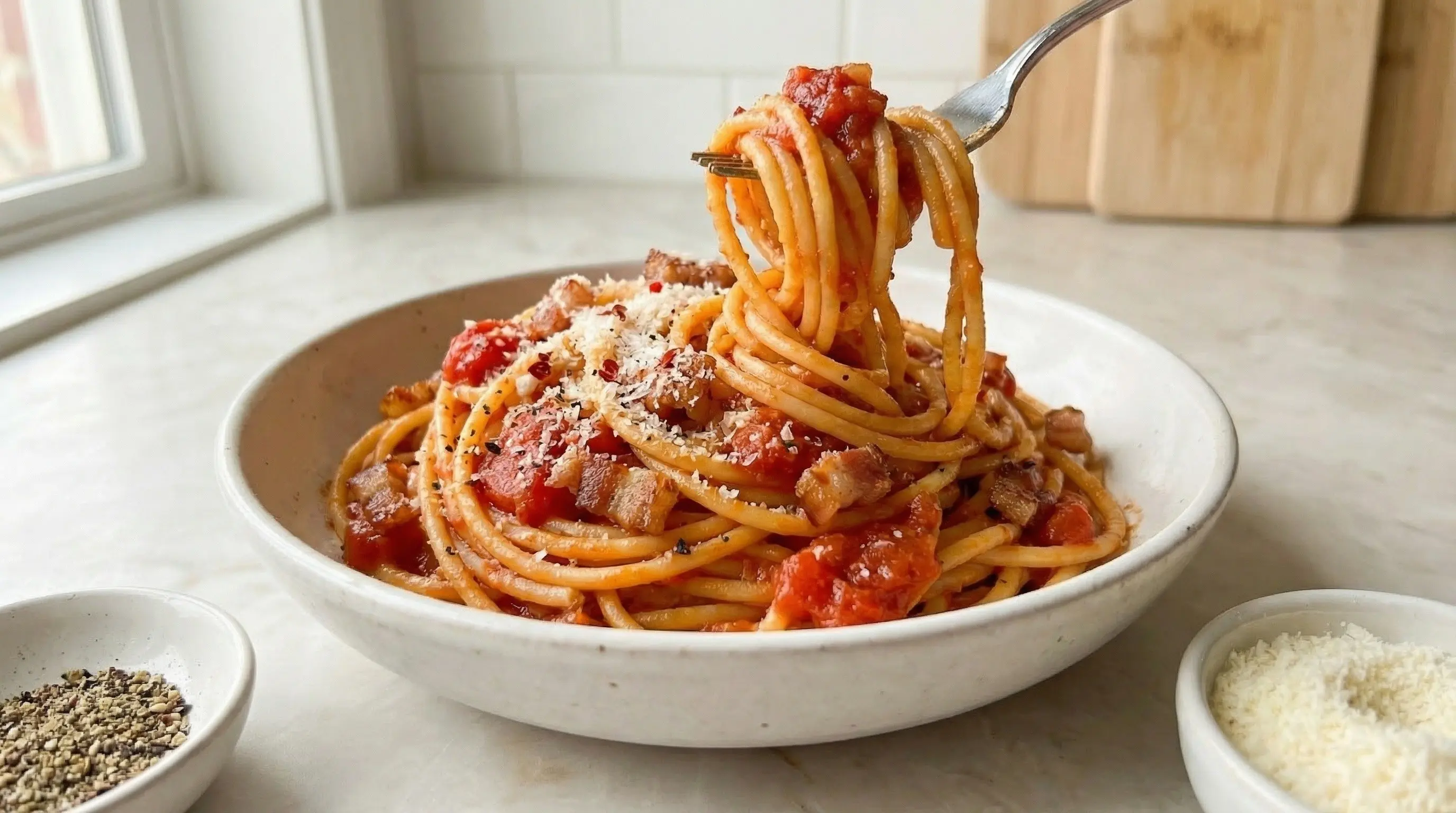
Pasta all'Amatriciana
Learn how to make authentic pasta all'Amatriciana with guanciale, tomatoes, pecorino Romano, and a hint of chili. This beloved Roman classic is simple, bold, and impossibly delicious!
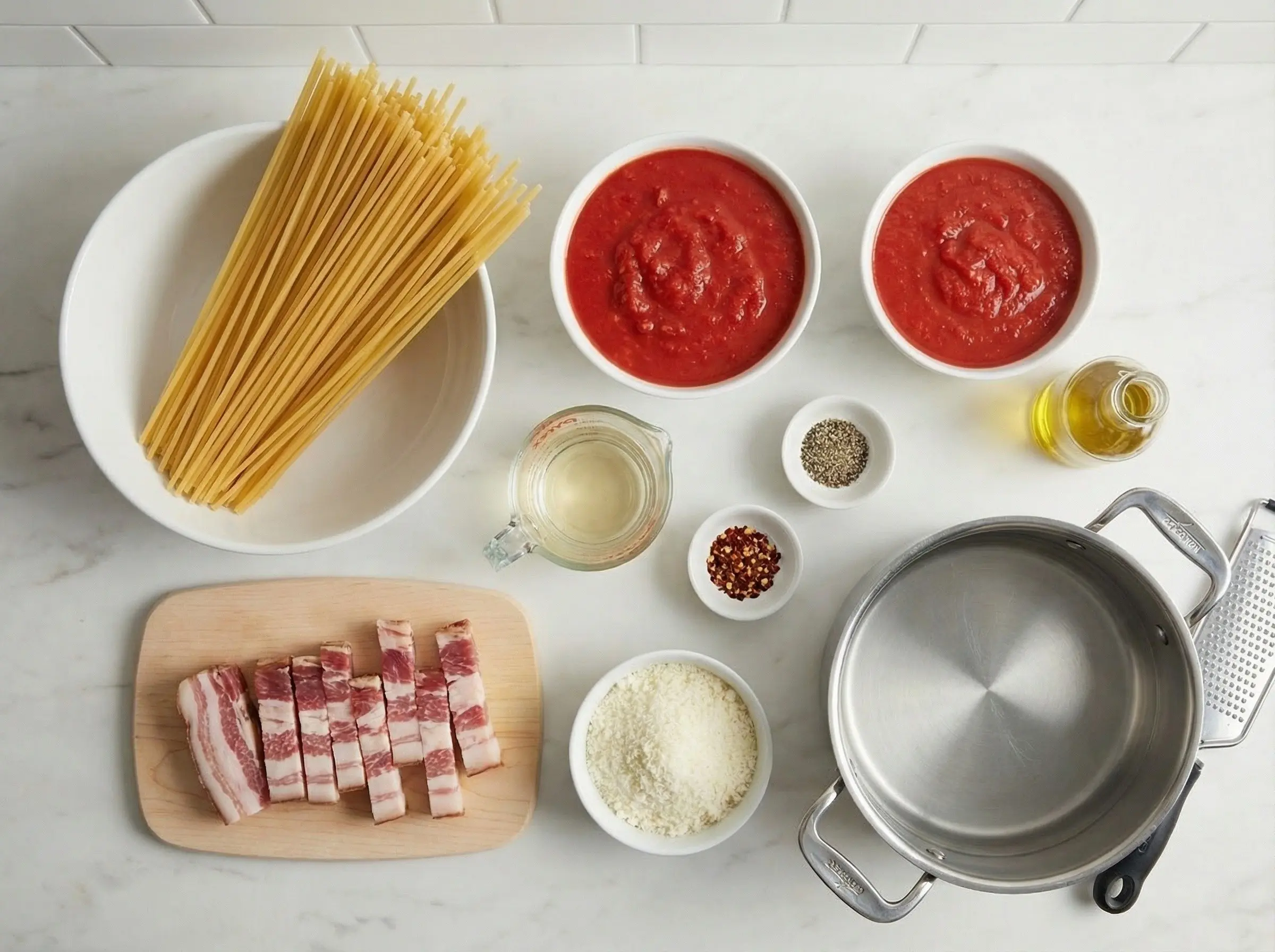
Ingredients
The Story
Pasta all'Amatriciana is one of the four iconic pasta dishes of Rome, alongside carbonara, cacio e pepe, and gricia. The dish takes its name from Amatrice, a small town in the mountainous Lazio region northeast of Rome, where shepherds and farmers developed hearty, simple dishes using local ingredients - cured pork, sheep's milk cheese, and whatever else was at hand. The original dish, called gricia, was a "white" pasta made with guanciale (cured pork jowl), pecorino cheese, and black pepper. When tomatoes arrived in Italy from the Americas and became widely cultivated in the 18th and 19th centuries, the people of Amatrice began adding them to their beloved gricia, creating what we now know as Amatriciana. The dish migrated to Rome along with many Amatriciani who came to the capital seeking work, particularly in the restaurant trade. By the late 19th and early 20th centuries, Amatriciana had become firmly established as a Roman staple, served in trattorias throughout the city. Tragically, Amatrice was devastated by a massive earthquake in 2016 that killed nearly 300 people and destroyed much of the historic town center. In response, Italians and food lovers worldwide rallied around Amatriciana as a symbol of solidarity, with restaurants donating proceeds from the dish to relief efforts. This outpouring transformed Amatriciana from a beloved regional specialty into an emblem of Italian culinary heritage and community resilience. What makes Amatriciana so extraordinary is how a handful of simple ingredients creates such depth of flavor. The guanciale is the foundation - this cured pork jowl has a delicate, sweet porkiness and silky fat that renders into the most luxurious cooking medium. The tomatoes, traditionally San Marzano or other high-quality Italian varieties, provide bright acidity and subtle sweetness. A touch of chili (peperoncino) adds gentle heat that lifts the dish. And the pecorino Romano, sharp and salty, ties everything together when tossed with the pasta. The pasta itself - traditionally bucatini, thick spaghetti with a hole running through the center - catches the sauce in its hollow core and clings to the rendered fat. Every element is essential; nothing is superfluous. Amatriciana embodies the Italian philosophy that the best cooking requires not elaborate technique but rather excellent ingredients treated with respect.
Instructions
Step 1
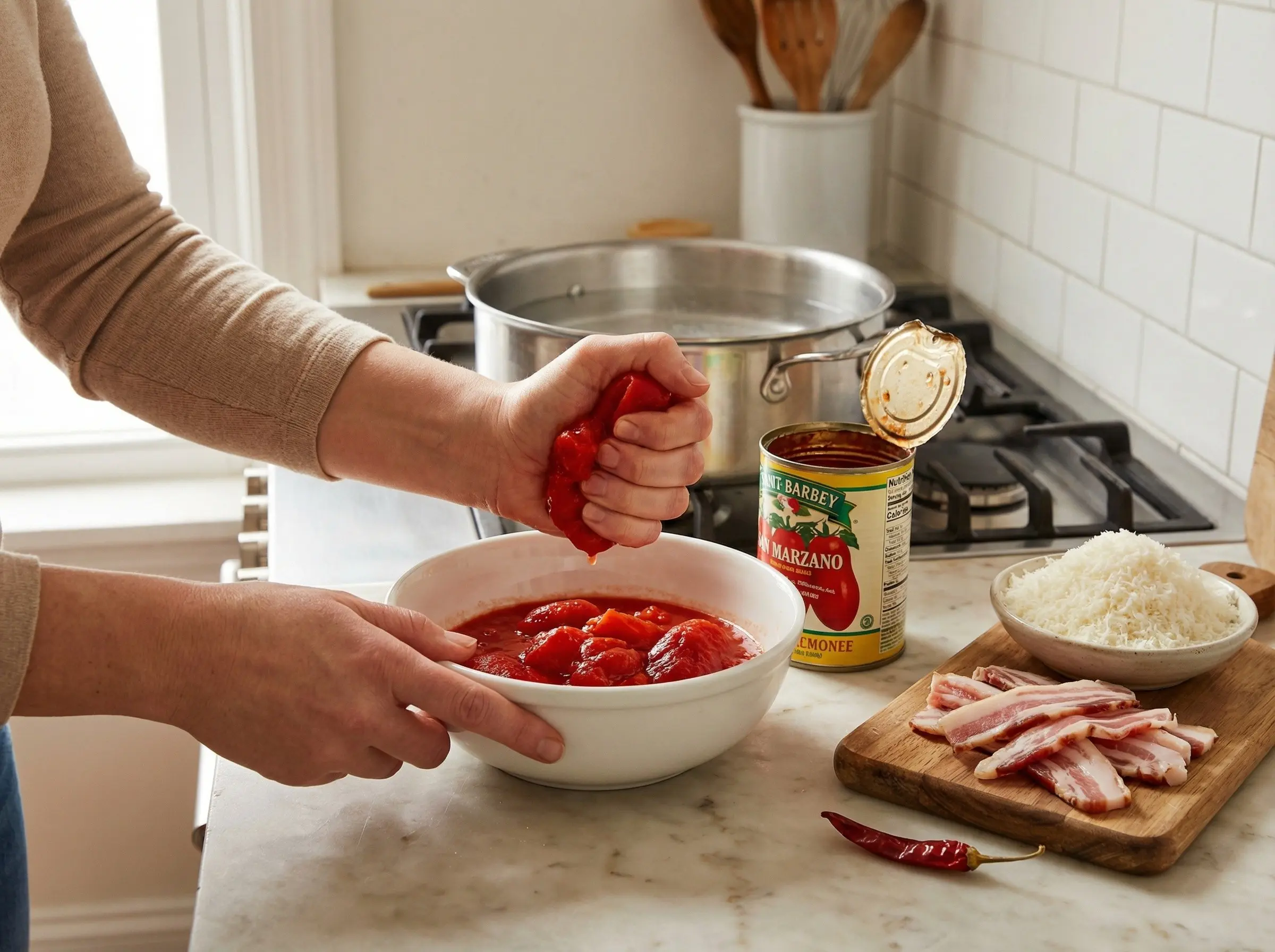
Prepare the ingredients. Cut the guanciale into strips about 1/4-inch thick and 1 inch long, or into small cubes - the shape is a matter of preference, but even sizing ensures even cooking. Pour the canned tomatoes into a bowl and crush them by hand into chunky pieces, discarding the tough core from each tomato. Some cooks prefer to puree the tomatoes; others like them very chunky. Hand-crushed provides the traditional rustic texture. Finely grate the pecorino Romano - it should be almost fluffy for the smoothest sauce. Bring a large pot of water to a boil and season generously with salt - it should taste like the sea.
Step 2
Render the guanciale. Place the guanciale in a cold, large skillet or saute pan along with the olive oil. Starting in a cold pan allows the fat to render slowly without burning the meat. Turn the heat to medium-low and cook, stirring occasionally, for 8-12 minutes until the guanciale has rendered most of its fat and the meat is golden and crispy at the edges but still slightly chewy - not completely crunchy like bacon. The rendered fat should be clear and abundant. This step cannot be rushed; low and slow is essential.
Step 3
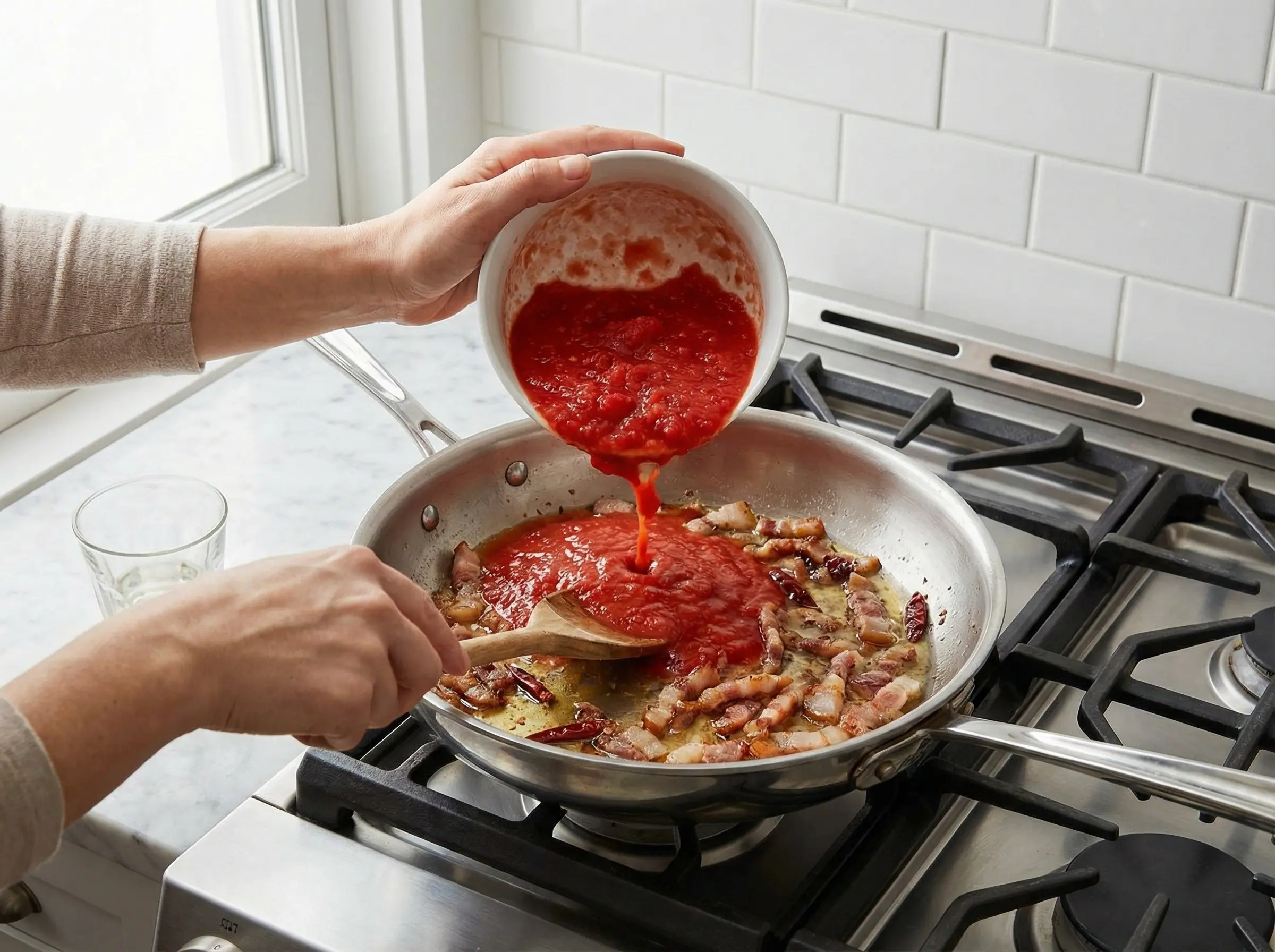
Build the sauce. Add the dried chili (whole or crumbled) or red pepper flakes to the pan with the guanciale. Stir for 30 seconds until fragrant. Carefully pour in the white wine - it will sizzle and steam. Let the wine simmer and reduce by about half, scraping up any browned bits from the bottom of the pan, about 2 minutes. Add the crushed tomatoes and stir to combine. Bring to a simmer, then reduce heat to low. Let the sauce cook gently for 15-20 minutes, stirring occasionally, until slightly thickened and the tomatoes have lost their raw edge. The sauce should not be too thick - it needs to remain fluid enough to coat the pasta.
Step 4
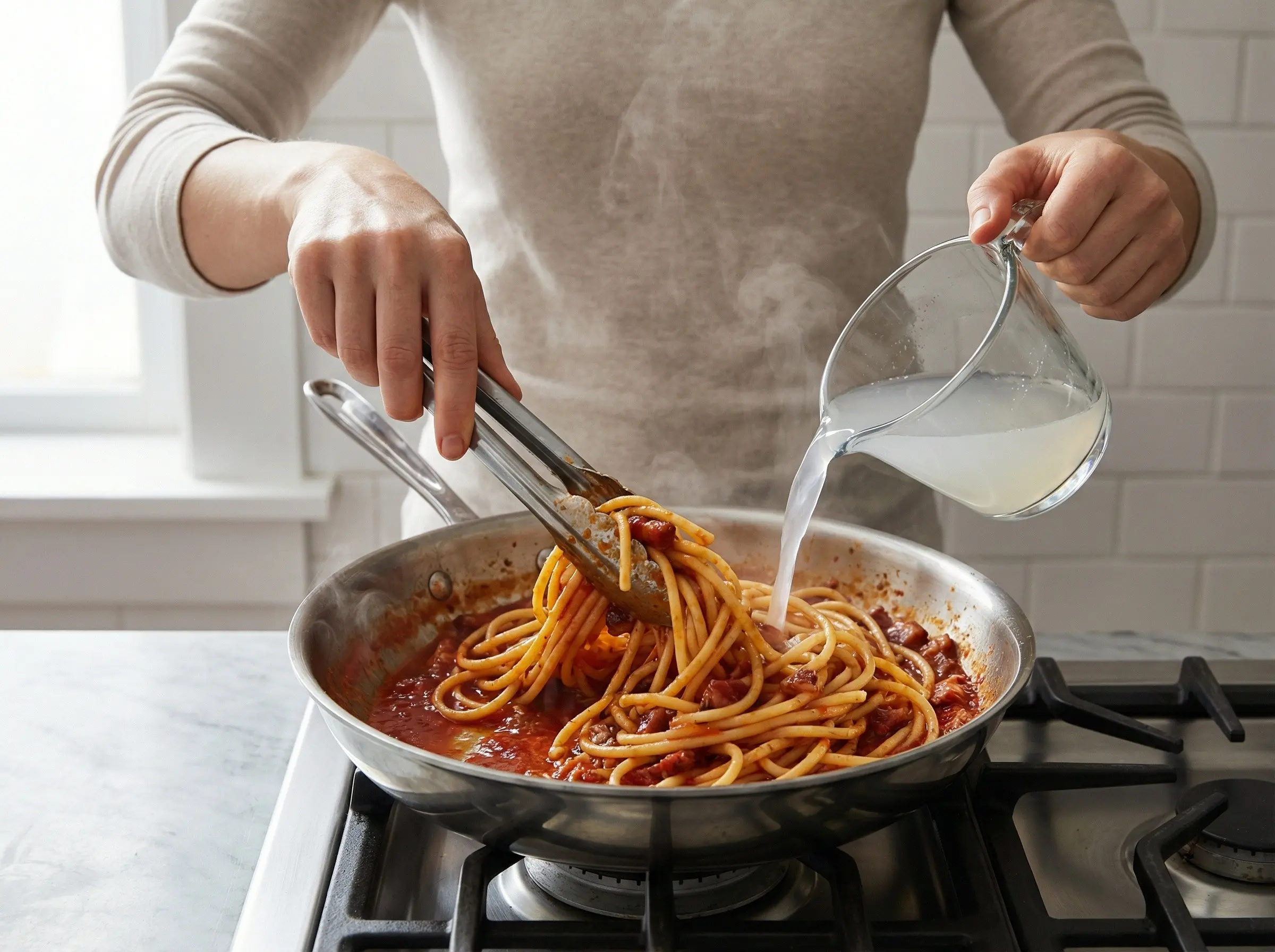
Cook the pasta. About halfway through the sauce cooking time, add the bucatini to the boiling salted water. Cook until just shy of al dente - about 1 minute less than package directions. The pasta will finish cooking in the sauce. Reserve at least 1 cup of starchy pasta water before draining. This starchy water is crucial for creating a smooth, emulsified sauce that clings to the pasta.
Step 5
Combine pasta and sauce. Using tongs, transfer the drained pasta directly into the pan with the sauce. Do not rinse the pasta - you want that starchy coating. Toss vigorously over medium heat for 1-2 minutes, adding splashes of pasta water as needed to keep the sauce fluid and glossy. The pasta should absorb some sauce while remaining well-coated. The constant motion helps emulsify the rendered guanciale fat with the tomato sauce, creating a silky, cohesive coating. Remove the pan from heat.
Step 6
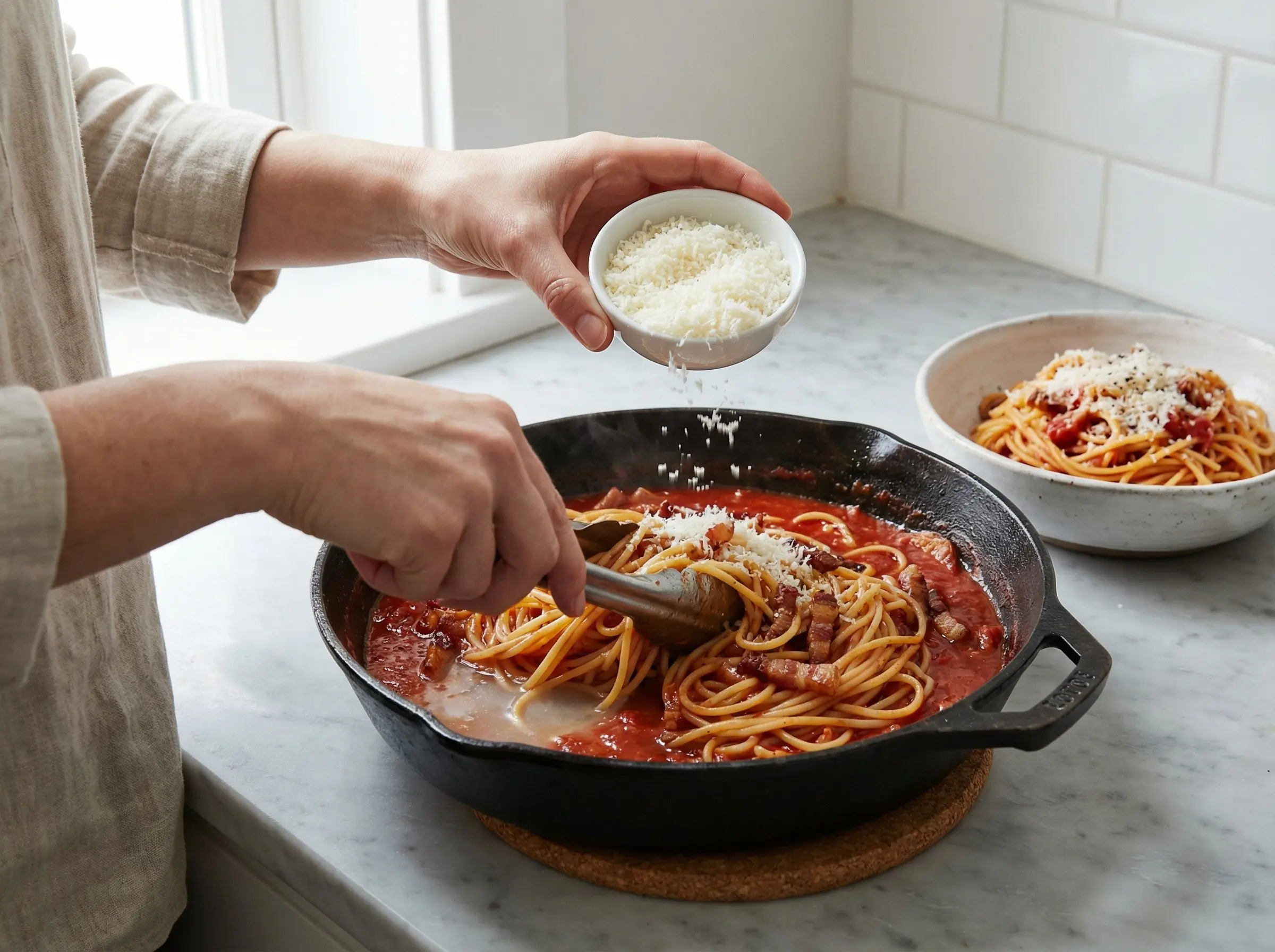
Finish with pecorino. With the pan off the heat (this is crucial - too much heat will cause the cheese to clump), add about three-quarters of the grated pecorino Romano. Toss vigorously, adding another splash of pasta water if needed, until the cheese melts into the sauce and creates a creamy, emulsified coating. The sauce should be glossy and cling to each strand of pasta. Taste and adjust seasoning - you likely will not need additional salt due to the pecorino and guanciale, but black pepper is welcome. Serve immediately in warm bowls, topped with the remaining pecorino and an additional grinding of black pepper. Remove the whole chili before serving if you used one. Amatriciana should be eaten right away while the sauce is fluid and the guanciale is still slightly crispy at the edges.
You Might Also Like
Master Your Kitchen with PantryAI
Love this recipe? Save it, shop for it, and cook it with ease. Download the PantryAI app to organize your pantry, track expirations, and discover recipes based on what you already have.

On a computer?Scan with your iPhone camera to download PantryAI.








Swipe to see more screenshots