
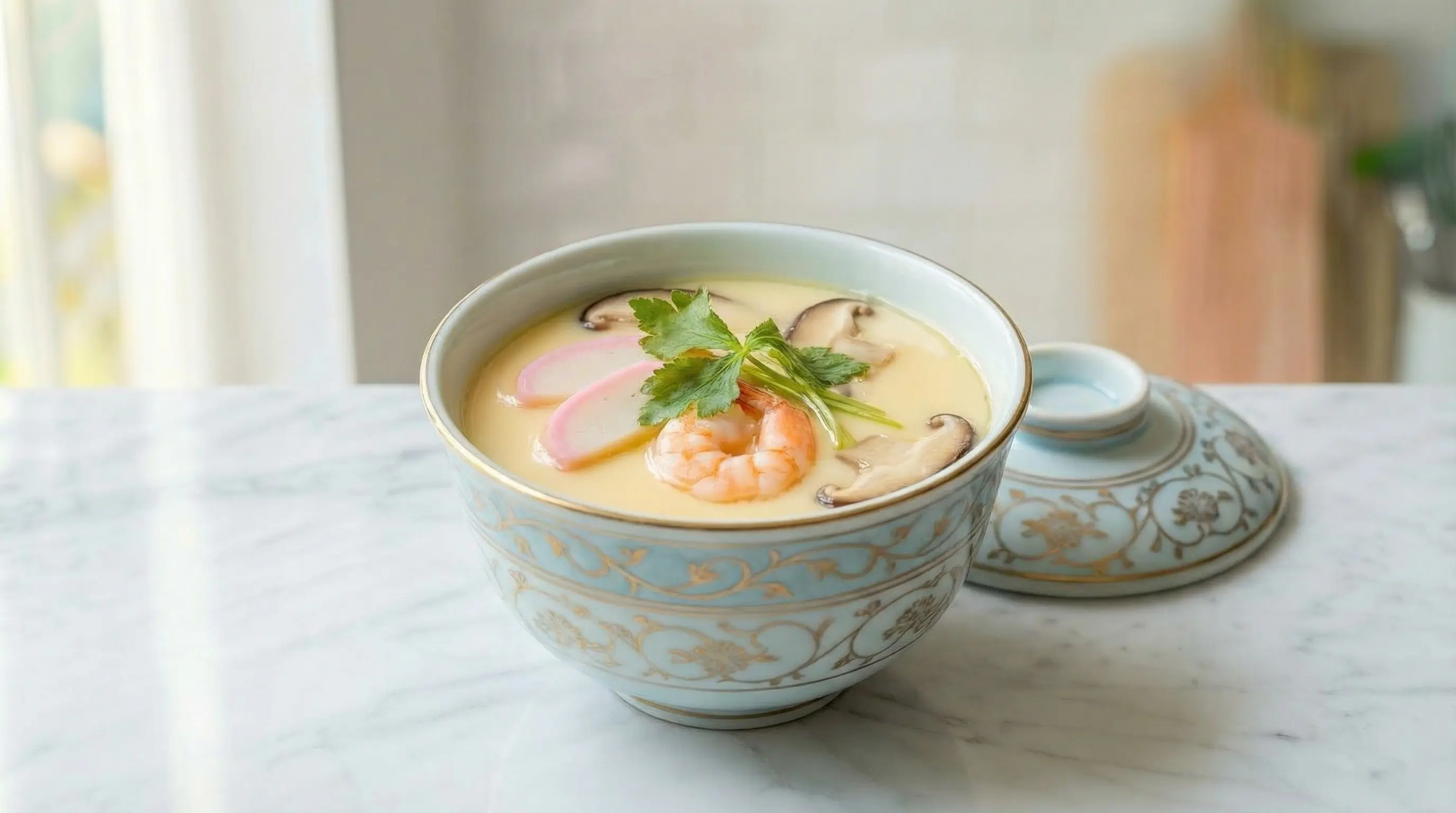
Chawanmushi
Learn how to make authentic chawanmushi, a silky Japanese steamed egg custard with shrimp, chicken, and mushrooms. This elegant dish is surprisingly easy and utterly delicious!
Ingredients
The Story
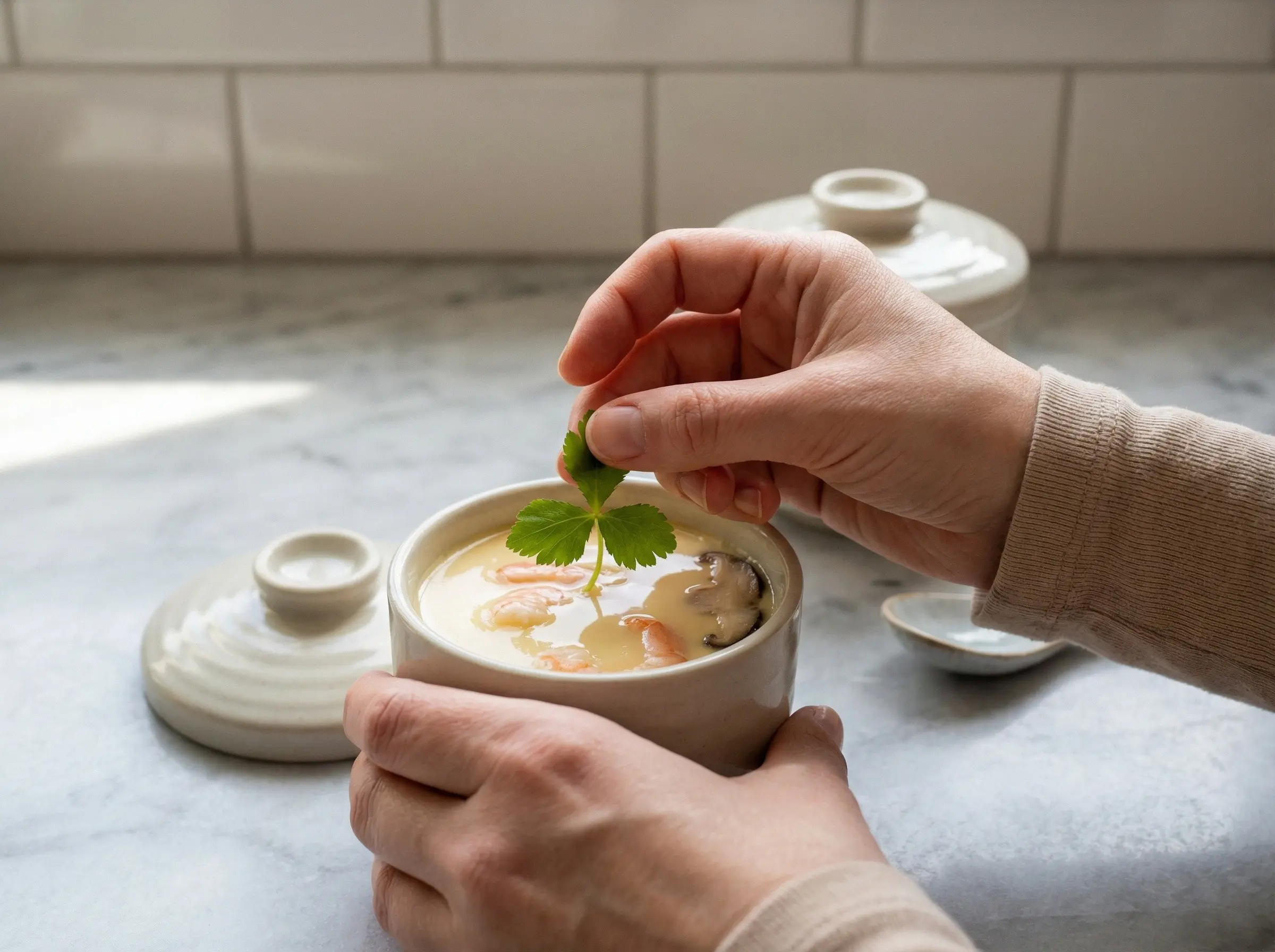
Chawanmushi is one of Japan's most elegant and refined dishes, a savory steamed egg custard that showcases the delicate artistry of Japanese cuisine. The name translates literally to "tea cup steamed" - "chawan" meaning tea cup and "mushi" meaning steamed - describing both the traditional vessel and cooking method. Unlike Western custards that are typically sweet and baked, chawanmushi is savory, flavored with dashi, and gently steamed to achieve an impossibly silky texture that trembles at the slightest touch. The dish is believed to have originated during the Edo period (1603-1868), possibly influenced by Chinese steamed egg dishes, and became popular in the sophisticated culinary culture of Kyoto and Osaka. Chawanmushi holds a special place in Japanese cuisine as a dish that bridges the everyday and the extraordinary. While simple enough for home cooking, it also appears on the menus of high-end kaiseki restaurants, where chefs compete to create the most refined versions with premium ingredients like uni (sea urchin), ikura (salmon roe), or matsutake mushrooms. The dish is particularly associated with autumn and winter, when its warm, comforting nature is most appreciated, though it can also be served chilled in summer. In traditional kaiseki meals, chawanmushi often appears as a palate cleanser between courses, its subtle flavors and silky texture providing a moment of calm amid more assertive dishes. It is also a beloved part of celebratory meals like osechi ryori (New Year cuisine) and wedding banquets. What makes chawanmushi so captivating is the contrast between its humble appearance and extraordinary texture. When made correctly, the custard should be impossibly smooth - silkier than any Western custard or flan - with a texture that Japanese describe as "purupuru" (wobbly and jiggly). This is achieved through a precise ratio of egg to dashi (typically 1:3), gentle steaming at low temperature, and careful straining of the egg mixture. Hidden within the custard are treasures: a pink shrimp, a piece of tender chicken, a slice of shiitake mushroom, a ginkgo nut, perhaps a decorative sprig of mitsuba. Each spoonful reveals a new surprise, making chawanmushi as much a pleasure to eat as it is to look at. It is a dish that embodies the Japanese aesthetic of understated elegance - simple on the surface but revealing depth and complexity with each bite.
Instructions
Step 1
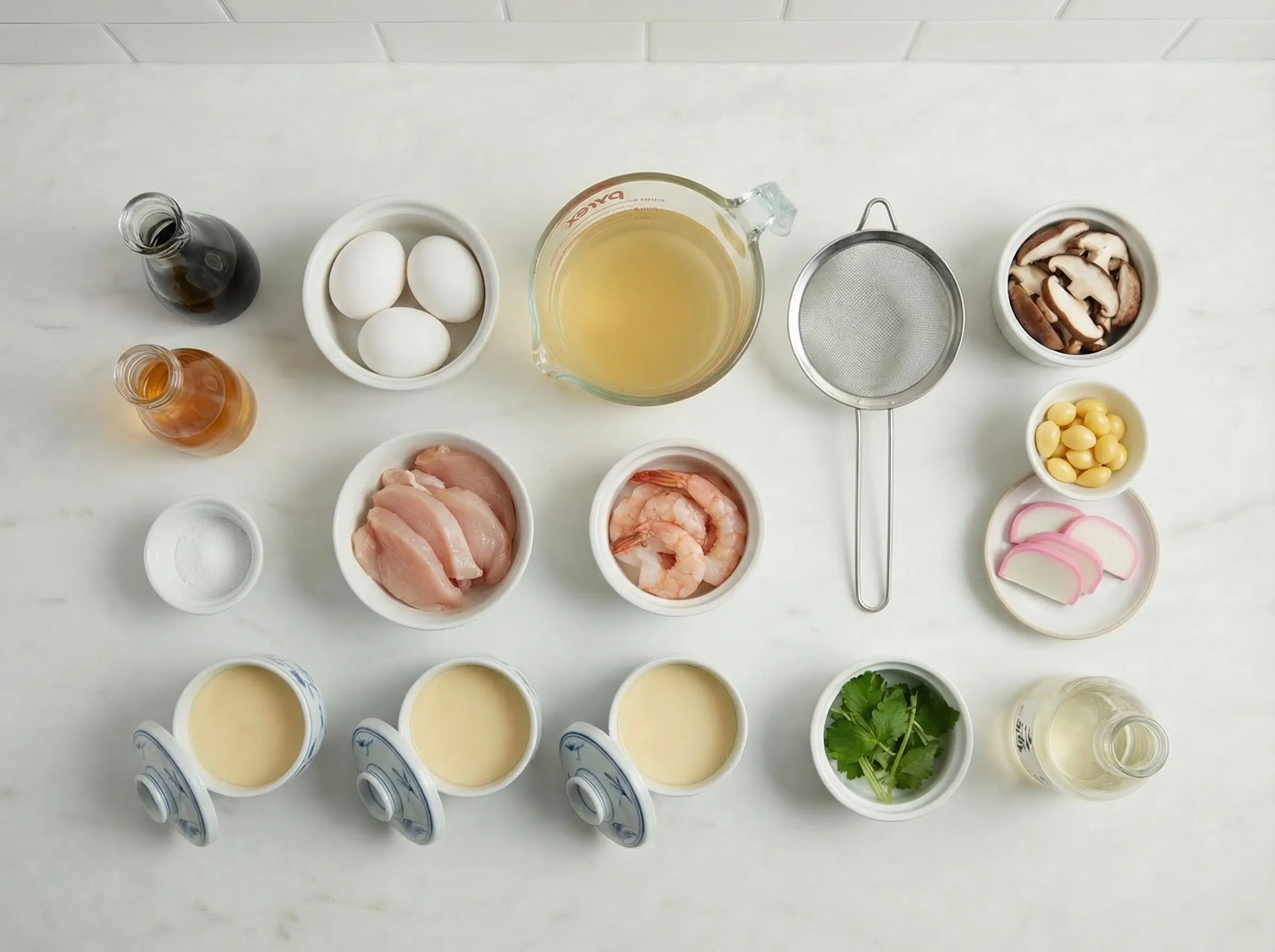
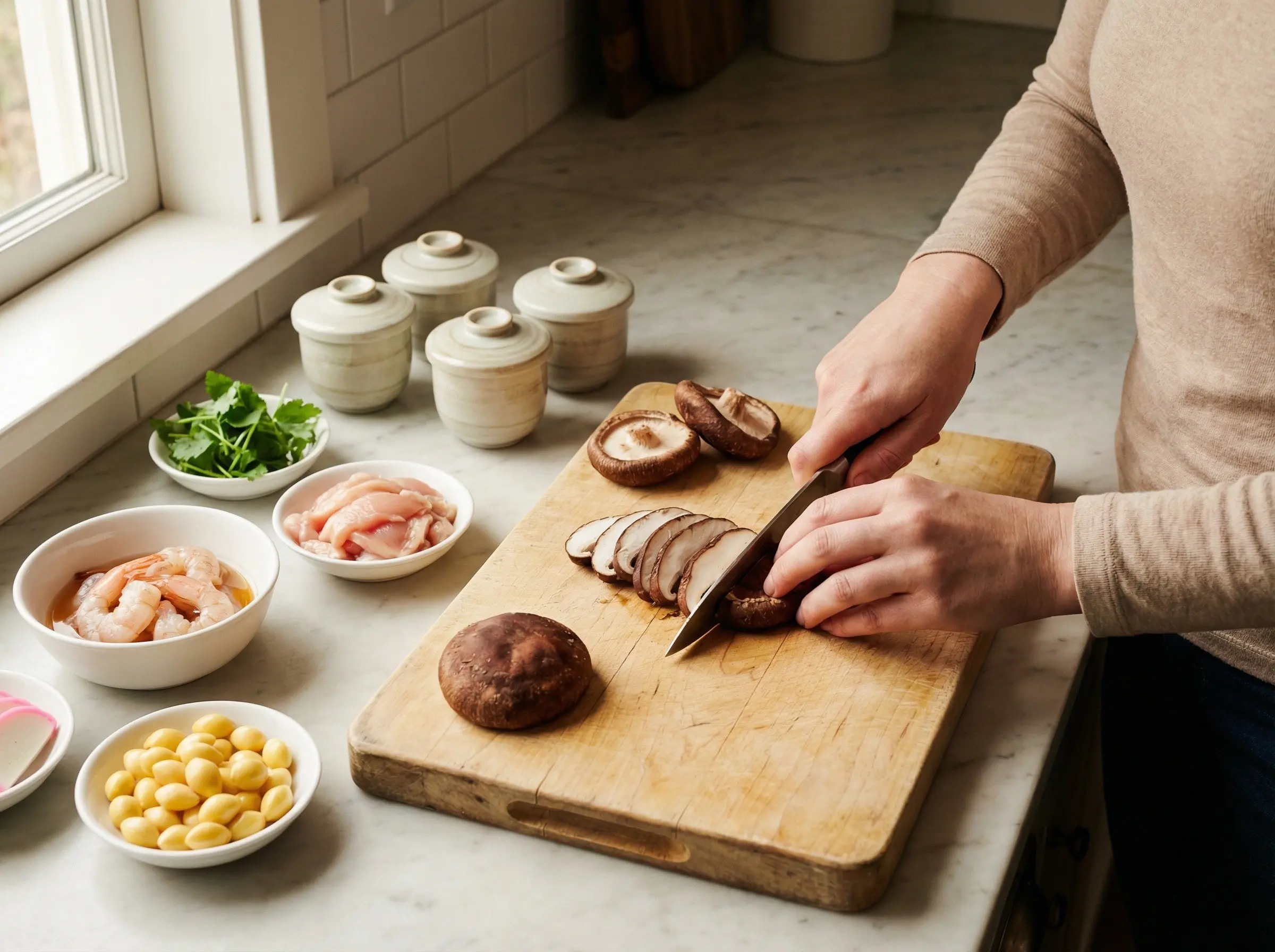
Prepare the fillings first. Season the shrimp and thinly sliced chicken breast lightly with a splash of sake and a pinch of salt - this removes any raw odor and adds subtle flavor. Let them marinate for 5-10 minutes while you prepare the other ingredients. Remove the stems from the shiitake mushrooms and slice the caps thinly. If using canned ginkgo nuts, drain and rinse them. Slice the kamaboko (fish cake) into decorative pieces. Prepare the mitsuba by cutting it into 1-inch lengths, or substitute with flat-leaf parsley. Set up four chawanmushi cups, small ceramic cups with lids, or heatproof teacups or ramekins.
Step 2
Prepare the egg custard mixture. In a large measuring cup or bowl, gently beat the eggs until just combined - do not whisk vigorously or create foam, as bubbles will mar the silky surface of the finished custard. Add the cooled dashi stock, soy sauce, mirin, and salt. Stir gently to combine. The ratio of egg to dashi is crucial: approximately 1 part egg to 3 parts dashi creates the ideal silky texture. The dashi must be completely cool or it will begin to cook the eggs prematurely.
Step 3
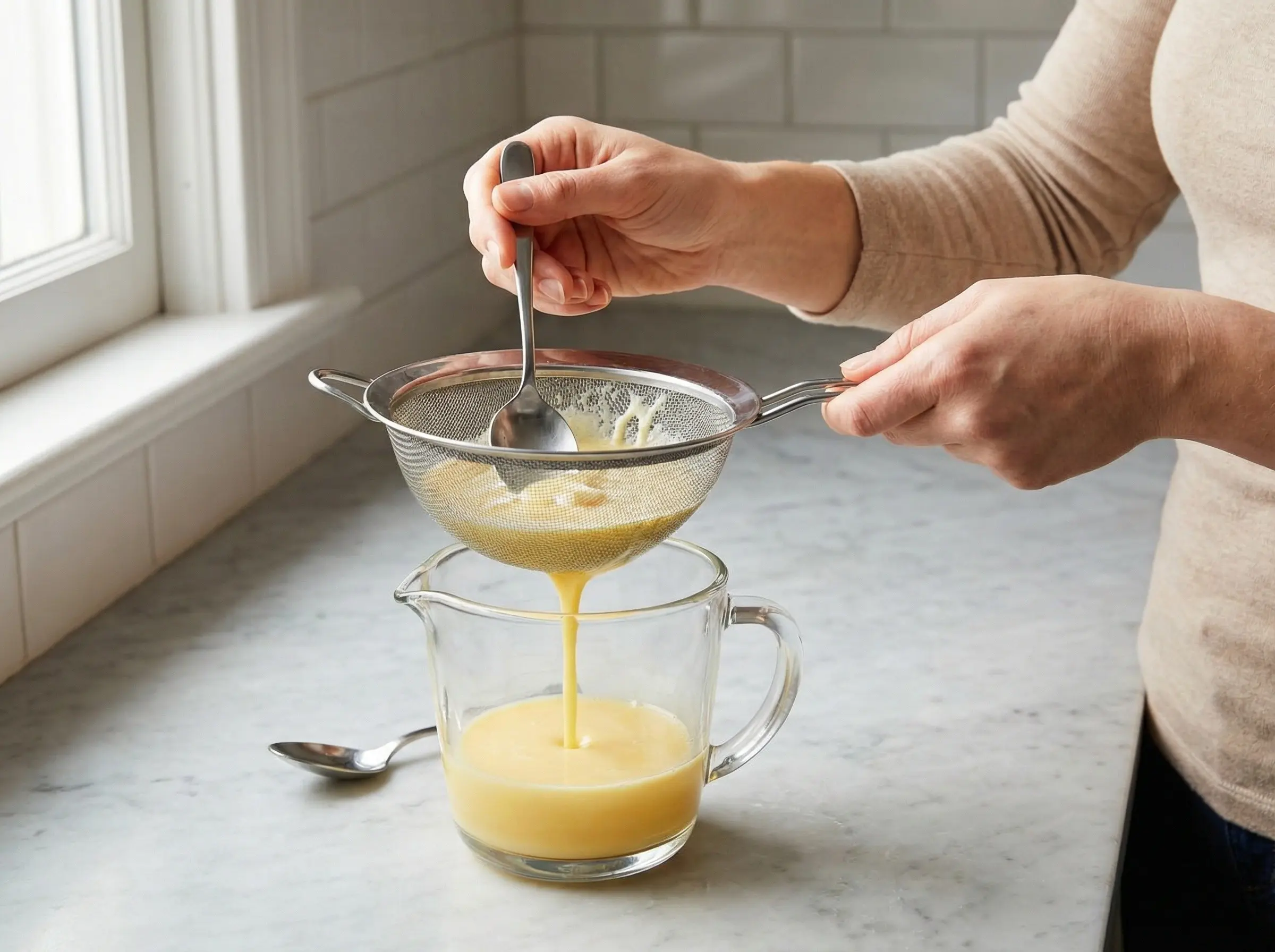
Strain the egg mixture through a fine-mesh sieve into a clean bowl or measuring cup with a spout. This step is essential - straining removes the chalazae (the stringy bits attached to the yolk) and any lumps, ensuring a perfectly smooth custard. Strain it twice for the silkiest results. Do not skip this step, as unstrained custard will have an uneven, slightly grainy texture. After straining, gently skim off any bubbles on the surface with a spoon.
Step 4
Arrange the fillings in the chawanmushi cups. Place a shrimp, a few pieces of chicken, 2-3 slices of shiitake mushroom, a ginkgo nut if using, and a slice of kamaboko in each cup. The ingredients should be distributed in a single layer at the bottom - do not overcrowd. The beauty of chawanmushi is discovering these treasures as you eat, so they should be mostly hidden within the custard. Reserve the mitsuba for garnishing at the end. Slowly pour the strained egg mixture into each cup, filling them about 80% full to allow for slight expansion. Gently skim off any surface bubbles with a spoon.
Step 5
Cover each cup with its lid, or tightly cover with aluminum foil - this prevents condensation from dripping onto the custard surface and creating pockmarks. Set up a steamer with water and bring to a boil. Once boiling, reduce the heat to maintain a gentle simmer - this is critical. High heat causes the custard to bubble and become porous like a sponge rather than silky smooth. Carefully place the covered cups in the steamer. Steam over low heat for 15-20 minutes, keeping the lid slightly ajar (about 1/2 inch) to allow steam to escape and maintain a gentle temperature. Alternatively, after an initial 2-3 minutes of steaming, reduce the heat to the lowest setting and steam for another 15 minutes.
Step 6
Check for doneness by gently tilting a cup - the custard should jiggle like set jello, and if you insert a toothpick or small knife, it should come out clean with clear liquid, not milky egg mixture. If not set, continue steaming for another 2-3 minutes. Once done, carefully remove the cups from the steamer. Uncover and place a sprig of mitsuba or a few leaves of parsley on top of each custard - the residual heat will gently wilt the herb. Replace the lid if you have one and serve immediately. Chawanmushi can be served hot, warm, or chilled - each temperature offers a different experience. Eat with a small spoon, savoring the silky custard and the treasures hidden within. The gentle umami of the dashi, the sweetness of the shrimp, the earthiness of the shiitake - each bite reveals a new harmony of flavors.
You Might Also Like
Master Your Kitchen with PantryAI
Love this recipe? Save it, shop for it, and cook it with ease. Download the PantryAI app to organize your pantry, track expirations, and discover recipes based on what you already have.

On a computer?Scan with your iPhone camera to download PantryAI.








Swipe to see more screenshots