
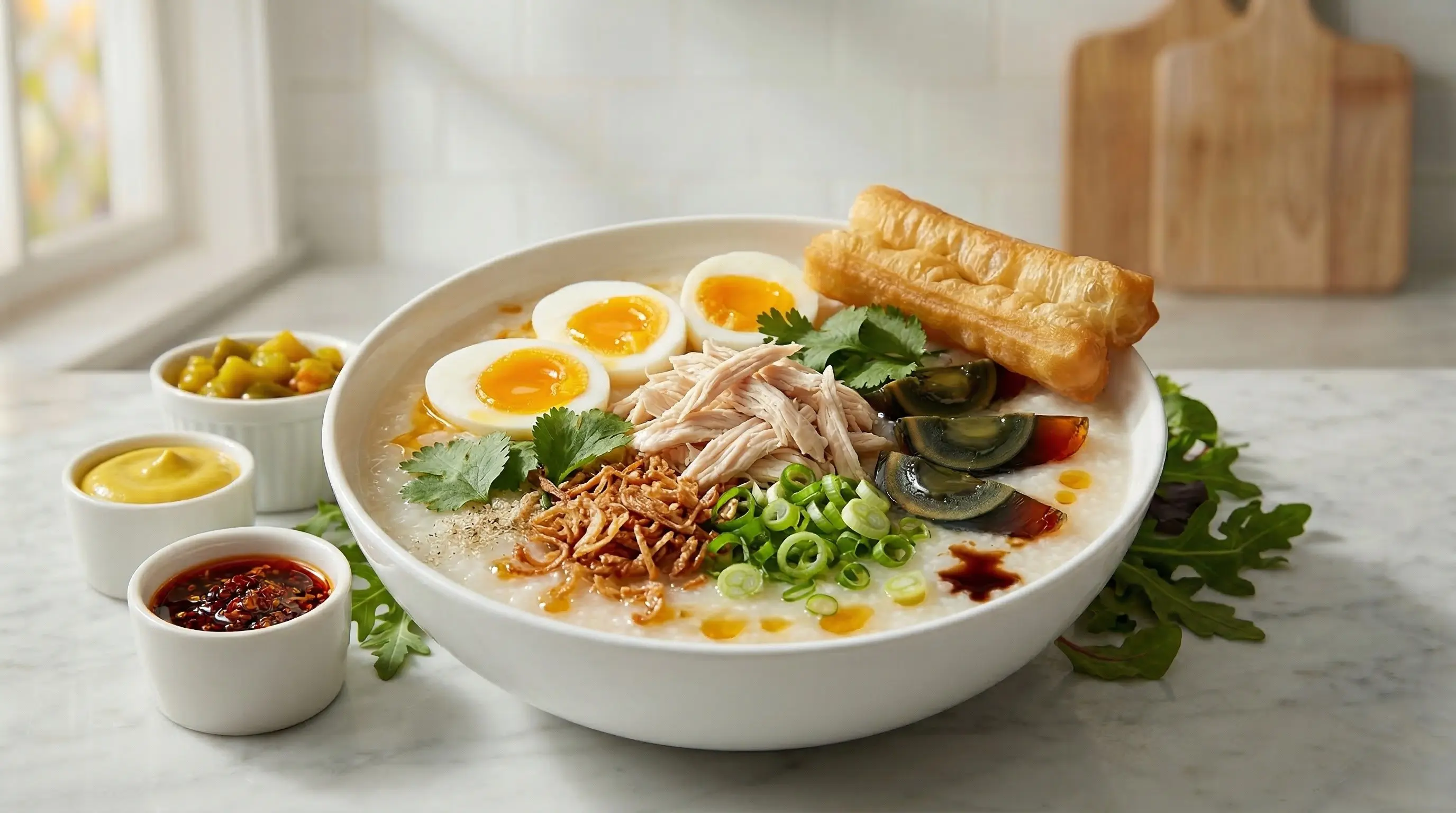
Congee
Learn how to make authentic congee, the silky Chinese rice porridge that is the ultimate comfort food. This soothing, nourishing bowl is endlessly customizable with your favorite savory toppings!
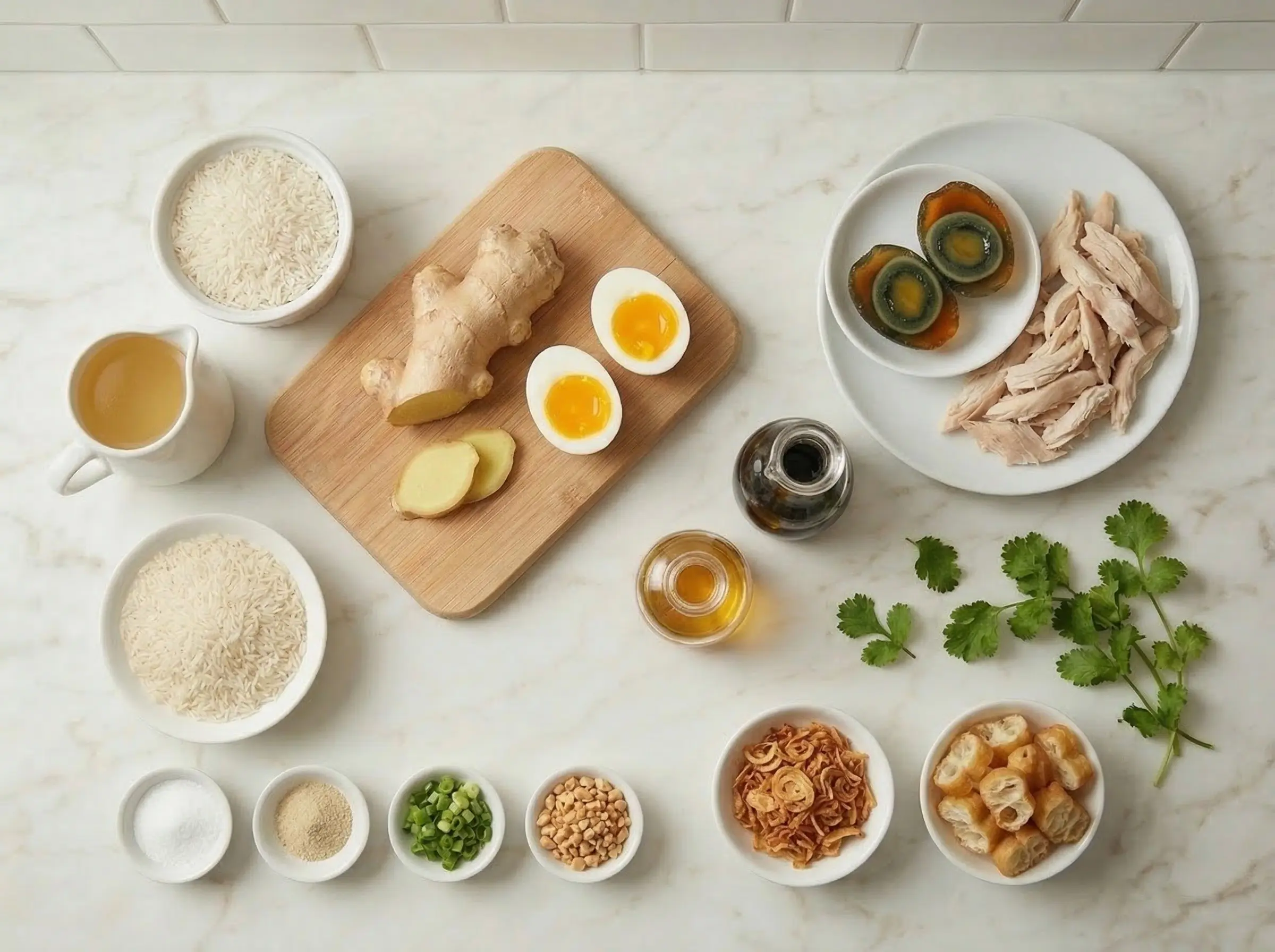
Ingredients
The Story
Congee is one of the oldest and most beloved dishes in Chinese cuisine, a silky rice porridge that has nourished people across Asia for thousands of years. Known as "zhou" in Mandarin, "jook" in Cantonese, and by many other names across the continent - okayu in Japan, chao in Vietnam, khao tom in Thailand, lugaw in the Philippines - this simple preparation of rice cooked in abundant water until it breaks down into a creamy, comforting porridge represents the very foundation of Asian comfort food. Archaeological evidence suggests rice porridge was consumed in China as early as 1000 BCE, and it appears in classical Chinese texts as a food for nourishment, healing, and everyday sustenance. In Chinese culture, congee holds a significance that transcends mere sustenance. Traditional Chinese medicine considers congee the ideal food for restoring digestive health, nourishing the qi (vital energy), and providing gentle nutrition during illness or recovery. The saying goes that congee "warms the stomach and strengthens the spleen." It is the first solid food given to babies, the food that mothers prepare for sick children, and the breakfast that fuels millions of workers across Asia every morning. From humble street stalls in Guangzhou to elegant dim sum restaurants in Hong Kong, congee is everywhere - served plain for purity or adorned with an array of toppings from century eggs to crispy fried dough. What makes congee so extraordinary is the transformation that occurs when rice meets water and time. With patient cooking, the rice grains burst and release their starch, creating a porridge that is simultaneously light and deeply satisfying. The texture should be silky smooth, flowing like a thick soup rather than sitting stiff like oatmeal. The flavor is subtle, almost neutral, which is precisely the point - congee is a canvas for toppings and condiments that each diner customizes to their taste. A drizzle of sesame oil, a splash of soy sauce, a shower of scallions, a soft-boiled egg, shreds of ginger-poached chicken, strips of crispy youtiao - each addition transforms the bowl. Congee is proof that the simplest foods, made with care and patience, can be the most profoundly comforting.
Instructions
Step 1
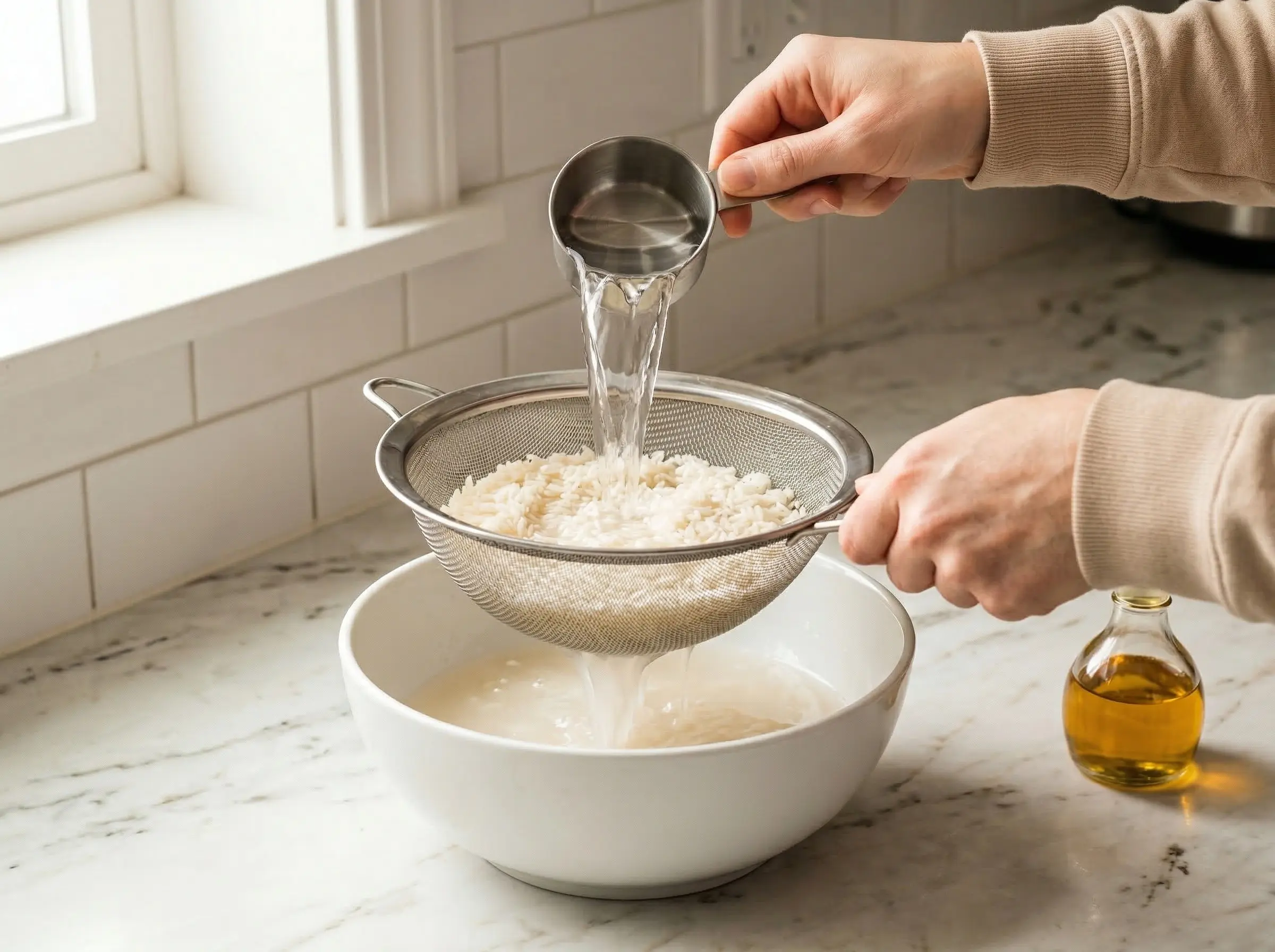
Prepare the rice. Rinse the rice in several changes of cold water until the water runs mostly clear - this removes excess surface starch for a cleaner-tasting congee. Drain well. For faster cooking and silkier texture, you can soak the rice for 30 minutes to overnight, or freeze the rinsed rice for at least 2 hours - freezing breaks down the grain structure and speeds cooking significantly. For extra silkiness, toss the rinsed rice with 1 tablespoon of oil - this helps the grains break down more smoothly.
Step 2
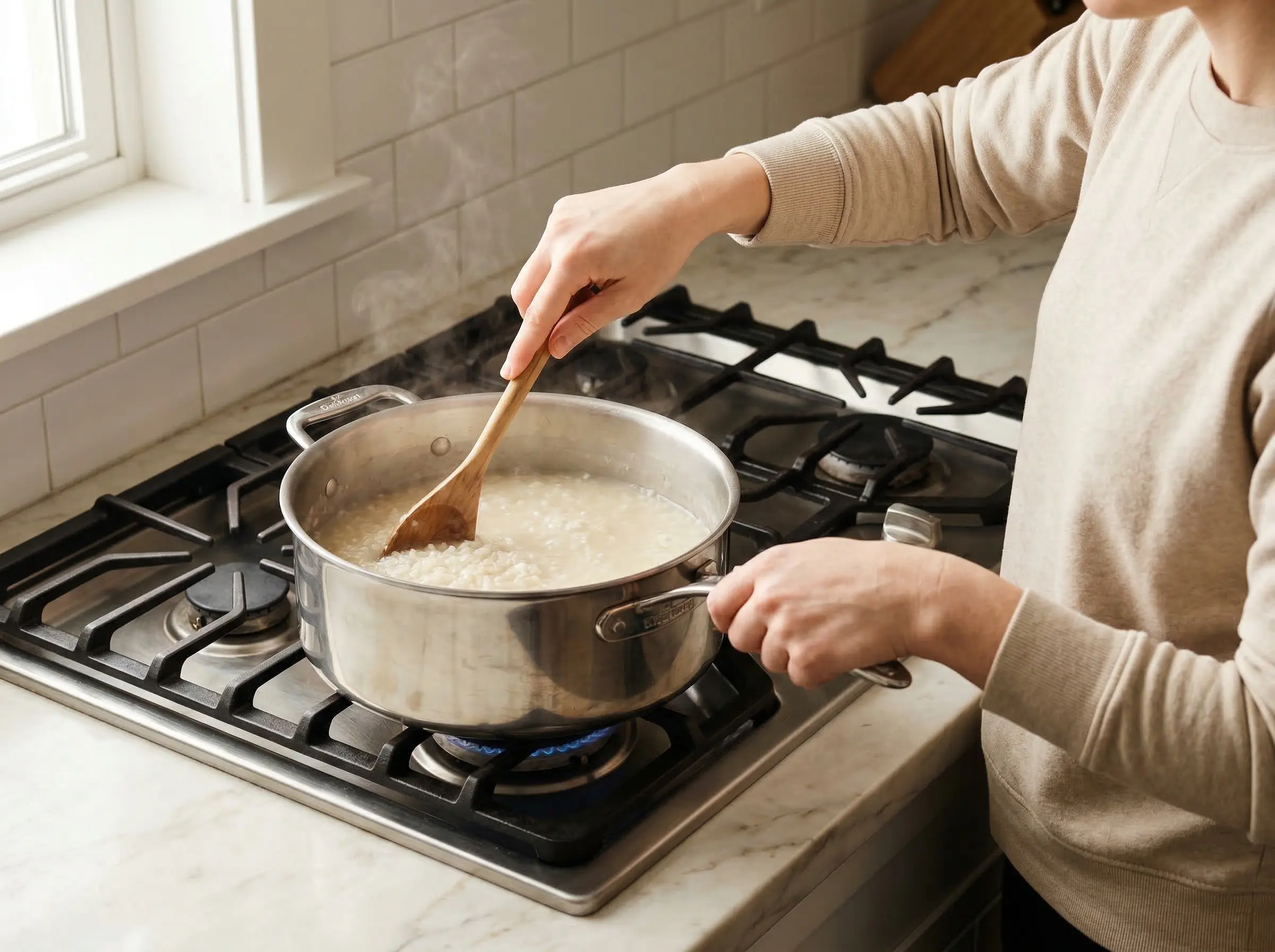
Start the congee. In a large heavy-bottomed pot or Dutch oven, bring the water or stock to a boil over high heat. Add the rice, ginger slices, and salt. Return to a boil, stirring to prevent the rice from sticking to the bottom. Reduce heat to low, maintaining a gentle simmer. If using chicken stock, the congee will have a richer, more savory flavor; water produces a more neutral base that lets the toppings shine.
Step 3
Simmer with patience. Cook the congee at a gentle simmer for 1 to 1.5 hours, stirring every 10-15 minutes to prevent sticking and to help break down the rice. The congee is ready when the rice grains have completely burst and the porridge is creamy and flowing. The consistency should be like a thick soup - it will coat a spoon but still flow freely. If it becomes too thick, add more hot water or stock to thin it. The longer you cook, the silkier the texture becomes.
Step 4
Optional: add protein while cooking. For chicken congee, add bone-in chicken thighs or a whole chicken leg to the pot during the last 30-40 minutes of cooking. The chicken will poach gently in the porridge, and the bones add extra body. Remove, shred the meat, and serve on top. For pork and century egg congee (the Cantonese classic), add strips of marinated pork or pork meatballs during the last 15 minutes. Fish congee adds delicate fish slices in the final minutes, cooking just until opaque.
Step 5
Adjust consistency and seasoning. Remove and discard the ginger slices. The congee will continue to thicken as it sits, so aim for a slightly thinner consistency than you want to serve. Taste and adjust salt as needed - congee should be seasoned but mild, as the toppings will add more flavor. For an extra silky texture, you can use an immersion blender to partially blend the congee, though traditional versions leave the rice grains somewhat visible.
Step 6
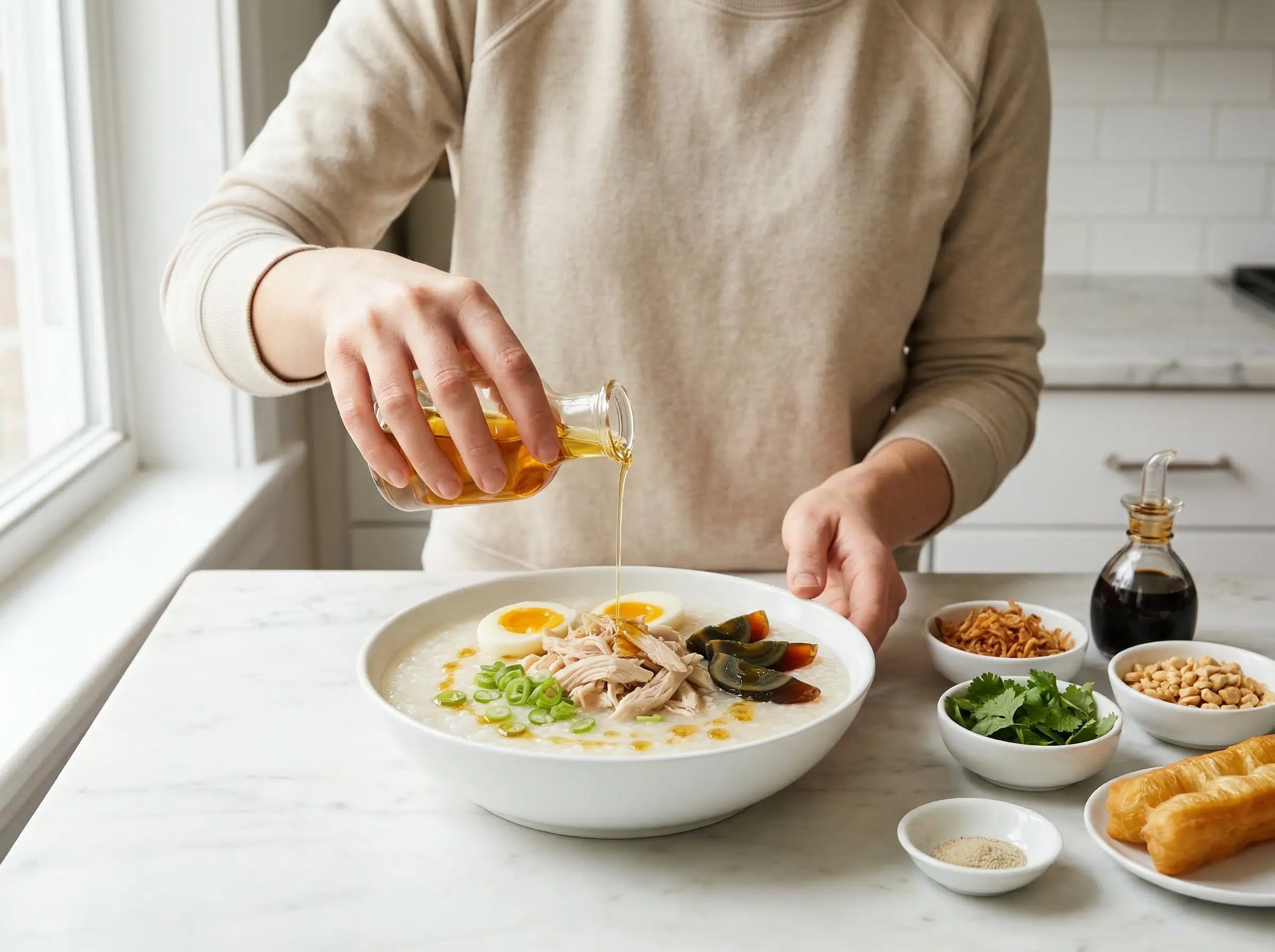
Serve with toppings. Ladle the hot congee into deep bowls. This is where congee becomes personal - set out an array of toppings and let each person customize their bowl. Essential toppings include: sliced scallions, a drizzle of sesame oil, a splash of soy sauce, and a generous pinch of white pepper. Popular additions include soft-boiled eggs, shredded poached chicken, sliced century egg, crispy fried shallots, crushed roasted peanuts, cilantro, and strips of youtiao (Chinese fried dough) for dipping. Some enjoy pickled vegetables, chili oil, or fish sauce. Congee is the ultimate comfort food - warm, soothing, and infinitely adaptable. It is traditionally eaten for breakfast in China but is perfect any time you need gentle nourishment. Leftover congee thickens significantly when refrigerated - thin with water or stock when reheating and stir constantly over medium heat.
You Might Also Like
Master Your Kitchen with PantryAI
Love this recipe? Save it, shop for it, and cook it with ease. Download the PantryAI app to organize your pantry, track expirations, and discover recipes based on what you already have.

On a computer?Scan with your iPhone camera to download PantryAI.








Swipe to see more screenshots