
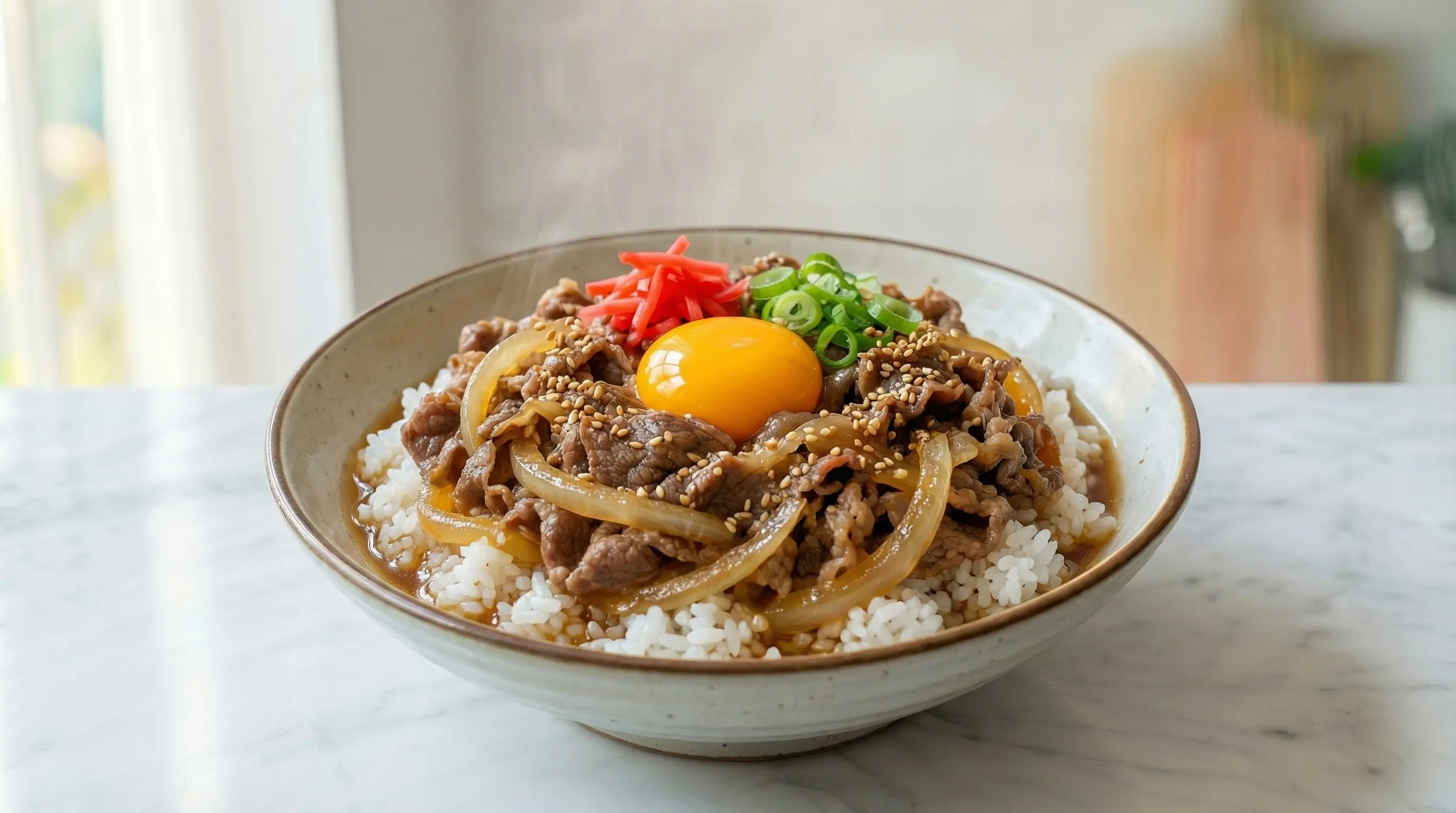
Gyudon
Learn how to make authentic gyudon, Japan's beloved simmered beef and onion rice bowl. This savory-sweet comfort food is quick, affordable, and incredibly satisfying!
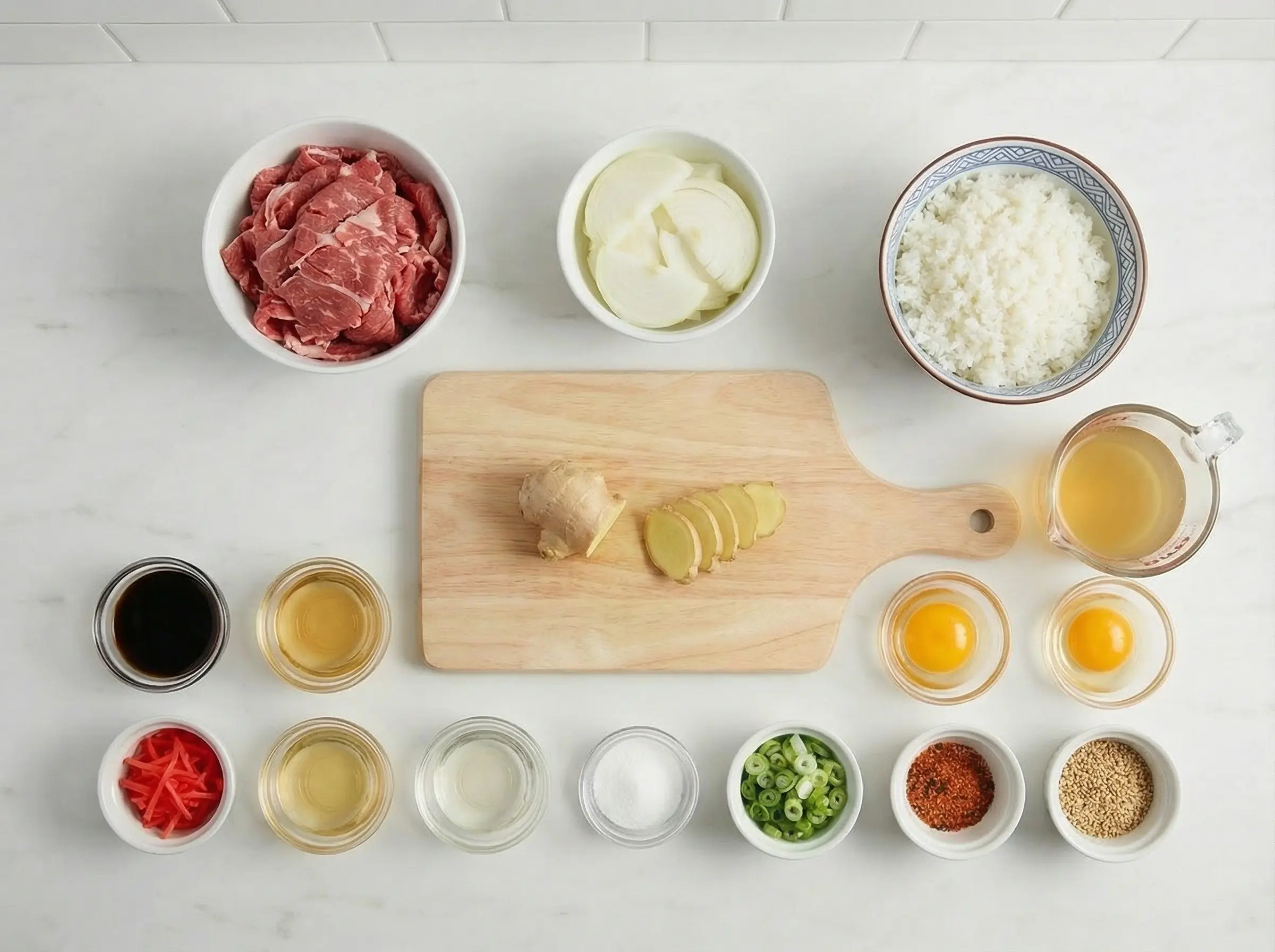
Ingredients
The Story
Gyudon is one of Japan's most iconic fast foods, a simple yet deeply satisfying bowl of thinly sliced beef and onions simmered in a sweet-savory sauce and served over steaming rice. The name combines "gyu" (beef) and "don" (short for donburi, meaning rice bowl), perfectly describing this unpretentious dish that has fueled Japanese workers and students for over a century. Gyudon was born during the Meiji era (1868-1912) when Japan opened to Western influence and beef consumption, previously taboo in Buddhist Japan, became increasingly accepted. The dish evolved from sukiyaki, the popular hot pot of simmered beef, adapted into a quick, portable format that could be eaten alone at a counter rather than shared around a communal pot. The modern gyudon industry was pioneered by Yoshinoya, which opened its first restaurant in Tokyo's Nihonbashi fish market in 1899. The founder, Eikichi Matsuda, aimed to serve delicious, nutritious food quickly and affordably to the hardworking market workers. Yoshinoya perfected the formula: paper-thin beef sliced against the grain, sweet onions, a precisely balanced sauce of soy sauce, mirin, sake, and dashi, all served over rice in minutes. The concept proved so successful that gyudon chains became ubiquitous across Japan. Today, Yoshinoya, Sukiya, and Matsuya operate thousands of locations, serving millions of bowls daily. These chains are beloved for their consistency, speed, and affordability - a filling meal can be had for just a few hundred yen, making gyudon the quintessential Japanese fast food. What makes gyudon so addictive is the harmony of flavors and textures achieved through simple cooking. The beef must be sliced paper-thin so it cooks in seconds and remains impossibly tender. The onions, simmered until soft and sweet, absorb the savory-sweet sauce and provide contrast to the meat. The sauce itself - a careful balance of soy sauce, mirin, sake, sugar, and dashi - is the soul of gyudon, slightly sweet but deeply savory, coating every strand of beef and pooling into the rice below. Traditional toppings include beni shoga (red pickled ginger) for brightness and crunch, a raw egg yolk stirred in for richness, and shichimi togarashi for gentle heat. Eaten quickly at a counter with chopsticks and a spoon, gyudon represents the democratic genius of Japanese cuisine - affordable, delicious, and available to everyone.
Instructions
Step 1
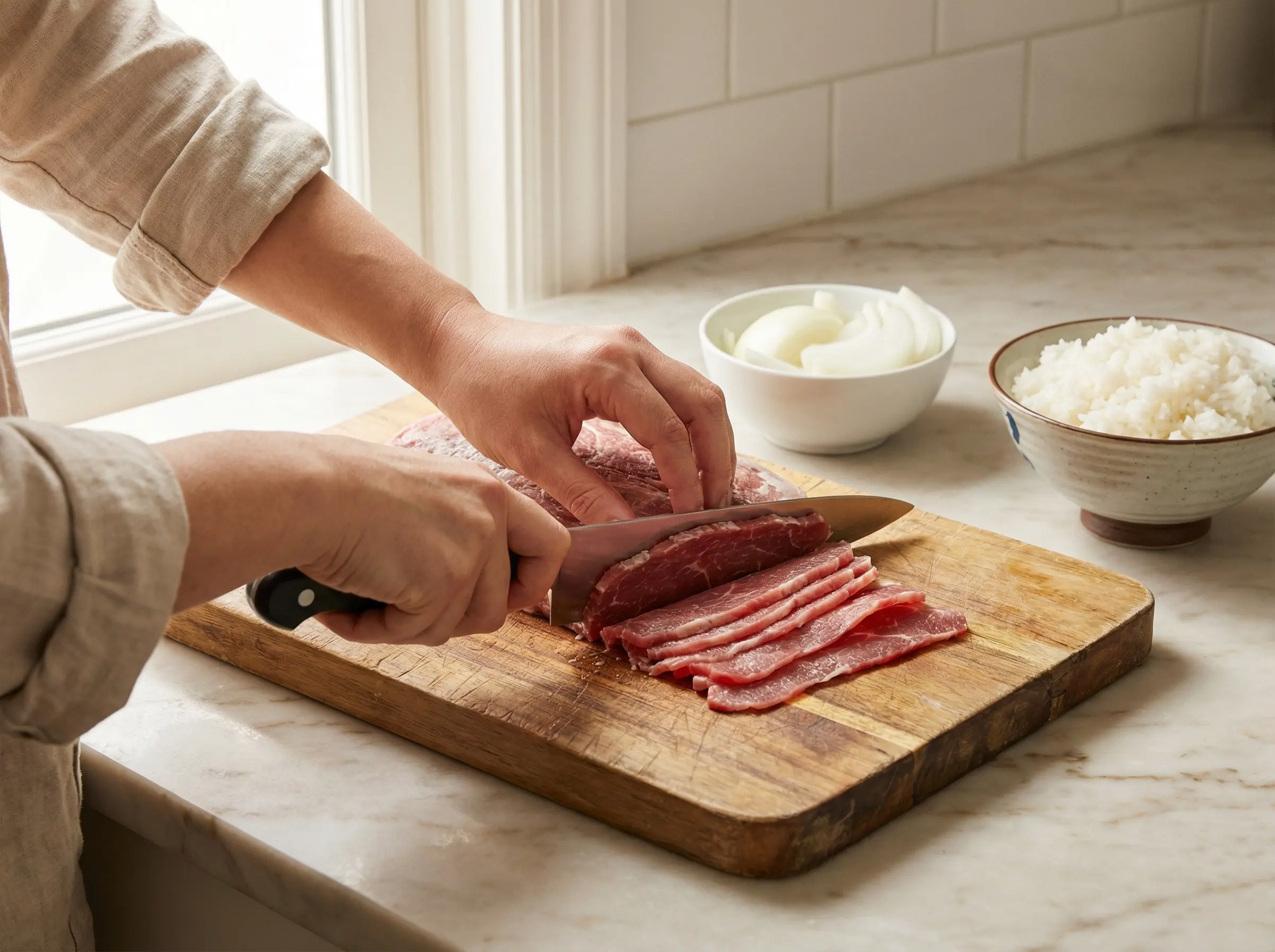
Prepare the beef by slicing it as thin as possible - this is crucial for authentic gyudon. The easiest way to achieve paper-thin slices is to partially freeze the beef for 1-2 hours until firm but not solid, then slice against the grain using a sharp knife. The slices should be almost translucent, no more than 1/8 inch thick. Alternatively, purchase pre-sliced beef marketed for shabu-shabu or bulgogi at Asian grocery stores - this saves significant time and effort. Slice the onions into thin half-moons, about 1/4 inch thick. Have your hot cooked rice ready in serving bowls.
Step 2
Make the gyudon sauce by combining the dashi stock, soy sauce, mirin, sake, and sugar in a measuring cup or small bowl. Stir until the sugar dissolves. This sauce is the heart of gyudon - it should be well-balanced between savory and sweet. If you do not have dashi, you can substitute with water plus 1/2 teaspoon of instant dashi powder (hondashi), or use a combination of chicken stock and a splash of fish sauce for umami depth. Taste the sauce and adjust if needed - some prefer it slightly sweeter, others more savory.
Step 3
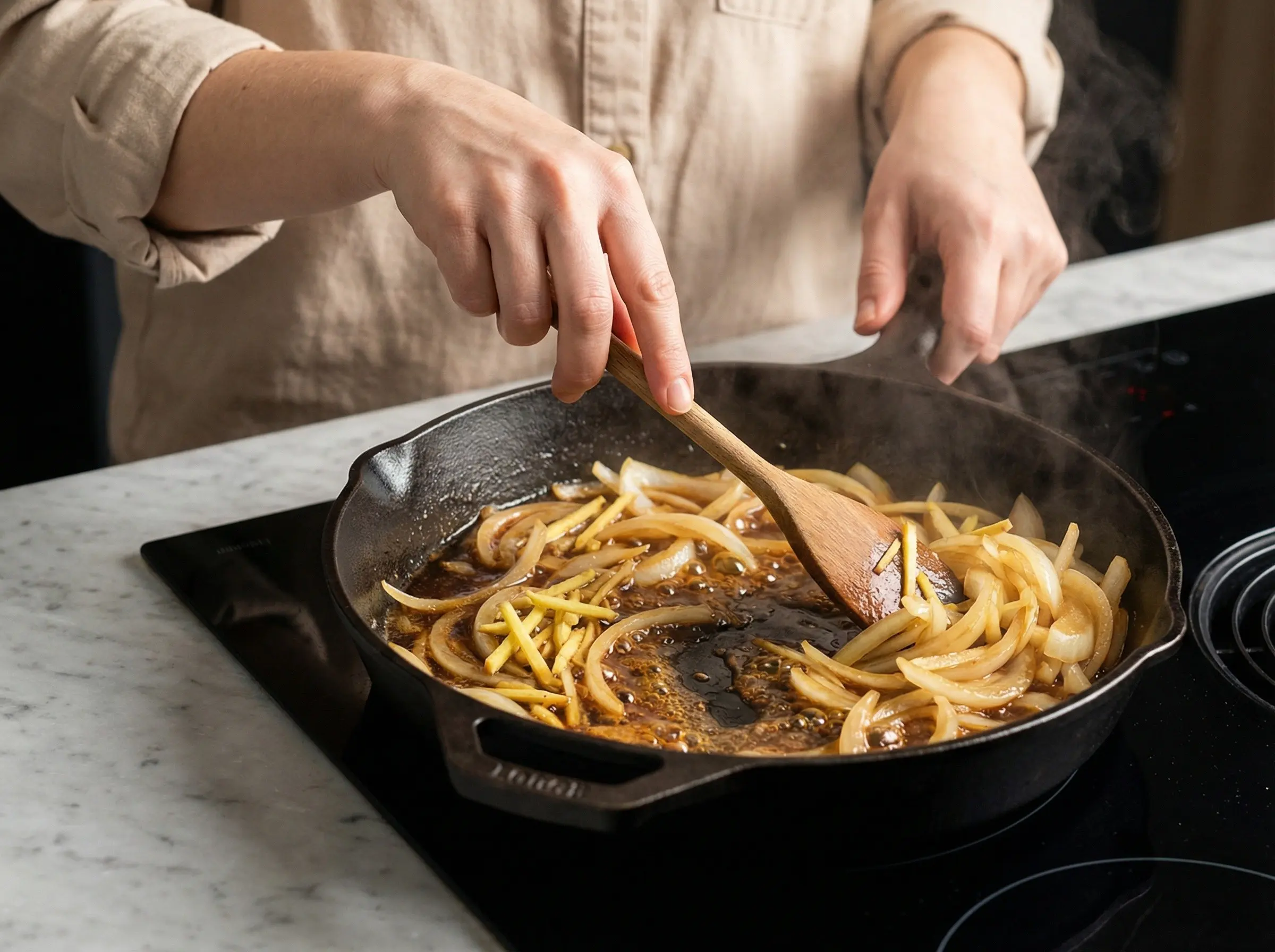
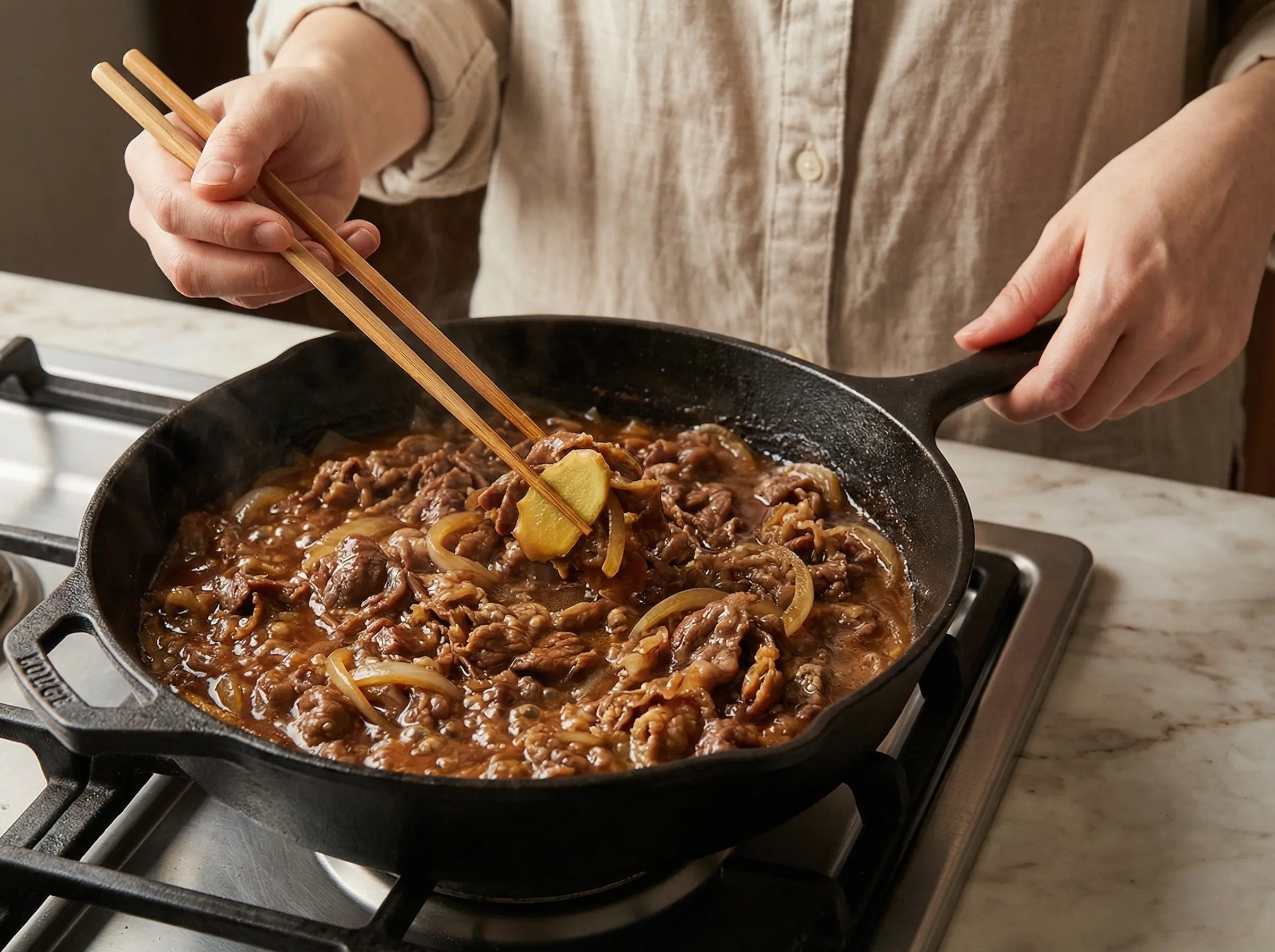
Pour the sauce into a wide skillet or shallow pan and add the sliced ginger. Bring to a simmer over medium-high heat. Add the sliced onions and spread them out in a single layer. Cook for 5-7 minutes, stirring occasionally, until the onions are soft, translucent, and have absorbed some of the sauce. The onions are a crucial component of gyudon - they should be completely tender and sweet, not crisp. The ginger infuses the sauce with subtle warmth and helps cut through the richness of the beef.
Step 4
Add the paper-thin beef slices to the simmering sauce, spreading them out and separating any pieces that stick together. The beef will cook very quickly - in just 1-2 minutes it should turn from pink to brown. Do not overcook or the beef will become tough and chewy. As soon as the beef is no longer pink, it is ready. The thin slices will be incredibly tender if cooked briefly but become rubbery if overcooked. Stir gently to ensure all the beef is coated with sauce and cooked evenly.
Step 5
Let the beef and onions simmer together for another minute to allow the flavors to meld. The sauce should have reduced slightly and become glossy, coating the beef and onions beautifully. Taste and adjust the seasoning if needed - a splash more soy sauce for saltiness, a pinch more sugar for sweetness. Remove and discard the ginger slices. The final dish should have a good amount of sauce - not soupy, but enough flavorful liquid to soak into the rice below.
Step 6
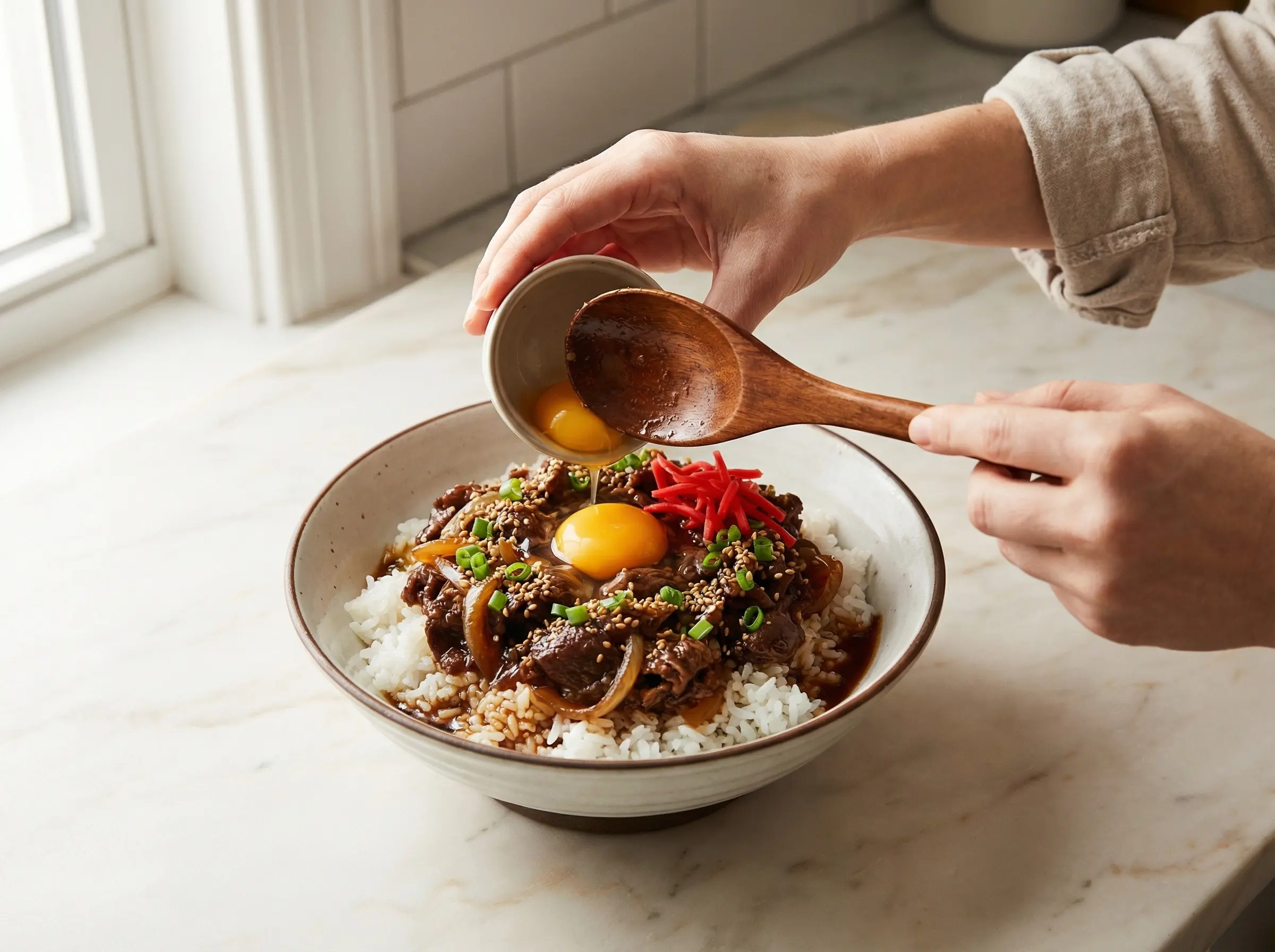
To serve, spoon the simmered beef and onions generously over bowls of hot steamed rice, making sure to include plenty of the delicious sauce. The sauce should pool around the rice, which will absorb it and become incredibly flavorful. Top with traditional garnishes: a small pile of beni shoga (red pickled ginger) for tangy crunch, sliced green onions for freshness, and a sprinkle of toasted sesame seeds. For the authentic gyudon chain experience, make a small well in the center of the beef and slide in a raw egg yolk - when stirred in, it creates an incredibly rich, silky coating. Alternatively, top with an onsen tamago (soft-cooked egg) or a fried egg. Serve with shichimi togarashi on the side for those who want a touch of heat. Eat immediately while hot, using chopsticks for the beef and onions and a spoon to capture every last bit of sauce-soaked rice. Gyudon is meant to be eaten quickly and with gusto - no lingering required.
You Might Also Like
Master Your Kitchen with PantryAI
Love this recipe? Save it, shop for it, and cook it with ease. Download the PantryAI app to organize your pantry, track expirations, and discover recipes based on what you already have.

On a computer?Scan with your iPhone camera to download PantryAI.








Swipe to see more screenshots