
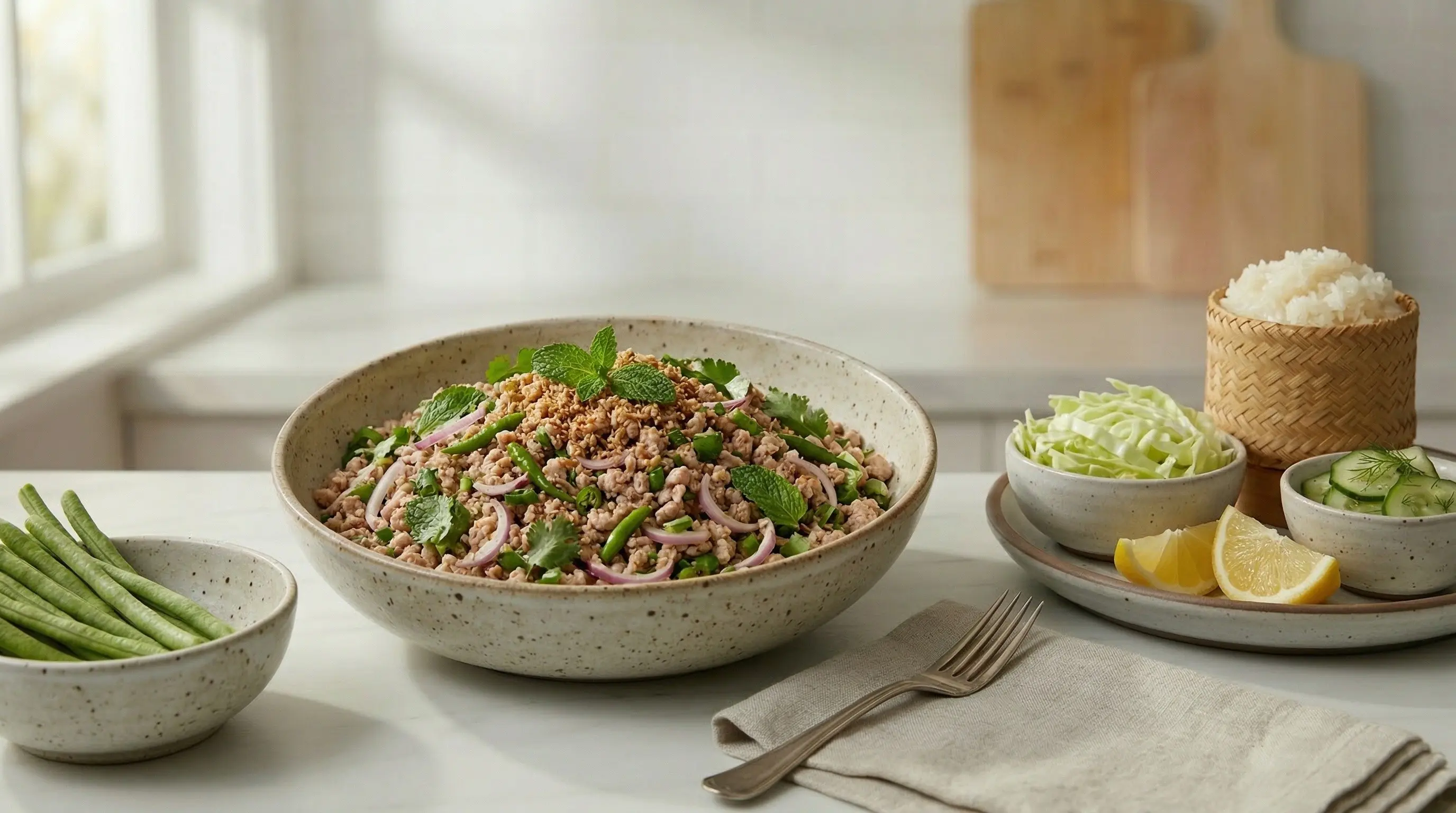
Larb
Learn how to make authentic larb, the bold Thai minced meat salad with lime, fish sauce, toasted rice, and fresh herbs. This Isaan classic is bright, spicy, and explosively flavorful!
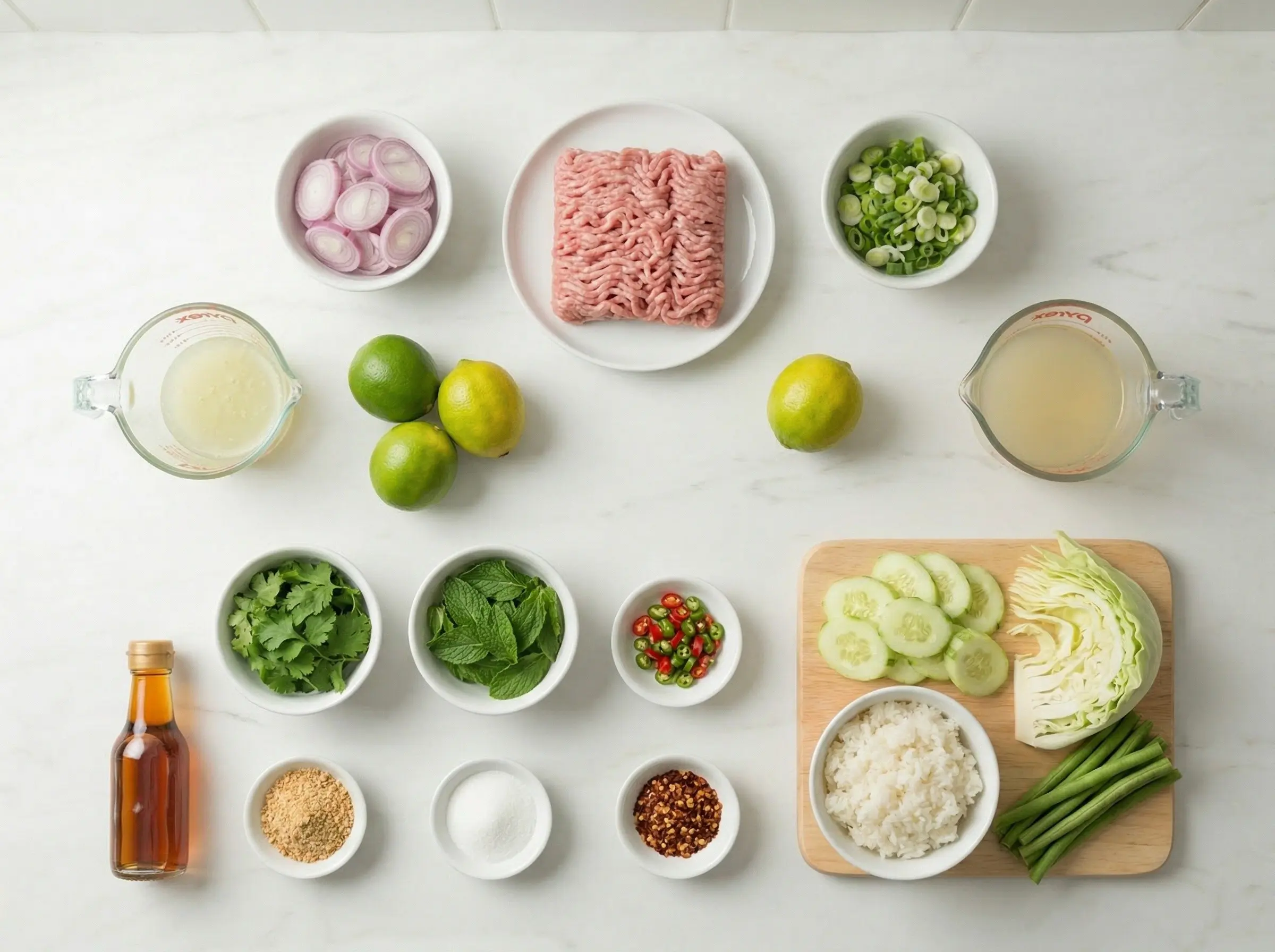
Ingredients
The Story
Larb (also spelled laab, laap, or lahb) is the national dish of Laos and one of the most beloved dishes of the Isaan region in northeastern Thailand, a fiercely flavored minced meat salad that showcases the bold, uncompromising flavors of Southeast Asian cuisine. The dish has ancient roots in the Lao culinary tradition, where it was originally made with raw meat or game, seasoned with herbs, lime, and fish sauce. The name "larb" or "laap" means "good fortune" or "luck" in Lao, and the dish is traditionally served at celebrations, festivals, and auspicious occasions. When Isaan became part of Thailand, larb traveled across the border and became integral to Thai cuisine, adapting slightly but retaining its essential character. Larb exists in countless variations across Laos and Thailand, reflecting regional preferences and ingredient availability. Larb moo (pork) and larb gai (chicken) are the most common versions in Thailand, while larb dip (raw beef or pork larb) remains popular in Laos and certain parts of Isaan for those who prize its silky texture and intense flavor. Duck, fish, and even catfish larb are traditional in some regions. What unites all versions is the essential flavor profile: sour from lime juice, salty from fish sauce, spicy from fresh or dried chilies, and the distinctive nutty crunch from khao khua, toasted rice powder that is the secret ingredient distinguishing true larb from imitations. What makes larb so extraordinary is its aggressive balance of flavors and textures. The meat, whether cooked or raw, is the canvas upon which an orchestra of seasonings plays. Fresh lime juice provides piercing acidity that wakes up the palate. Fish sauce contributes funky, savory depth. Fresh chilies bring searing heat that builds with each bite. Shallots add sharpness, fresh mint contributes cooling herbaceousness, and cilantro rounds out the aromatic complexity. The toasted rice powder is the genius element - it absorbs excess liquid while adding an earthy, almost smoky nuttiness and subtle crunch that ties everything together. Served at room temperature with sticky rice and crisp vegetables for scooping, larb is meant to be eaten communally, with friends pinching bites of sticky rice and using them to grab mouthfuls of the spicy salad. It is intense, uncompromising, and utterly addictive.
Instructions
Step 1
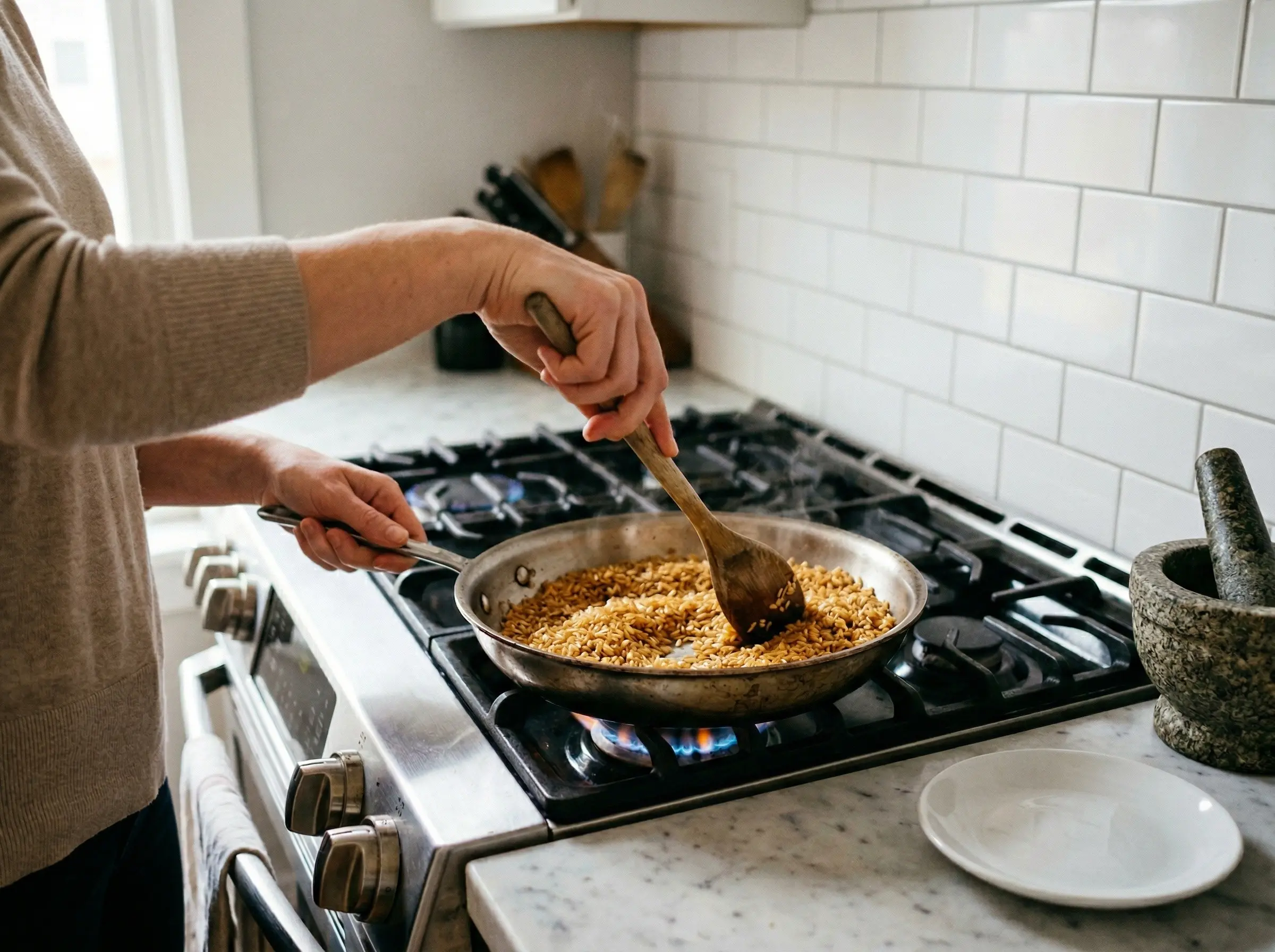
Make the toasted rice powder if not using store-bought. Heat a dry skillet over medium heat. Add 2 tablespoons of raw sticky rice (glutinous rice) or jasmine rice. Toast, stirring constantly, for 8-10 minutes until the grains are deep golden brown and smell nutty and aromatic. Be patient - the rice should be the color of peanut butter. Transfer to a plate to cool completely, then grind in a spice grinder, mortar and pestle, or blender until you have a coarse powder with some texture remaining. Khao khua is essential to authentic larb and cannot be omitted - it provides the distinctive flavor and texture.
Step 2
Cook the meat. Heat a skillet or wok over medium-high heat. Add the ground meat without any oil - pork and beef have enough fat, and for chicken you can add a splash of oil. Break up the meat with a spatula and cook for 5-7 minutes, stirring frequently, until cooked through and no longer pink. Add the chicken stock or water during cooking to keep the meat moist. The meat should be in small, loose crumbles, not large chunks. Do not brown the meat or develop a crust - larb meat should be tender and moist, not crispy.
Step 3
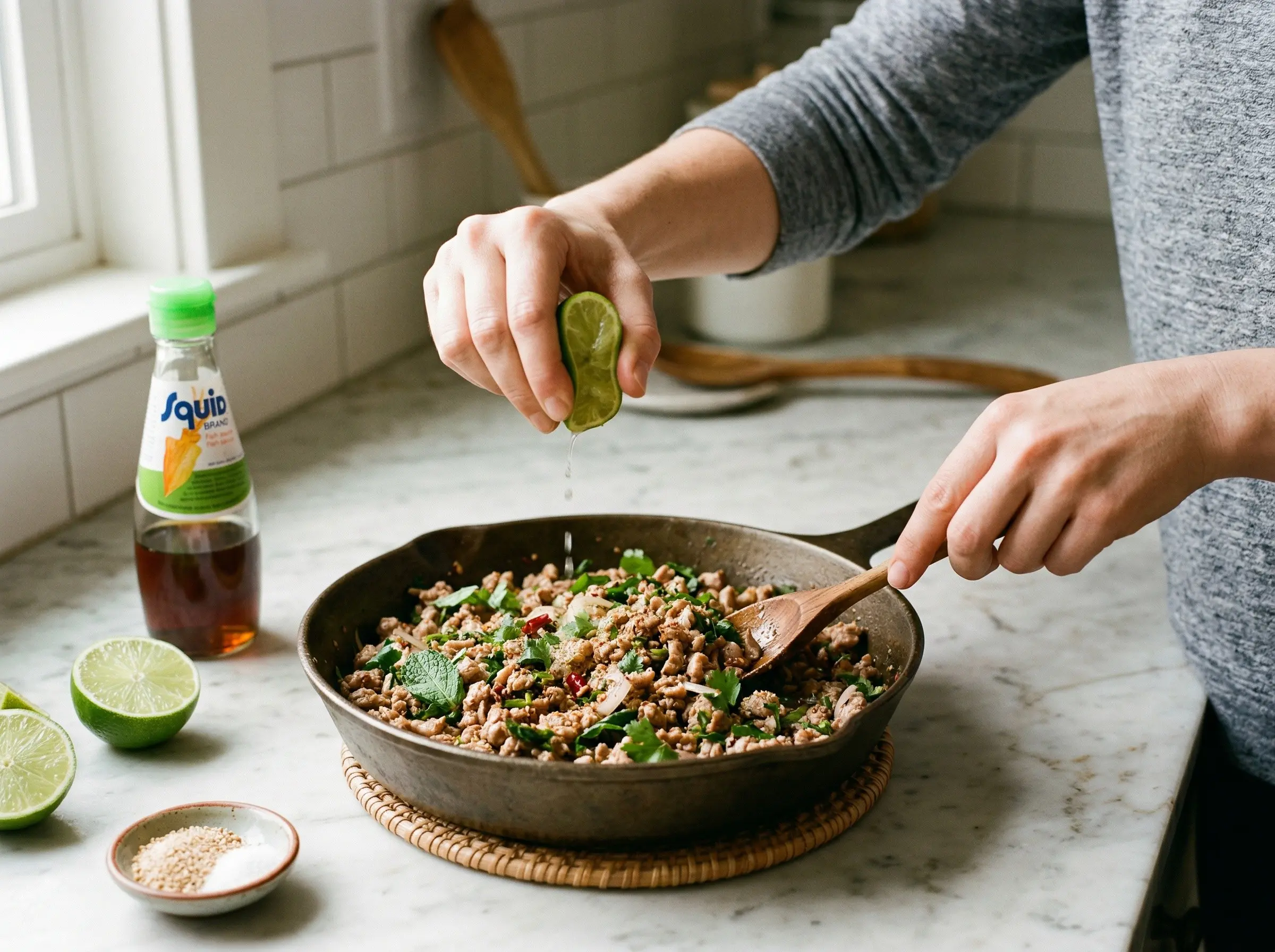
Cool slightly and season. Remove the skillet from heat and let the meat cool for 2-3 minutes - larb should be served at room temperature, not hot. Add the lime juice, fish sauce, and sugar. Toss well to combine. The residual heat will help the flavors meld. Taste and adjust: the flavor should be predominantly sour from the lime, followed by salty from the fish sauce, with heat coming from the chilies added in the next step.
Step 4
Add the aromatics. Add the sliced shallots, Thai chilies, green onions, and the toasted rice powder. Toss everything together thoroughly. The rice powder will absorb some of the liquid and add its characteristic nutty flavor. For extra heat, add the dried red chili flakes. The amount of fresh chilies is adjustable - traditional Isaan larb is quite spicy, but adjust to your preference. The dish should have a nice balance of all elements.
Step 5
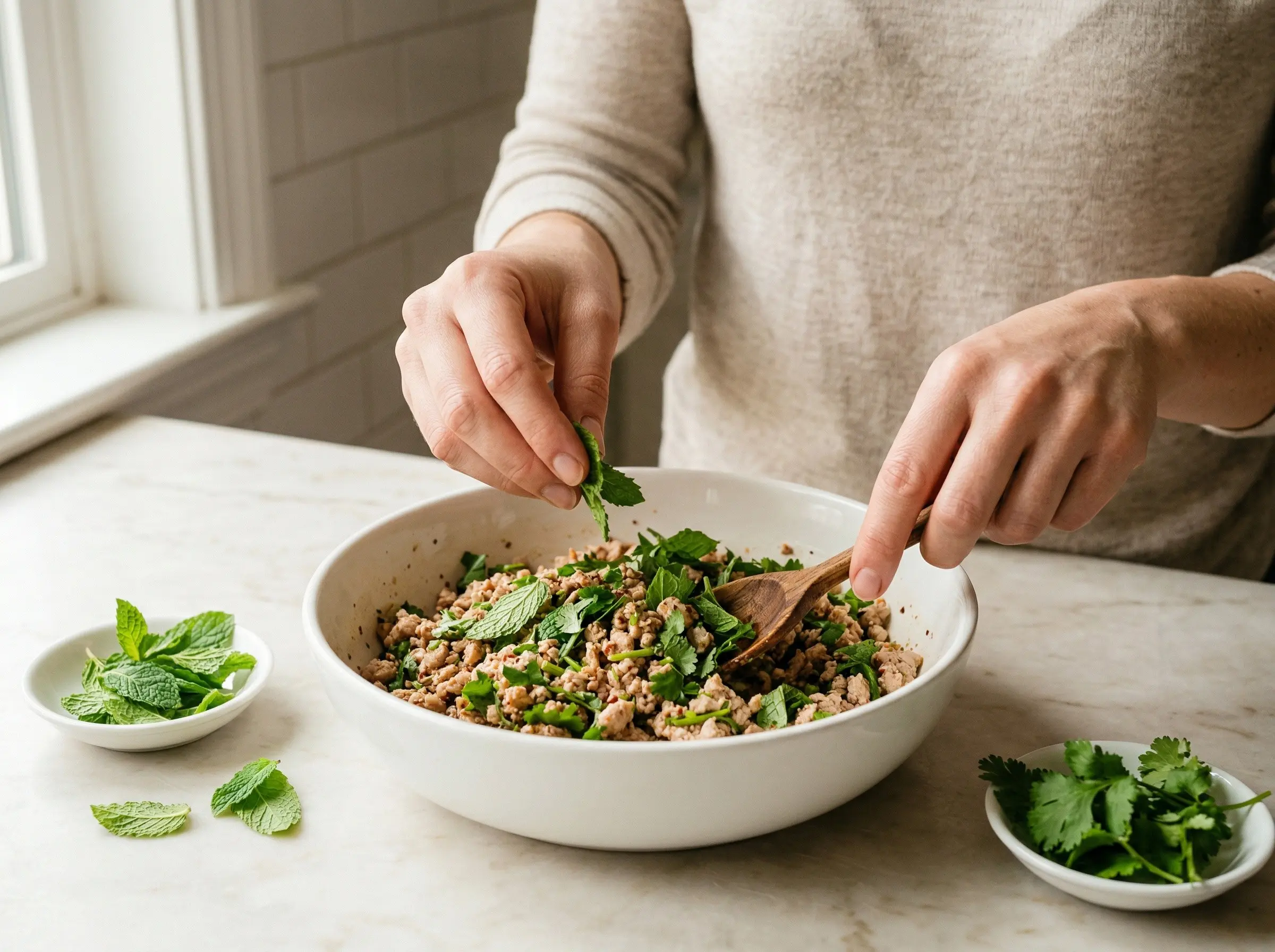
Add the fresh herbs just before serving. Tear the mint leaves and roughly chop the cilantro. Fold them into the larb gently - you want the herbs fresh and vibrant, not wilted. Reserve some whole mint leaves for garnish. The fresh herbs are essential, providing cooling contrast to the spicy, sour flavors. Do not add the herbs too early or they will wilt and lose their bright character.
Step 6
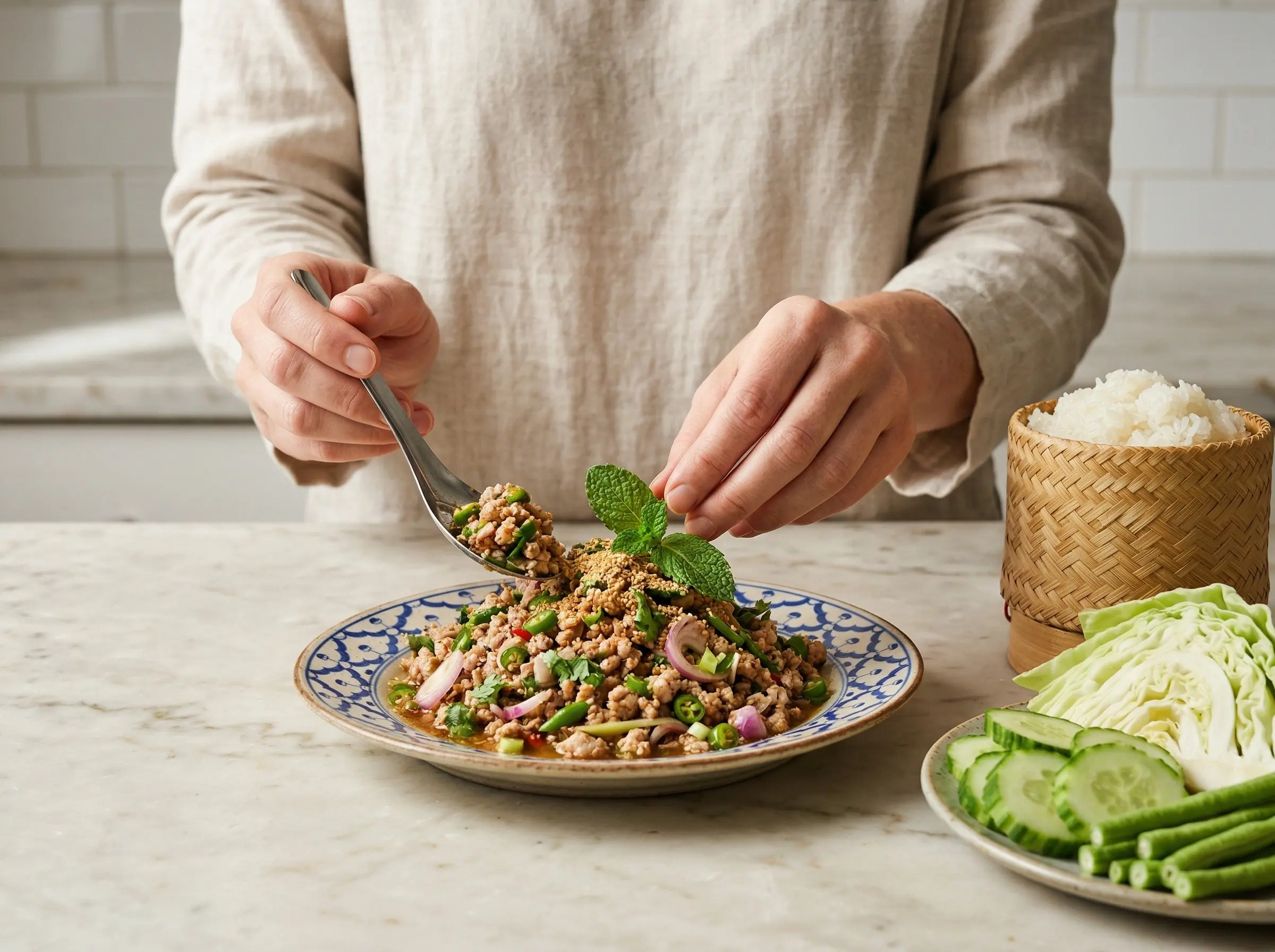
Serve the traditional way. Transfer the larb to a serving plate and garnish with reserved mint leaves. Serve at room temperature (not cold from the fridge) with a basket of sticky rice and a plate of fresh vegetables: crisp cabbage leaves, cucumber slices, long beans, and wedges of green cabbage. The traditional way to eat larb is to pinch off a piece of sticky rice with your fingers, press it into a small ball, and use it to scoop up a bite of the meat salad along with some vegetables. The sticky rice mellows the intense flavors and the fresh vegetables provide cooling crunch. In Thailand and Laos, larb is typically served as part of a larger meal with other dishes like grilled meats and papaya salad (som tum), but it can also stand alone as a light meal. Leftover larb can be refrigerated for a day, though the flavors are brightest when fresh. Add a squeeze of lime juice when reheating to refresh the flavors.
You Might Also Like
Master Your Kitchen with PantryAI
Love this recipe? Save it, shop for it, and cook it with ease. Download the PantryAI app to organize your pantry, track expirations, and discover recipes based on what you already have.

On a computer?Scan with your iPhone camera to download PantryAI.








Swipe to see more screenshots