
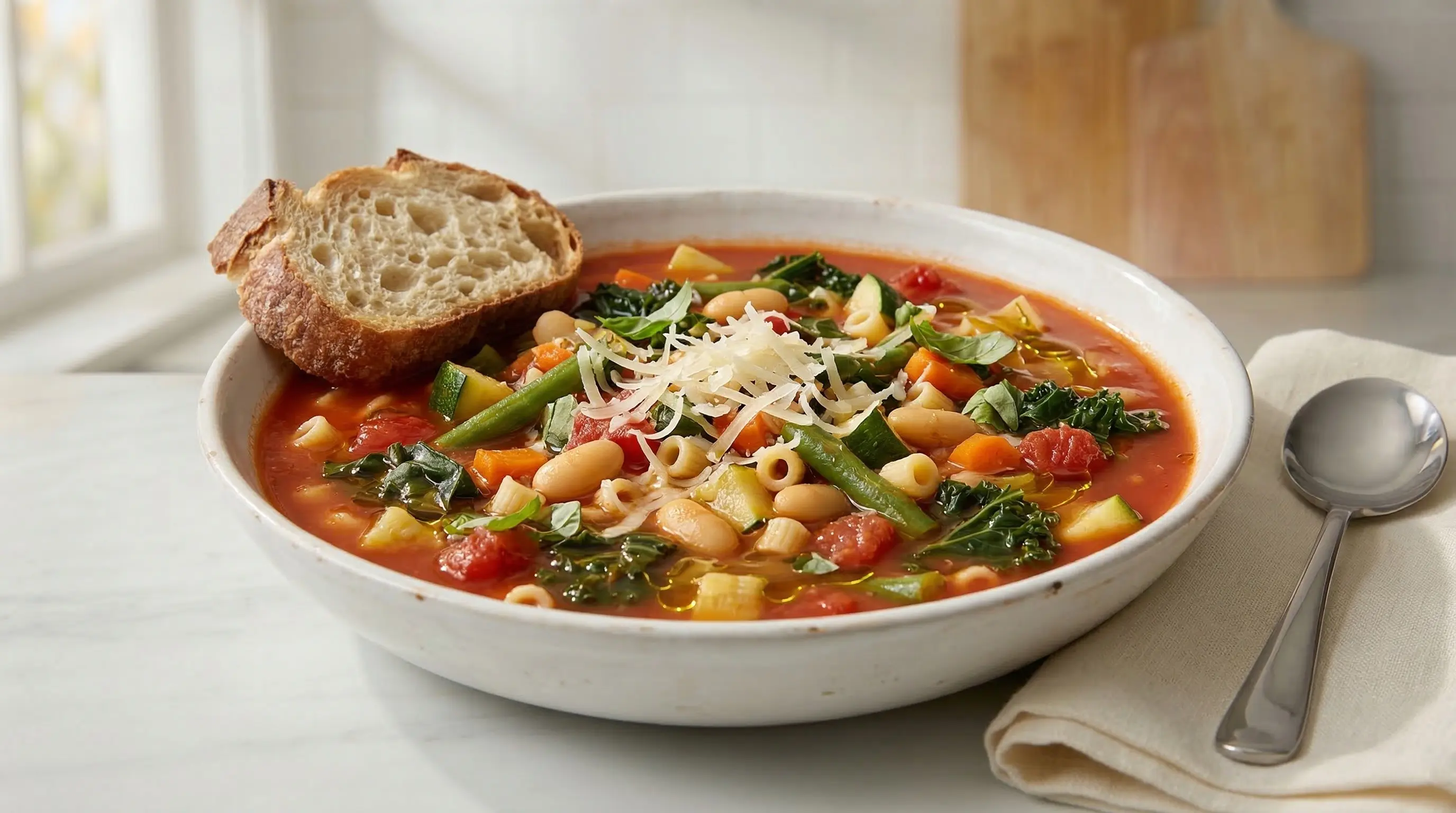
Minestrone Soup
Learn how to make authentic minestrone, the hearty Italian vegetable soup with beans, pasta, and a Parmesan rind. This rustic classic is healthy, satisfying, and endlessly customizable with seasonal vegetables!
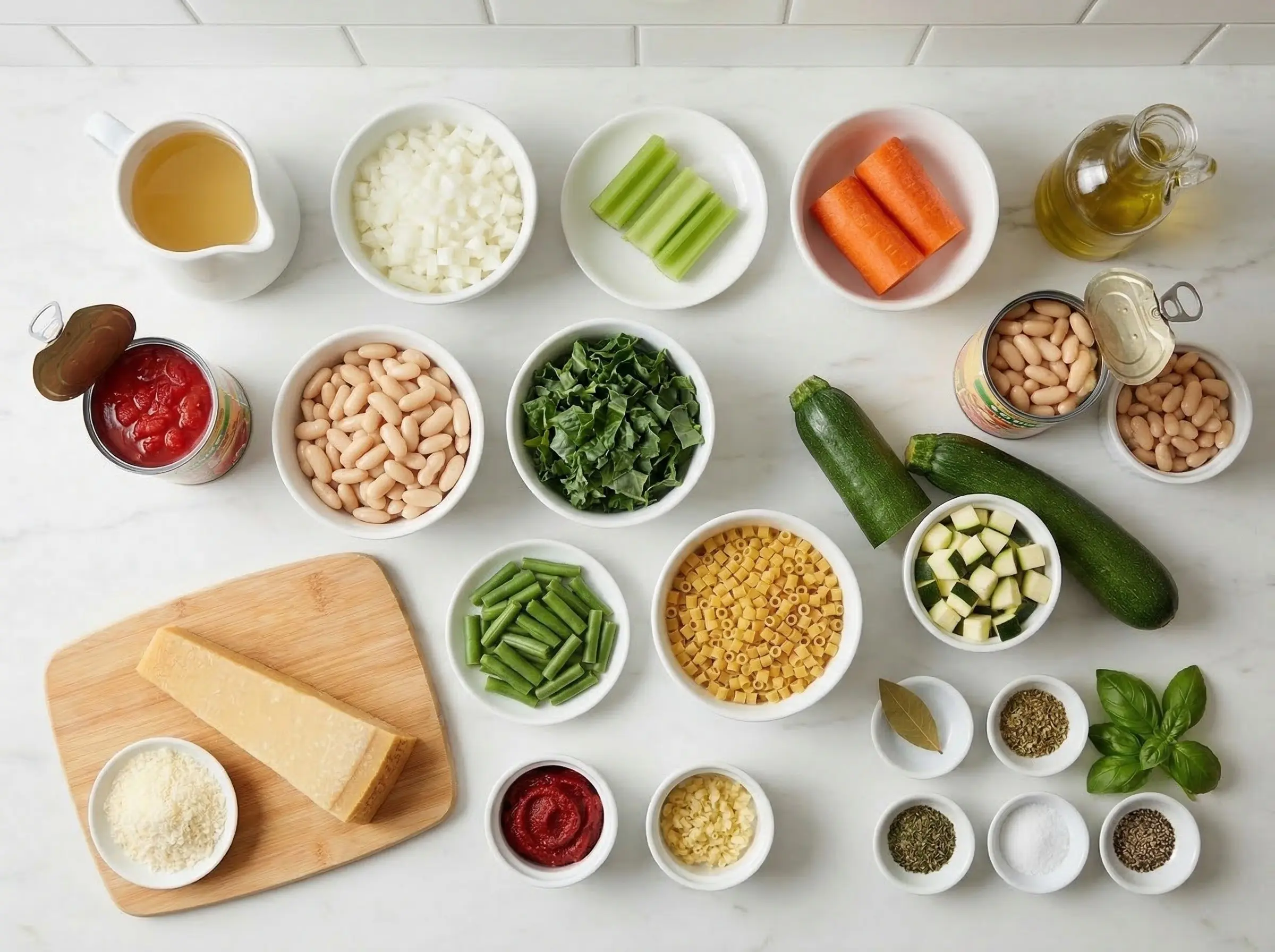
Ingredients
The Story
Minestrone is Italy's most iconic soup, a celebration of vegetables that has nourished Italian families since ancient Roman times. The name derives from "minestra," meaning soup, with the "-one" suffix indicating something substantial - this is big soup, a meal in itself rather than a delicate first course. Unlike soups defined by a single ingredient, minestrone is defined by abundance and flexibility; it is fundamentally a vehicle for whatever vegetables are in season or on hand. This philosophy of using what is available has made minestrone a constant presence in Italian kitchens for over two millennia, predating even the introduction of tomatoes and beans from the New World. There is no single authentic minestrone recipe - the dish varies dramatically across Italy's regions and from household to household. In Genoa, minestrone is finished with a dollop of pesto. In Milan, rice replaces pasta and the soup is left brothier. Tuscan versions are thick with white beans and hearty greens like cavolo nero. Southern Italian versions might include more tomatoes and Mediterranean vegetables. What unites all versions is the philosophy of la cucina povera - peasant cooking that transforms humble, inexpensive ingredients into something deeply satisfying through technique and care. A Parmesan rind simmered in the broth is a classic trick, contributing umami depth that elevates the simple vegetables into something complex. What makes minestrone so extraordinary is the way it builds layers of flavor from the simplest ingredients. The soffritto of onion, celery, and carrot provides the aromatic foundation. Each vegetable adds its own character - zucchini for sweetness, green beans for snap, tomatoes for acidity, beans for creamy starch. The pasta or rice absorbs the flavorful broth, becoming little pockets of concentrated taste. The Parmesan rind, slowly dissolving, contributes savory depth that cannot be replicated any other way. A finishing drizzle of grassy olive oil and shower of grated Parmesan complete the dish. Minestrone is proof that vegetables, treated with respect and patience, need no meat to be deeply satisfying. It is a soup for all seasons - lighter in summer with zucchini and fresh tomatoes, heartier in winter with root vegetables and dark greens.
Instructions
Step 1
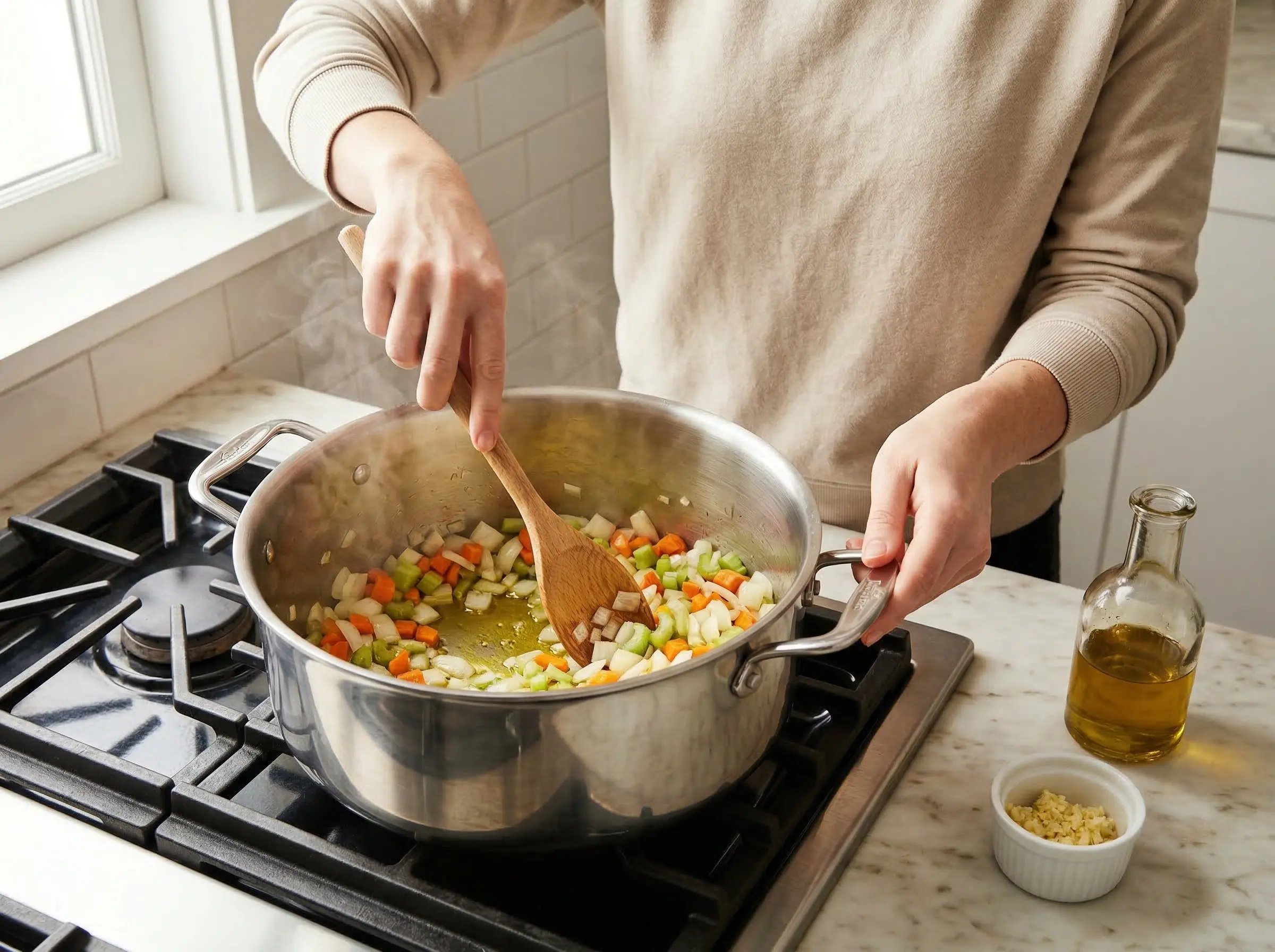
Build the soffritto. Heat the olive oil in a large Dutch oven or heavy-bottomed pot over medium heat. Add the diced onion, celery, and carrots - this classic trio is the foundation of Italian cooking. Cook for 8-10 minutes, stirring occasionally, until the vegetables are softened and the onion is translucent but not browned. Add the garlic and cook for 1 minute until fragrant. This patient cooking of the aromatics builds the flavor base for the entire soup.
Step 2
Add the tomatoes and paste. Add the tomato paste and cook, stirring constantly, for 2-3 minutes to caramelize slightly and deepen its flavor. Add the diced tomatoes with their juices, dried oregano, dried basil, salt, and pepper. Cook for 3-4 minutes, stirring occasionally, allowing the tomatoes to break down slightly and the flavors to meld.
Step 3
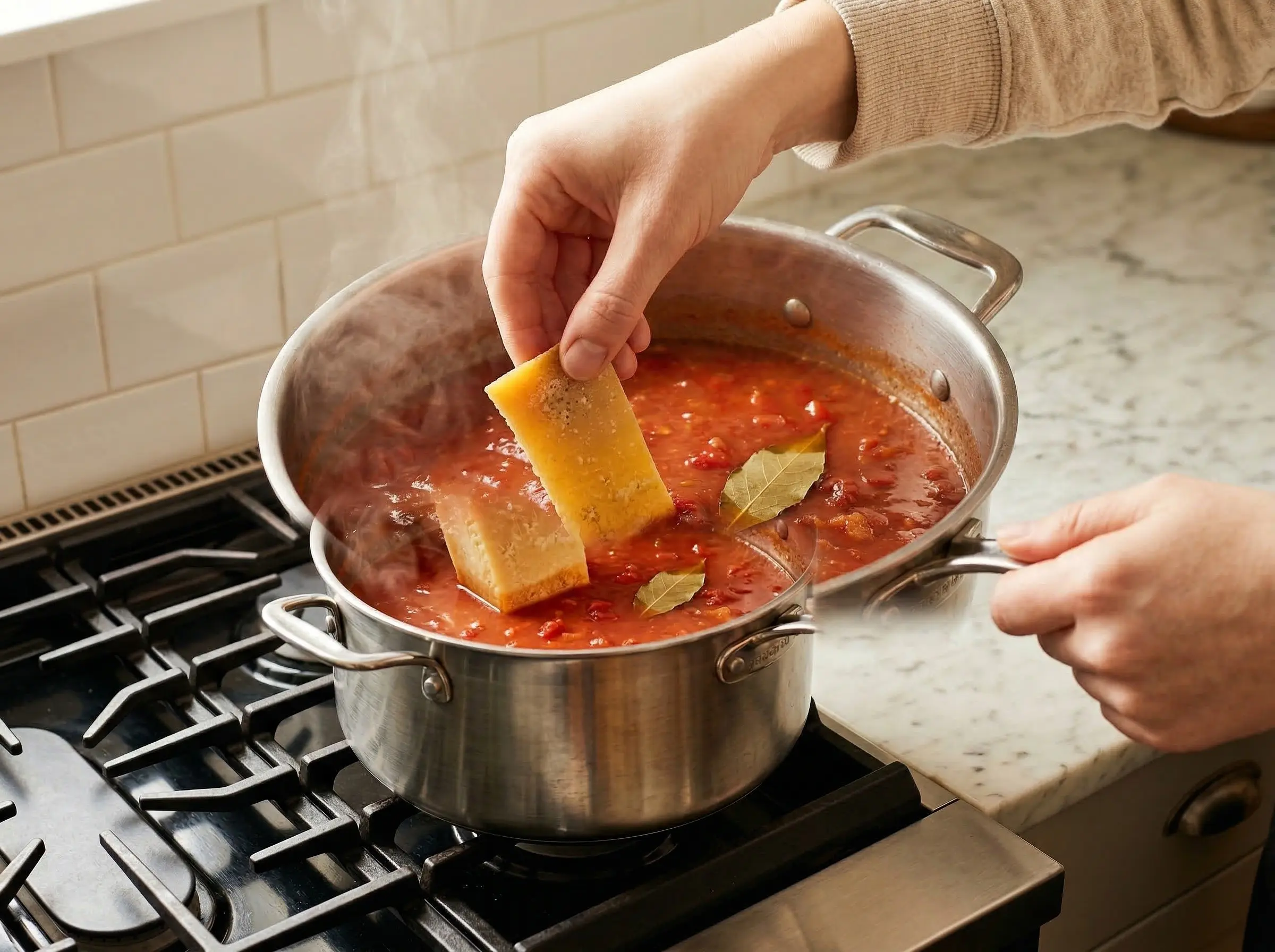
Add the broth and Parmesan rind. Pour in the vegetable or chicken broth and add the Parmesan rind and bay leaf. The Parmesan rind is the secret weapon of Italian grandmothers - as it simmers, it slowly releases savory, umami-rich compounds that add incredible depth without any identifiable cheese flavor. Bring to a boil, then reduce heat to a gentle simmer. Cook uncovered for 20 minutes to allow the flavors to develop.
Step 4
Add the beans and firmer vegetables. Add the cannellini beans, zucchini, and green beans to the pot. Simmer for 10-12 minutes until the vegetables are just becoming tender but still have some bite. The zucchini should be soft but not mushy, the green beans tender-crisp. Stir occasionally to ensure even cooking.
Step 5
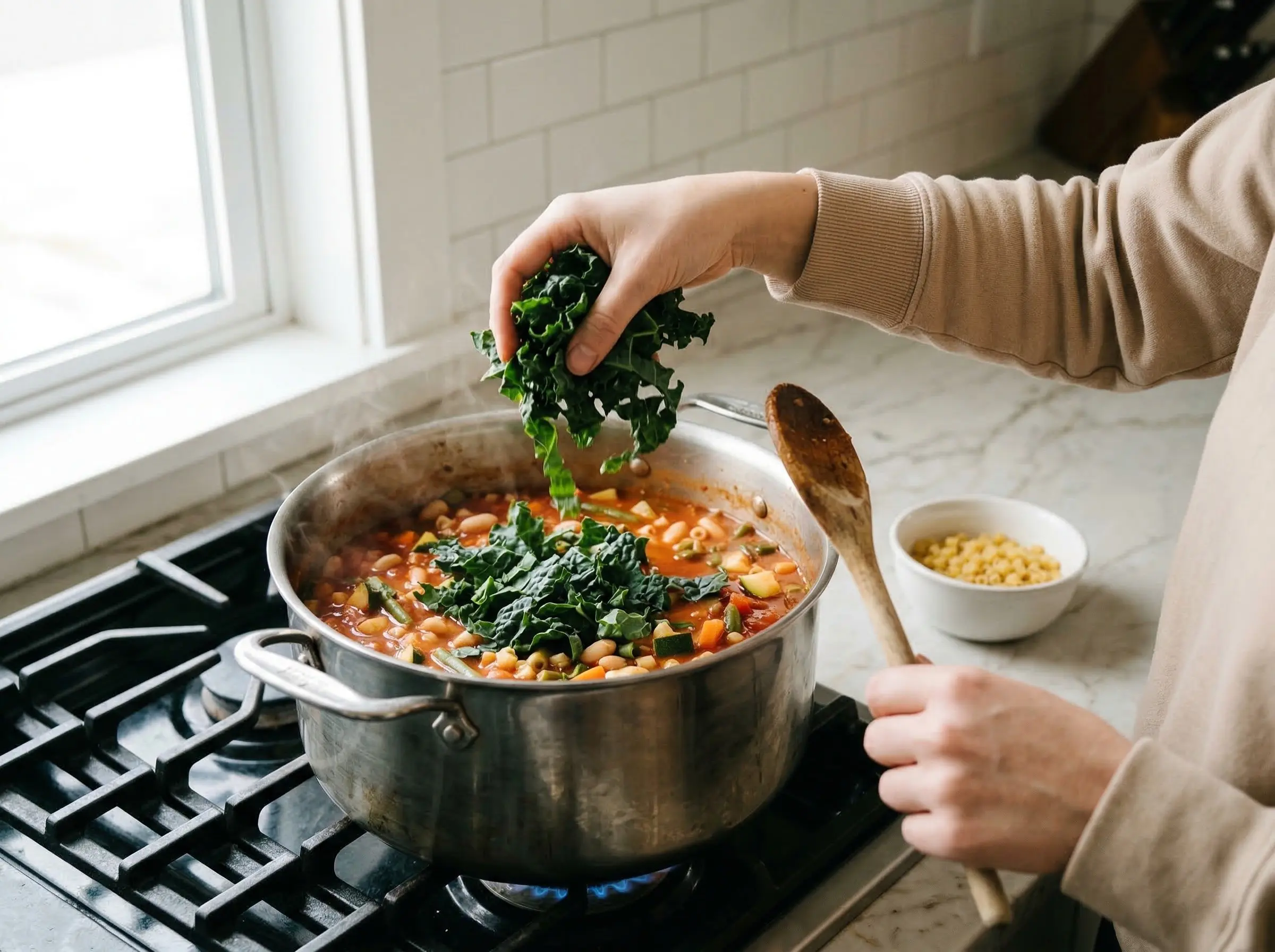
Add the pasta and greens. Add the pasta and chopped kale or Swiss chard. Cook for another 8-10 minutes, or according to pasta package directions, until the pasta is al dente and the greens are tender. The greens will wilt dramatically - this is normal. Stir occasionally to prevent the pasta from sticking to the bottom. The soup should be thick and hearty but still have plenty of broth - add more broth or water if it becomes too thick.
Step 6
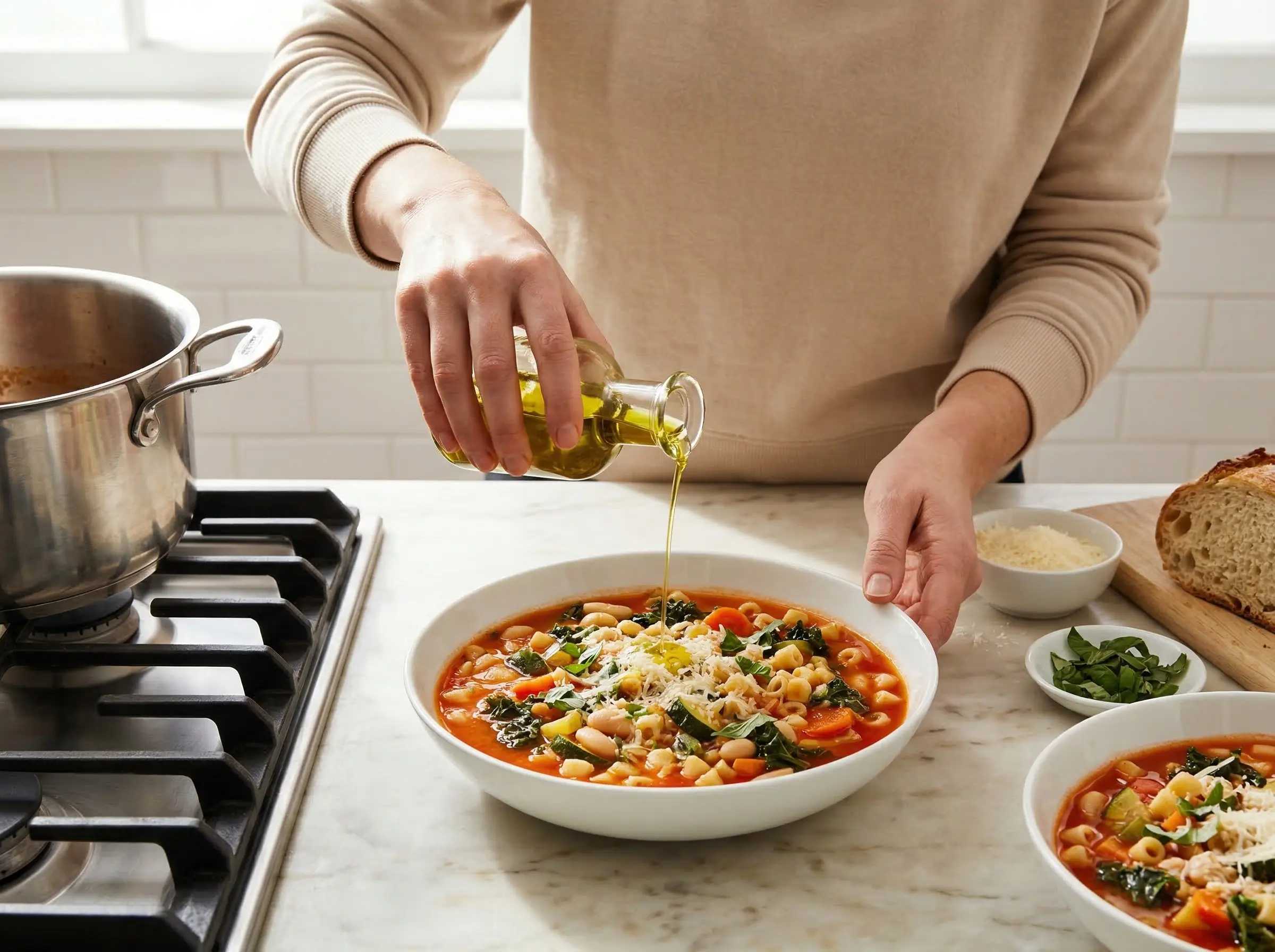
Finish and serve. Remove and discard the bay leaf and Parmesan rind (or eat the softened rind - it is delicious). Taste and adjust seasoning - minestrone often needs a generous amount of salt to bring all the vegetable flavors together. Ladle into warm bowls. Drizzle each serving generously with extra virgin olive oil - this final drizzle is essential, not optional. Top with freshly grated Parmesan cheese and torn fresh basil leaves. Serve immediately with crusty bread for dipping. Minestrone thickens significantly as it sits because the pasta absorbs the broth. If making ahead or reheating, add additional broth or water when reheating. Many Italians believe minestrone tastes even better the next day as the flavors meld and deepen. The soup keeps refrigerated for up to 5 days and freezes well for up to 3 months - freeze without the pasta if planning to store for later.
You Might Also Like
Master Your Kitchen with PantryAI
Love this recipe? Save it, shop for it, and cook it with ease. Download the PantryAI app to organize your pantry, track expirations, and discover recipes based on what you already have.

On a computer?Scan with your iPhone camera to download PantryAI.








Swipe to see more screenshots