
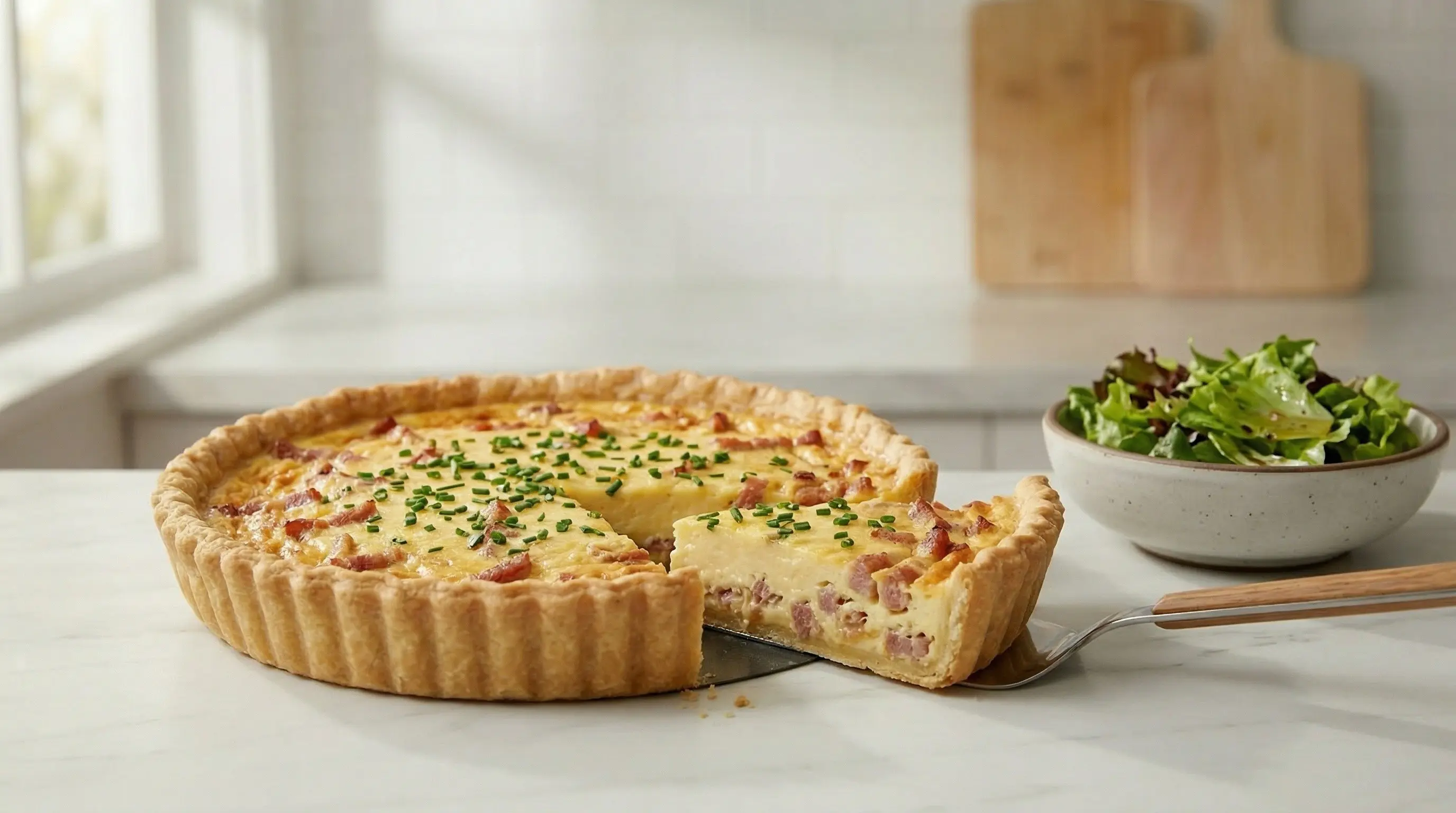
Quiche Lorraine
Learn how to make authentic Quiche Lorraine, the classic French savory tart with a buttery crust, silky custard, and smoky bacon. This elegant dish is perfect for brunch, lunch, or a light dinner!
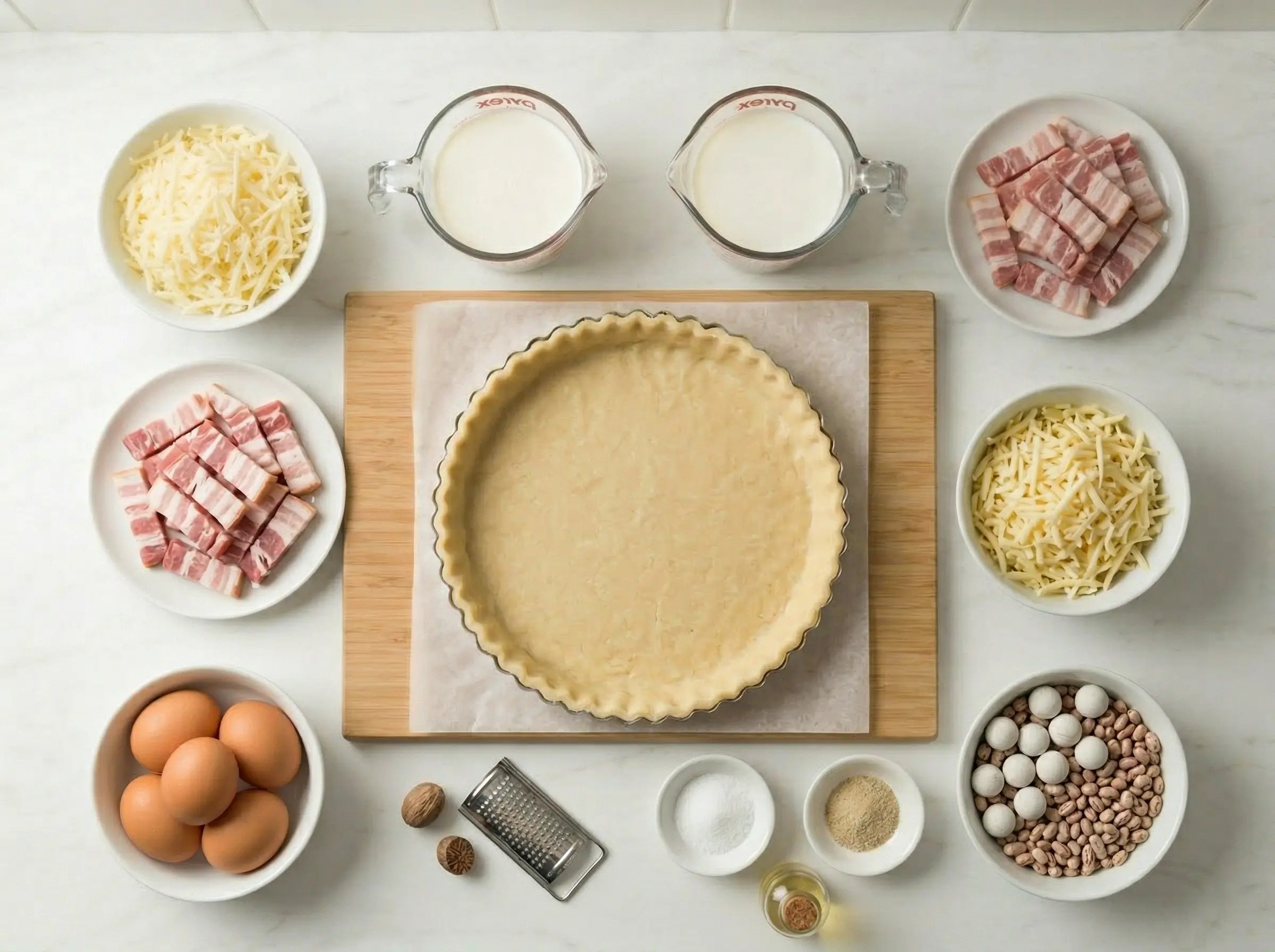
Ingredients
The Story
Quiche Lorraine is the original and most celebrated of all quiches, a savory custard tart that has been made in the Lorraine region of northeastern France for centuries. The dish takes its name from its homeland, a historically contested territory that has passed between French and German control multiple times, resulting in a cuisine that blends influences from both cultures. The word "quiche" itself derives from the German word "kuchen," meaning cake, reflecting the region's Germanic heritage. The earliest versions of quiche Lorraine, dating back to the 16th century, were simpler than today's version - just eggs, cream, and smoked bacon (lardons) in a bread dough crust, without the cheese that later recipes sometimes include. The classic quiche Lorraine has strict traditional parameters that purists guard jealously. An authentic quiche Lorraine contains only eggs, cream, and lardons (French smoked bacon) - no cheese, no onions, no vegetables. The custard should be rich but delicate, barely set and still trembling in the center when removed from the oven. The crust must be buttery and flaky, baked blind to ensure crispness beneath the filling. Variations that add Gruyere cheese are technically "quiche au fromage," and those with onions become "quiche alsacienne." This precision reflects the French approach to regional cuisine, where each dish has a defined identity tied to its place of origin. What makes quiche Lorraine so extraordinary is the luxurious simplicity of its construction. The butter-rich pate brisee crust provides a crisp, flaky foundation that contrasts perfectly with the silky custard within. The eggs and cream, whisked together and baked gently, set into a texture that is somewhere between a custard and a souffle - barely firm, impossibly smooth, meltingly rich on the tongue. The lardons contribute salty, smoky depth that punctuates the creamy filling. Served warm (never hot, which masks the delicate flavors, and never cold, which firms the custard unpleasantly), quiche Lorraine represents French cuisine at its most elegant and understated. It proves that mastery of technique and quality of ingredients matter more than complexity, and that sometimes the simplest dishes are the most difficult to perfect.
Instructions
Step 1
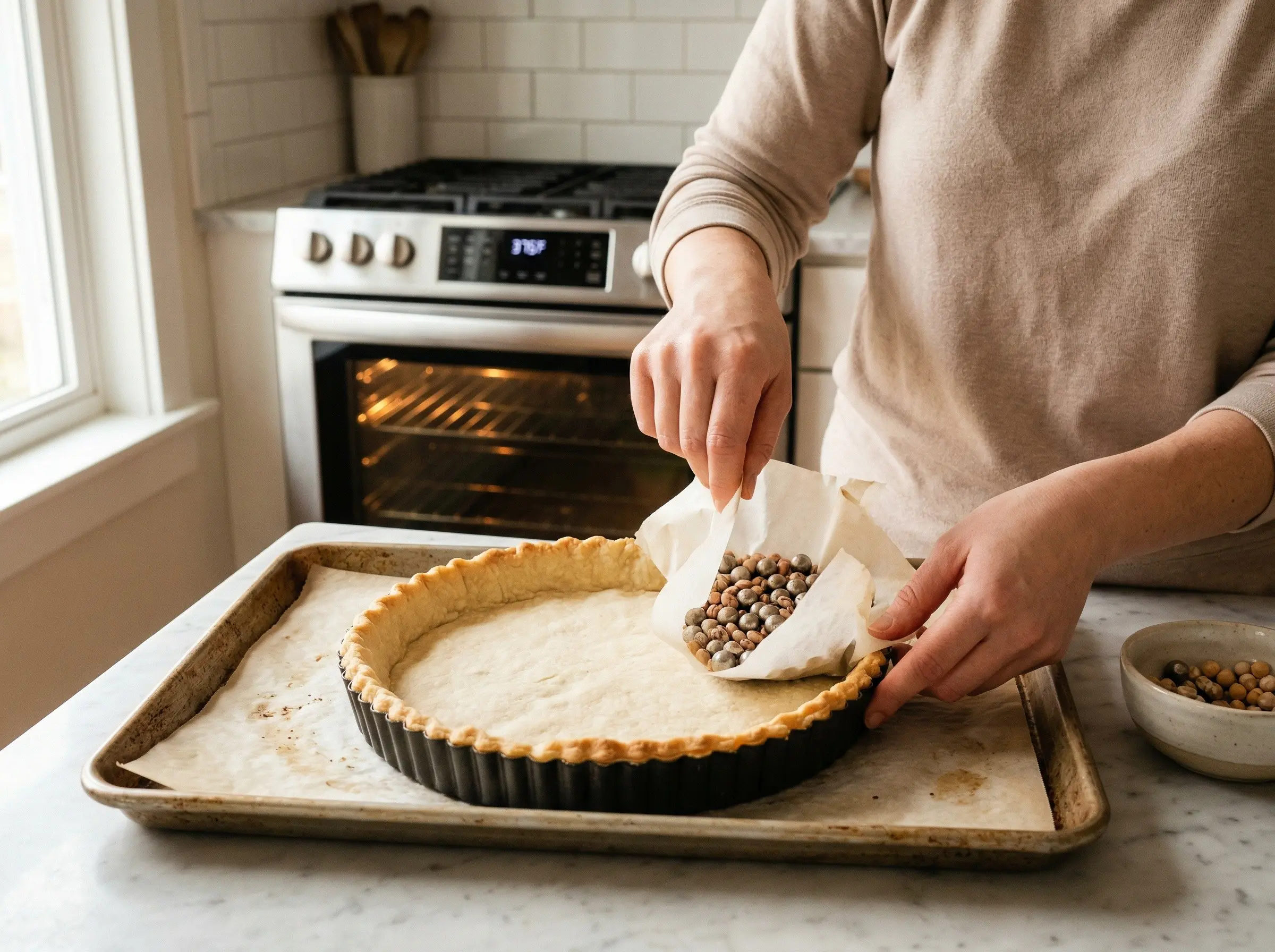
Prepare and blind bake the crust. If using homemade pate brisee, roll it out to about 1/8 inch thickness and fit it into a 9-inch tart pan with a removable bottom or a pie dish. Trim the edges and crimp decoratively. Refrigerate for at least 30 minutes - this prevents shrinking during baking. Preheat your oven to 375 degrees F. Line the chilled crust with parchment paper and fill with pie weights or dried beans. Blind bake for 20 minutes until the edges are set. Remove the weights and parchment, then bake for another 5-10 minutes until the bottom is dry and just beginning to turn golden. This prevents a soggy bottom.
Step 2
Cook the bacon while the crust bakes. Cut the bacon crosswise into 1/4-inch strips (lardons) if using thick-cut bacon. Cook in a skillet over medium heat for 8-10 minutes, stirring occasionally, until the fat has rendered and the bacon is golden but not too crispy - it will cook further in the oven. The bacon should still have some chewiness. Transfer to a paper towel-lined plate to drain. Pour off all but 1 tablespoon of the bacon fat if you want to saute onions or other additions for a non-traditional version.
Step 3
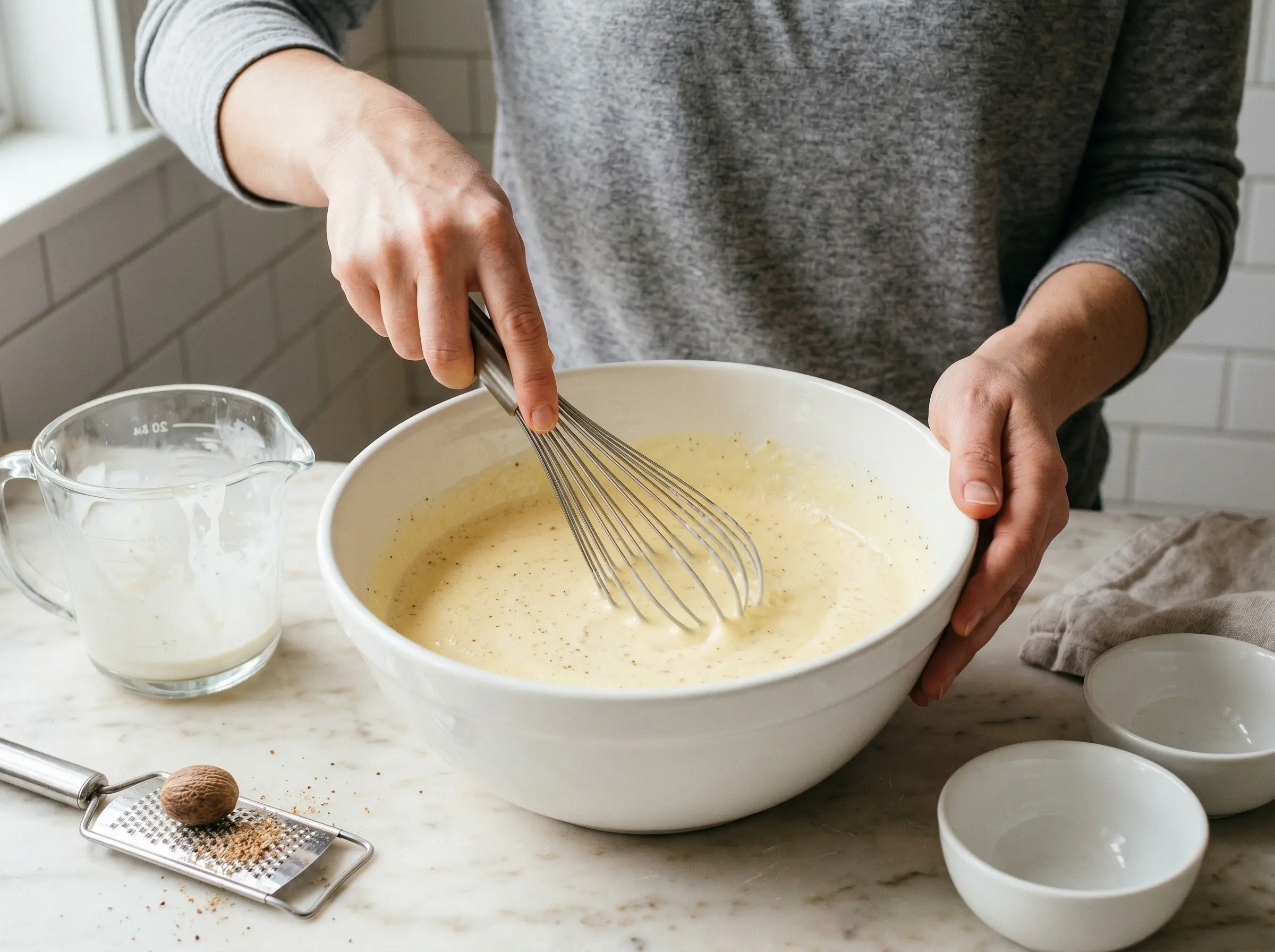
Make the custard. In a large bowl or measuring pitcher, whisk together the eggs, heavy cream, milk, nutmeg, salt, and white pepper until completely smooth with no streaks of egg white visible. The mixture should be homogeneous and slightly frothy. White pepper is traditional as it does not leave visible specks in the pale custard, though black pepper can be used. Do not overwhip - you want a smooth custard, not a foamy one.
Step 4
Assemble the quiche. Reduce the oven temperature to 350 degrees F. Scatter the cooked bacon evenly over the bottom of the par-baked crust. If using Gruyere cheese (not traditional but delicious), sprinkle it evenly over the bacon. Give the custard a final stir, then pour it slowly over the bacon, filling the crust to just below the rim. The filling should not overflow the edges. If you have extra custard, reserve it and add more after 10 minutes of baking when the filling has set enough to accommodate it.
Step 5
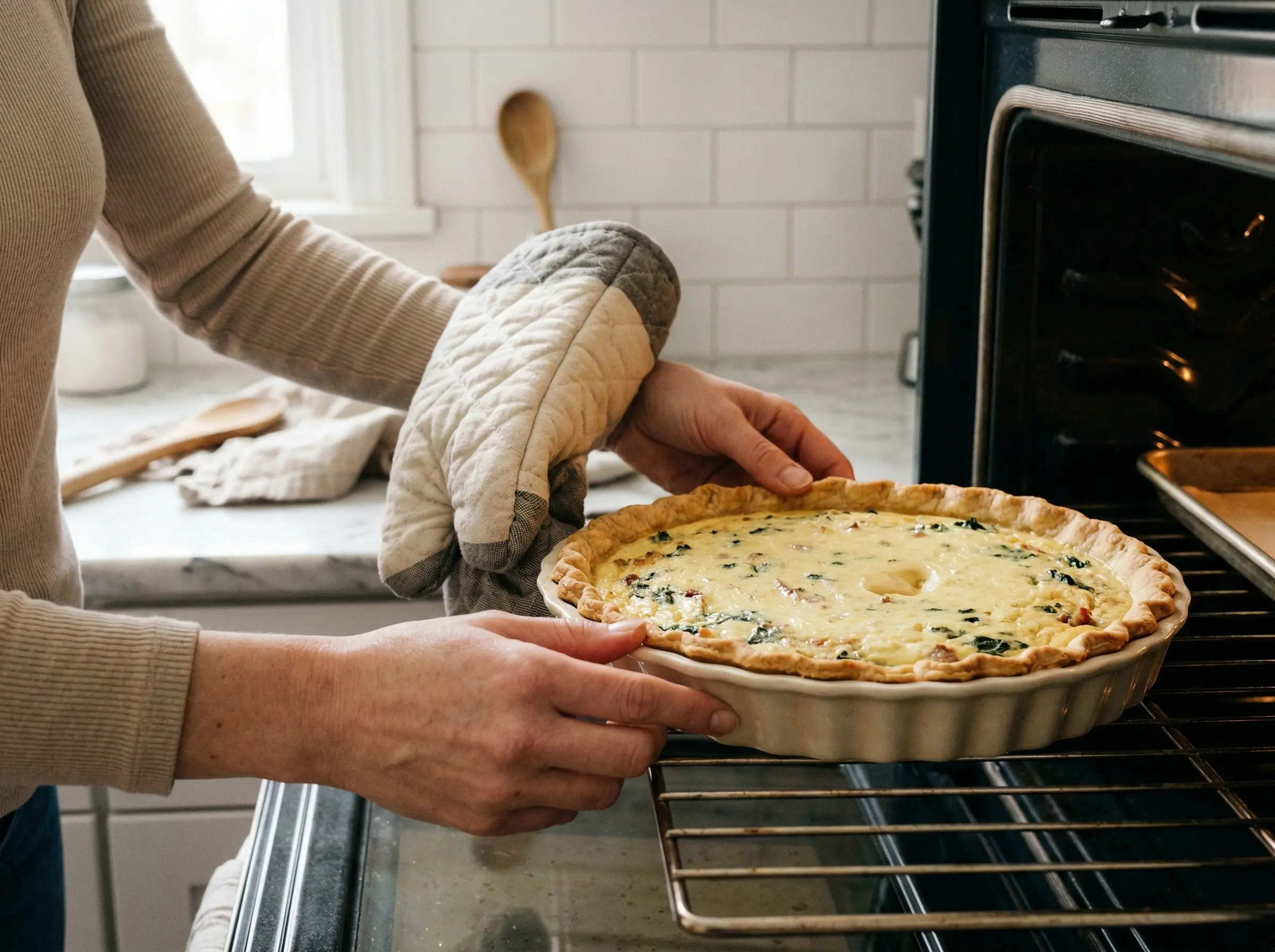
Bake the quiche gently. Place the quiche on a baking sheet (to catch any drips) and bake at 350 degrees F for 35-45 minutes. The quiche is done when the edges are set and slightly puffed, but the center still has a gentle wobble when you nudge the pan - like set gelatin, not liquid. The custard will continue to set as it cools. Overbaking is the most common mistake and results in a rubbery, curdled texture instead of silky smoothness. The top should be pale golden, not browned.
Step 6
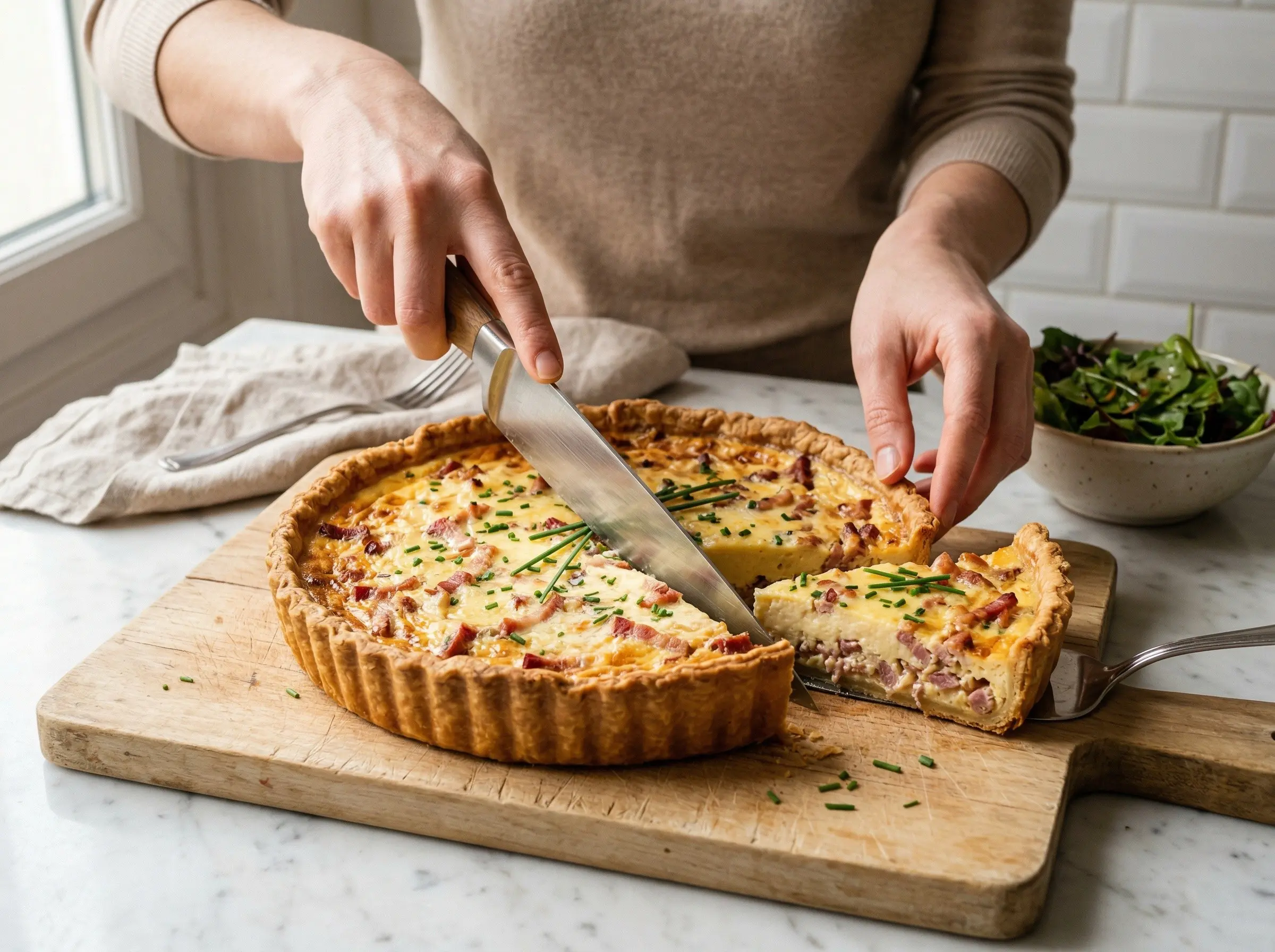
Rest and serve at the ideal temperature. Remove the quiche from the oven and let it rest for at least 15-20 minutes before slicing. This resting period is essential - it allows the custard to finish setting and makes the quiche easier to slice cleanly. Quiche Lorraine should be served warm, not hot or cold. Hot quiche masks the delicate flavors and the custard will be too soft; cold quiche has a firmer, less pleasant texture. The ideal serving temperature is just above room temperature, when the custard is silky and the flavors fully expressed. Garnish with minced fresh chives if desired. Serve with a simple green salad dressed with a light vinaigrette for a classic French lunch. Leftover quiche can be refrigerated for up to 3 days and reheated gently in a 300 degree F oven for 15-20 minutes until warmed through.
You Might Also Like
Master Your Kitchen with PantryAI
Love this recipe? Save it, shop for it, and cook it with ease. Download the PantryAI app to organize your pantry, track expirations, and discover recipes based on what you already have.

On a computer?Scan with your iPhone camera to download PantryAI.








Swipe to see more screenshots