

Waldorf Salad
Learn how to make the classic Waldorf salad with crisp apples, crunchy celery, toasted walnuts, and creamy dressing. This elegant American salad from the famous Waldorf-Astoria Hotel is timeless and delicious!
Ingredients
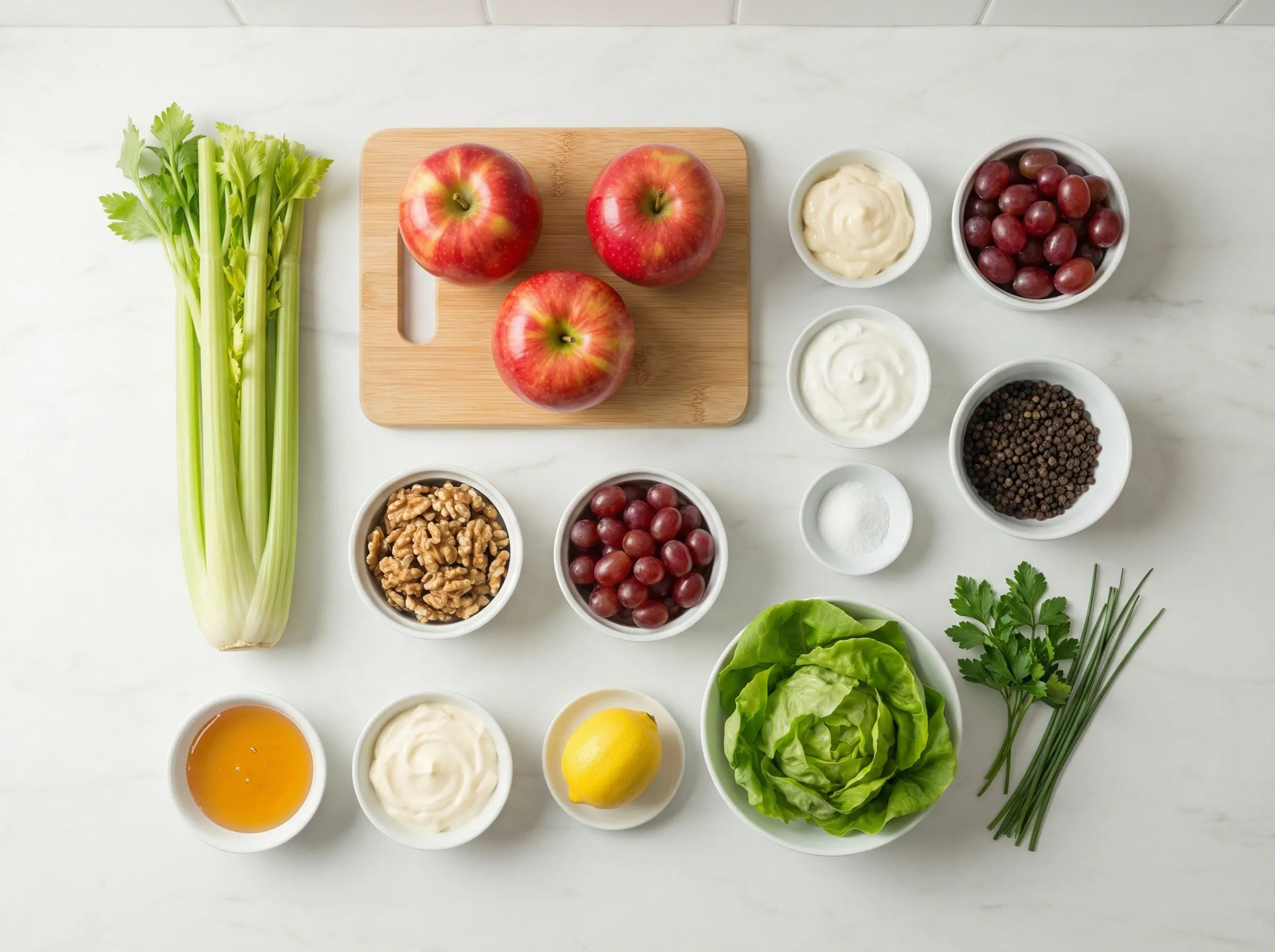
The Story
The Waldorf salad is one of America's most storied dishes, created in 1893 at the legendary Waldorf Hotel in New York City. The hotel, which would later merge with the Astoria to become the Waldorf-Astoria, was the most luxurious establishment of its era, frequented by the Gilded Age elite - the Vanderbilts, Astors, and Rockefellers. The salad was created by the hotel's maitre d'hotel, Oscar Tschirky, known simply as "Oscar of the Waldorf." His original creation was elegantly simple: just diced apples, celery, and mayonnaise. The walnuts that we consider essential today were not added until later, appearing in recipes by the early 1900s as the salad evolved and spread beyond the hotel's dining room. Oscar Tschirky was a fascinating figure who helped define American fine dining in the late 19th and early 20th centuries. Though he was not a chef himself, his role as maitre d' gave him tremendous influence over the hotel's menus and the dining experience of New York's social elite. He published "The Cook Book by Oscar of the Waldorf" in 1896, which included the Waldorf salad among hundreds of other recipes. The salad quickly became a sensation, spreading to restaurants and home kitchens across America. It represented a new style of lighter, fresher American cuisine that was emerging in contrast to the heavy, French-dominated fine dining of the era. What makes the Waldorf salad so enduring is its perfect balance of flavors and textures. Crisp, sweet-tart apples provide the foundation, their juicy crunch contrasting with the fresh, vegetal snap of celery. Toasted walnuts add richness, earthiness, and a satisfying bite. The creamy mayonnaise-based dressing (often lightened with yogurt or sour cream in modern versions) binds everything together while adding luxurious richness. Some versions include grapes for additional sweetness, raisins for chewy texture, or a bed of lettuce for freshness. The salad works equally well as an elegant first course, a light lunch, or a side dish at holiday gatherings. Over 130 years after its creation, the Waldorf salad remains a testament to the power of simple, quality ingredients combined thoughtfully.
Instructions
Step 1
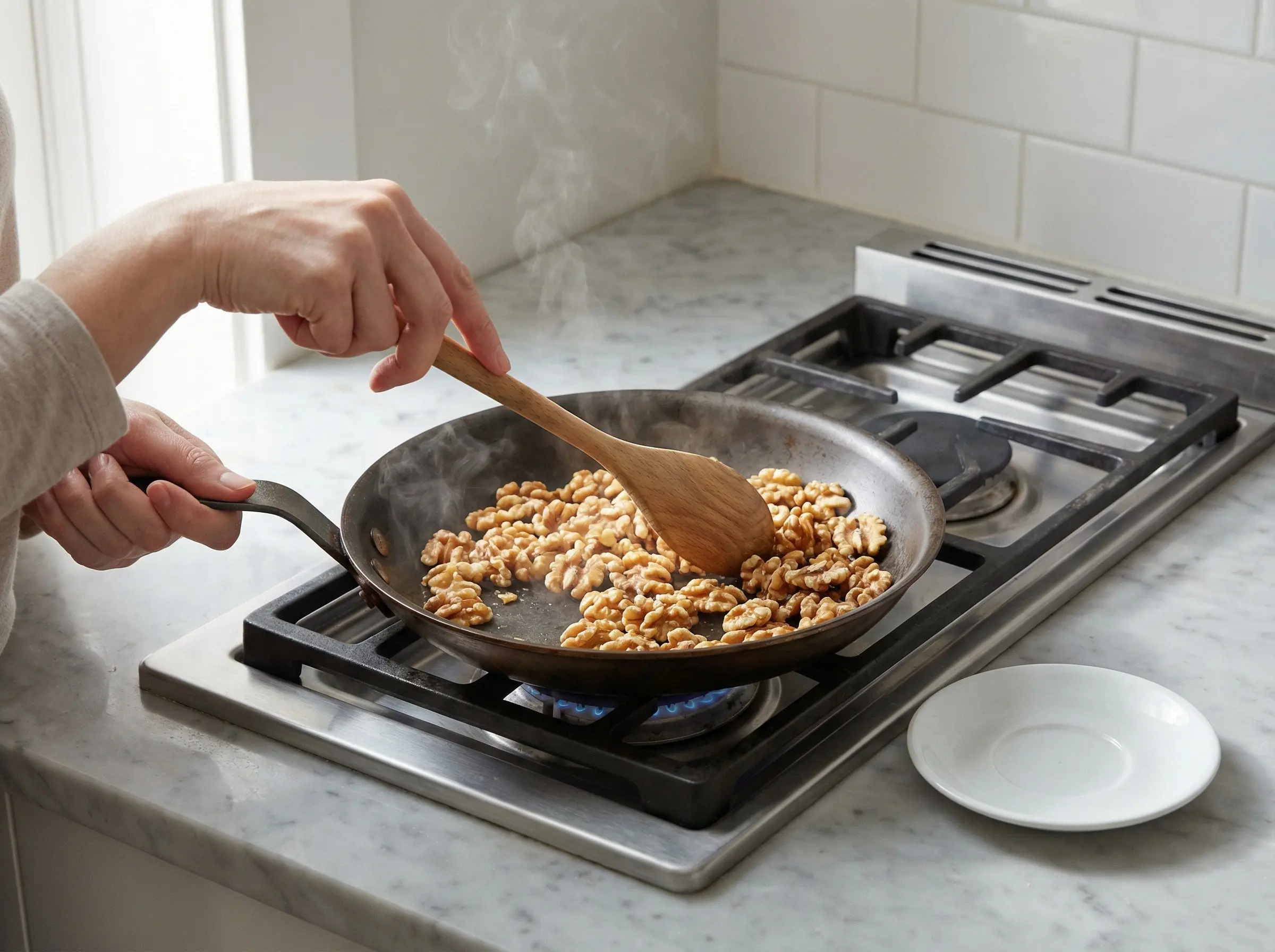
Toast the walnuts for maximum flavor. Spread the walnuts in a single layer on a baking sheet or in a dry skillet. Toast at 350 degrees F for 8-10 minutes, or over medium heat in the skillet for 4-5 minutes, stirring frequently, until fragrant and lightly golden. Watch carefully as they can burn quickly. Transfer to a plate to cool completely - they will crisp up as they cool. Roughly chop once cooled. Toasting transforms walnuts from bland and slightly bitter to rich, nutty, and aromatic.
Step 2
Make the dressing. In a large bowl, whisk together the mayonnaise, Greek yogurt (or sour cream), lemon juice, honey, salt, and a few grinds of black pepper until smooth and well combined. The yogurt lightens the dressing and adds tanginess that complements the sweet apples. Taste and adjust - you may want more lemon for brightness, more honey for sweetness, or more salt to bring out the flavors. The dressing can be made ahead and refrigerated for up to 3 days.
Step 3
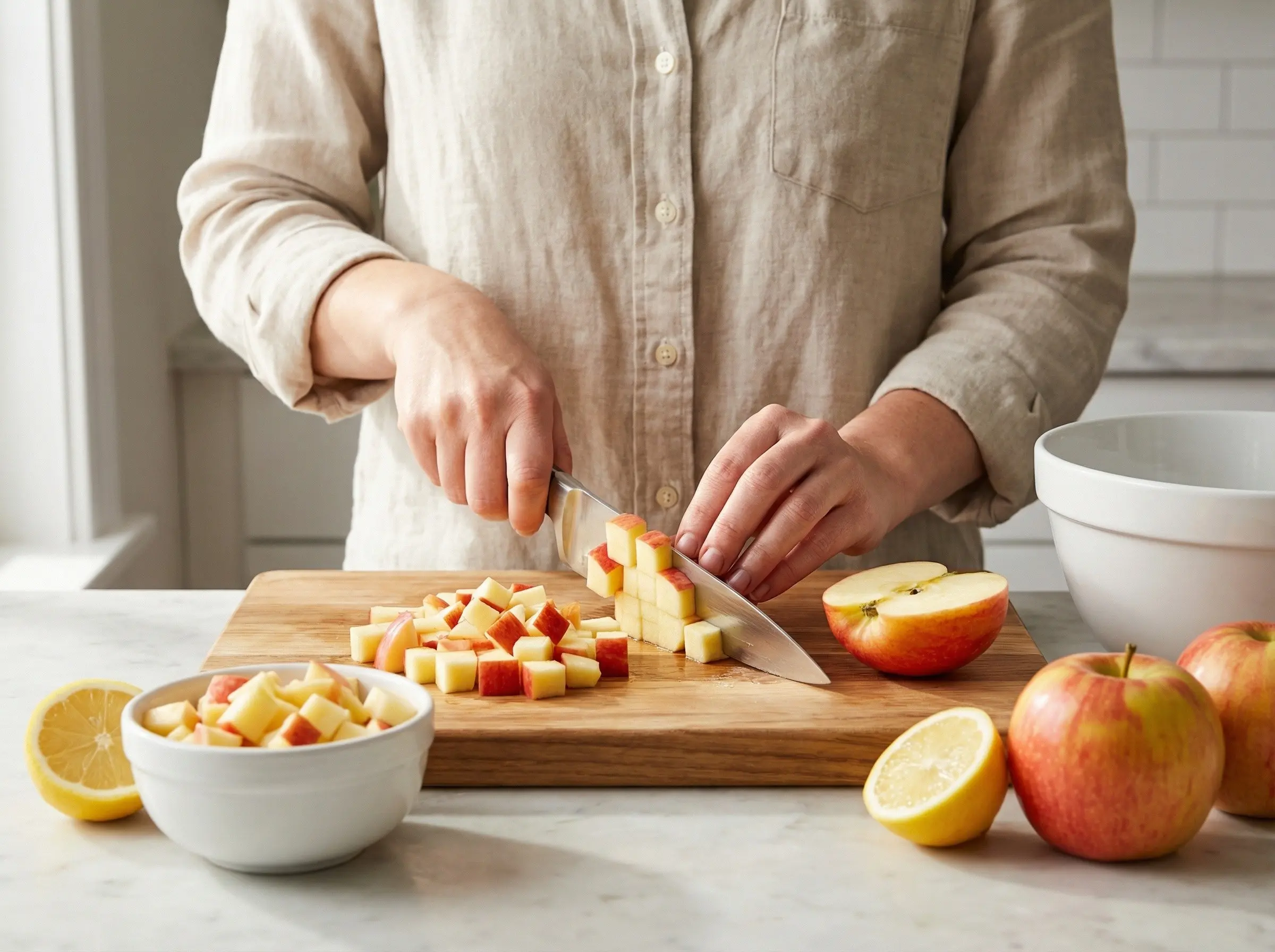
Prepare the apples. This should be done just before assembling to prevent browning. Core the apples and cut into 1/2-inch dice - you can leave the skin on for color and texture, or peel if you prefer. Immediately toss the diced apples with a squeeze of lemon juice to prevent oxidation. Choose crisp, slightly tart apples for the best contrast with the creamy dressing - Honeycrisp, Granny Smith, Pink Lady, or Fuji all work well. Avoid soft or mealy apples.
Step 4
Prepare the remaining ingredients. Thinly slice the celery on a slight diagonal for visual appeal - you want pieces that are crisp and easy to eat. If using grapes, halve them lengthwise. The celery should be fresh and snappy; limp celery will ruin the texture of the salad. Remove any strings from the outer stalks if they are particularly fibrous.
Step 5
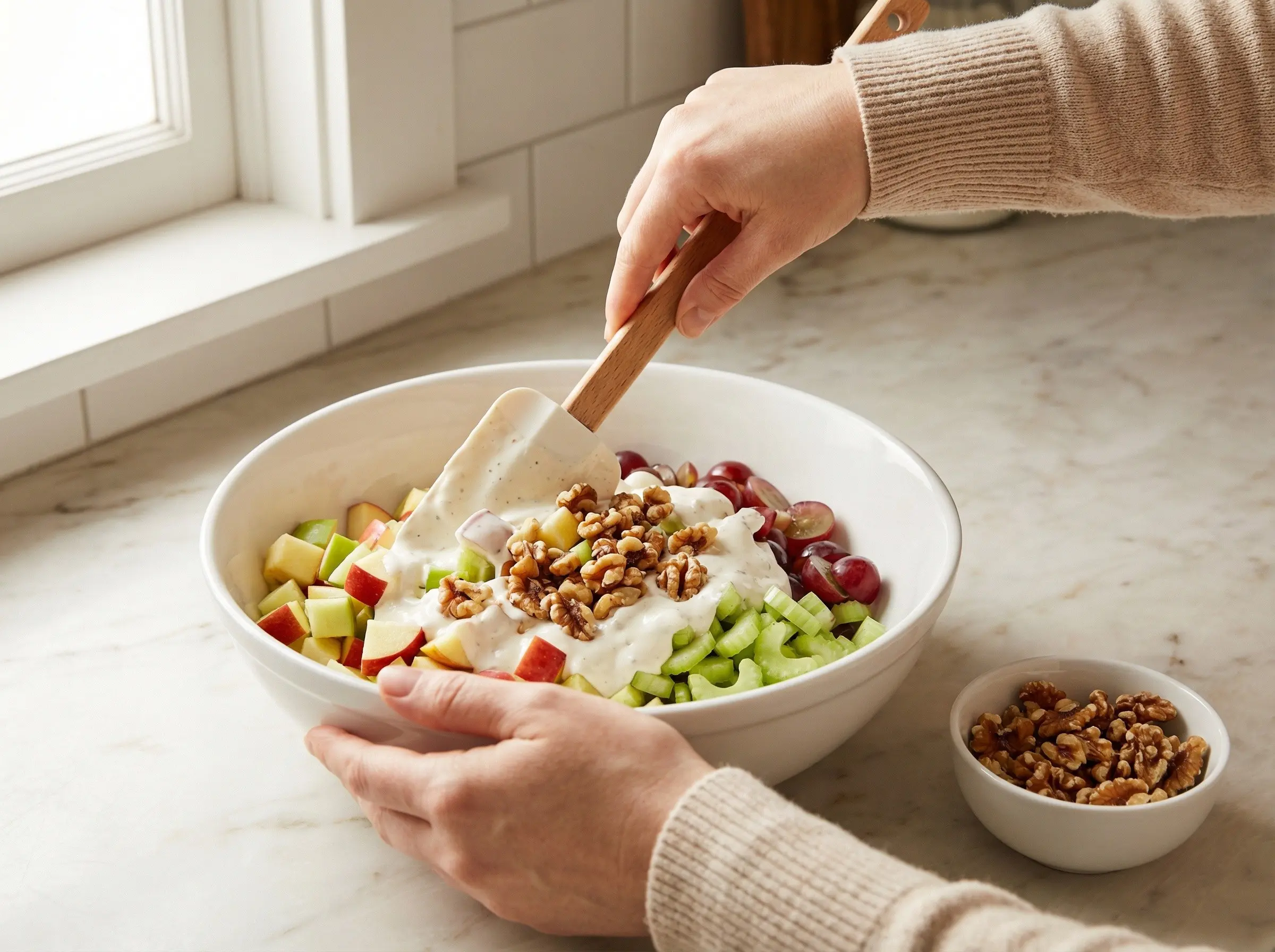
Assemble the salad. Add the prepared apples, sliced celery, halved grapes (if using), and about three-quarters of the toasted walnuts to the bowl with the dressing. Gently fold everything together until all the ingredients are evenly coated with dressing. Be gentle to avoid crushing the apples or making the salad mushy. Taste and adjust seasoning - a pinch more salt often helps bring the flavors together.
Step 6
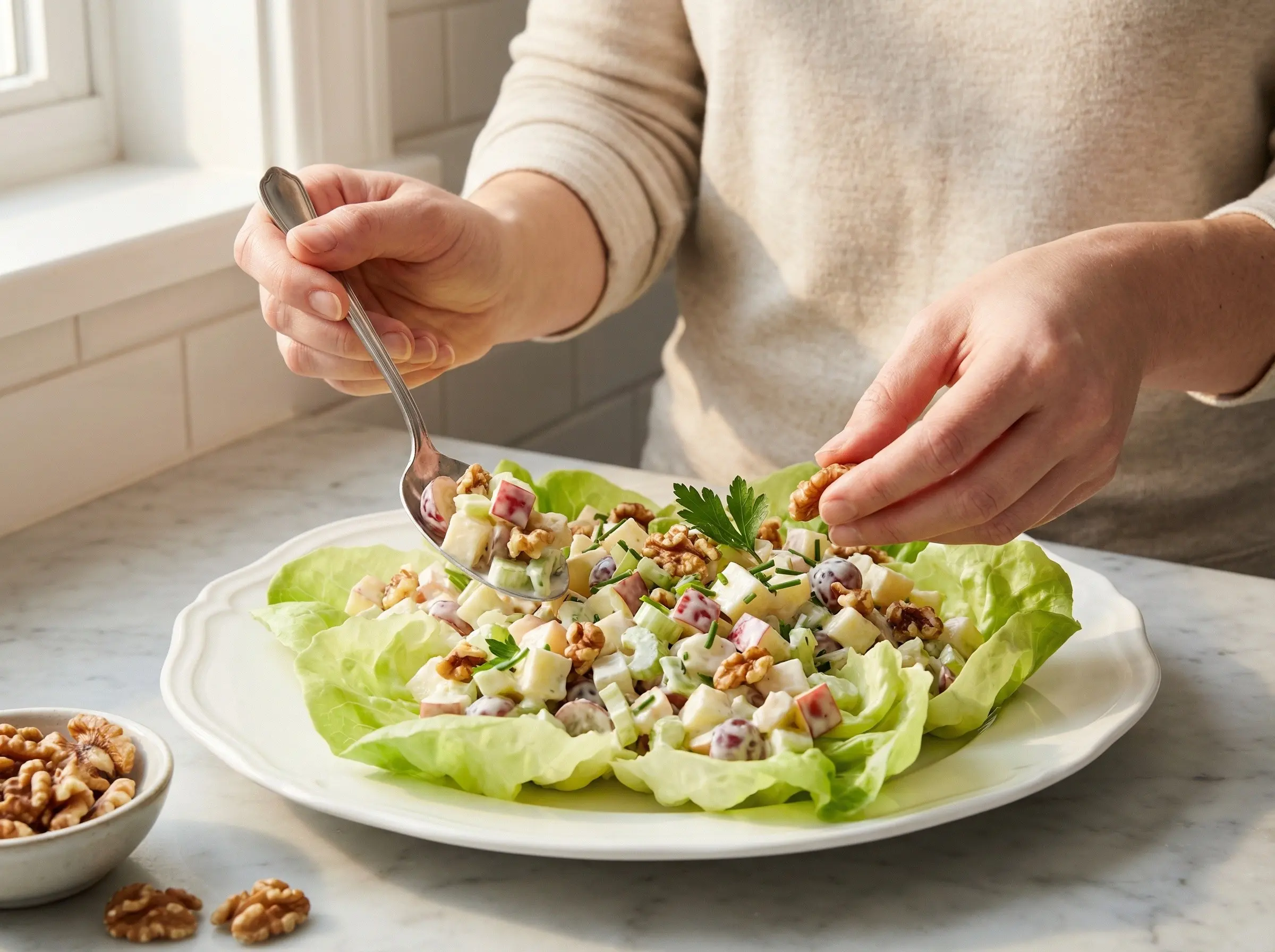
Serve the Waldorf salad. For an elegant presentation, arrange butter lettuce leaves on individual plates or a serving platter to create cups or a bed for the salad. Spoon the salad onto the lettuce. Top with the remaining toasted walnuts and garnish with fresh parsley or snipped chives if desired. Serve immediately for the best texture - the apples will soften and release juice if the salad sits too long. Waldorf salad is traditionally served as a first course or side dish, though it can become a light main course with the addition of diced cooked chicken or turkey. It pairs beautifully with roasted poultry, making it a popular addition to Thanksgiving and holiday tables.
You Might Also Like

Master Your Kitchen with PantryAI
Love this recipe? Save it, shop for it, and cook it with ease. Download the PantryAI app to organize your pantry, track expirations, and discover recipes based on what you already have.

On a computer?Scan with your iPhone camera to download PantryAI.








Swipe to see more screenshots