
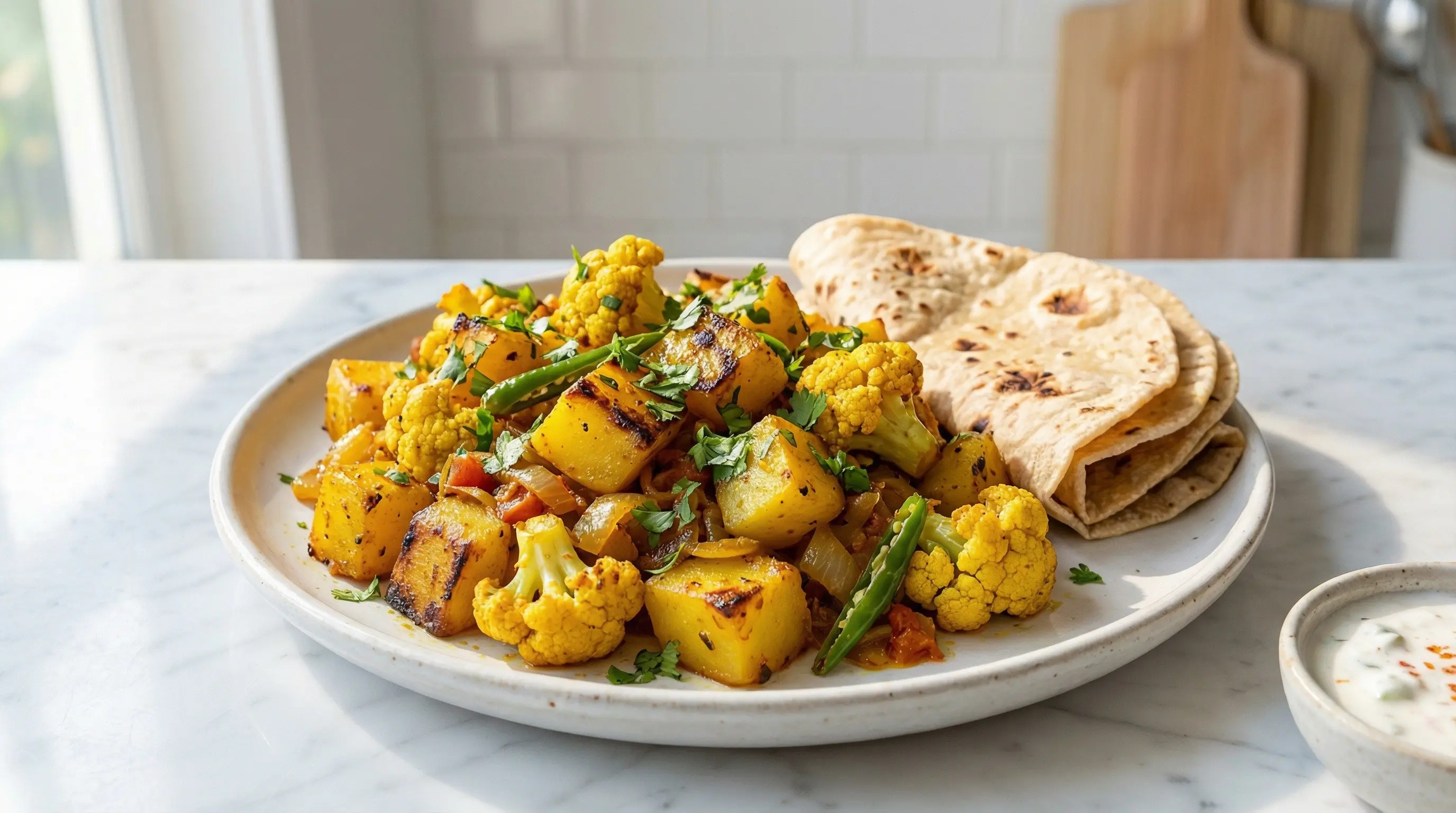
Aloo Gobi
Learn how to make authentic aloo gobi, a classic Indian dry curry of tender potatoes and cauliflower with aromatic spices. This comforting vegetarian dish is simple, flavorful, and perfect with roti or rice!
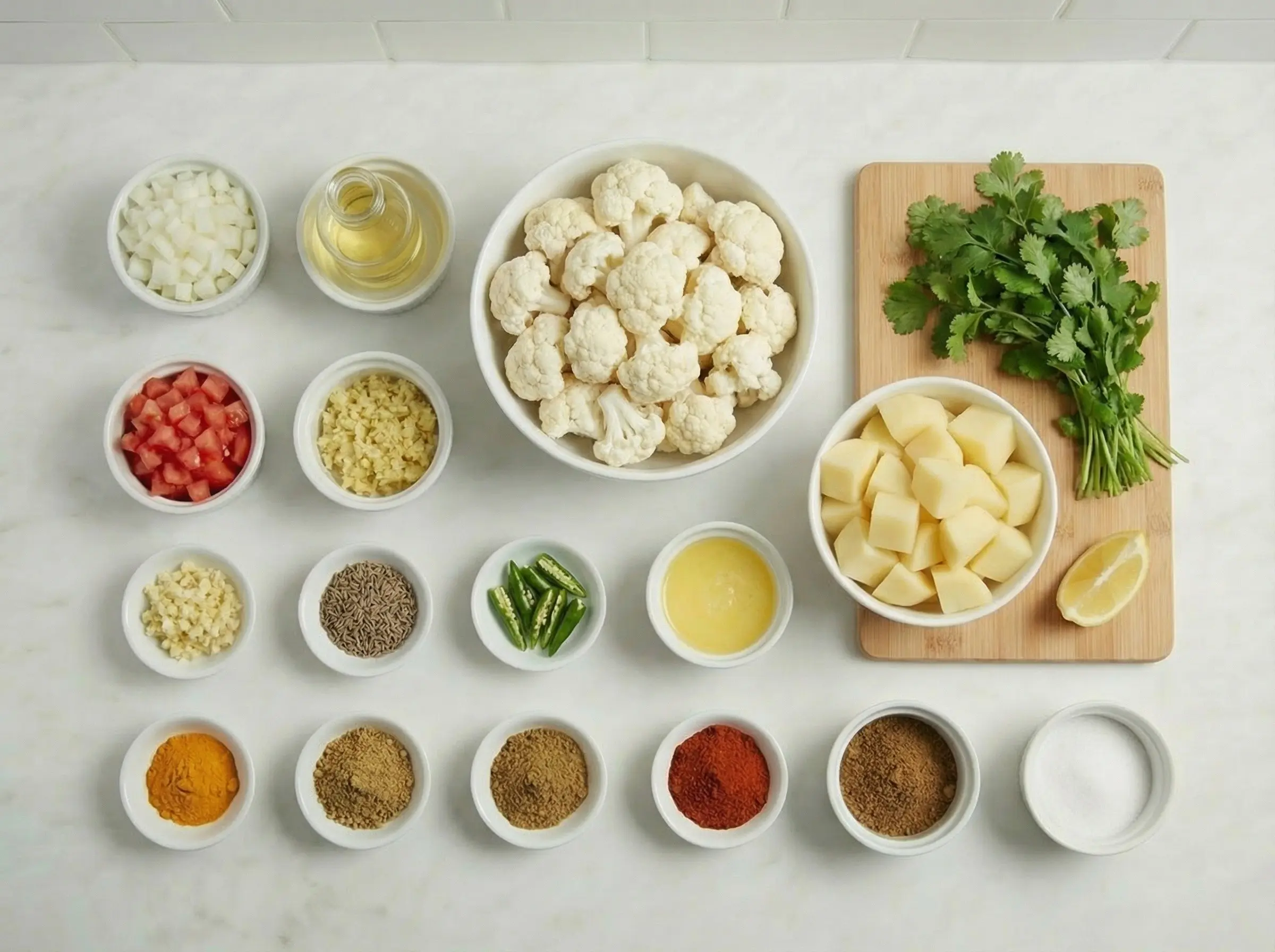
Ingredients
The Story
Aloo gobi is one of the most beloved and widely prepared dishes in Indian home cooking, a humble yet deeply satisfying dry curry of potatoes (aloo) and cauliflower (gobi) seasoned with aromatic spices. The dish is quintessentially North Indian, particularly associated with the Punjab region, where it appears on family tables several times a week as part of the daily meal. Unlike restaurant curries swimming in sauce, aloo gobi is a "sukhi sabzi" (dry vegetable dish), where the vegetables are cooked until tender and coated with spices rather than submerged in gravy. This style of cooking allows the natural flavors of the vegetables to shine through, enhanced rather than masked by the spice blend. The combination of potatoes and cauliflower is a stroke of culinary genius born from practicality. Both vegetables are inexpensive, widely available, and store well - making them staples of Indian vegetarian cooking. Cauliflower was introduced to India during British colonial rule in the 19th century and was quickly embraced and adapted into local cuisine. The pairing with potatoes, already a beloved ingredient, proved to be magical: the starchy potatoes provide satisfying heft and absorb spices beautifully, while the cauliflower offers a more delicate texture and slightly nutty, sweet flavor. Together with the warming spices - turmeric, cumin, coriander, and often garam masala - they create a dish that is far greater than the sum of its simple parts. What makes aloo gobi so enduringly popular is its perfect balance of comfort and flavor. The dish should have some charred, caramelized edges on the vegetables, achieved through patient cooking in a dry pan rather than steaming or boiling. The turmeric provides its characteristic golden color and earthy undertones, while cumin adds warmth and depth. Ginger and green chilies contribute brightness and heat, and a finishing touch of fresh cilantro adds herbaceous freshness. Aloo gobi is traditionally served with hot rotis or parathas, the bread used to scoop up bites of the spiced vegetables, though it is equally delicious alongside rice and dal. It is vegetarian comfort food at its finest - simple, nourishing, and utterly satisfying.
Instructions
Step 1
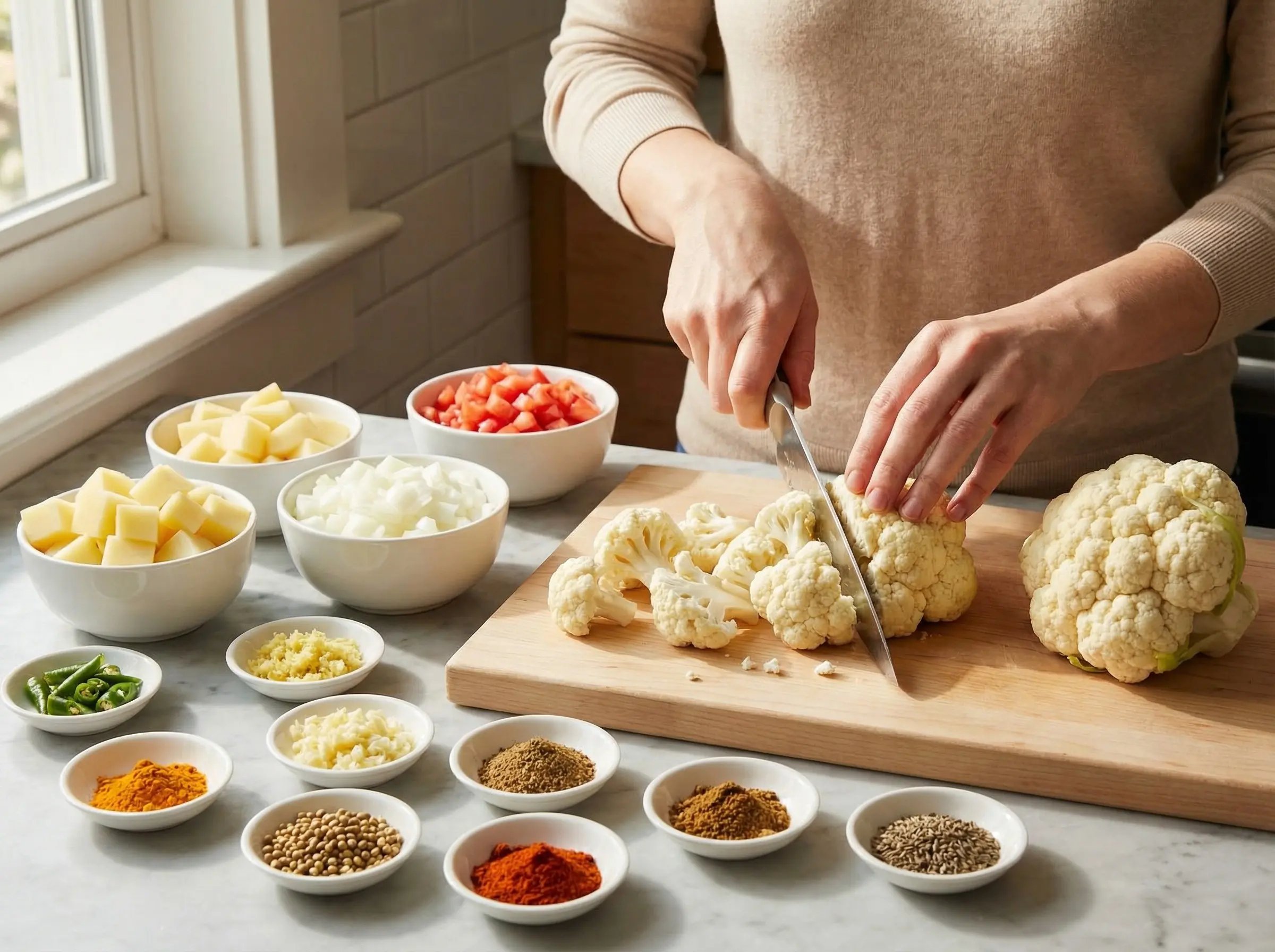
Prepare the vegetables. Peel the potatoes and cut them into 1-inch cubes - they should be similar in size to the cauliflower florets for even cooking. Cut the cauliflower into medium-sized florets, breaking apart any large pieces. Wash and dry the florets thoroughly - wet cauliflower will steam instead of developing the desirable golden edges. Dice the onion, mince the garlic, grate the ginger, and slit the green chilies lengthwise (this releases flavor while keeping the seeds contained). Dice the tomatoes. Have all your spices measured and ready, as the cooking moves quickly once you begin.
Step 2
Heat the oil or ghee in a large, wide skillet or kadai over medium-high heat. Ghee adds authentic flavor, but vegetable oil works well for a vegan version. When the oil shimmers, add the cumin seeds. Let them sizzle and pop for about 30 seconds until fragrant and slightly darkened - this is called tempering (tadka) and releases the aromatic oils in the seeds. Be careful not to burn them. Add the slit green chilies and stir for a few seconds.
Step 3
Add the diced onion to the pan and sauté for 5-6 minutes until softened and golden brown at the edges. Add the minced garlic and grated ginger, stirring for another minute until very fragrant. Add the ground turmeric, ground coriander, ground cumin, and red chili powder. Stir constantly for 30 seconds to toast the spices and coat the onions - this blooms the spices and prevents them from tasting raw. Add a splash of water if the spices start to stick or burn.

Step 4
Add the diced tomatoes and cook for 3-4 minutes, stirring occasionally, until they break down and form a thick masala paste. The oil should begin to separate from the tomato mixture around the edges - this indicates the masala is properly cooked. Add the cubed potatoes and cauliflower florets to the pan. Toss everything together to coat the vegetables evenly with the spice mixture. Season with salt.
Step 5
Reduce the heat to medium-low. Cover the pan and cook for 15-20 minutes, stirring occasionally, until the potatoes and cauliflower are tender when pierced with a fork. Resist the urge to add water - the vegetables will release enough moisture to steam themselves, and keeping the dish dry allows the vegetables to develop golden, slightly charred edges. If the vegetables are sticking, reduce the heat and add just a tablespoon or two of water. Remove the lid during the last 5 minutes to allow any excess moisture to evaporate and the edges to crisp slightly.

Step 6
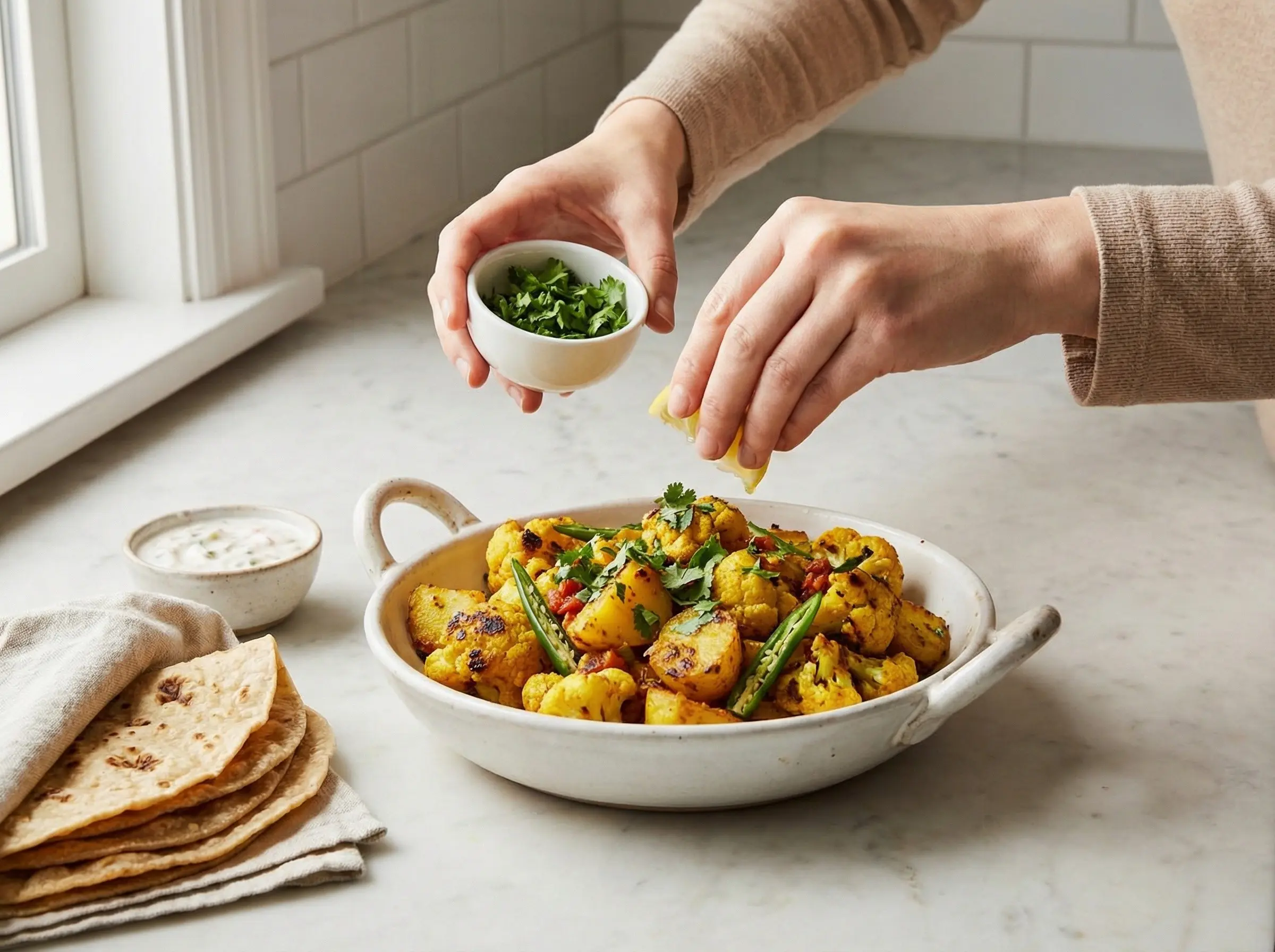
Once the vegetables are tender and have golden spots, sprinkle with garam masala and toss gently. The garam masala is added at the end to preserve its aromatic qualities. Remove from heat and add the lemon juice, which brightens all the flavors. Taste and adjust seasoning - you may need more salt or a pinch more chili powder. Transfer to a serving dish and garnish generously with fresh chopped cilantro. Serve hot with roti, paratha, naan, or steamed basmati rice. Aloo gobi is traditionally part of a larger Indian meal that might include dal (lentils), raita (yogurt), and pickles. The dish tastes even better the next day as the flavors continue to develop - store refrigerated and reheat gently in a pan, adding a splash of water if needed.
You Might Also Like

Master Your Kitchen with PantryAI
Love this recipe? Save it, shop for it, and cook it with ease. Download the PantryAI app to organize your pantry, track expirations, and discover recipes based on what you already have.

On a computer?Scan with your iPhone camera to download PantryAI.








Swipe to see more screenshots