
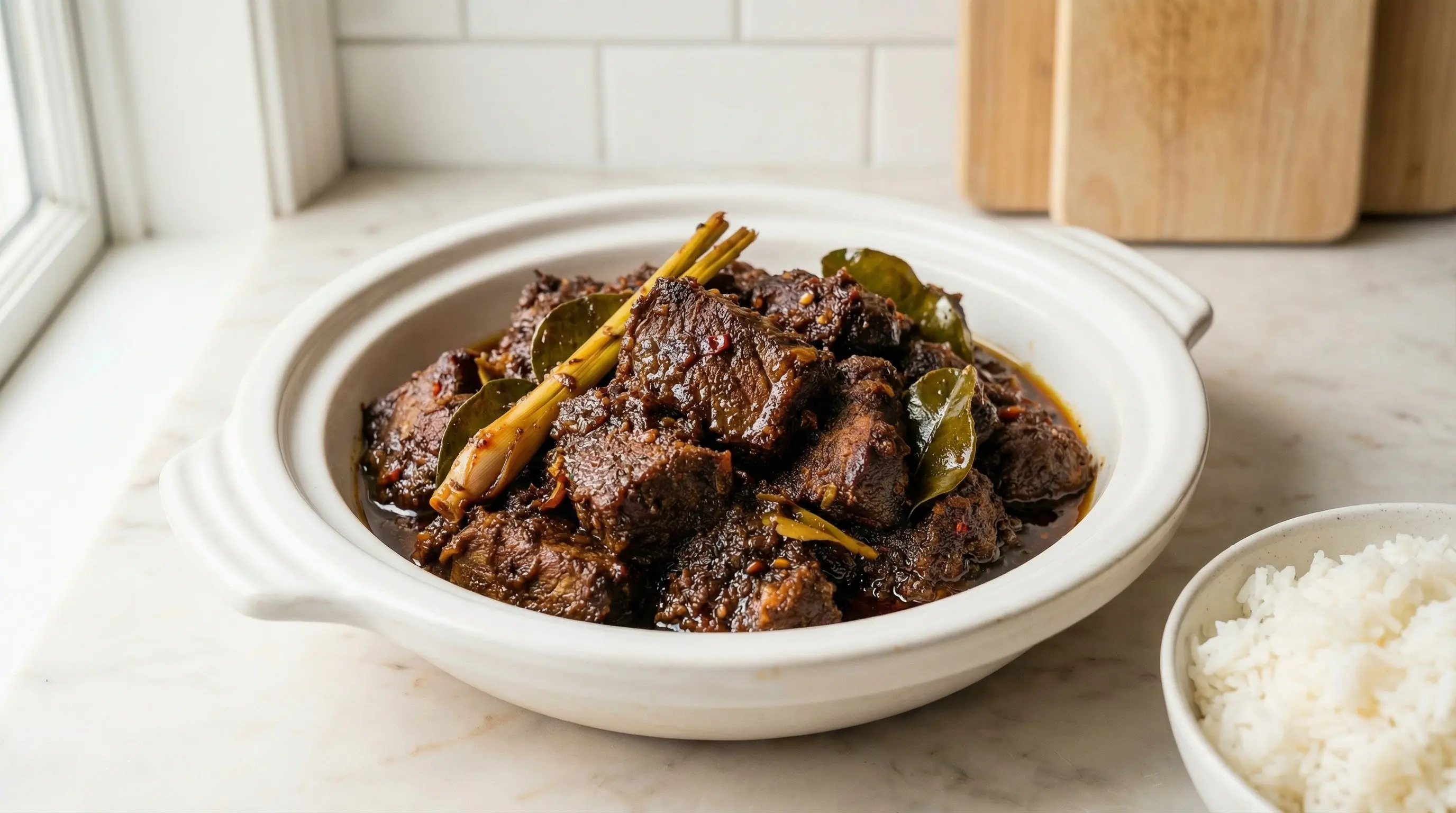
Beef Rendang
Learn how to make authentic beef rendang, the legendary Indonesian dry curry with tender beef slow-cooked in coconut milk and aromatic spices. This rich, complex dish was voted the world's most delicious food!
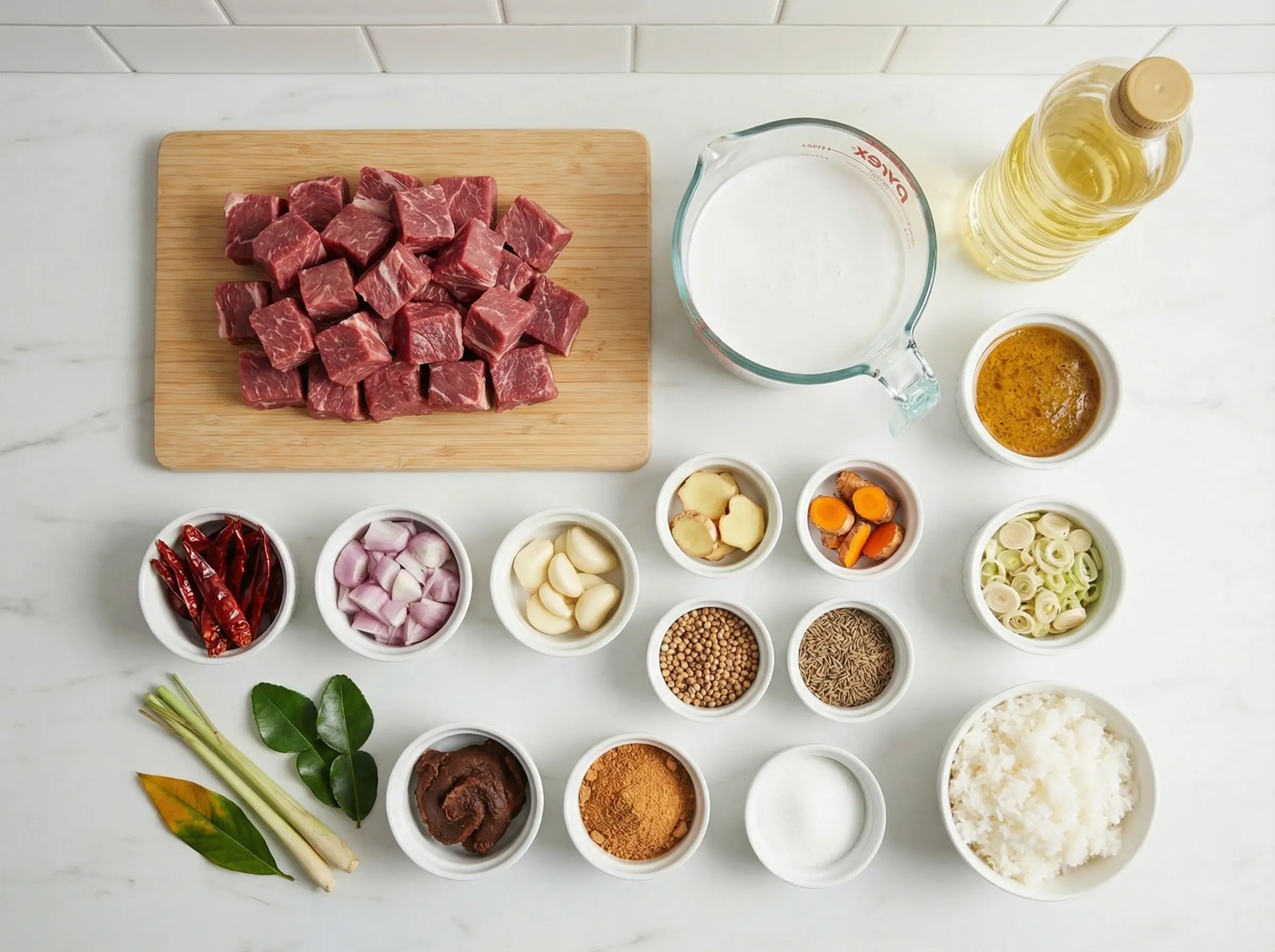
Ingredients
The Story
Beef rendang is widely considered one of the greatest dishes in world cuisine - it was famously voted the "World's Most Delicious Food" by CNN in 2011, and has topped similar polls multiple times since. This extraordinary dry curry originates from the Minangkabau people of West Sumatra, Indonesia, where it has been prepared for centuries as a ceremonial dish for special occasions, festivals, and honoring guests. The Minangkabau are a matrilineal society with a rich culinary tradition, and rendang represents the pinnacle of their cooking - a dish that requires patience, skill, and premium ingredients, prepared with love for those who matter most. The genius of rendang lies in its cooking method, which transforms simple ingredients into something transcendent through time and technique. Unlike most curries that are saucy, rendang is cooked for hours until virtually all the liquid evaporates, leaving the meat coated in a thick, intensely flavored paste that has caramelized and concentrated into pure umami. This extended cooking process, called "kalio" in its earlier wet stage and "rendang" when fully dry, was originally developed as a preservation method - the dry, heavily spiced meat could last for weeks without refrigeration in tropical climates, making it ideal for long journeys. Traditionally, rendang was prepared by Minangkabau men before leaving their villages to seek their fortunes, given to them by their mothers as sustenance and a taste of home. What makes beef rendang so extraordinary is the depth and complexity of flavor achieved through the slow cooking process. The beef, typically tough cuts that benefit from long braising, becomes impossibly tender while absorbing layers of flavor from the spice paste - galangal, lemongrass, turmeric, ginger, garlic, and chilies create an aromatic foundation. Coconut milk provides richness that transforms into a caramelized coating as it reduces. Kaffir lime leaves and toasted coconut add the finishing aromatics. The final result is meat that is deeply bronzed, coated in a thick, almost dry sauce that glistens with rendered coconut oil, intensely savory with subtle sweetness and a warm, lingering heat. Each bite delivers an explosion of complex flavors - this is not a dish of subtlety but of bold, harmonious intensity.
Instructions
Step 1
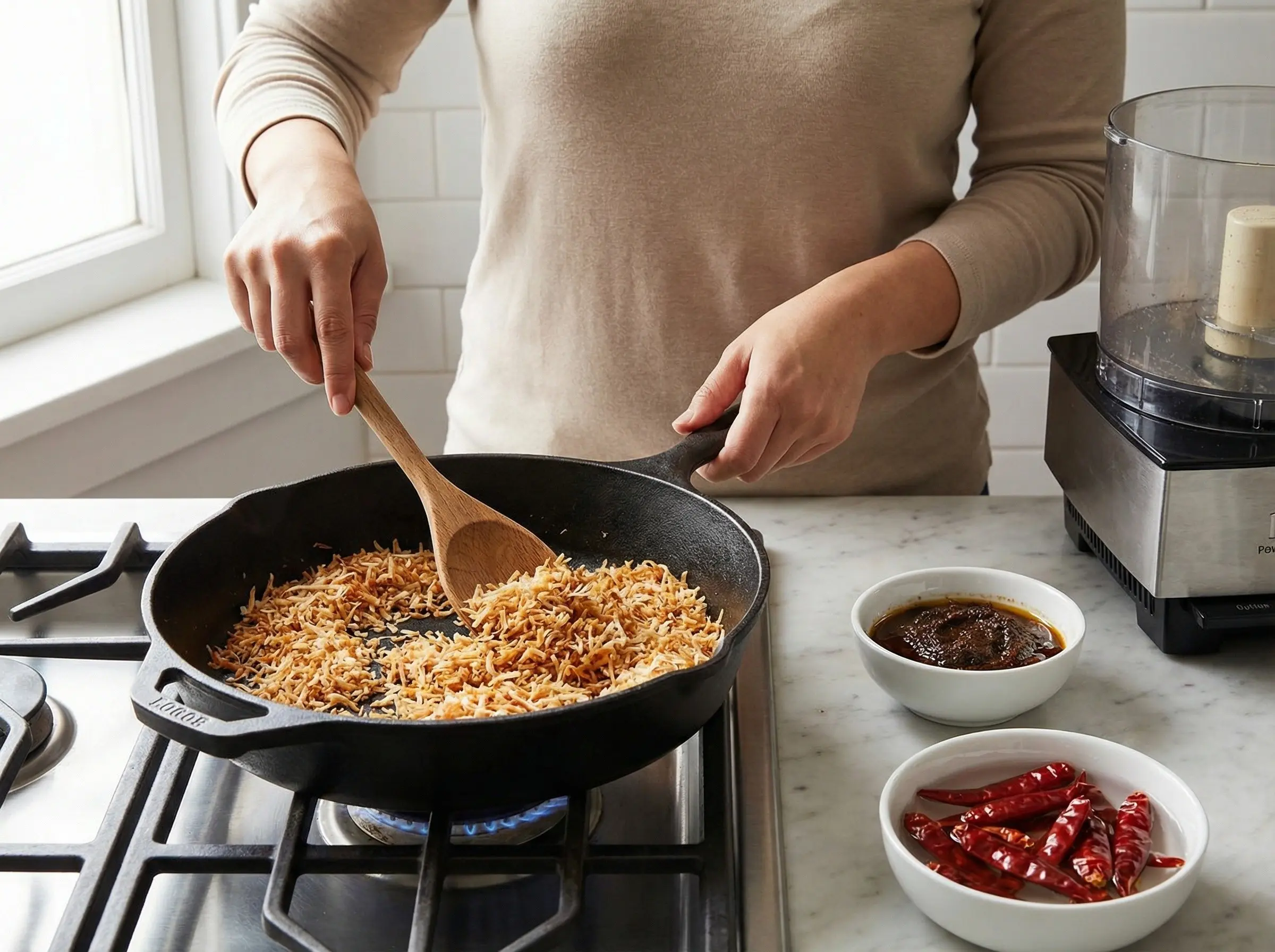
Prepare the kerisik (toasted coconut paste) if not using store-bought. Toast 1 cup of unsweetened desiccated coconut in a dry skillet over medium-low heat, stirring constantly for 15-20 minutes until deep golden brown and very fragrant. Transfer to a food processor and blend until it becomes an oily paste - this takes several minutes of processing. The kerisik is essential for authentic rendang flavor and helps thicken the sauce. Set aside. Soak the dried red chilies in hot water for 20-30 minutes until softened, then drain well.
Step 2
Make the spice paste (rempah). In a food processor or blender, combine the soaked chilies, shallots, garlic, galangal, ginger, fresh turmeric (or powder), sliced lemongrass, toasted coriander seeds, and toasted cumin seeds. Blend until you have a smooth paste, scraping down the sides as needed. Add a splash of water if necessary to help the blending, but keep it as dry as possible. This paste is the flavor foundation of the rendang - take your time to make it very smooth.
Step 3
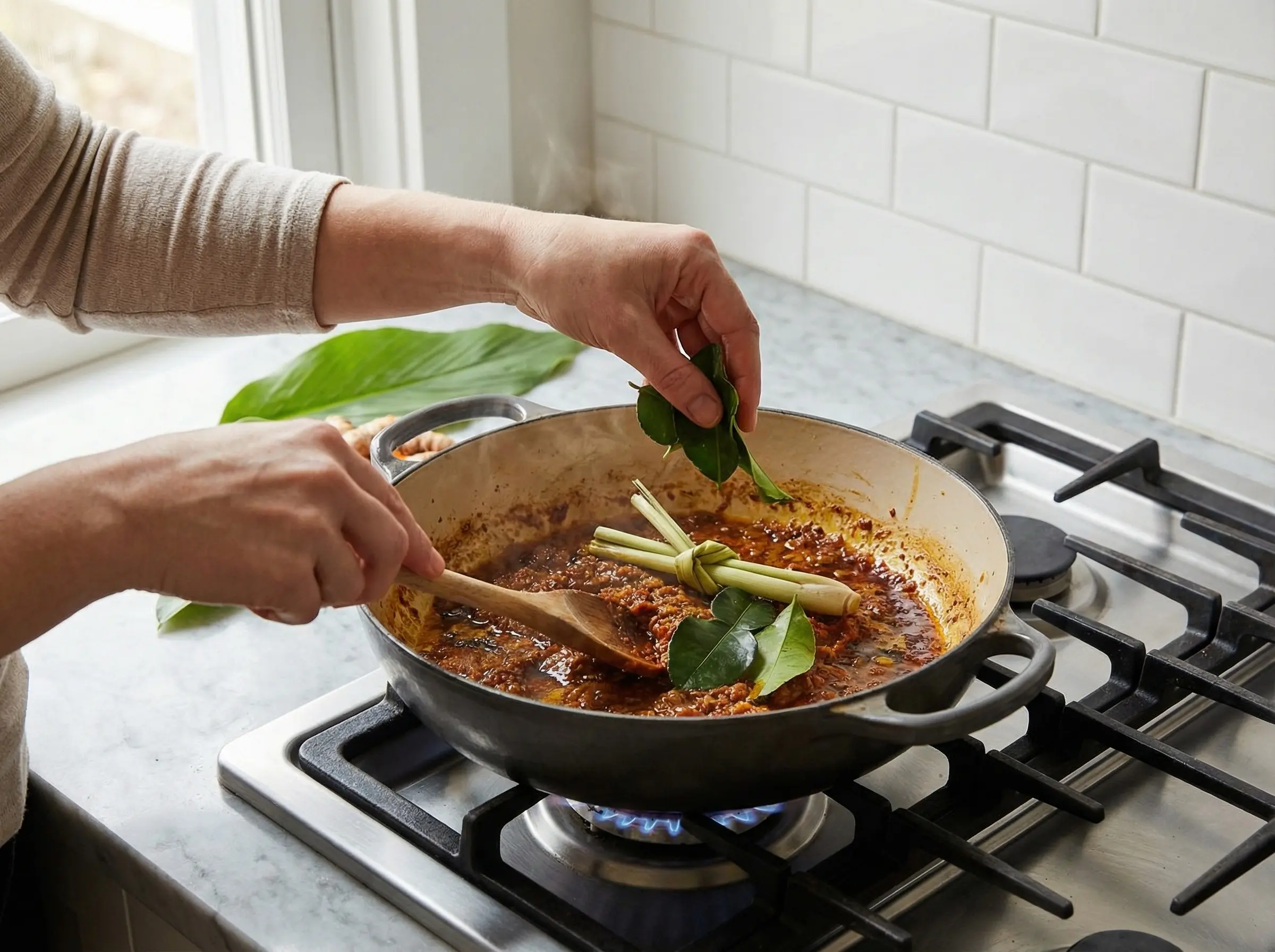
Heat the vegetable oil in a large, heavy-bottomed pot or Dutch oven over medium heat. Add the spice paste and fry, stirring frequently, for 8-10 minutes until very fragrant, darkened in color, and the oil begins to separate from the paste. This step is crucial - properly frying the paste removes the raw taste and develops deep, complex flavors. Add the bruised lemongrass stalks, kaffir lime leaves, and turmeric leaf if using. Stir to combine.
Step 4
Add the beef cubes to the pot and stir to coat thoroughly with the spice paste. Cook for 3-4 minutes, stirring occasionally, until the beef is well coated and lightly seared on all sides. Pour in the coconut milk, tamarind paste, palm sugar, and salt. Stir well to combine. Bring to a boil, then immediately reduce heat to low. The liquid should barely simmer - vigorous boiling will toughen the meat. Cook uncovered, stirring occasionally, for about 2 hours. The sauce will gradually reduce and thicken.
Step 5
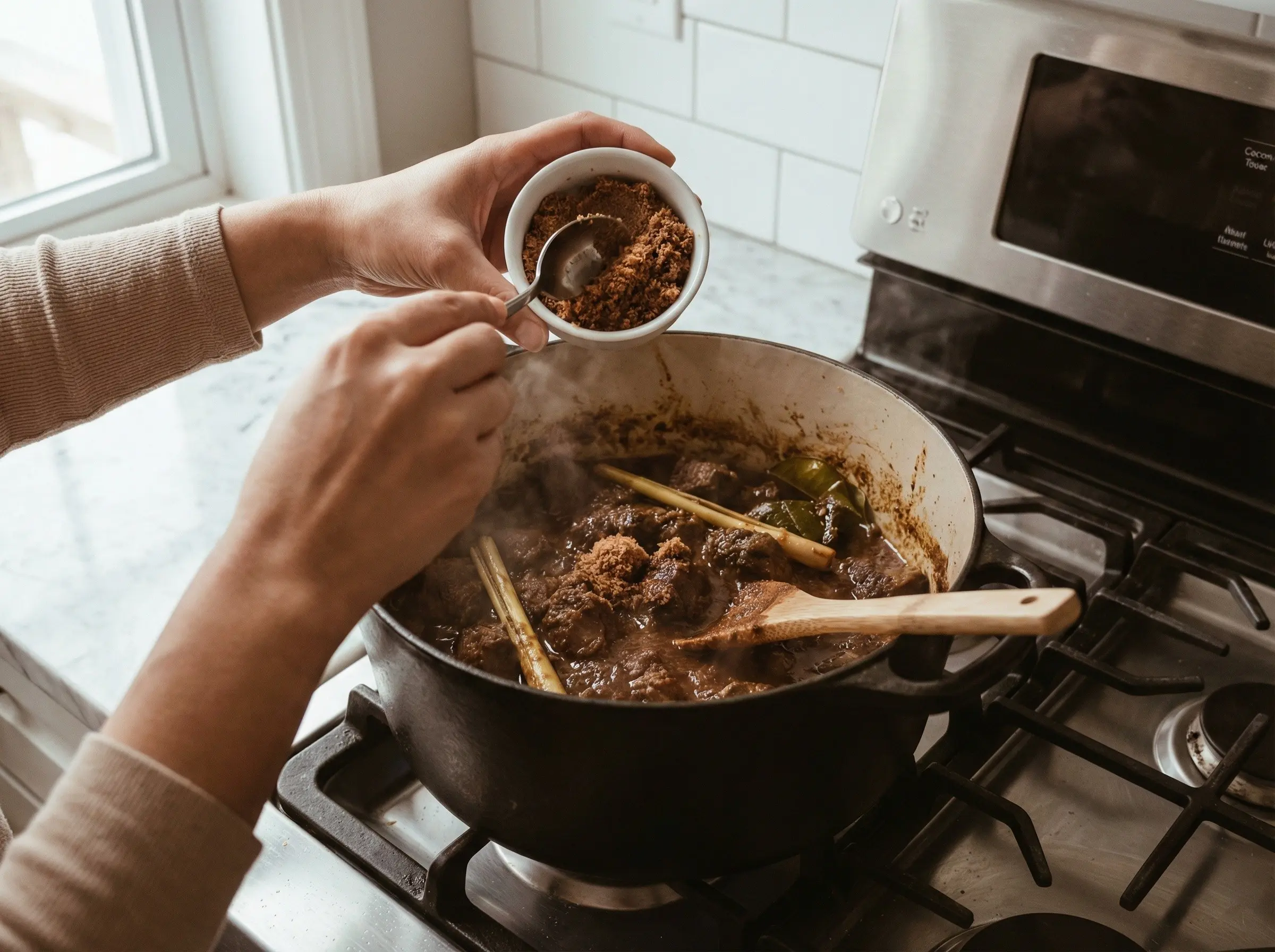
After about 2 hours, the liquid will have reduced significantly and the beef will be tender. Add the kerisik (toasted coconut paste) and stir well to incorporate. Continue cooking, stirring more frequently now to prevent sticking, for another 1-1.5 hours. This is the critical stage where rendang transforms from a curry (kalio) to true rendang. The sauce will continue to reduce until the coconut milk has almost completely evaporated and the meat is coated in a thick, dark, oily paste. The oil from the coconut will separate and the rendang will begin to fry in this oil.
Step 6
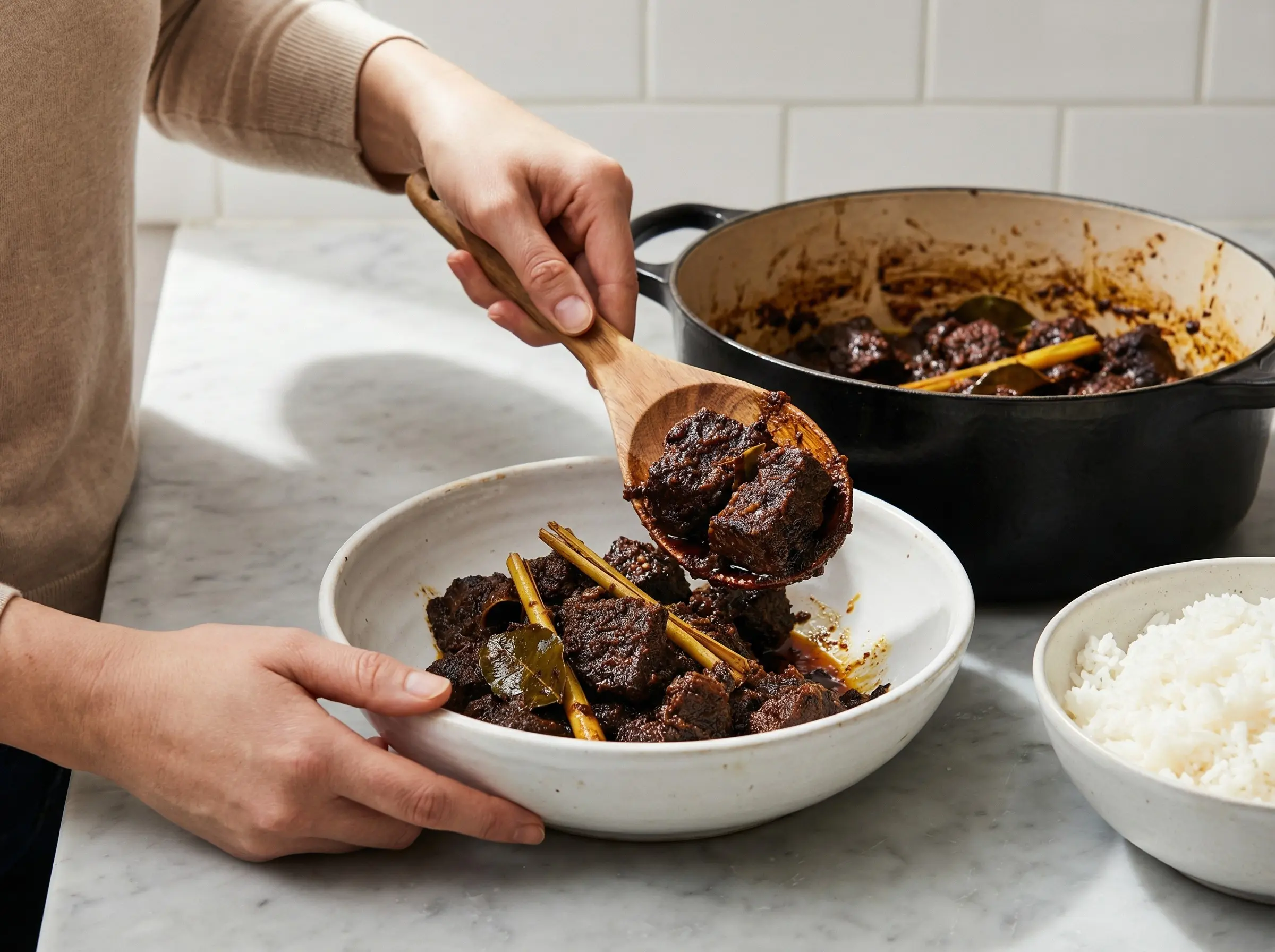
The rendang is ready when the meat is very tender (almost falling apart), coated in a thick, dark brown paste, and glistening with caramelized coconut oil. The sauce should be almost completely dry - not soupy or saucy. This entire process takes 3-4 hours and cannot be rushed. Taste and adjust seasoning - you may need more salt or a squeeze of tamarind for brightness. Remove the lemongrass stalks and kaffir lime leaves if desired (some people like to leave them for presentation). Transfer to a serving dish. Rendang is traditionally served at room temperature alongside steamed rice, though it is also delicious warm. It tastes even better the next day after the flavors have melded further, and keeps refrigerated for up to a week or frozen for months. In fact, traditional rendang was prized for its keeping qualities - it improves over several days as the flavors continue to develop.
You Might Also Like
Master Your Kitchen with PantryAI
Love this recipe? Save it, shop for it, and cook it with ease. Download the PantryAI app to organize your pantry, track expirations, and discover recipes based on what you already have.

On a computer?Scan with your iPhone camera to download PantryAI.








Swipe to see more screenshots