
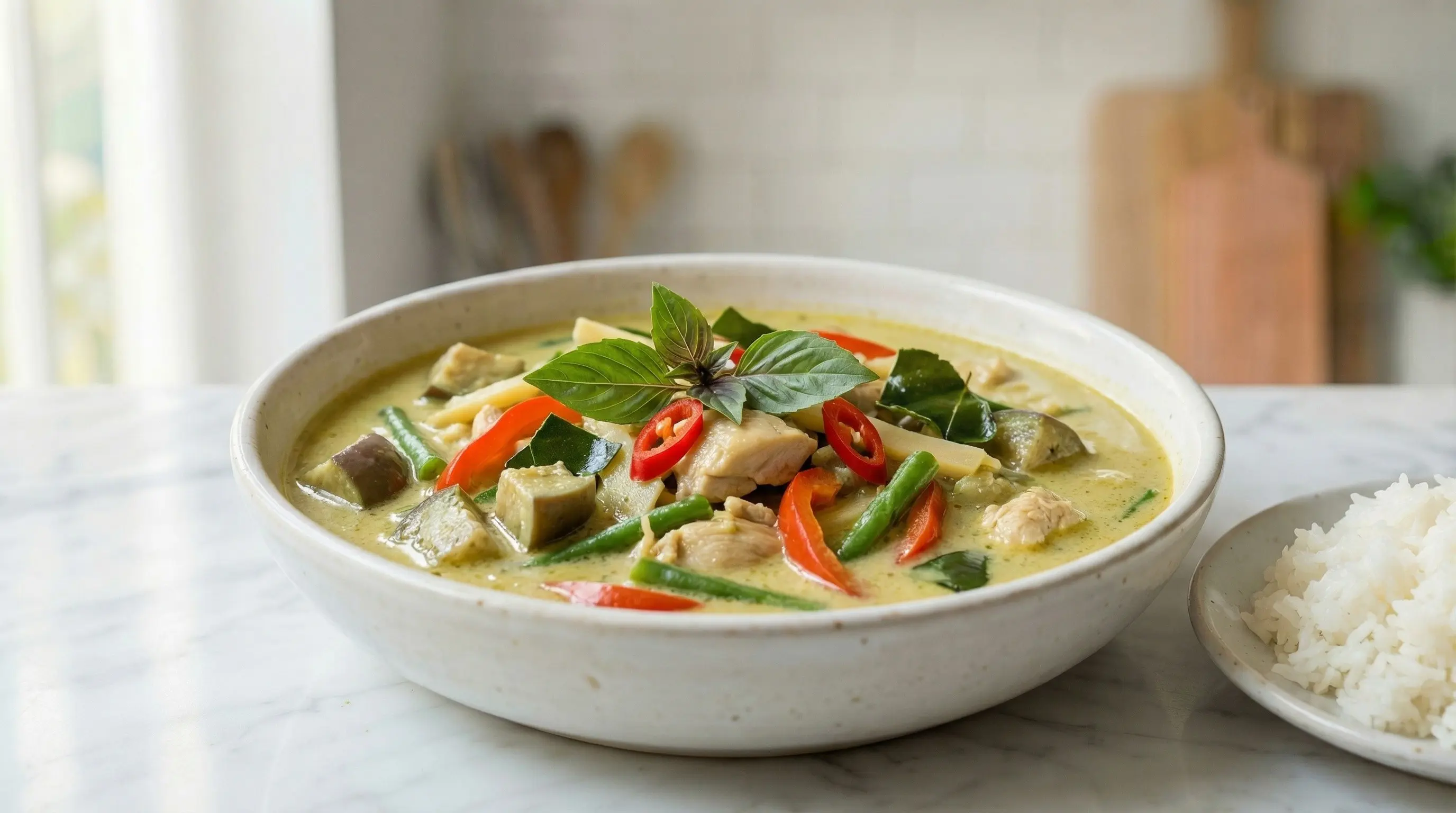
Authentic Thai Green Curry
Learn how to make authentic Thai green curry with tender chicken, vegetables, and a rich coconut sauce. This aromatic curry is creamy, slightly spicy, and ready in 30 minutes!
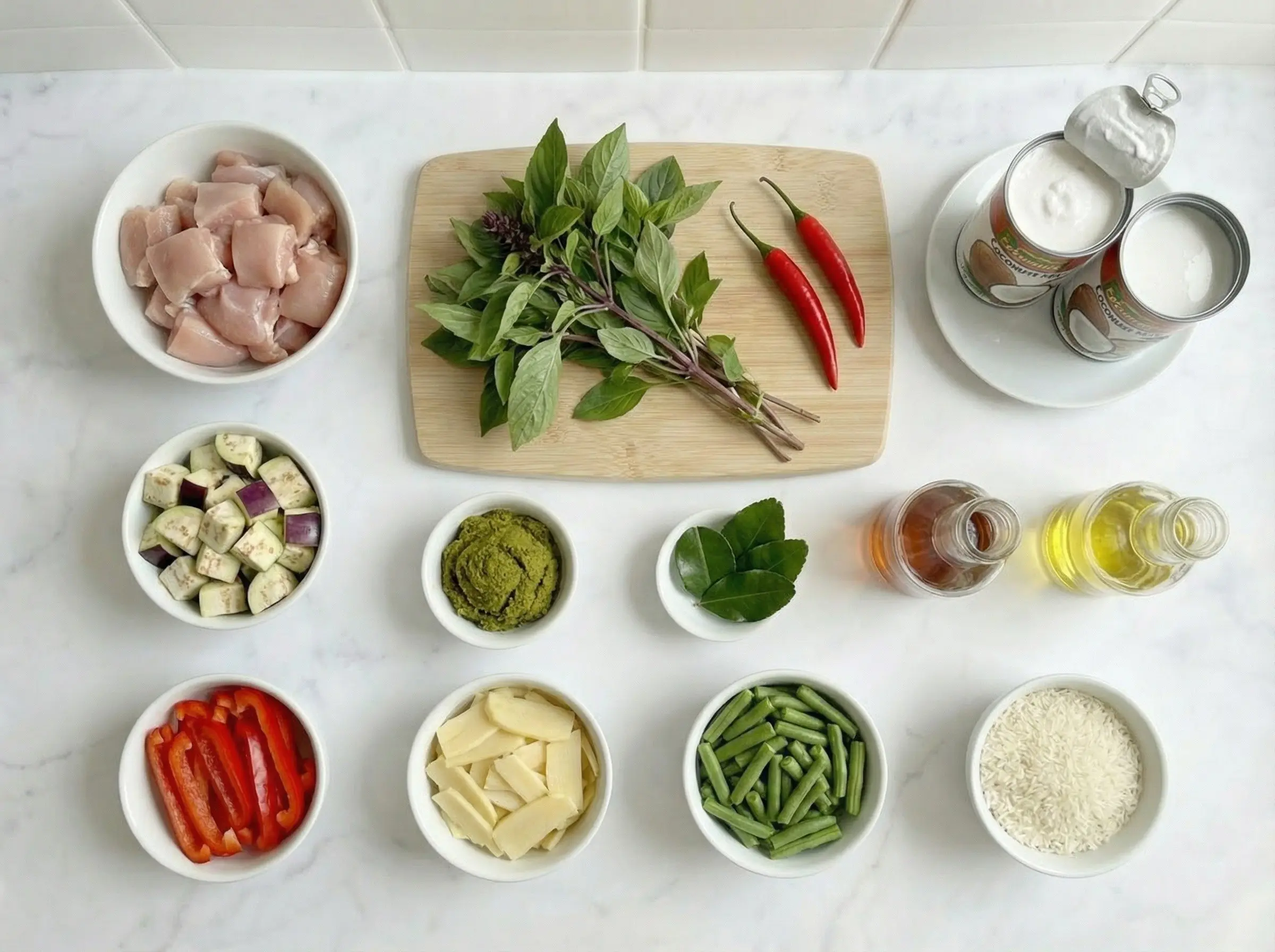
Ingredients
The Story
Thai green curry, known as "gaeng khiao wan" in Thai, translates literally to "sweet green curry" - a name that refers not to sweetness in taste but to the vibrant green color of the fresh chilies used in the curry paste. Green curry is one of the central curries in Thai cuisine, part of a family that includes red curry, yellow curry, massaman, and panang. While Indian curries rely heavily on dried spices, Thai curries are built on fresh ingredients pounded into aromatic pastes, giving them a brighter, more herbaceous character. The distinctive green color comes from fresh green Thai chilies, combined with herbs like cilantro, Thai basil, and kaffir lime zest. The history of Thai curries reflects Thailand's position as a cultural crossroads in Southeast Asia. Curry-style dishes likely arrived in Thailand through trade with India and the Malay Peninsula centuries ago, but Thai cooks transformed them into something distinctly their own. Rather than adopting the dried spice blends of Indian curries, Thai cooks developed paste-based curries using local ingredients - galangal instead of ginger, fish sauce instead of salt, coconut milk from the abundant palms, and the fiery Thai chilies that grew wild in the region. Green curry as we know it today likely developed in the central plains of Thailand, particularly around Bangkok, where the royal court cuisine refined and elevated these dishes. What makes Thai green curry so beloved is its remarkable depth of flavor achieved through the complexity of the curry paste and the richness of coconut milk. A proper green curry paste contains over a dozen ingredients pounded together: green chilies, garlic, shallots, lemongrass, galangal, cilantro roots, kaffir lime zest, coriander seeds, cumin, white peppercorns, and shrimp paste. When this paste is fried in coconut cream and then simmered with more coconut milk, vegetables, and protein, the result is a curry that is simultaneously creamy and bright, rich and refreshing, spicy and aromatic. The addition of Thai basil at the end provides a final burst of freshness that elevates the entire dish. Thai green curry represents the essence of Thai cooking philosophy: bold, balanced, and built on layers of fresh, aromatic ingredients.
Instructions
Step 1
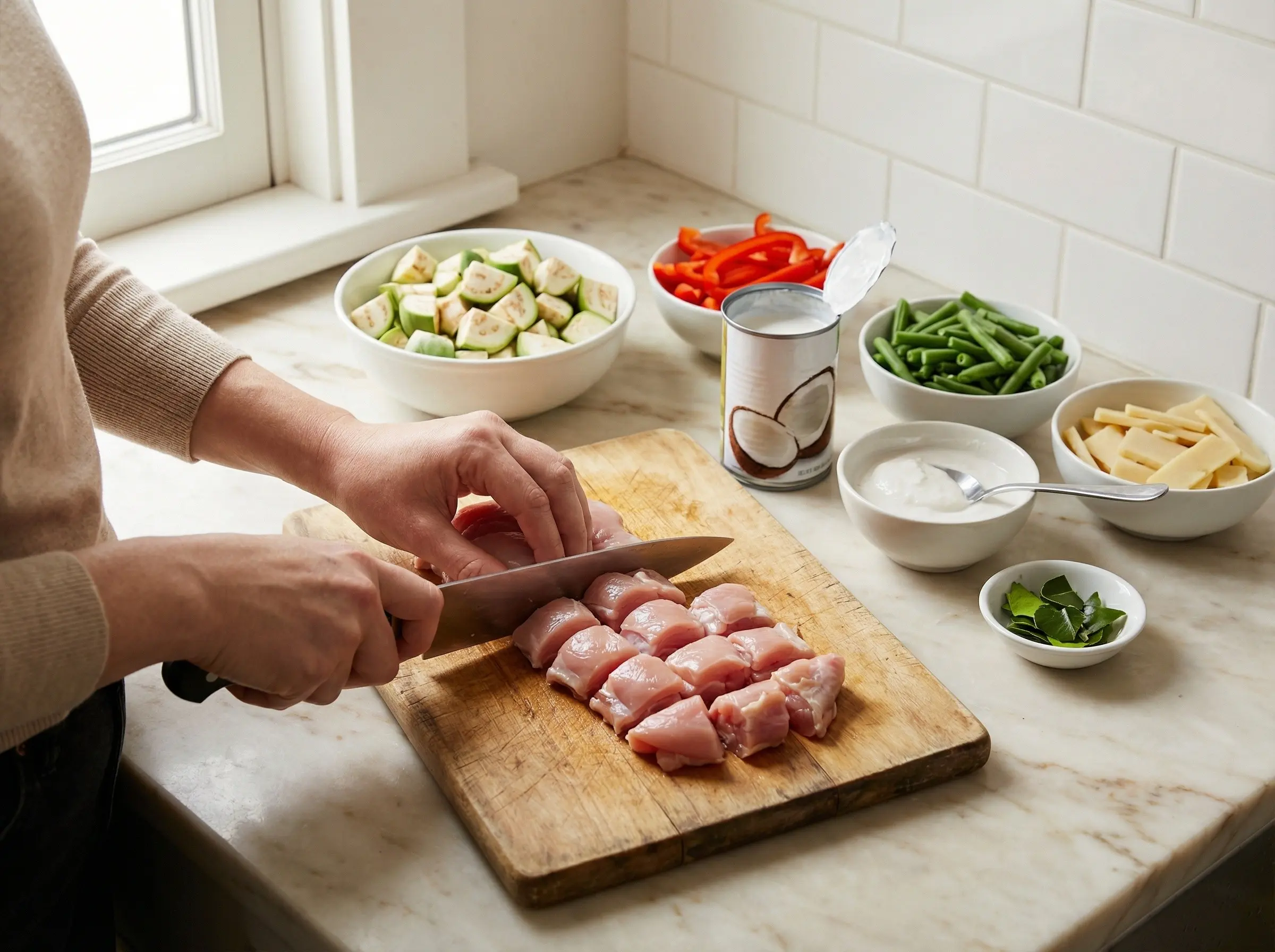
Prepare all your ingredients before cooking as green curry comes together quickly. Cut the chicken thighs into bite-sized pieces, about 1-inch cubes. Chicken thighs are preferred over breast because they stay tender and juicy during cooking and absorb more flavor. Cut the eggplant into cubes - if using Thai eggplant, quarter them; if using regular eggplant, cut into 1-inch cubes. Slice the red bell pepper into thin strips. Trim the green beans and cut into 2-inch pieces. Drain the bamboo shoots if using canned. Tear the kaffir lime leaves in half and remove the tough center stem. Open the cans of coconut milk - do not shake them. Carefully scoop out the thick coconut cream that has risen to the top and set it aside separately from the thinner coconut milk. This separation is important for properly frying the curry paste.
Step 2
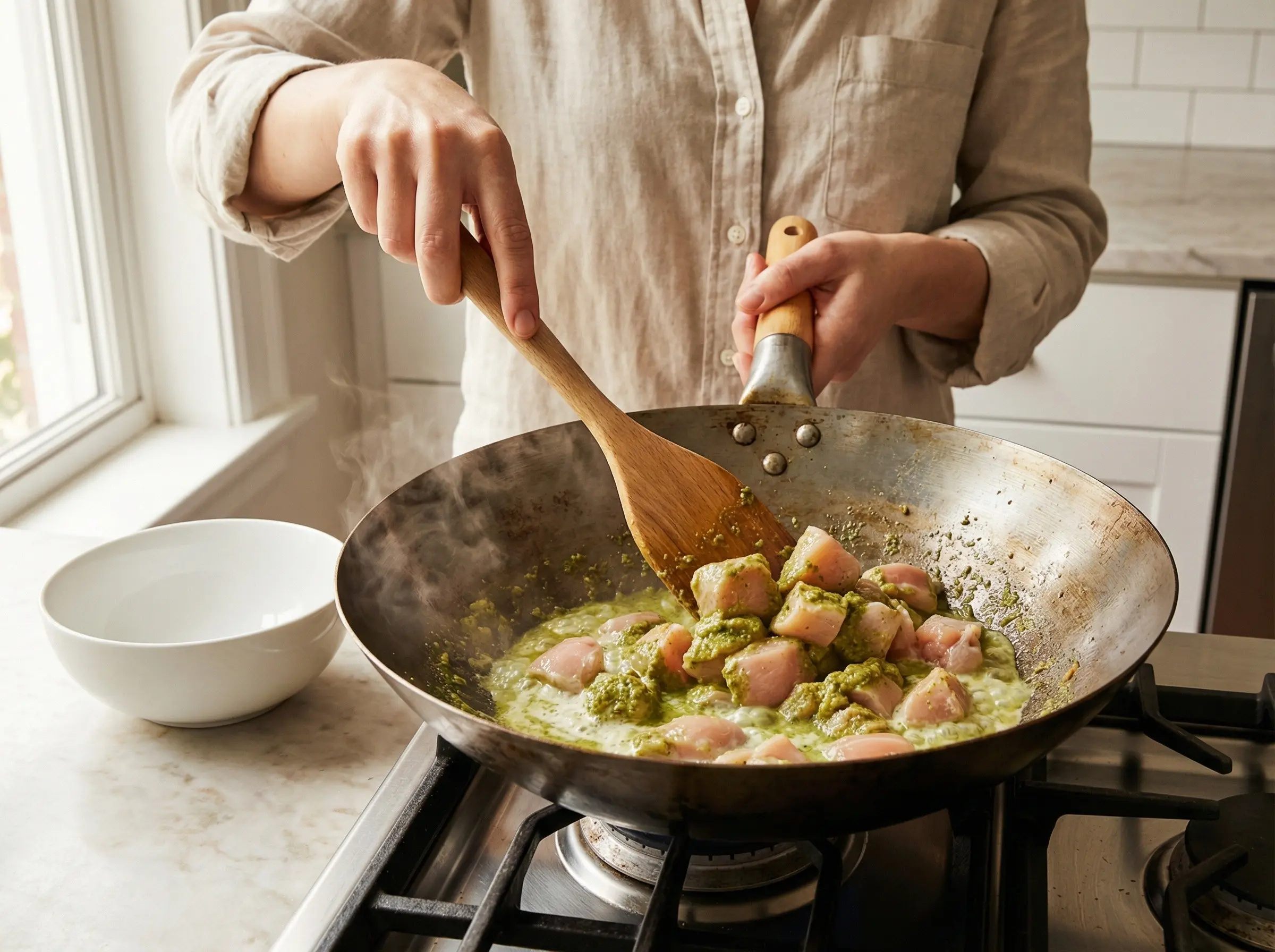
Heat the vegetable oil in a large wok or deep skillet over medium-high heat. Add the thick coconut cream - about 1/2 cup - and let it heat until it begins to separate and oil droplets appear on the surface. This process is called cracking the coconut cream and takes about 2-3 minutes. You will see the cream become glossy and oil will pool around the edges. Add the green curry paste to the cracked coconut cream. Fry the paste vigorously, stirring constantly, for 2-3 minutes until it becomes very fragrant and darkens slightly. The paste should sizzle and release an incredible aroma. This step is crucial - frying the curry paste in coconut cream blooms the spices and develops deeper, more complex flavors than simply simmering the paste in liquid.
Step 3
Add the chicken pieces to the fragrant curry paste and toss to coat them evenly. Cook for 3-4 minutes, stirring frequently, until the chicken is no longer pink on the outside and has absorbed some of the curry paste. The chicken will not be fully cooked through yet - it will finish cooking in the coconut milk. The pieces should be well coated with the green curry paste, giving them a vibrant green color. If the paste starts to stick to the pan, reduce the heat slightly and add a splash of the thin coconut milk.
Step 4
Pour in the remaining coconut milk (both the thin milk and any remaining cream) and stir to combine with the curry paste. Add the eggplant, green beans, and torn kaffir lime leaves. Bring the curry to a gentle simmer - avoid boiling vigorously as this can cause the coconut milk to separate. Simmer for 8-10 minutes until the vegetables are tender and the chicken is cooked through. The eggplant should be soft and have absorbed some of the curry sauce. Stir occasionally to ensure even cooking. The curry should be creamy and fragrant, with the green curry paste fully incorporated into the coconut milk.
Step 5
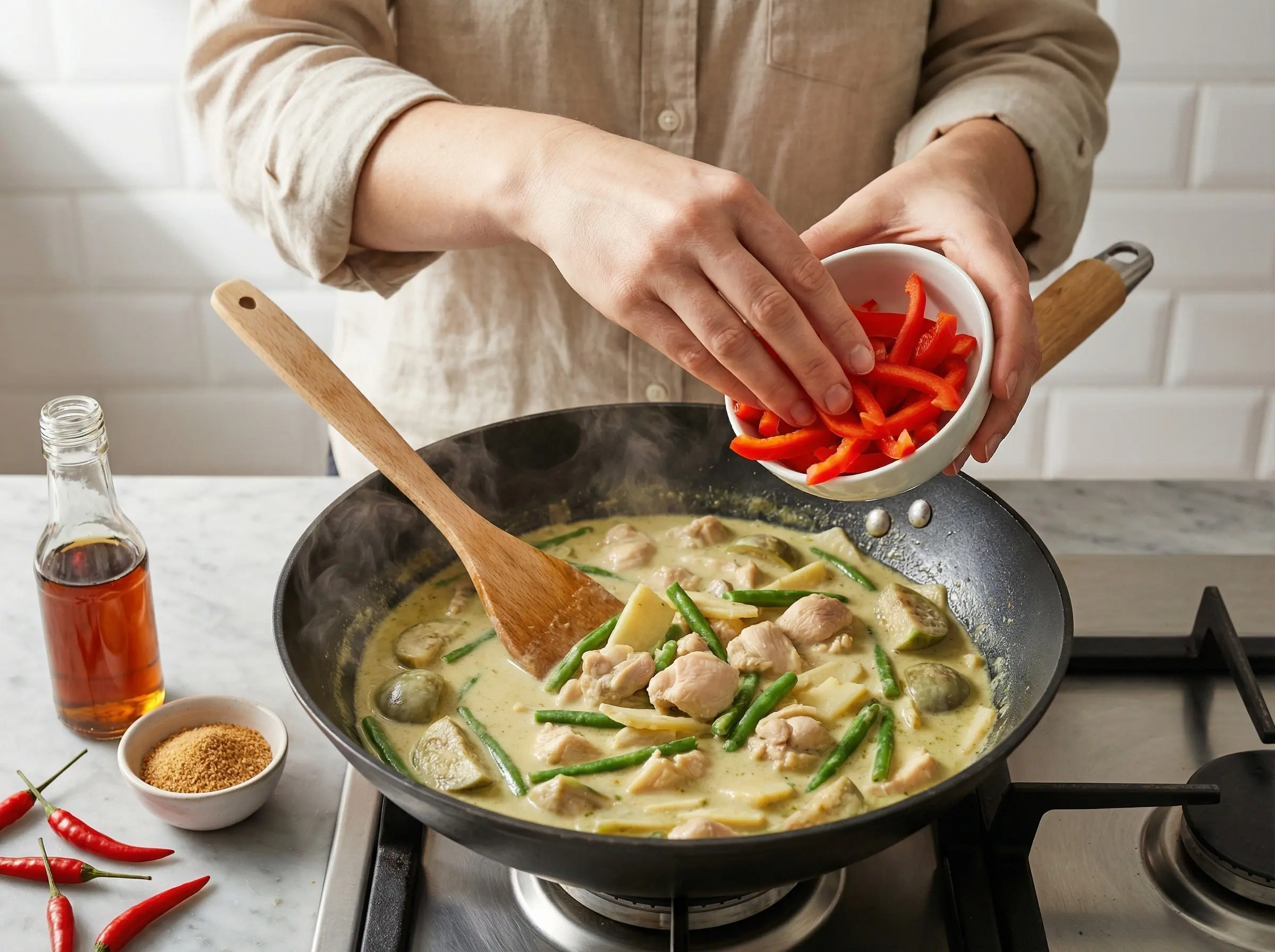
Add the sliced red bell pepper and bamboo shoots to the curry. These vegetables need less cooking time and should remain slightly crisp for textural contrast. Simmer for another 3-4 minutes. Season the curry with fish sauce and palm sugar, stirring to dissolve the sugar. Taste and adjust the seasoning - the curry should be a balance of creamy, salty, sweet, and spicy. Add more fish sauce for saltiness and umami depth, more sugar to balance heat and acidity, or more curry paste if you want it spicier. Thai curries should be well-seasoned and bold, not bland. If you want extra heat, add the sliced Thai chilies now.
Step 6
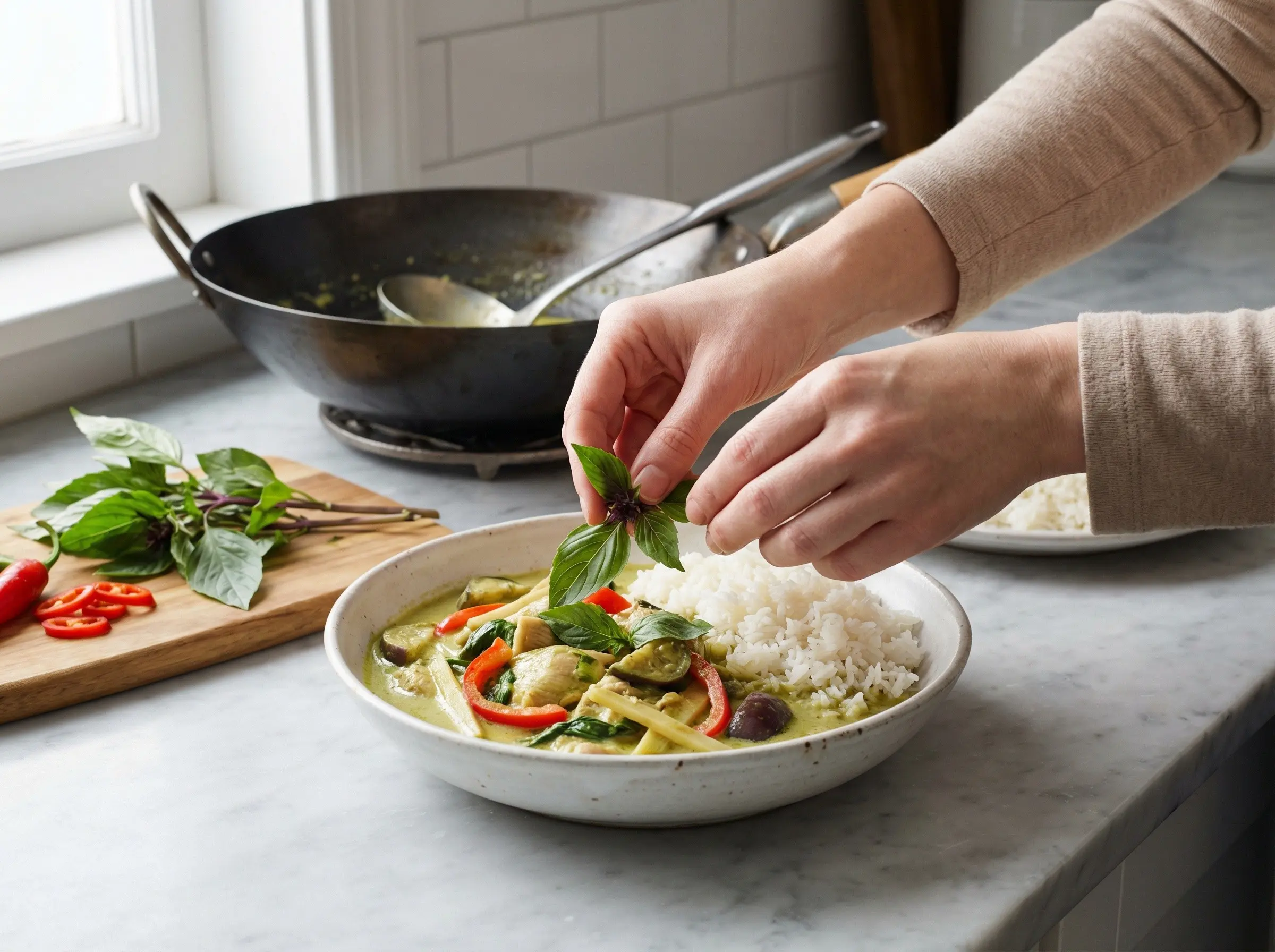
Remove the curry from heat and stir in the fresh Thai basil leaves. The basil will wilt slightly from the residual heat, releasing its distinctive anise-like aroma that is essential to authentic green curry. Do not cook the basil - adding it off the heat preserves its vibrant green color and fresh flavor. Ladle the green curry into deep bowls and serve immediately with steamed jasmine rice. In Thailand, curry is typically spooned over rice or served alongside it. The creamy sauce is meant to be mixed with the rice. Garnish with additional Thai basil leaves if desired. Green curry is best enjoyed fresh, but leftovers can be refrigerated for up to 3 days. Reheat gently over low heat - add a splash of coconut milk or water if the sauce has thickened too much. The flavors often improve slightly after a day as they have more time to meld together.
You Might Also Like
Master Your Kitchen with PantryAI
Love this recipe? Save it, shop for it, and cook it with ease. Download the PantryAI app to organize your pantry, track expirations, and discover recipes based on what you already have.

On a computer?Scan with your iPhone camera to download PantryAI.








Swipe to see more screenshots