
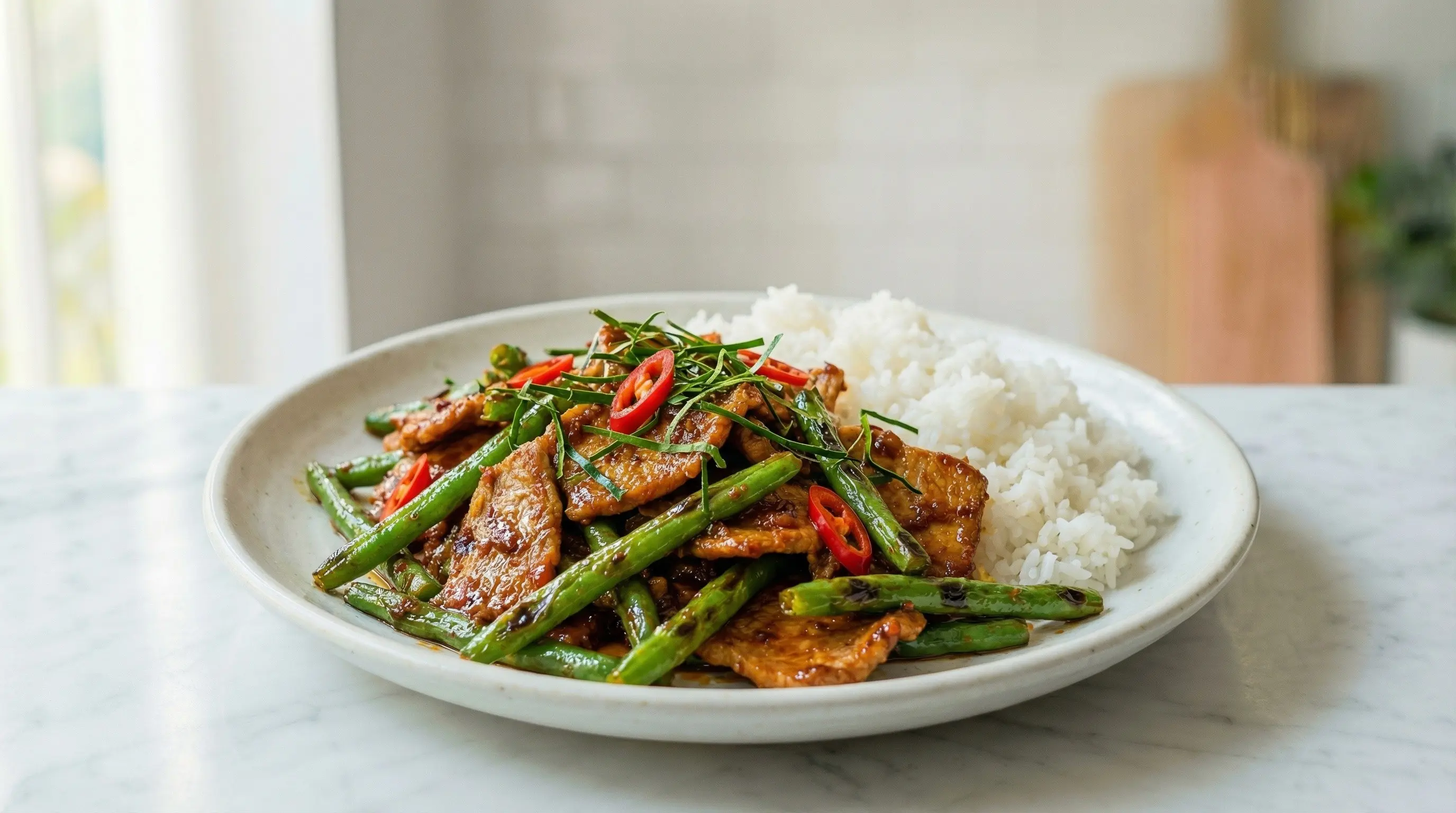
Pad Prik King
Learn how to make authentic pad prik king, a Thai dry curry stir-fry with crispy green beans, red curry paste, and aromatic kaffir lime leaves. Bold, spicy, and ready in 20 minutes!
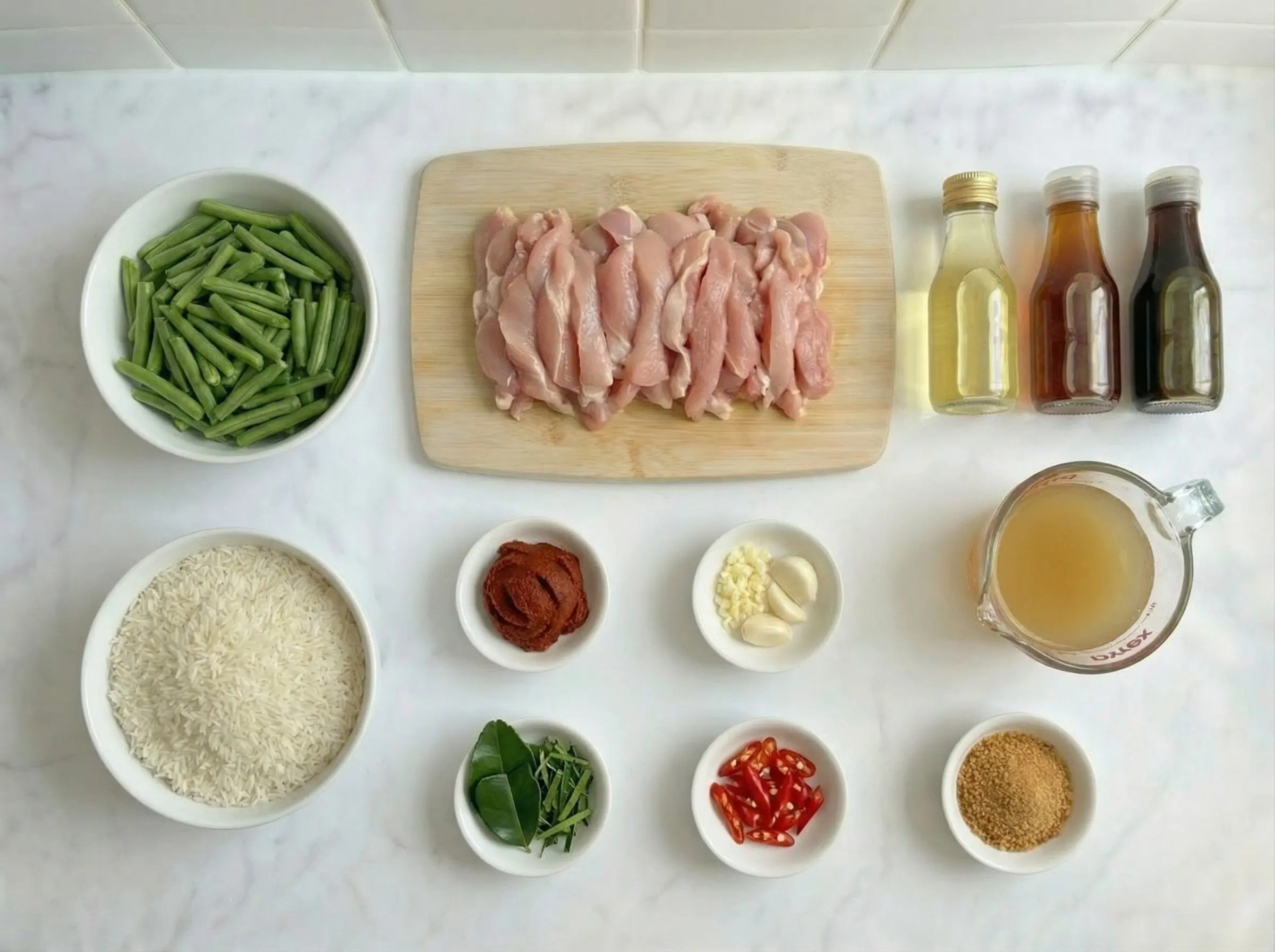
Ingredients
The Story
Pad prik king is a classic Thai stir-fry that showcases the dry curry technique unique to Thai cuisine. The name translates to "stir-fry with ginger curry" - "prik king" refers to a specific type of red curry paste that traditionally contains ginger as a prominent ingredient, distinguishing it from other Thai curry pastes. Unlike the wet, coconut milk-based curries that Thailand is famous for internationally, pad prik king belongs to a category of dishes where curry paste is fried until dry and aromatic, coating the ingredients rather than swimming in sauce. This technique concentrates the flavors intensely, creating a dish that is bold, aromatic, and deeply satisfying. The dish has its roots in central Thai cuisine, where it developed as a quick, everyday meal that could be prepared with whatever protein and vegetables were available. Green beans became the most popular vegetable pairing, their crisp texture and mild flavor providing the perfect canvas for the intense curry paste. Pork is the most traditional protein, though chicken, shrimp, and even crispy pork belly are common variations. The addition of finely shredded kaffir lime leaves at the end is essential - their distinctive citrus-floral fragrance elevates the dish and provides a fresh counterpoint to the rich, spicy curry paste. Pad prik king is everyday home cooking in Thailand, the kind of dish that Thai mothers make for their families on busy weeknights. What makes pad prik king so distinctive is the dry curry technique and the resulting intensity of flavor. When red curry paste is fried in oil without coconut milk, it transforms - the spices bloom, the aromatics caramelize, and the paste becomes deeply fragrant and slightly sweet. This fried paste then coats each piece of protein and vegetable, delivering concentrated curry flavor in every bite. The green beans are typically cooked until slightly blistered and tender-crisp, providing textural contrast. A touch of palm sugar balances the heat, while fish sauce adds umami depth. The final garnish of kaffir lime leaves is not just decorative - their oils release when you bite into them, creating bursts of citrus aroma that make the dish truly special. Pad prik king represents Thai cooking at its most elemental: a handful of quality ingredients, proper technique, and bold, balanced flavors.
Instructions
Step 1
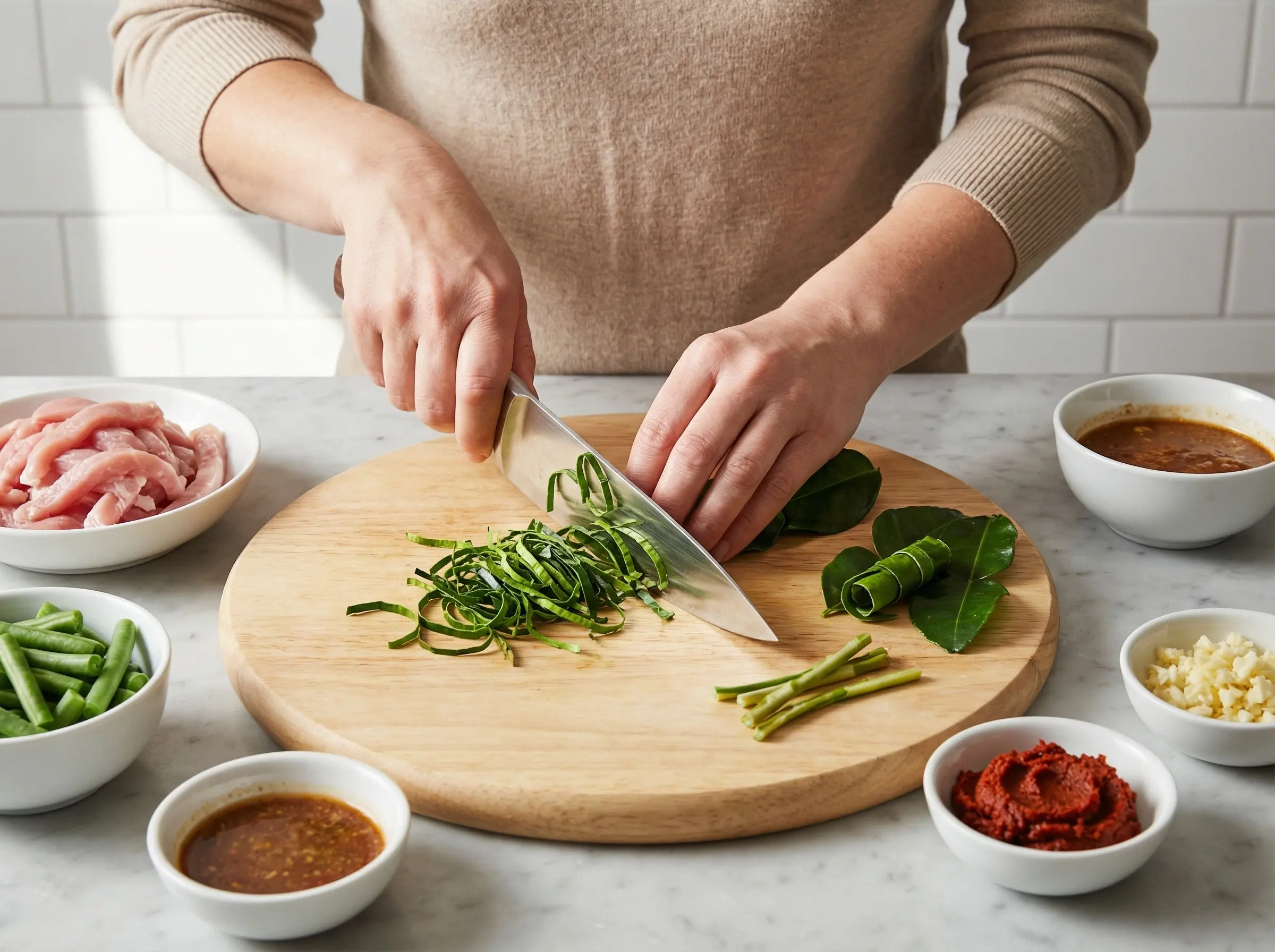
Prepare all ingredients before cooking as this stir-fry comes together very quickly. Slice the pork or chicken into thin strips, about 1/4 inch thick and 2 inches long - thin slices ensure quick cooking and maximum surface area for the curry paste to coat. Trim the ends off the green beans and cut them in half, or into 2-inch pieces. Mince the garlic. Remove the tough center stem from the kaffir lime leaves, stack them, roll tightly, and slice into very thin ribbons (chiffonade) - this releases their aromatic oils and makes them pleasant to eat. Mix together the fish sauce, oyster sauce, palm sugar, and chicken broth in a small bowl, stirring until the sugar dissolves.
Step 2
Heat a wok or large skillet over high heat until very hot. Add the vegetable oil and swirl to coat. Add the green beans and stir-fry for 3-4 minutes, tossing frequently, until they are blistered in spots, bright green, and tender-crisp. The beans should have some charred spots which add flavor but still have a nice snap when bitten. If your wok is not large enough to cook them in a single layer, work in batches. Transfer the beans to a plate and set aside.
Step 3
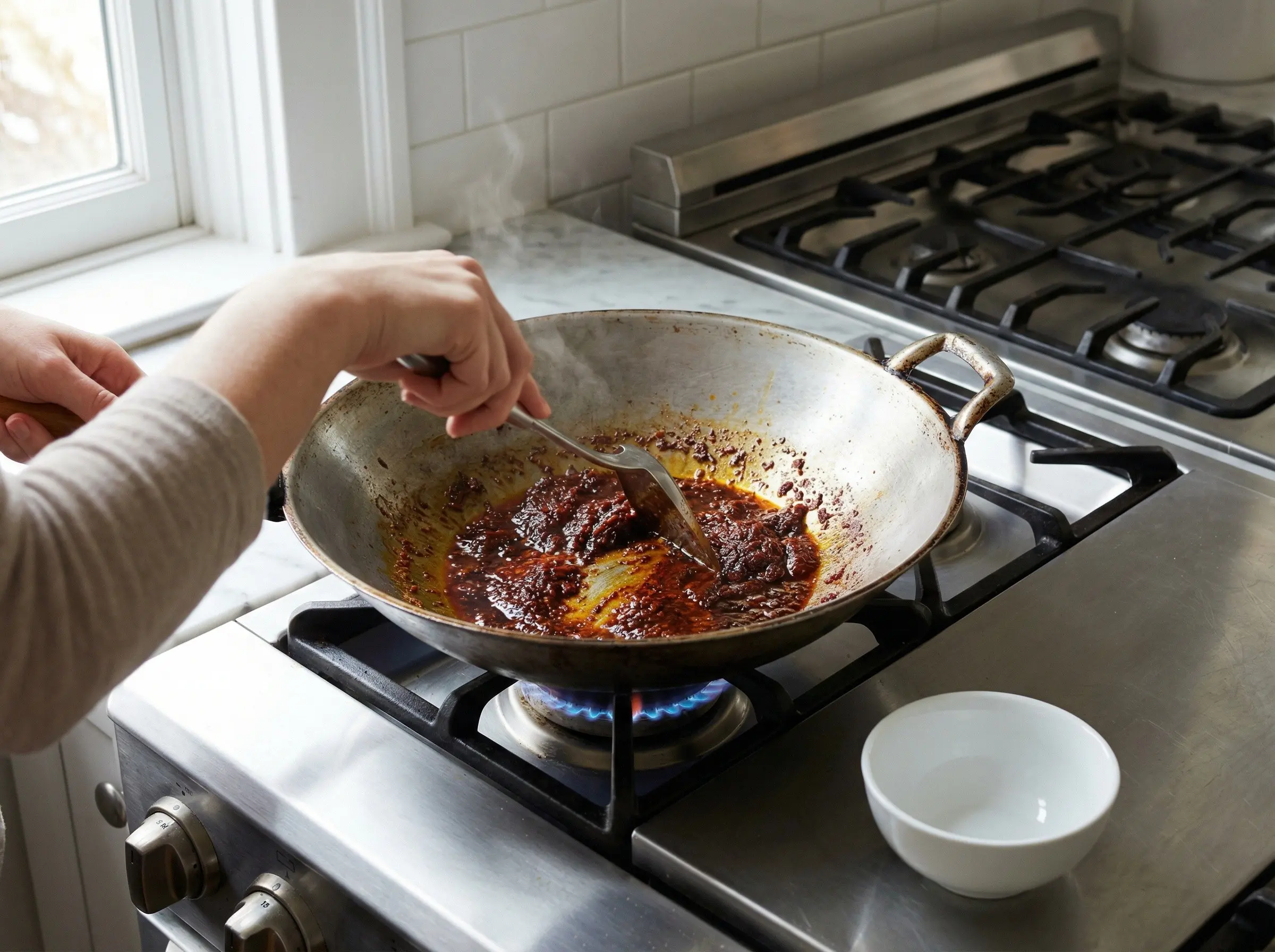
Return the wok to high heat. Add a bit more oil if needed. Add the minced garlic and stir-fry for just 10-15 seconds until fragrant. Immediately add the red curry paste. This is the key step - stir-fry the curry paste vigorously for 1-2 minutes until it becomes very fragrant, darkens slightly, and the oil begins to separate and pool around the edges. The paste should sizzle and transform from a wet mixture to a dry, aromatic coating. This frying process is what makes pad prik king a dry curry rather than a saucy one. Be careful not to burn the paste - reduce heat slightly if it begins to scorch.
Step 4
Add the sliced pork or chicken to the wok with the fried curry paste. Stir-fry vigorously for 2-3 minutes, tossing and flipping constantly, until the meat is coated in the red curry paste and cooked through. The curry paste should coat each piece of meat evenly, creating a vibrant red color. If the paste sticks to the wok, add a splash of the sauce mixture to help deglaze. The meat should be just cooked through - do not overcook or it will become tough.
Step 5
Return the blistered green beans to the wok. Pour in the prepared sauce mixture. Toss everything together over high heat for about 1 minute until the sauce is absorbed and the beans are reheated. The dish should look dry and glossy, with the curry paste coating all the ingredients rather than pooling as a sauce. Add the sliced red chili if using for extra heat and color. Taste and adjust seasoning - add more fish sauce for saltiness, more sugar for sweetness, or more curry paste for heat.
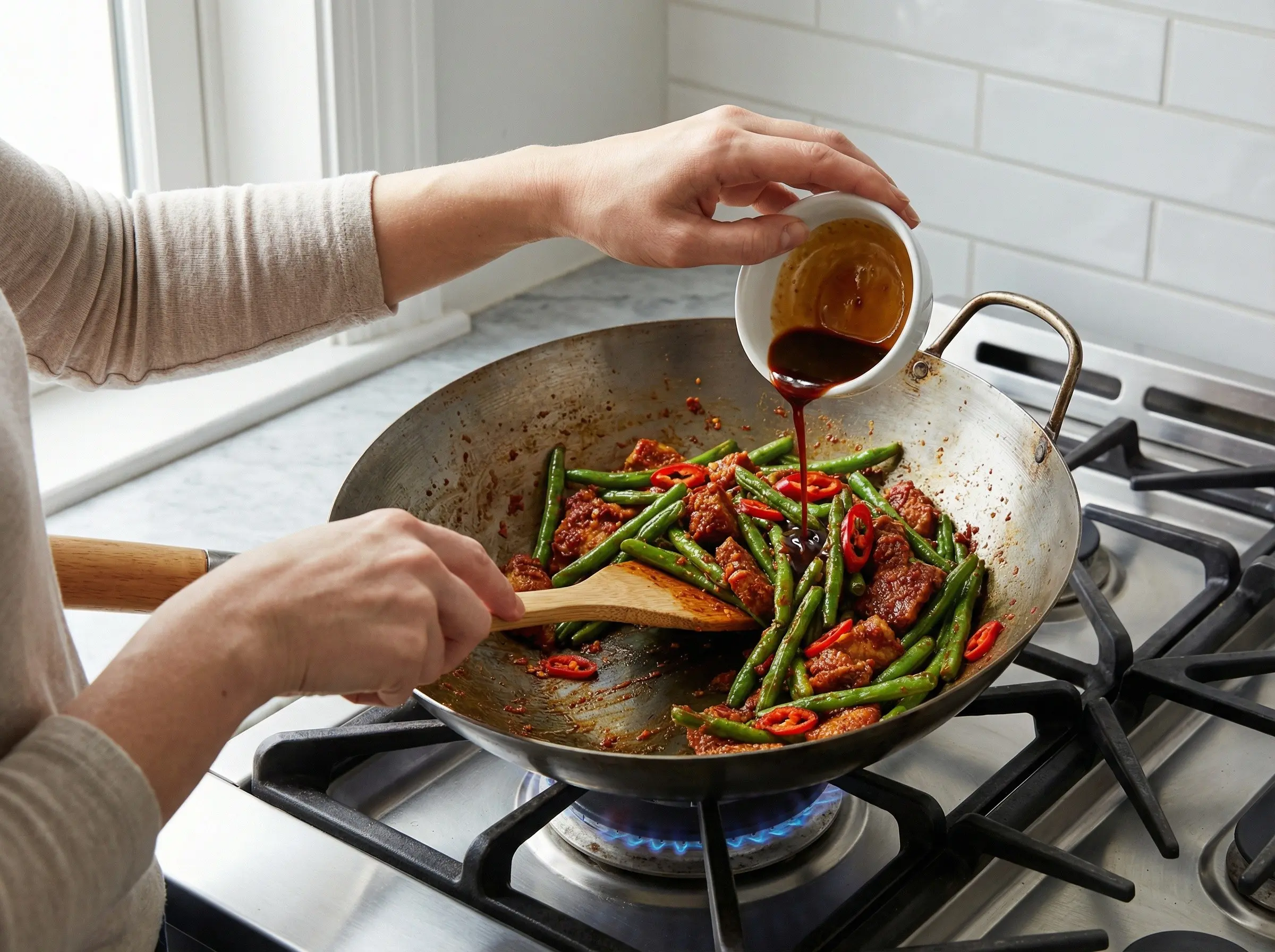
Step 6
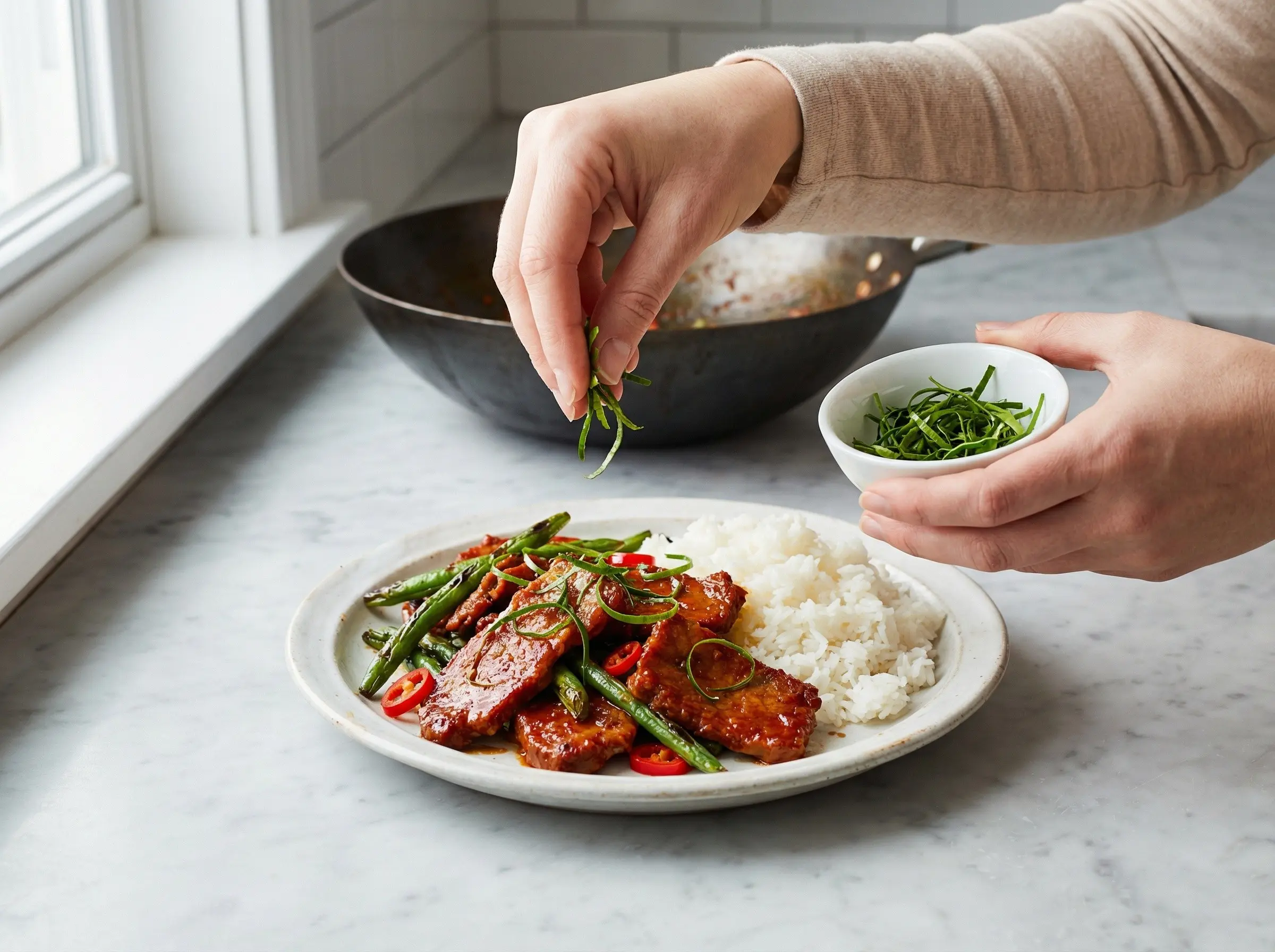
Remove the wok from heat and add the thinly sliced kaffir lime leaves. Toss briefly to distribute - the residual heat will release their incredible citrus aroma without cooking them. The lime leaves should remain bright green and fragrant. Transfer immediately to a serving plate. The finished dish should be dry and glossy, deeply red from the curry paste, with visible green beans and ribbons of kaffir lime leaf throughout. Serve hot with steamed jasmine rice. Pad prik king is also delicious at room temperature, making it suitable for Thai lunch boxes and packed meals. The flavors actually improve slightly as they meld, though the green beans will lose some crispness. Store leftovers refrigerated for up to 3 days and reheat in a wok or skillet.
You Might Also Like
Master Your Kitchen with PantryAI
Love this recipe? Save it, shop for it, and cook it with ease. Download the PantryAI app to organize your pantry, track expirations, and discover recipes based on what you already have.

On a computer?Scan with your iPhone camera to download PantryAI.








Swipe to see more screenshots