
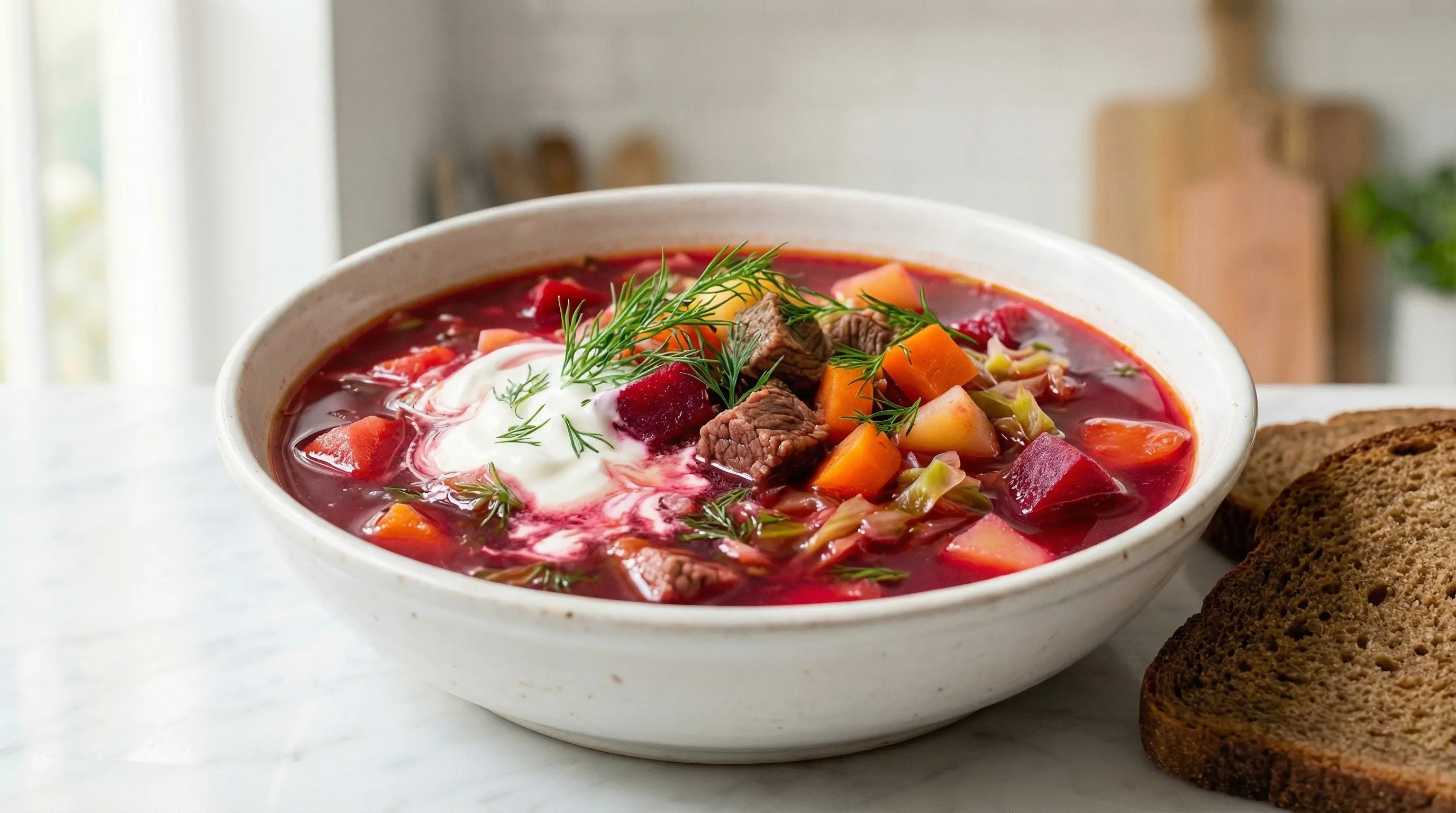
Traditional Borscht
Learn how to make authentic Russian borscht with beets, cabbage, and a rich broth. This vibrant soup is hearty, flavorful, and served with a dollop of sour cream!
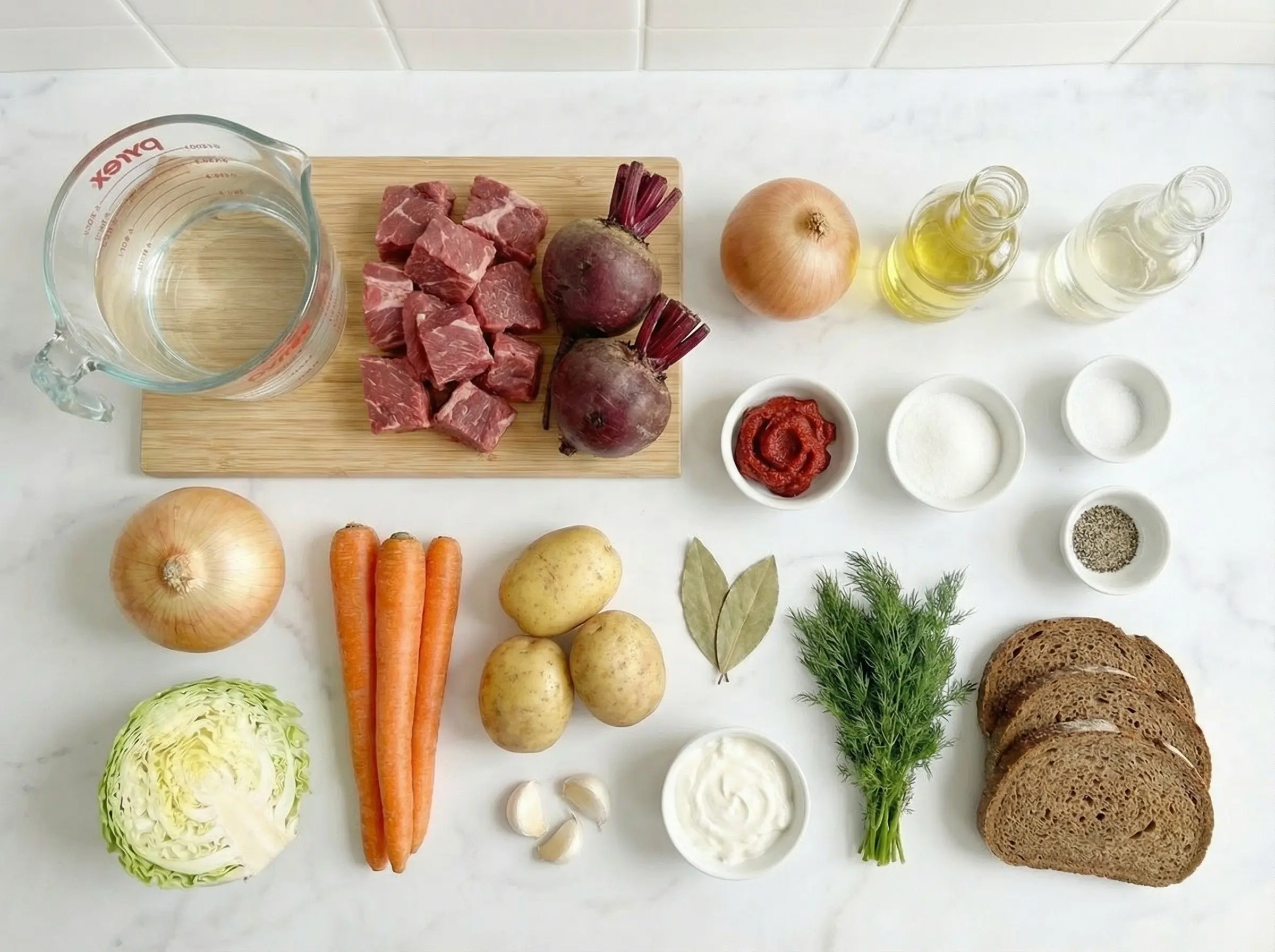
Ingredients
The Story
Borscht is one of the most iconic dishes of Eastern European cuisine, with a history spanning over a thousand years and variations across Russia, Ukraine, Poland, Belarus, and other Slavic countries. The origins of borscht are debated, but most food historians trace it back to the medieval period when it was originally made with hogweed (a plant called "borshch" in Slavic languages) rather than beets. The beet-based version we recognize today emerged sometime in the 16th or 17th century when beets became widely cultivated in the region. Each country and even each family has their own cherished recipe, leading to passionate debates about what constitutes authentic borscht. In Russian and Ukrainian culture, borscht holds deep significance beyond just being a soup - it represents home, comfort, and tradition. The dish was traditionally made in large batches and served throughout the week, with the flavor improving over time. Regional variations are numerous: Ukrainian borscht tends to be thicker and heartier, often containing beans and sometimes prunes; Russian borscht may include beef or be made vegetarian; Polish barszcz is often clearer and more broth-like. During the Soviet era, borscht became a symbol of shared Eastern European identity, appearing in cafeterias, homes, and restaurants across the vast territory. The tradition of making borscht was often passed down through generations, with grandmothers teaching granddaughters the family's specific method. What makes borscht so beloved is its perfect balance of flavors and textures - the earthy sweetness of beets, the tang of vinegar or lemon, the richness of the broth, the freshness of dill, and the cooling contrast of sour cream. The vibrant magenta color is unmistakable and visually stunning. Borscht can be served hot or cold, as a main course or starter, vegetarian or with meat. Whether eaten in a Moscow apartment, a village in Ukraine, or a Polish home in winter, borscht provides nourishment, warmth, and a connection to centuries of Eastern European culinary tradition.
Instructions
Step 1
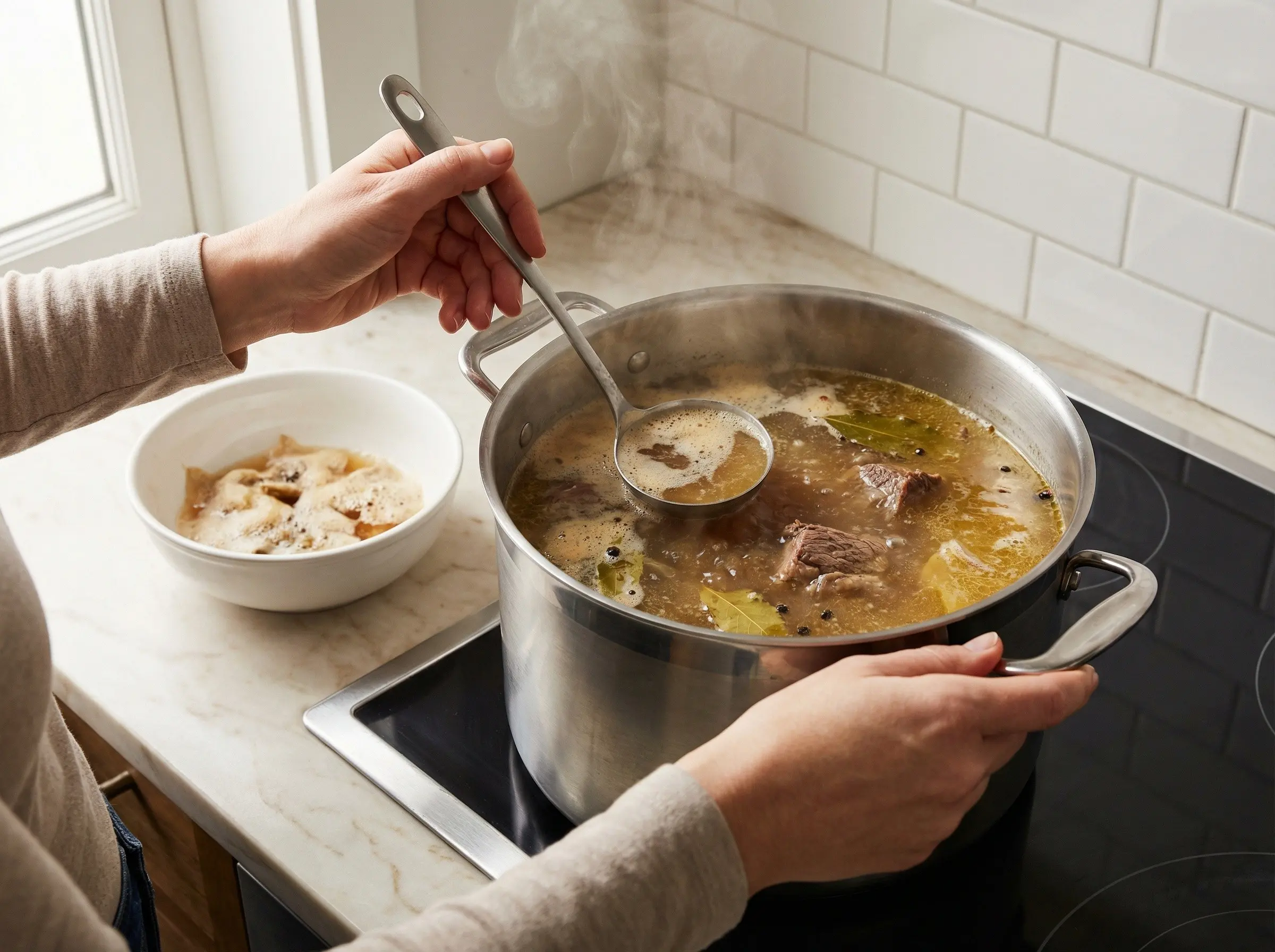
Start by making the beef broth, which forms the flavorful base of the borscht. Place the beef chunks in a large pot or Dutch oven and cover with the 10 cups of cold water. Bring to a boil over high heat, then immediately reduce to a gentle simmer. As the water heats, foam and impurities will rise to the surface - skim these off with a spoon or ladle and discard. This creates a clearer, cleaner-tasting broth. Add the bay leaves, 1 teaspoon of salt, and black pepper. Cover partially and let simmer gently for about 1.5 to 2 hours until the beef is very tender and the broth is rich and flavorful. The meat should be falling-apart tender. Once cooked, remove the beef chunks from the broth and set aside. Strain the broth through a fine-mesh sieve to remove any remaining impurities. You should have about 8 cups of rich beef broth. Return the broth to the pot.
Step 2
While the broth simmers, prepare your vegetables. Peel the beets and grate them on the large holes of a box grater - wear gloves if you do not want your hands stained pink. The grated beets will cook faster and distribute their color and flavor more evenly throughout the soup. Dice the onion, slice the carrots into rounds or half-moons, peel and cube the potatoes into bite-sized pieces, and shred the cabbage into thin strips. Mince the garlic. Having all your vegetables prepped and ready makes the cooking process much smoother. Some cooks like to keep one beet aside to grate fresh at the end to add brightness to the color if needed.
Step 3
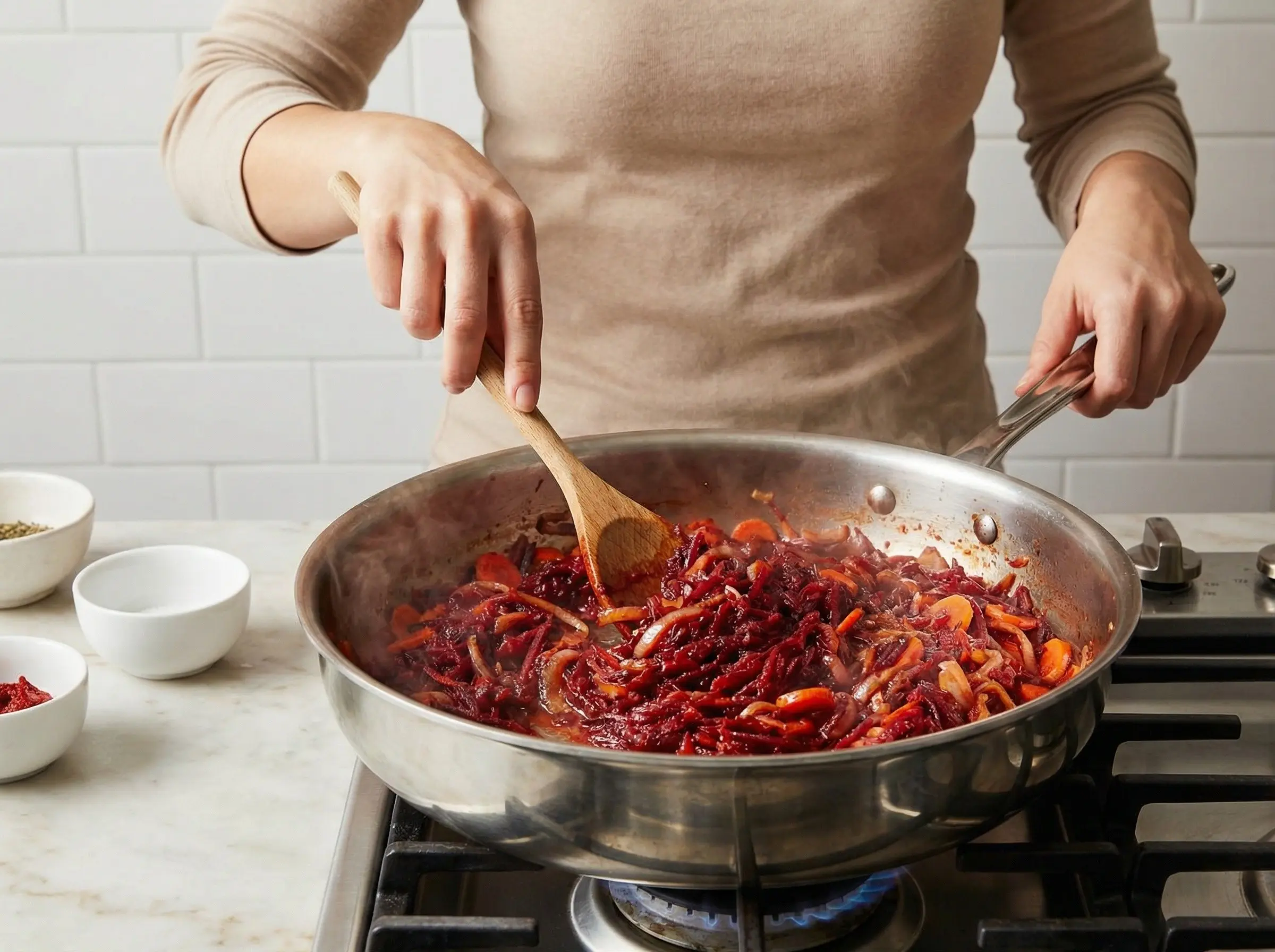
In a large skillet, heat the vegetable oil over medium heat. Add the diced onion and sliced carrots and sauté for 5-6 minutes until the onions are translucent and the carrots begin to soften. Add the grated beets and continue cooking for another 5-7 minutes, stirring occasionally. The beets will release their juices and the mixture will become vibrant red. Add the tomato paste and minced garlic, stirring constantly for 1-2 minutes until fragrant and the tomato paste darkens slightly. This sautéing process, sometimes called making a zazharka, concentrates the flavors and enhances the sweetness of the vegetables. The kitchen will smell incredible at this point.
Step 4
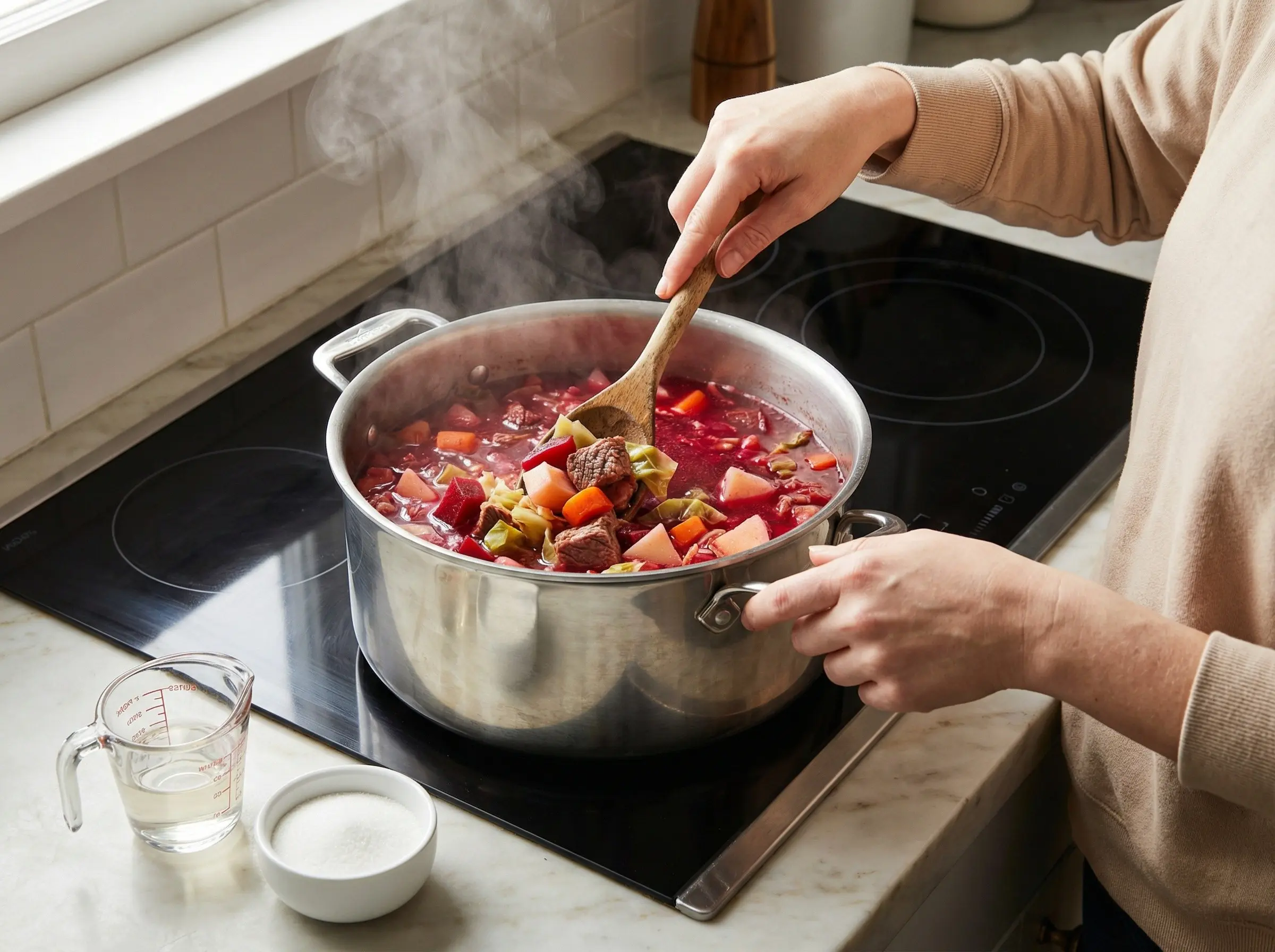
Add the sautéed vegetable mixture to the pot with the beef broth. Bring to a boil, then add the cubed potatoes. Reduce heat to medium and simmer for 10 minutes until the potatoes are starting to soften. Add the shredded cabbage and continue simmering for another 10-15 minutes until all the vegetables are tender. The cabbage should be soft but not mushy. Stir in the vinegar and sugar - these ingredients balance the earthiness of the beets with brightness and a touch of sweetness. This sweet-sour balance is characteristic of Russian borscht. Shred or chop the reserved cooked beef and add it back to the pot. Taste and adjust seasoning with more salt, vinegar, or sugar as needed. The soup should be rich, slightly sweet, and tangy.
Step 5
Let the borscht simmer for a final 5-10 minutes to allow all the flavors to meld together. The soup should be a beautiful deep magenta color with visible pieces of vegetables and meat. Some cooks believe borscht tastes even better the next day after the flavors have had more time to develop, so making it a day ahead is perfectly fine. In fact, many Russian families make a large pot on the weekend to enjoy throughout the week. The borscht will thicken slightly as it cools and the vegetables absorb more liquid.
Step 6
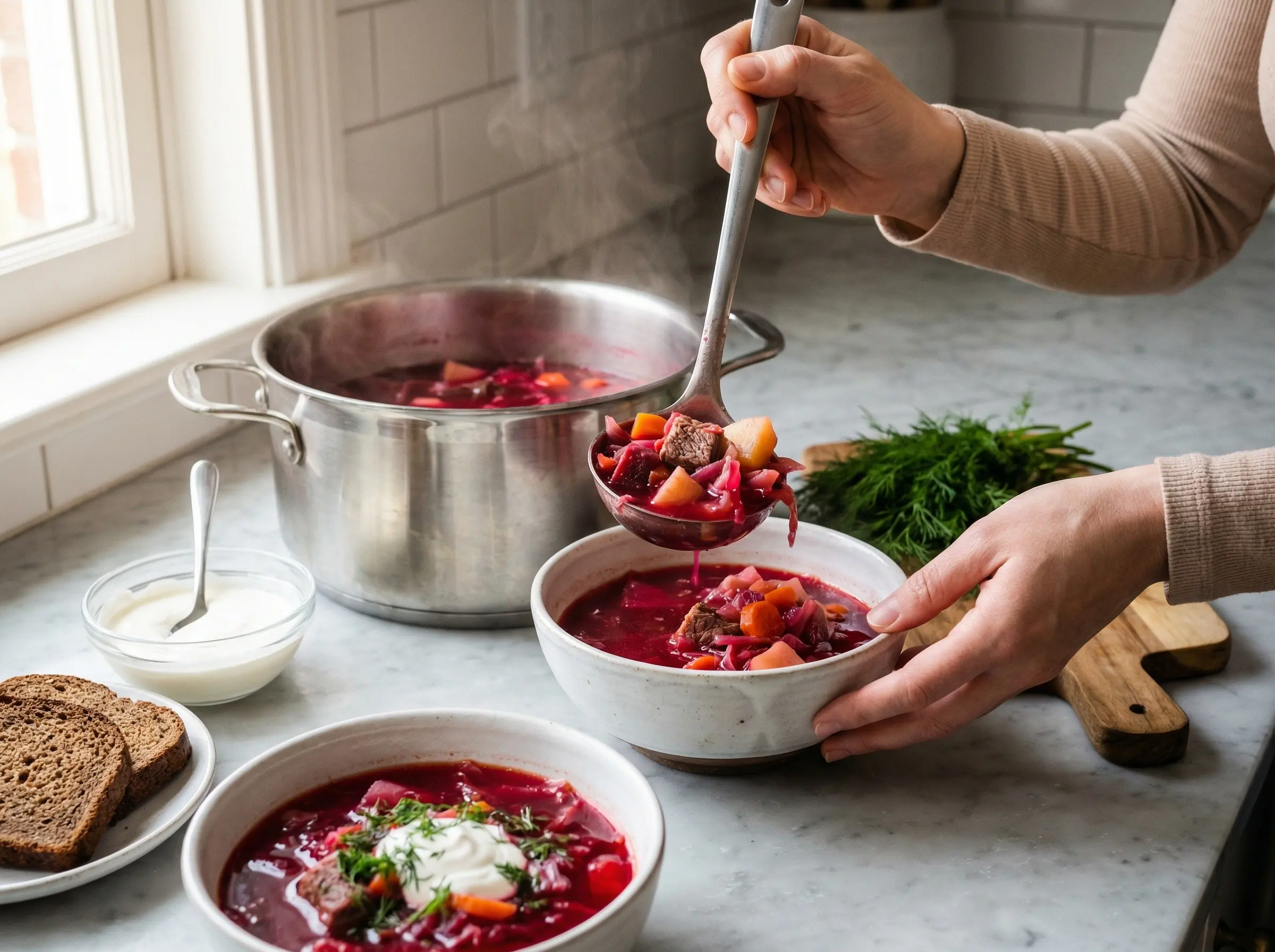
To serve, ladle the hot borscht into deep bowls, making sure each serving has a good mix of vegetables and meat. Top each bowl with a generous dollop of sour cream - this is not optional, it is traditional and essential. The cold sour cream creates a beautiful marbled effect as it melts into the hot soup and adds a cooling, tangy richness that perfectly complements the beets. Garnish generously with freshly chopped dill - the fresh, bright flavor of dill is the perfect finishing touch. Serve with slices of dark rye bread or pumpernickel on the side for dipping and soaking up the flavorful broth. Some people also like to serve borscht with a small glass of vodka, though this is optional. The combination of hot soup, cold sour cream, fresh dill, and hearty bread is pure comfort food. Store leftover borscht in the refrigerator for up to 5 days, or freeze for up to 3 months.
You Might Also Like


Master Your Kitchen with PantryAI
Love this recipe? Save it, shop for it, and cook it with ease. Download the PantryAI app to organize your pantry, track expirations, and discover recipes based on what you already have.

On a computer?Scan with your iPhone camera to download PantryAI.








Swipe to see more screenshots