
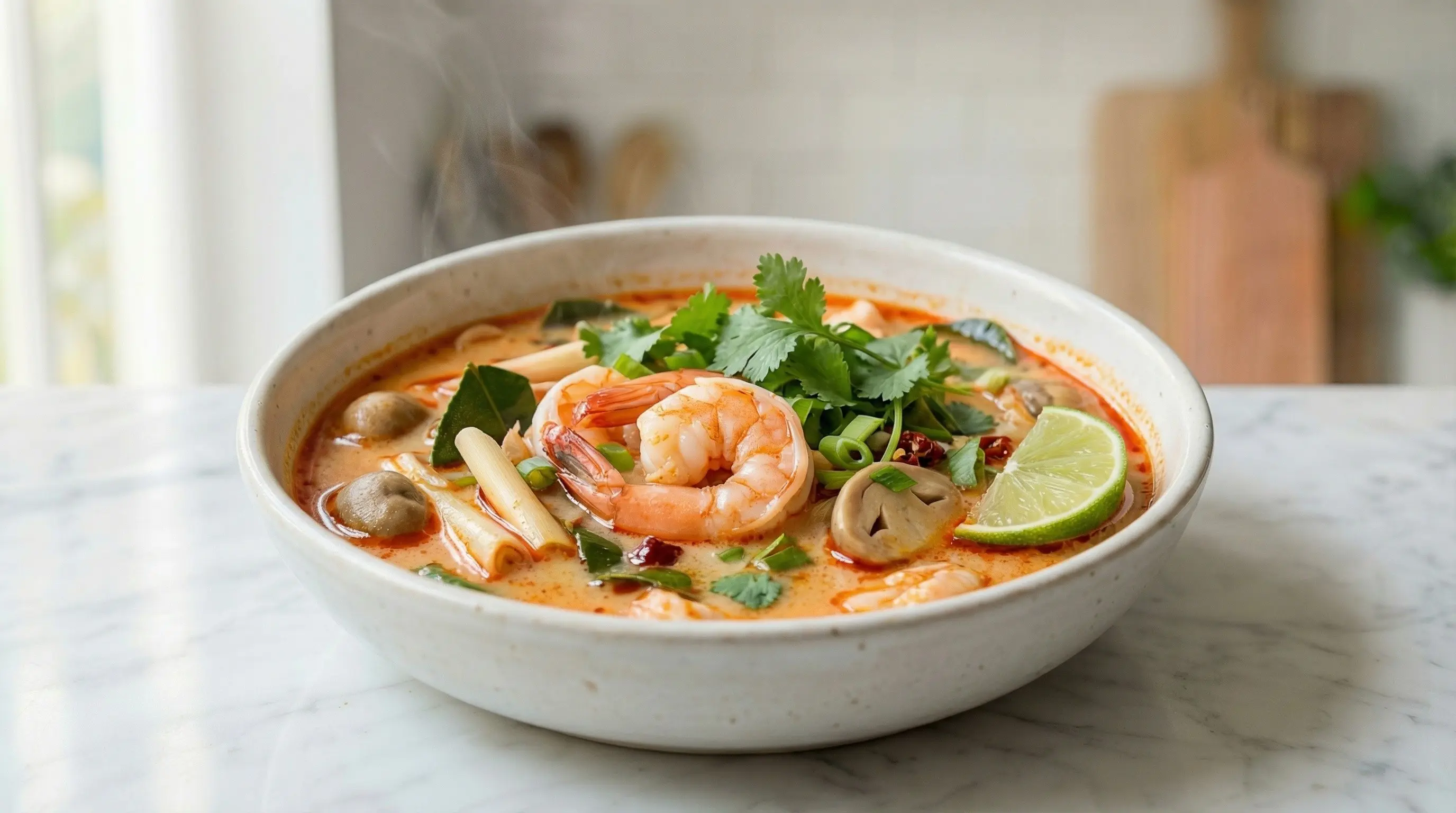
Authentic Tom Yum Goong
Learn how to make authentic tom yum goong, Thailand's famous hot and sour shrimp soup with lemongrass, galangal, and lime. This aromatic soup is bold, bright, and incredibly flavorful!
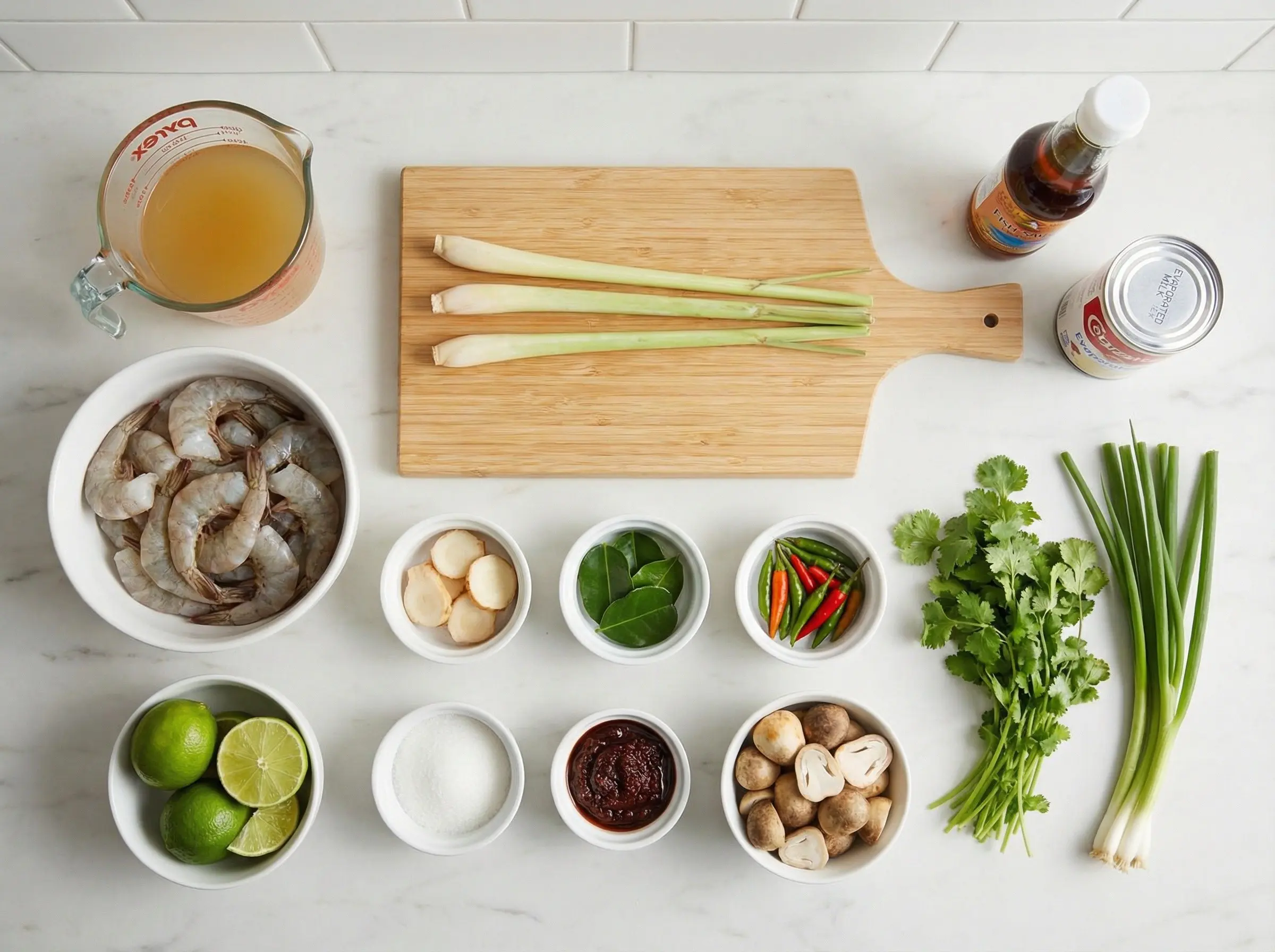
Ingredients
The Story
Tom yum goong is arguably Thailand's most famous soup and one of the most recognized dishes in Southeast Asian cuisine. The name breaks down simply: "tom" means boiling, "yum" refers to the Thai style of spicy and sour salad, and "goong" means shrimp. Together, they describe a soup that captures the essence of Thai cooking - a harmonious balance of hot, sour, salty, and sweet flavors that dance on the palate. While the exact origins are difficult to pinpoint, tom yum likely developed in central Thailand, where the abundance of fresh shrimp from rivers and the Gulf of Thailand combined with the aromatic herbs that grow prolifically in the tropical climate. The soup reflects Thailand's culinary philosophy of using fresh, aromatic ingredients to create bold, layered flavors without heavy cooking techniques. The holy trinity of Thai aromatics - lemongrass, galangal, and kaffir lime leaves - forms the fragrant backbone of tom yum. These ingredients are bruised and simmered to release their essential oils, creating a broth that is intensely aromatic before any other ingredients are added. Fish sauce provides the essential umami depth, while fresh lime juice adds the characteristic sourness that defines the dish. Thai chilies bring the heat, and the optional addition of nam prik pao (Thai roasted chili paste) creates the creamy, reddish variation known as tom yum goong nam khon. What makes tom yum goong so beloved worldwide is its ability to deliver an explosion of flavors in every spoonful. The soup is simultaneously comforting and invigorating - the hot broth soothes while the chilies awaken the senses, the sourness refreshes while the aromatics transport you to tropical Thailand. Unlike many Western soups that rely on long simmering to develop flavor, tom yum comes together in minutes, with the freshness of the ingredients being paramount. The shrimp are added at the last moment to remain tender and sweet, the herbs stay vibrant, and the lime juice is squeezed in just before serving to maintain its bright acidity. Tom yum goong represents Thai cuisine at its finest - quick, fresh, bold, and perfectly balanced.
Instructions
Step 1
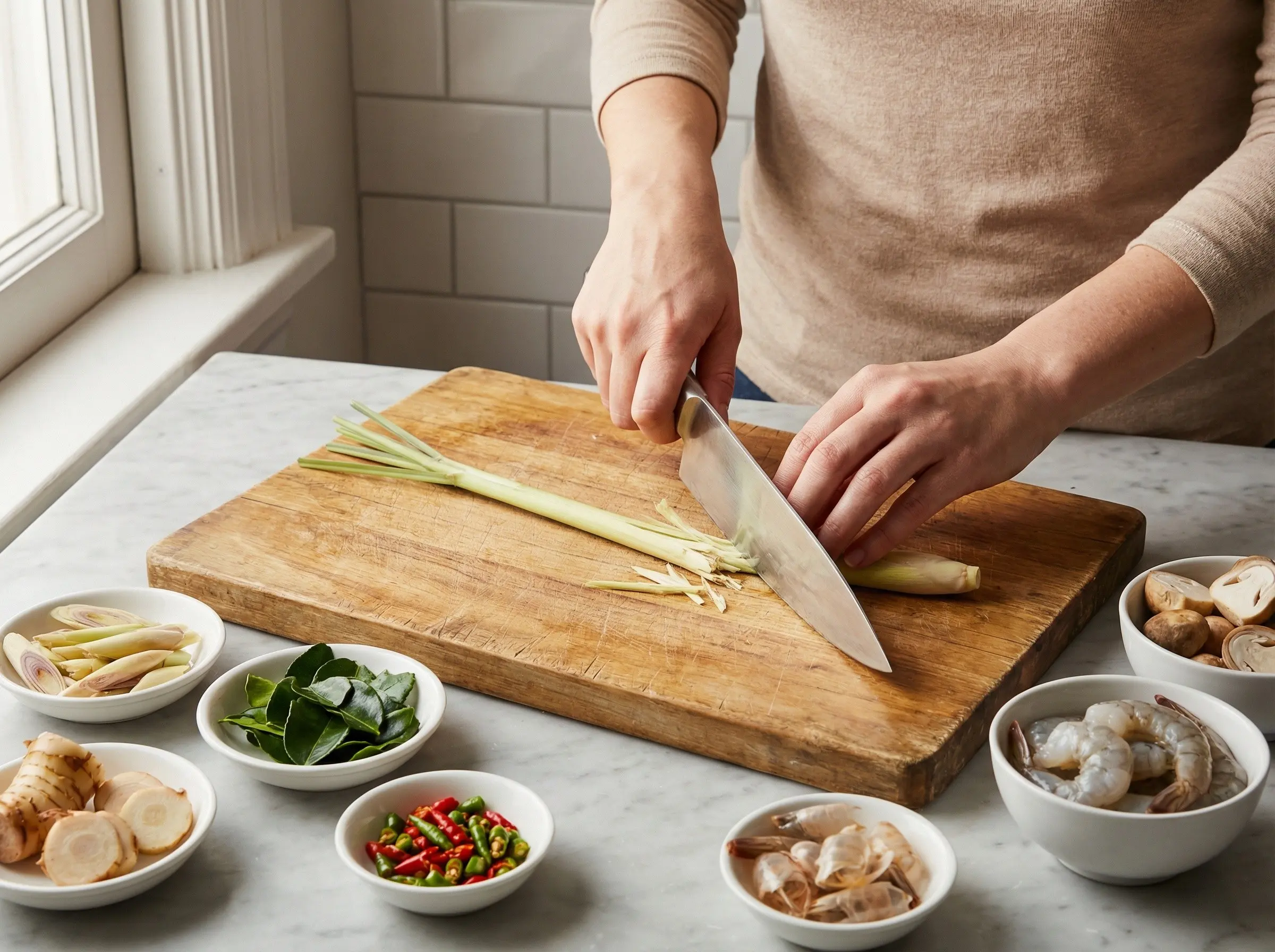
Prepare the shrimp and aromatics. If using shell-on shrimp, peel and devein them, reserving the shells and heads for making an even more flavorful stock if desired. You can simmer the shells in the chicken stock for 15-20 minutes, then strain, for a deeper shrimp flavor. Prepare the lemongrass by trimming off the root end and the tough green tops, leaving only the pale lower portion of the stalk. Cut each stalk into 2-inch pieces and bruise them by smashing with the flat side of a knife or the bottom of a heavy pan - this releases the aromatic oils. Slice the galangal into thin coins - do not peel it. Tear the kaffir lime leaves in half and remove the center stem, bruising them slightly. Cut the mushrooms in half if large. Crush the Thai chilies lightly with the back of a knife.
Step 2
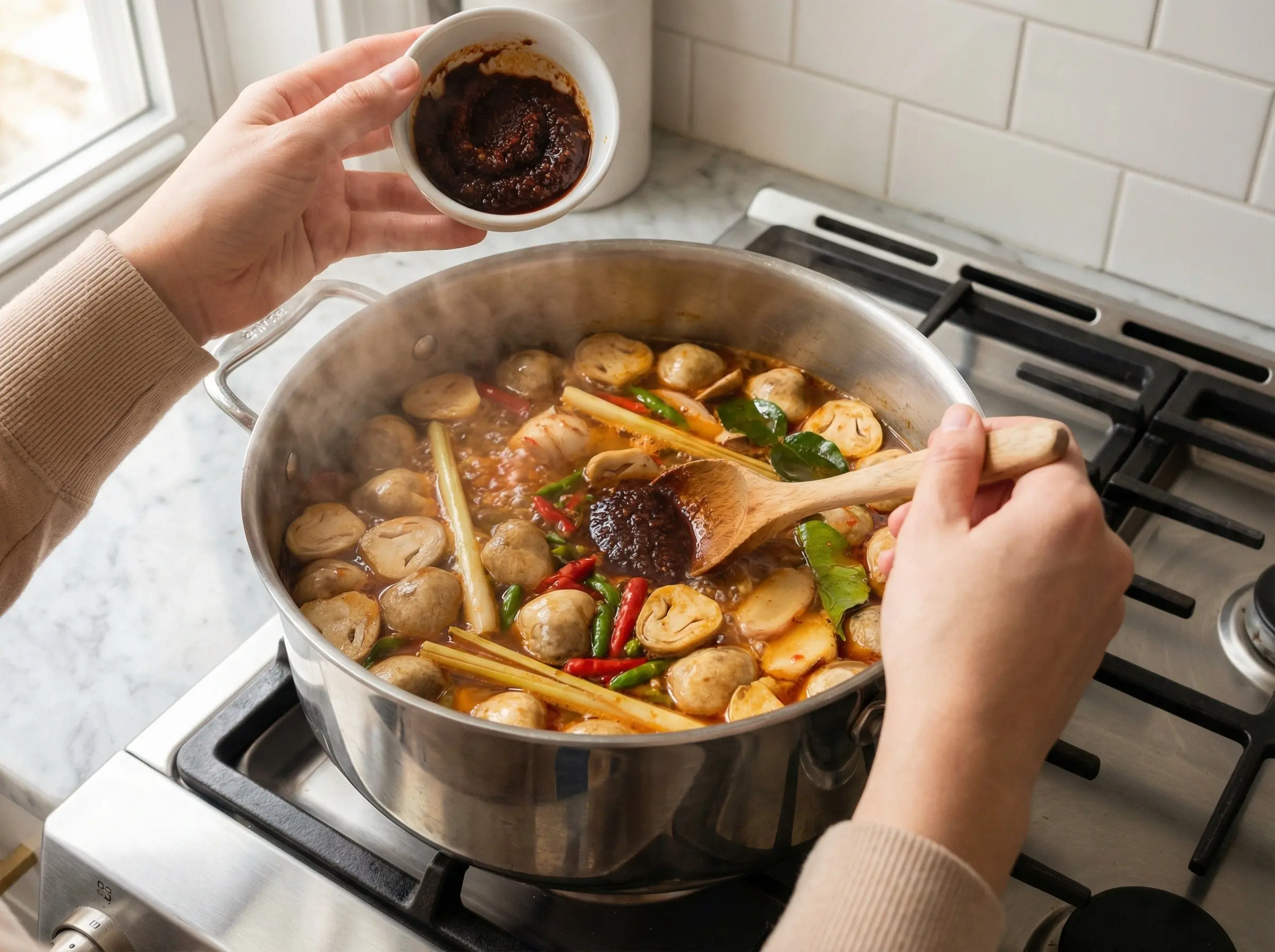
Pour the stock into a large pot and bring to a boil over high heat. Add the lemongrass pieces, galangal slices, and torn kaffir lime leaves. These aromatics are the foundation of tom yum and should be added first to infuse the broth. Let the stock simmer for 5-7 minutes, allowing the aromatics to release their fragrant oils into the liquid. The broth should become incredibly aromatic - you will smell the distinctive citrusy, gingery, floral notes that define tom yum. Keep the pot at a steady simmer, not a rolling boil, to gently extract the flavors without making the broth bitter.
Step 3
Add the mushrooms and crushed Thai chilies to the simmering broth. Cook for 2-3 minutes until the mushrooms are just tender. Straw mushrooms are traditional and have a lovely silky texture, but oyster mushrooms, shiitake, or even white button mushrooms work well as substitutes. Add the nam prik pao (Thai roasted chili paste) and stir to dissolve it into the broth. The nam prik pao adds color, depth, and a subtle sweetness and smokiness that distinguishes the creamy tom yum nam khon style from the clear tom yum nam sai. If you want a clear broth soup, you can omit the chili paste or reduce the amount significantly.
Step 4
Add the shrimp to the simmering broth. Cook for only 2-3 minutes, just until the shrimp turn pink and curl into a C-shape. Do not overcook the shrimp - they will become tough and rubbery. The residual heat will continue cooking them even after you remove the pot from heat. As soon as the shrimp are pink and opaque, remove the pot from heat immediately. The shrimp should be tender, sweet, and succulent. If using very large shrimp, they may take an additional minute, but watch them carefully.
Step 5
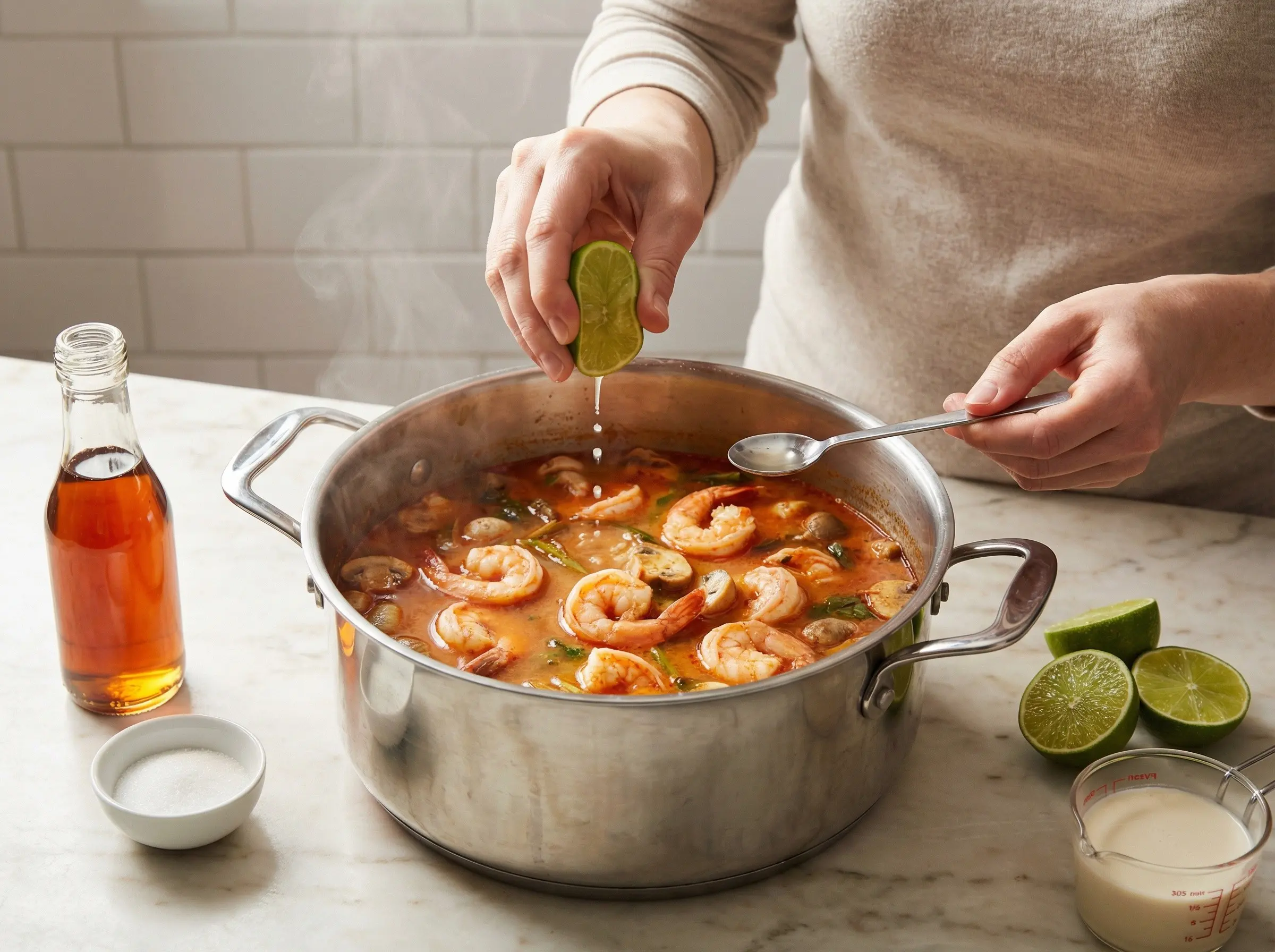
Season the soup while off the heat. Add the fish sauce, fresh lime juice, and sugar, stirring to combine. The balance of these three ingredients is crucial - they should create a harmonious blend of salty, sour, and sweet. Taste and adjust: add more fish sauce for saltiness and umami, more lime juice for sourness, or more sugar to balance acidity. The soup should be predominantly sour and spicy, with underlying savory depth from the fish sauce. For the creamy version known as tom yum nam khon, stir in the evaporated milk at this point - it adds richness and mellows the heat slightly while creating the characteristic creamy orange color. For the clear version, simply omit the milk.
Step 6
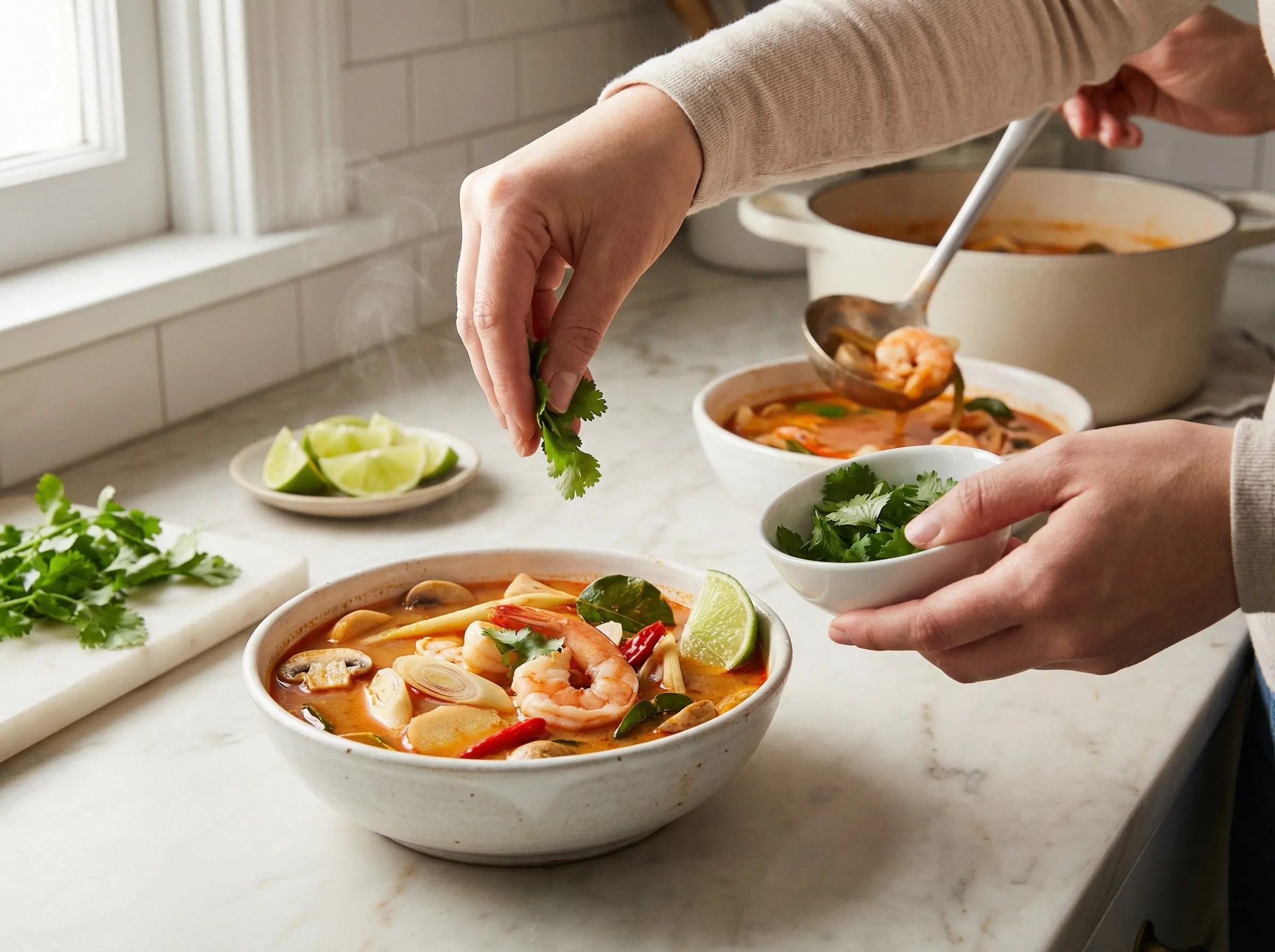
Ladle the tom yum goong into large soup bowls, making sure each serving gets plenty of shrimp and mushrooms. The aromatic ingredients like lemongrass, galangal, and kaffir lime leaves are traditionally left in the soup for presentation but are not meant to be eaten - they are too fibrous and intense. Diners push them aside while eating. Garnish each bowl generously with fresh cilantro leaves and sliced green onions. The fresh herbs add a final layer of brightness and color. Serve immediately while piping hot, with steamed jasmine rice on the side if desired. Tom yum is best eaten right away when the flavors are at their brightest. Some Thai restaurants serve additional fish sauce, lime wedges, and dried chili flakes on the side so diners can adjust the seasoning to their personal taste. The soup should make you sweat slightly, clear your sinuses, and leave you feeling both satisfied and refreshed.
You Might Also Like
Master Your Kitchen with PantryAI
Love this recipe? Save it, shop for it, and cook it with ease. Download the PantryAI app to organize your pantry, track expirations, and discover recipes based on what you already have.

On a computer?Scan with your iPhone camera to download PantryAI.








Swipe to see more screenshots