
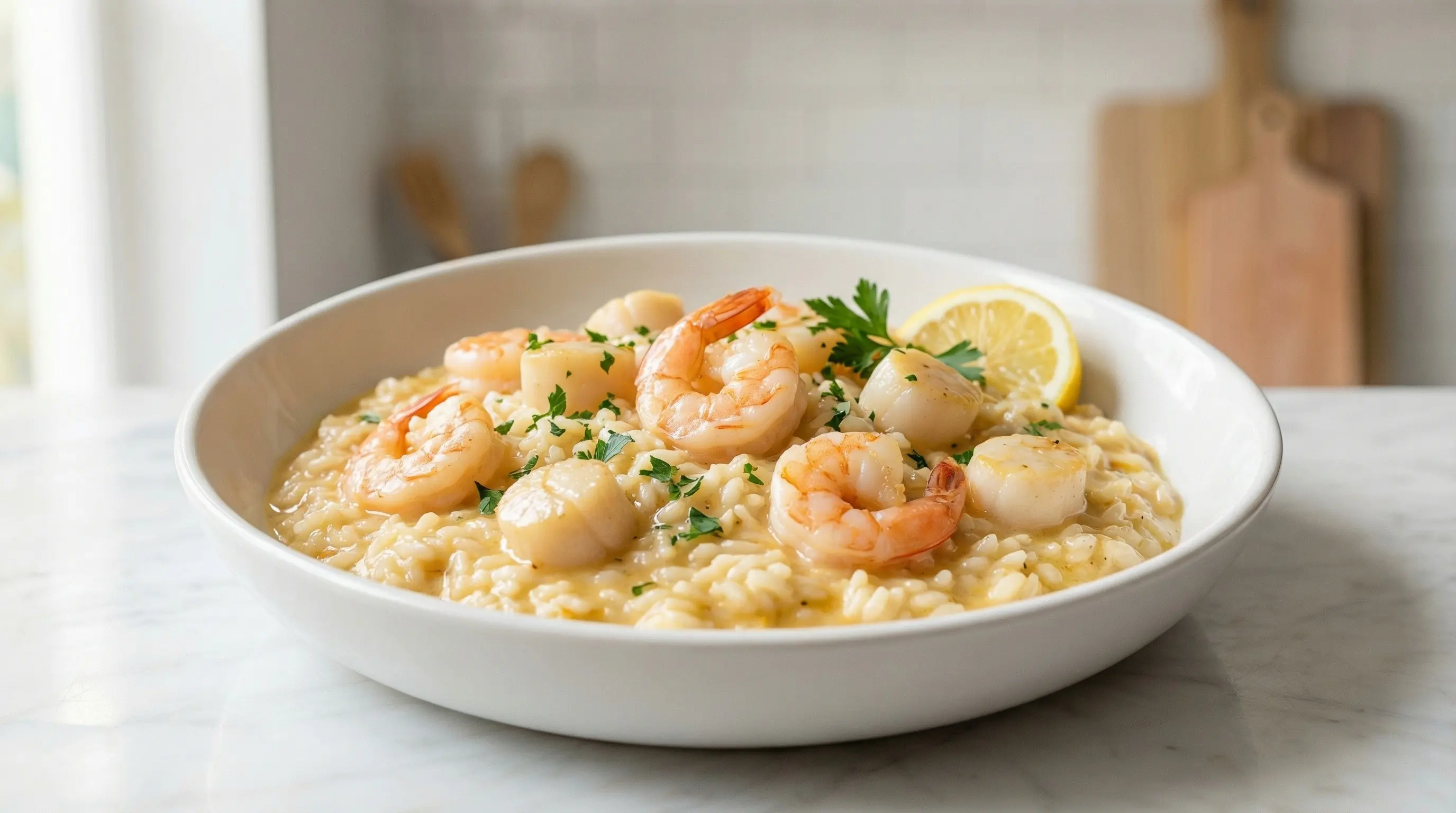
Creamy Seafood Risotto
Learn how to make restaurant-quality seafood risotto with shrimp, scallops, and a creamy, luxurious texture. This elegant Italian dish is perfect for special occasions!
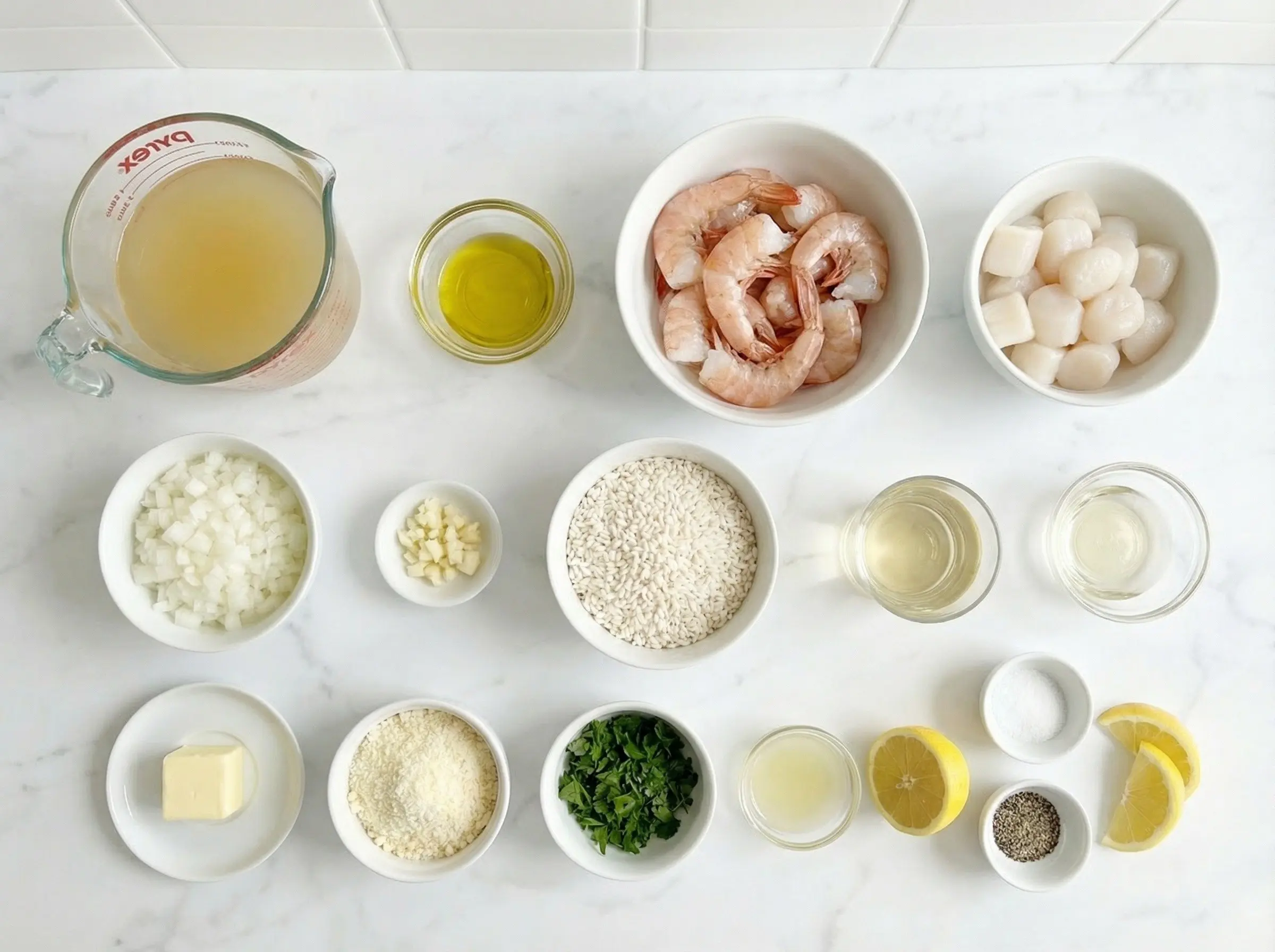
Ingredients
The Story
Risotto is one of the most iconic dishes of northern Italy, particularly associated with the regions of Lombardy, Piedmont, and Veneto where rice cultivation has flourished since the 15th century. The technique of slowly cooking rice in broth while constantly stirring was developed to coax the starches from the short-grain Arborio, Carnaroli, or Vialone Nano rice, creating the dish's signature creamy consistency without the use of cream. The word "risotto" comes from "riso," meaning rice, and the dish represents the Italian culinary philosophy of transforming simple ingredients through careful technique into something extraordinary. Seafood risotto, or "risotto ai frutti di mare," is a specialty of Italy's coastal regions, particularly Venice and the Adriatic coast. Venice, with its lagoons and access to the sea, has a long tradition of combining the rice grown in the Po Valley with the abundant seafood from its waters. Historical records show that rice dishes with fish and shellfish were served at banquets in Venice as early as the Renaissance. The dish evolved as different regions incorporated their local seafood - in Venice it might feature scampi and cuttlefish, in Sicily it could include sea urchin, while in Liguria it might showcase local langoustines. The key was always using the freshest seafood available that day. What makes seafood risotto so special is the marriage of land and sea - the creamy, starchy rice provides a luxurious base that allows the delicate flavors of seafood to shine. Unlike heavy cream-based dishes, risotto achieves its texture through the rice itself, releasing starch as it cooks to create a flowing, all'onde (wave-like) consistency. The seafood is typically added near the end of cooking to prevent it from becoming tough and rubbery. When executed properly, each grain of rice should be al dente with a creamy coating, studded with tender pieces of seafood. Seafood risotto represents Italian cooking at its finest - technique-driven, ingredient-focused, and deeply satisfying.
Instructions
Step 1
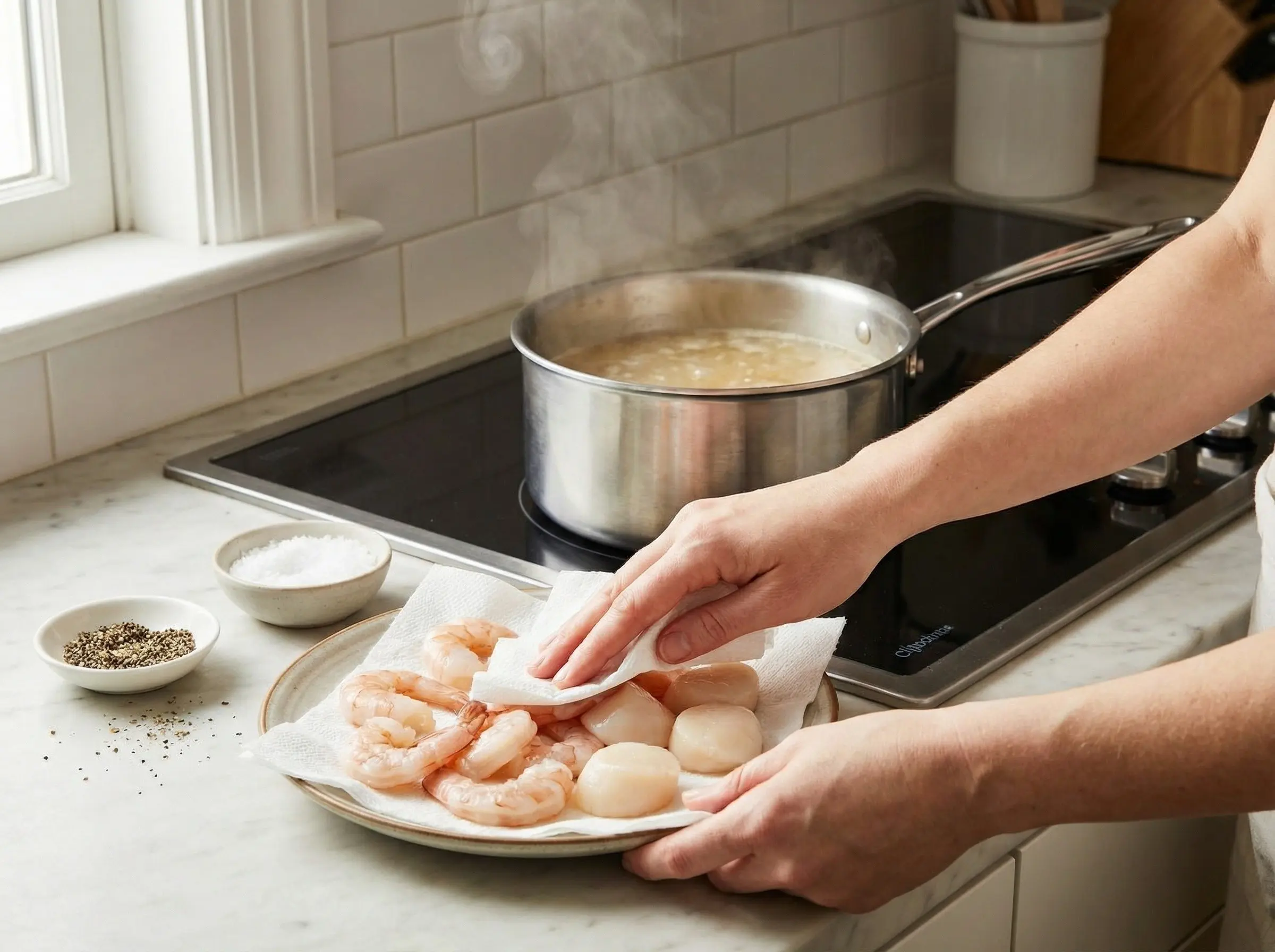
Pour the broth into a medium saucepan and bring it to a gentle simmer over medium-low heat. Keep it warm throughout the cooking process - warm broth is essential for proper risotto. If you add cold broth to the rice, it will cool down the cooking process and prevent the rice from releasing its starch properly. Pat the shrimp and scallops completely dry with paper towels and season lightly with salt and pepper. Moisture on the seafood will prevent proper searing and can make the risotto watery. Cut any very large shrimp in half if desired for easier eating. Having your broth hot and your seafood prepped before you start cooking the rice is crucial since risotto requires constant attention once you begin.
Step 2
Heat 2 tablespoons of olive oil in a large, wide skillet or sauté pan over medium-high heat. Add the shrimp and cook for about 1-2 minutes per side until just pink and barely cooked through. Transfer to a plate. Add the scallops to the same pan and cook for about 1 minute per side until lightly golden but still translucent in the center. They will finish cooking when added back to the risotto later. Transfer the scallops to the plate with the shrimp. Do not overcook the seafood at this stage - it is better to undercook slightly since it will cook more in the risotto. The goal here is to build flavor by searing the seafood and leaving behind some delicious browned bits in the pan.
Step 3
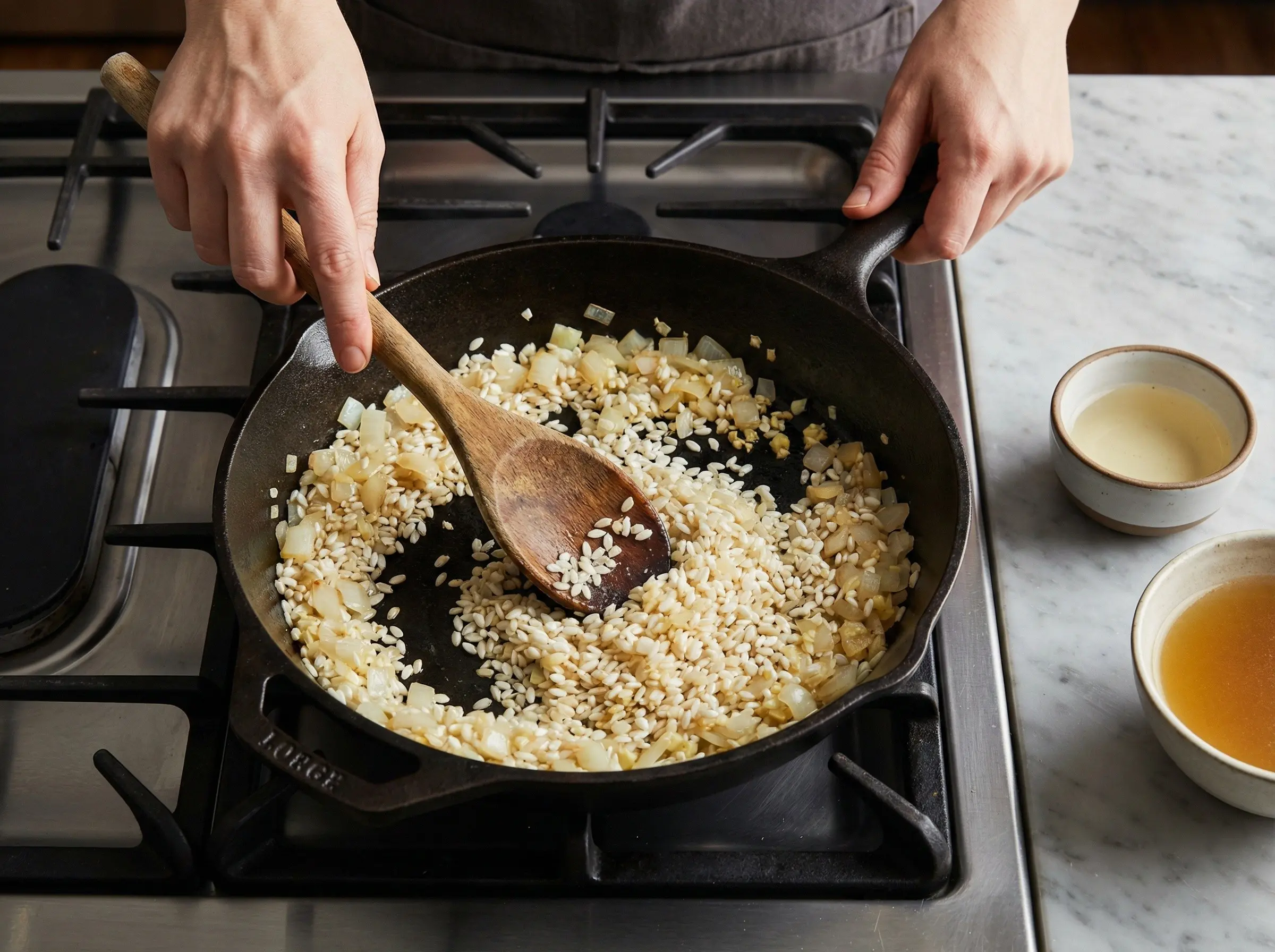
Reduce the heat to medium and add the remaining tablespoon of olive oil to the same pan. Add the finely diced onion and cook for 3-4 minutes, stirring occasionally, until soft and translucent but not browned. Scrape up any browned bits left from the seafood - these add tremendous flavor. Add the minced garlic and cook for 30 seconds until fragrant. Add the Arborio rice and stir constantly for 2-3 minutes, toasting the rice until the edges become slightly translucent but the centers remain white. This toasting step is important - it helps the rice maintain its structure and prevents it from becoming mushy. The rice should make a clicking sound as you stir it against the pan.
Step 4
Pour in the white wine and stir constantly until it is almost completely absorbed by the rice, about 2-3 minutes. The wine should bubble vigorously and you will smell the alcohol cooking off. Once the wine is mostly absorbed, begin adding the warm broth one ladleful at a time - about 1/2 to 3/4 cup per addition. Stir frequently and wait until each addition is almost completely absorbed before adding the next ladleful. You do not need to stir constantly between additions, but do stir regularly to prevent sticking and to help release the rice starch. This gradual addition of liquid and the stirring action are what create risotto''s signature creamy texture. The entire process of adding broth will take about 18-20 minutes.
Step 5
After about 18 minutes of adding broth and stirring, start tasting the rice. It should be al dente - tender but with a slight bite in the center, not chalky or hard, but definitely not mushy. The risotto should have a creamy, flowing consistency - all''onde, meaning it should move like waves when you shake the pan. If the rice is not quite tender, continue adding broth and cooking until it reaches the right texture. Once the rice is properly cooked, remove from heat and immediately stir in the butter and Parmesan cheese. This final addition, called mantecatura, creates an even creamier, more luxurious texture and adds richness. The risotto should be slightly loose - it will thicken as it sits.
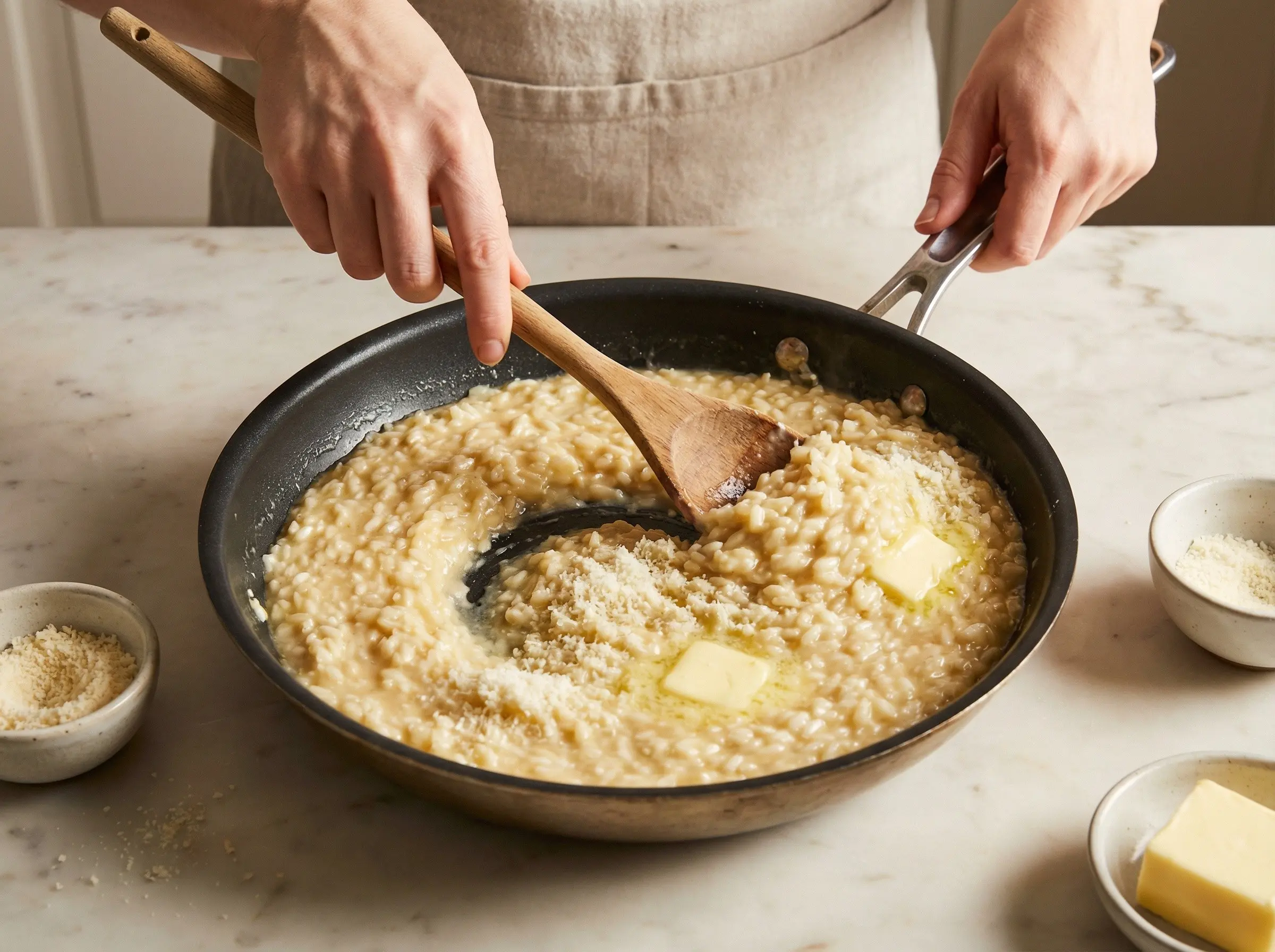
Step 6
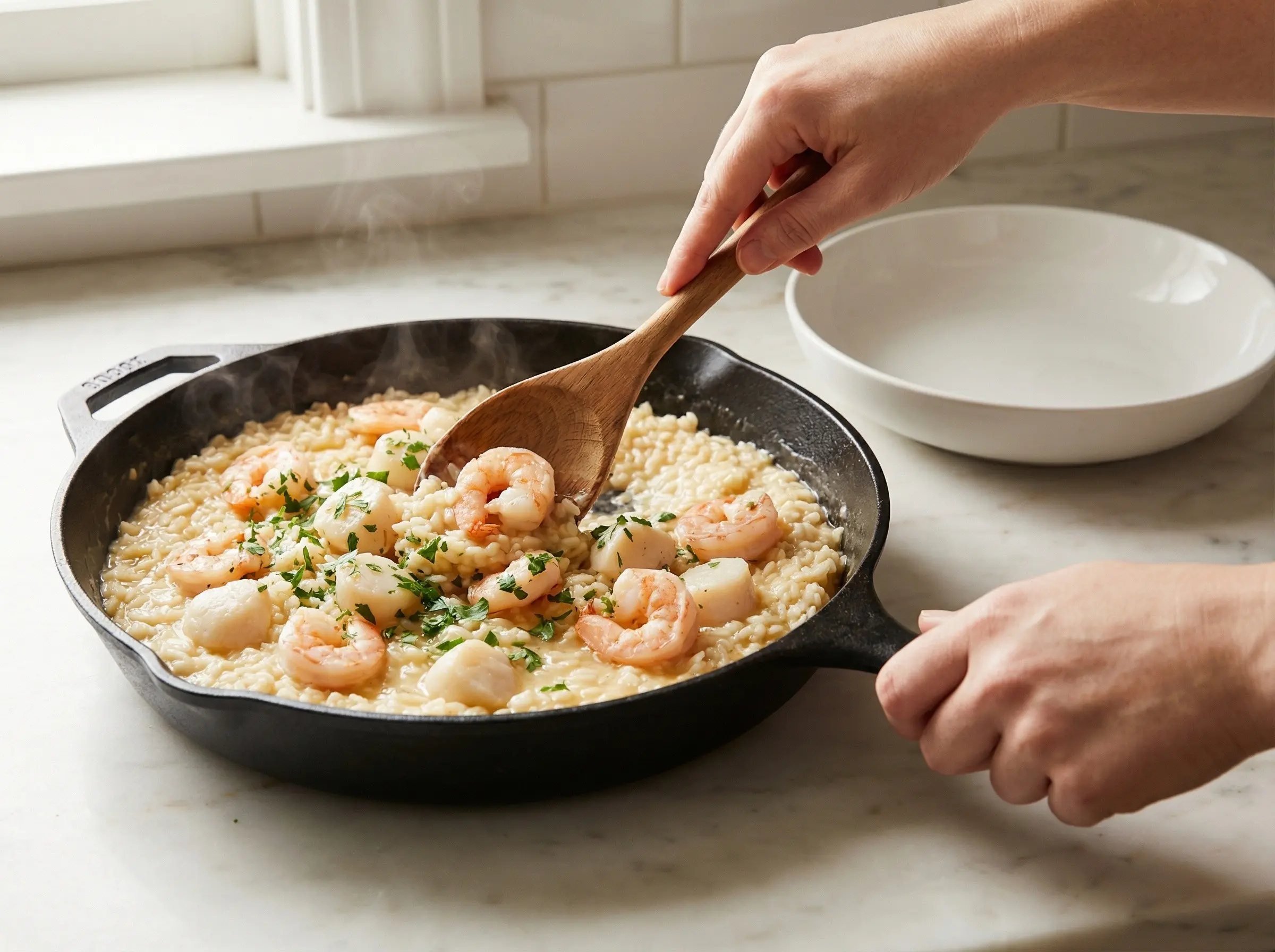
Gently fold the cooked shrimp and scallops back into the risotto along with any juices that accumulated on the plate. The residual heat will finish cooking the seafood perfectly without making it rubbery. Stir in the chopped fresh parsley and lemon juice - the brightness of the lemon enhances the seafood flavors beautifully. Taste and adjust seasoning with salt and pepper as needed. Be careful with salt since the broth and Parmesan are already salty. Serve immediately in shallow bowls or plates. Risotto waits for no one - it is best enjoyed right away while it has that perfect creamy, flowing texture. Garnish with additional parsley and serve with lemon wedges on the side. A crisp white wine like Pinot Grigio or Sauvignon Blanc pairs beautifully with seafood risotto.
You Might Also Like
Master Your Kitchen with PantryAI
Love this recipe? Save it, shop for it, and cook it with ease. Download the PantryAI app to organize your pantry, track expirations, and discover recipes based on what you already have.

On a computer?Scan with your iPhone camera to download PantryAI.








Swipe to see more screenshots