
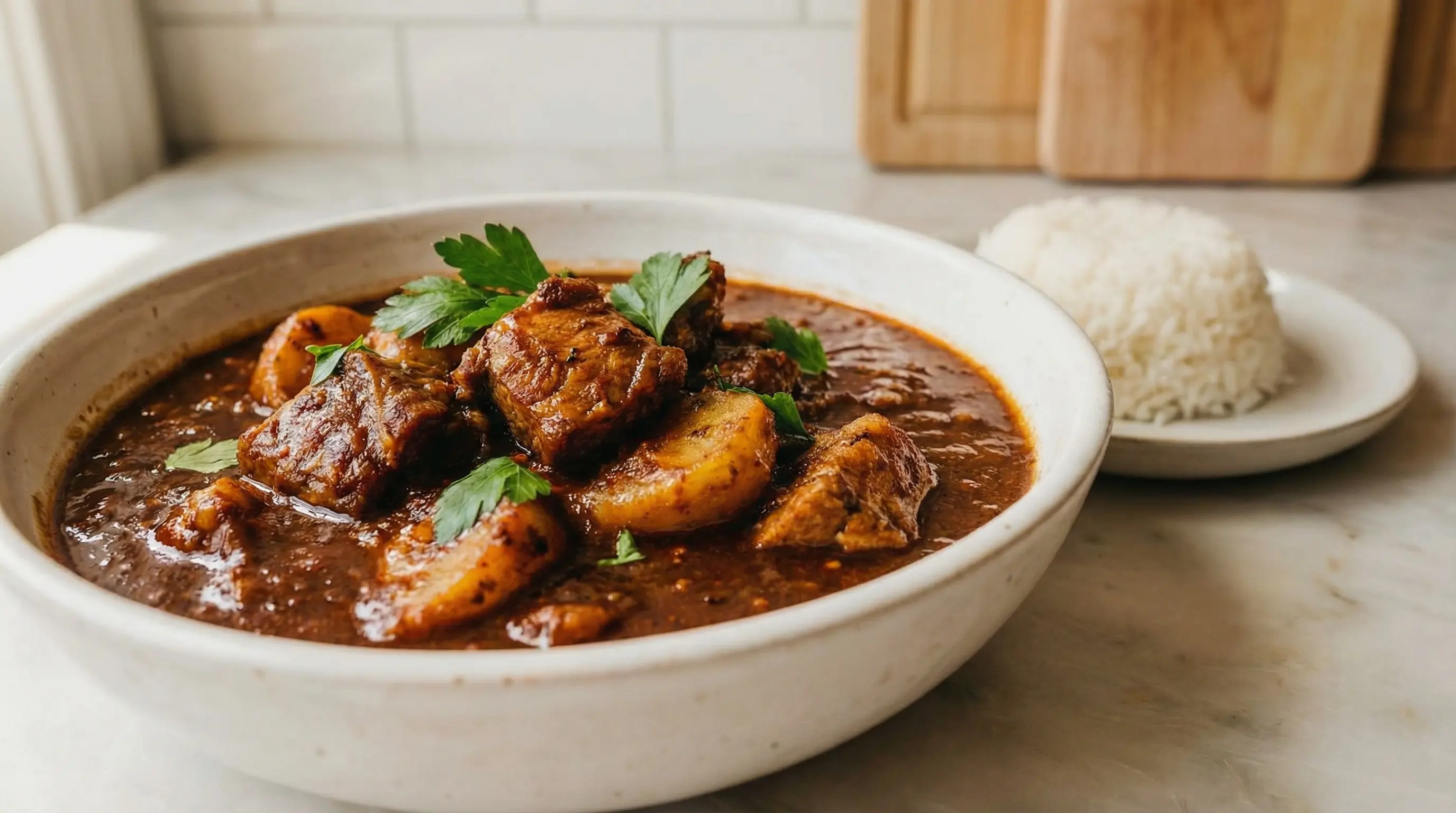
Traditional Carapulcra
Learn how to make authentic carapulcra, Peru's ancient and flavorful dried potato stew with pork, peanuts, and ají panca. This pre-Columbian dish is rich, hearty, and deeply satisfying!
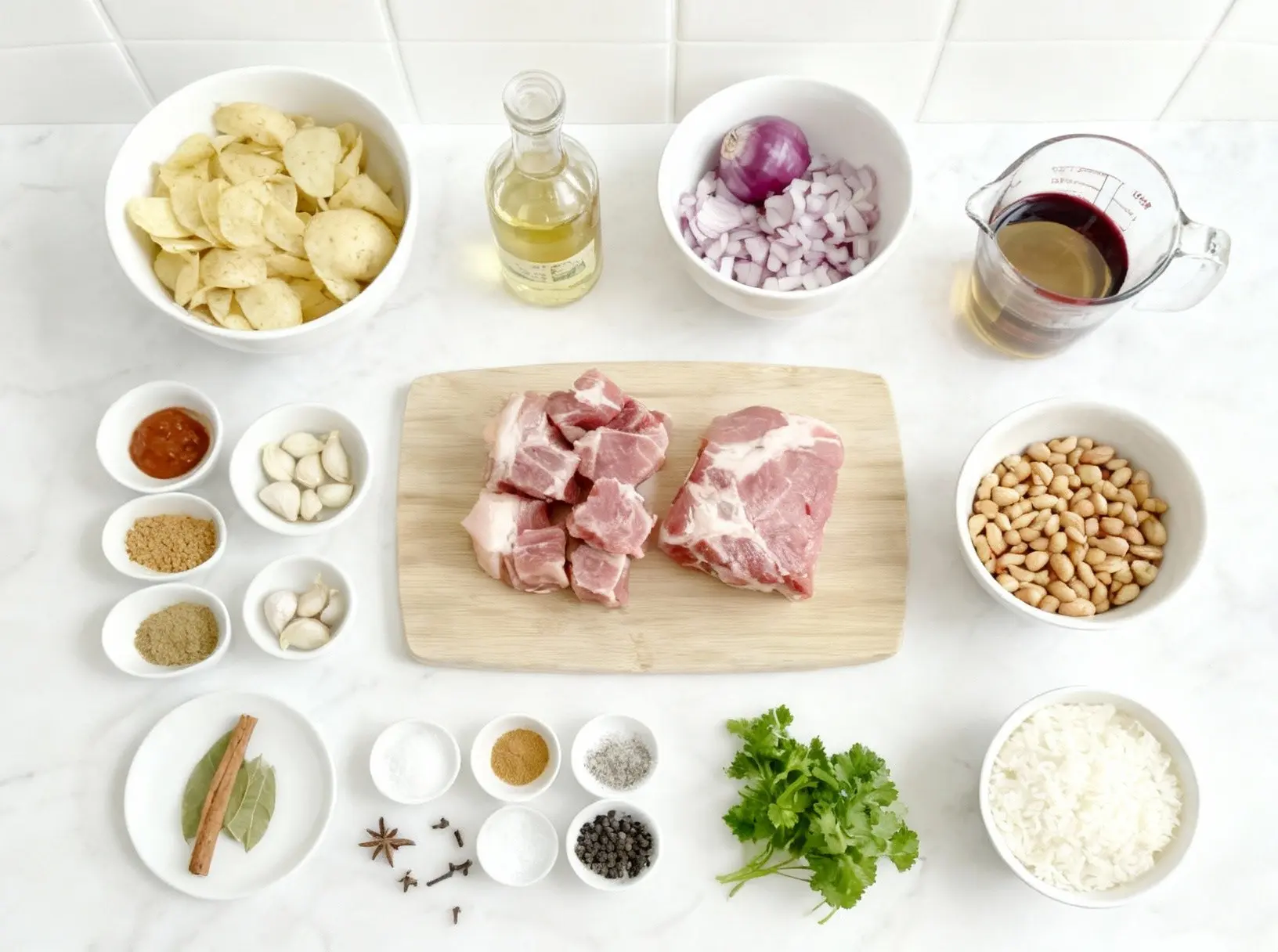
Ingredients
The Story
Carapulcra is considered one of Peru's oldest dishes, with origins tracing back to pre-Columbian times long before the Spanish conquest. The name comes from the Quechua word "qala phurka," meaning "stones cook" or "hot stones," referring to the ancient cooking method of placing hot stones in clay pots to heat food. The dish is built around papa seca (dried potatoes), a preservation technique developed by Andean civilizations over 2,000 years ago. In the harsh, high-altitude climate of the Andes, indigenous peoples discovered that freezing potatoes overnight in the cold mountain air and then drying them in the sun created a lightweight, shelf-stable food that could be stored for years - essential for surviving harsh winters and long journeys. The carapulcra we know today is a beautiful example of culinary mestizaje - the blending of indigenous Andean ingredients with those brought by Spanish colonizers and African slaves. The base of papa seca and ají peppers is purely pre-Columbian, while pork arrived with the Spanish and peanuts came from Africa via the slave trade. This fusion occurred primarily along Peru's coast, particularly in Lima, Ica, and Chincha, where Afro-Peruvian communities developed their own rich culinary traditions. Carapulcra became especially associated with celebrations and festivals, often served alongside sopa seca (a dry noodle dish) as the famous carapulcra con sopa seca combination that remains a beloved pairing at Peruvian celebrations today. What makes carapulcra so remarkable is its depth of flavor, achieved through the unique characteristics of papa seca. When dried potatoes are rehydrated and cooked, they develop an intensely earthy, slightly nutty flavor that fresh potatoes simply cannot replicate. The long, slow cooking process allows the papa seca to absorb the rich sauce made with ají panca (a mild, fruity dried pepper), peanuts, and aromatic spices. The result is a stew that is simultaneously hearty and complex, with layers of flavor built over hours of simmering. Carapulcra represents the soul of Peruvian cuisine - ancient techniques, diverse cultural influences, and humble ingredients transformed into something extraordinary through patience and tradition.
Instructions
Step 1
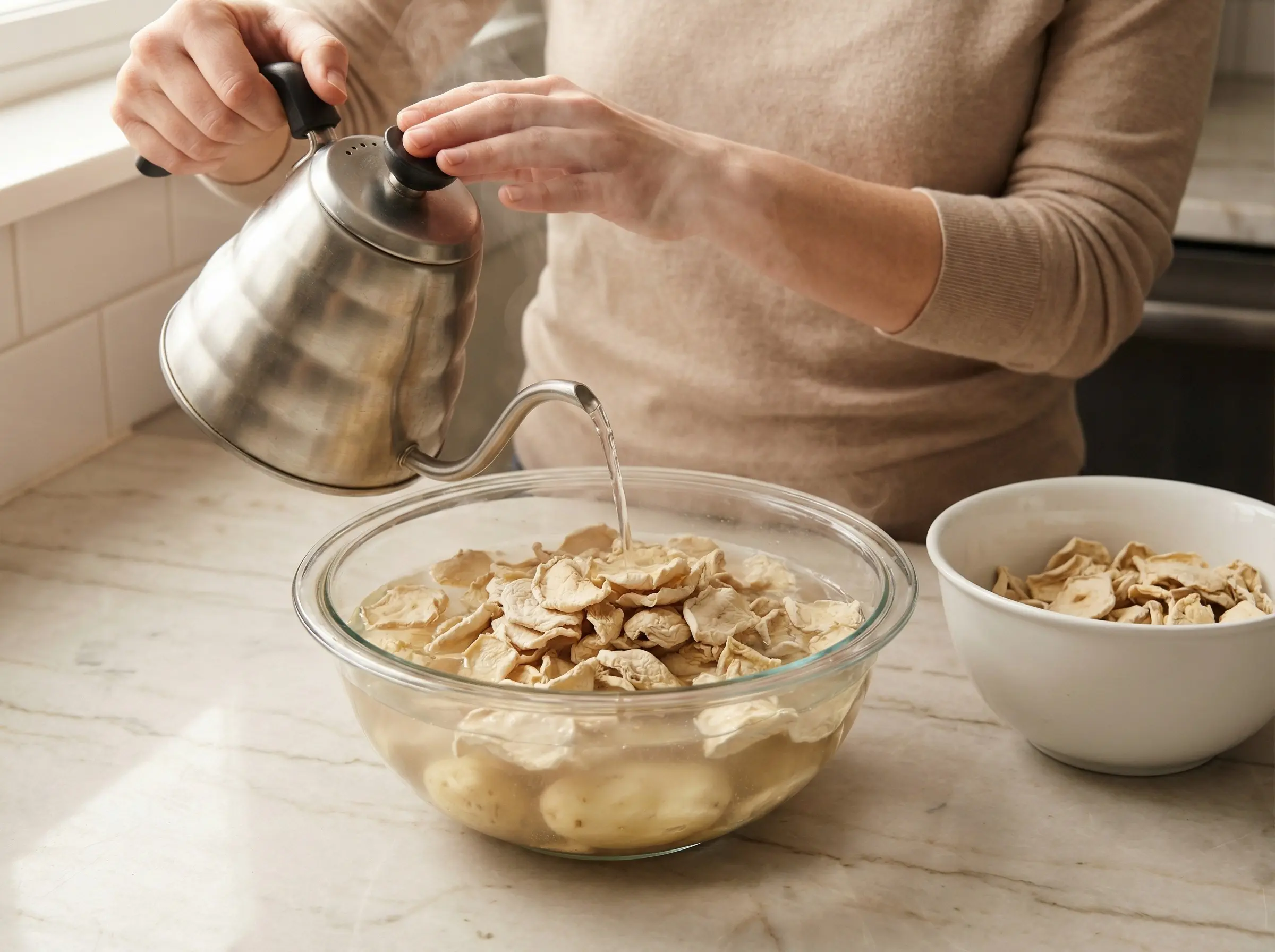
Start by preparing the papa seca, which needs to be rehydrated before cooking. Place the dried potatoes in a large bowl and cover with plenty of hot water. Let them soak for at least 2 hours, or preferably overnight - the longer they soak, the more evenly they will cook. The papa seca will absorb water and expand significantly. Once rehydrated, drain the potatoes and squeeze out excess water gently. Some traditional recipes call for toasting the papa seca in a dry skillet before soaking to enhance its nutty flavor - if you choose to do this, toast them over medium heat for 5-7 minutes, stirring constantly, until fragrant and slightly darkened before soaking. Papa seca can be found in Latin American grocery stores or online - there is no true substitute, though some cooks use a combination of dehydrated potato flakes and fresh potatoes in a pinch.
Step 2
Prepare the peanut paste, which gives carapulcra its characteristic richness and subtle nuttiness. Place the roasted peanuts in a blender or food processor with about 1/2 cup of the broth. Blend until you have a smooth paste - this may take a few minutes, scraping down the sides as needed. The paste should be thick but pourable. Set aside. If you prefer a chunkier texture in your carapulcra, you can reserve some peanuts to chop roughly and add later. Traditional recipes sometimes use toasted peanuts that are ground by hand in a stone mortar, which creates a more rustic texture.
Step 3
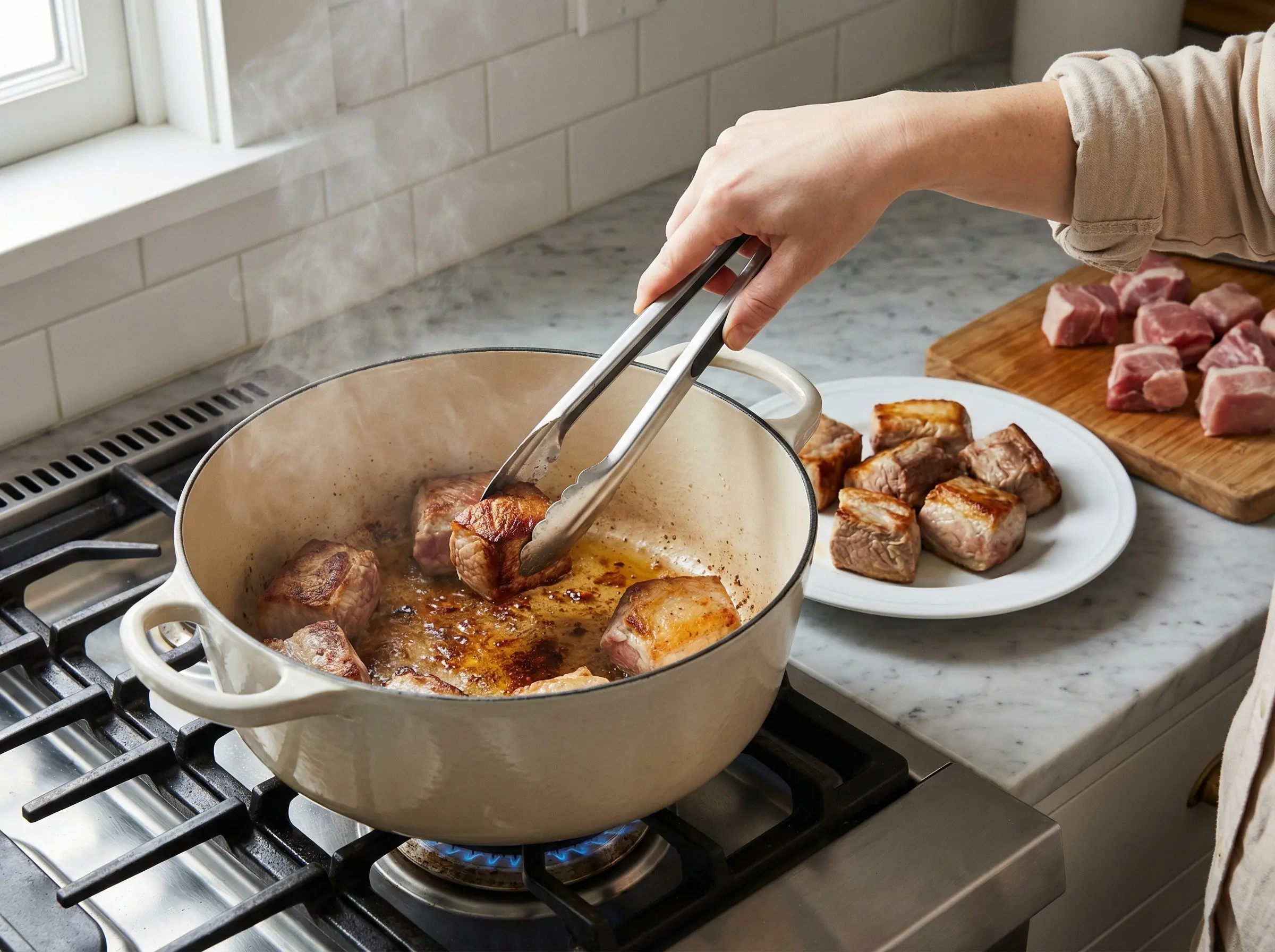
Season the pork cubes generously with salt and pepper. Heat the vegetable oil in a large, heavy-bottomed pot or Dutch oven over medium-high heat. Working in batches to avoid overcrowding, brown the pork pieces on all sides, about 3-4 minutes per side. The pork should develop a deep golden-brown crust - this caramelization is essential for building flavor. Do not rush this step. Transfer the browned pork to a plate and set aside. You should have flavorful browned bits stuck to the bottom of the pot - these will add tremendous depth to the stew.
Step 4
Reduce the heat to medium. Add the diced red onion to the pot with the pork drippings and cook for 5-6 minutes until softened and beginning to caramelize. Add the minced garlic and cook for another minute until fragrant. Add the aji panca paste and aji mirasol paste if using. Cook the paste with the onions for 3-4 minutes, stirring constantly - this blooms the peppers and develops their flavor. The mixture should become very aromatic and darken slightly. This base, called an aderezo in Peruvian cooking, is the flavor foundation of the dish. Add the ground cumin and ground cloves, stirring to combine and toast the spices for about 30 seconds.
Step 5
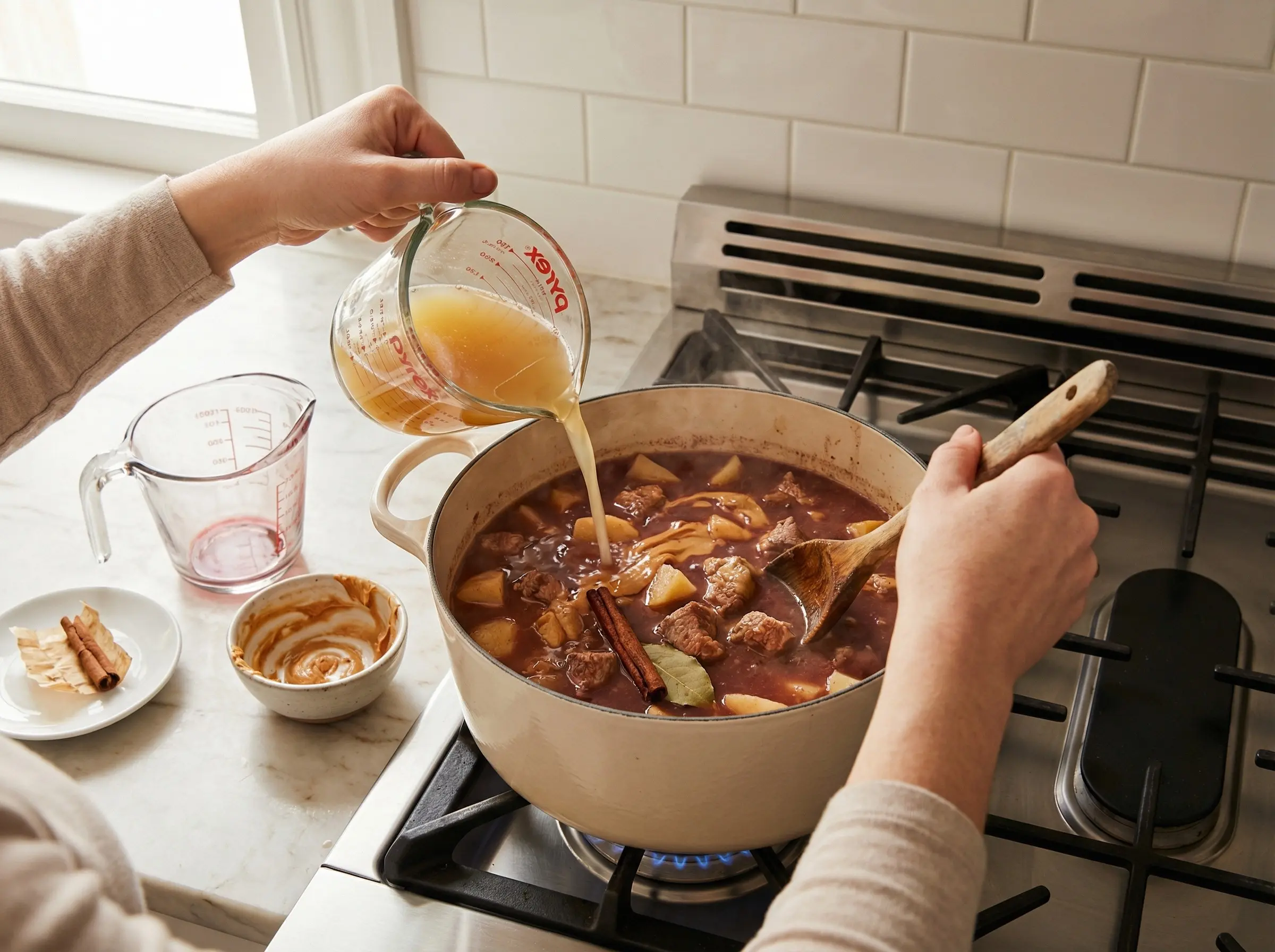
Pour in the red wine, stirring and scraping up all the browned bits from the bottom of the pot. Let the wine simmer for 2-3 minutes until slightly reduced. Add the drained, rehydrated papa seca, the browned pork with any accumulated juices, the peanut paste, remaining broth, cinnamon stick, bay leaves, and sugar. Stir well to combine everything. The liquid should just cover the ingredients - add more broth or water if needed. Bring to a boil, then reduce heat to low, cover, and simmer gently for about 1.5 to 2 hours, stirring occasionally to prevent sticking. The carapulcra is ready when the pork is fork-tender and the papa seca has absorbed much of the liquid, creating a thick, rich stew.
Step 6
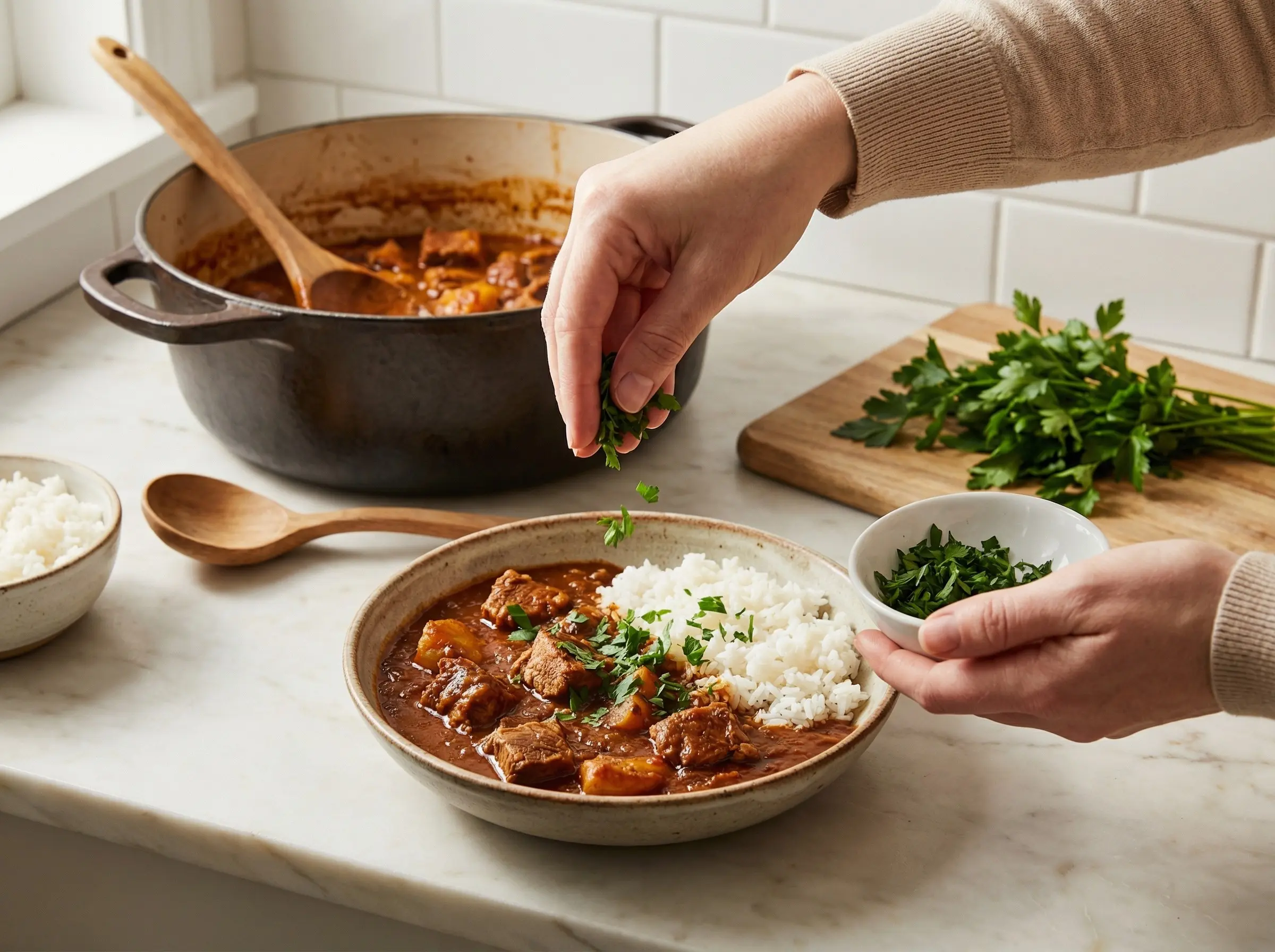
During the last 30 minutes of cooking, check the consistency and seasoning. The carapulcra should be thick and hearty, not soupy - the papa seca should have absorbed most of the liquid and become creamy while still holding some shape. If it seems too thick, add a splash of broth. If too thin, cook uncovered to reduce. Taste and adjust seasoning with more salt, pepper, or a touch more sugar to balance the flavors. Remove the cinnamon stick and bay leaves before serving. Ladle the carapulcra into deep bowls and garnish with fresh chopped parsley. Serve hot with white rice on the side. Traditionally, carapulcra is served alongside sopa seca, a dry flavorful noodle dish, as the classic combination known as carapulcra con sopa seca - a beloved pairing at Peruvian celebrations and Sunday family gatherings. Carapulcra tastes even better the next day after the flavors have had more time to meld, and it keeps well in the refrigerator for up to 4 days. Reheat gently, adding a splash of broth if needed to loosen the stew.
You Might Also Like
Master Your Kitchen with PantryAI
Love this recipe? Save it, shop for it, and cook it with ease. Download the PantryAI app to organize your pantry, track expirations, and discover recipes based on what you already have.

On a computer?Scan with your iPhone camera to download PantryAI.








Swipe to see more screenshots