
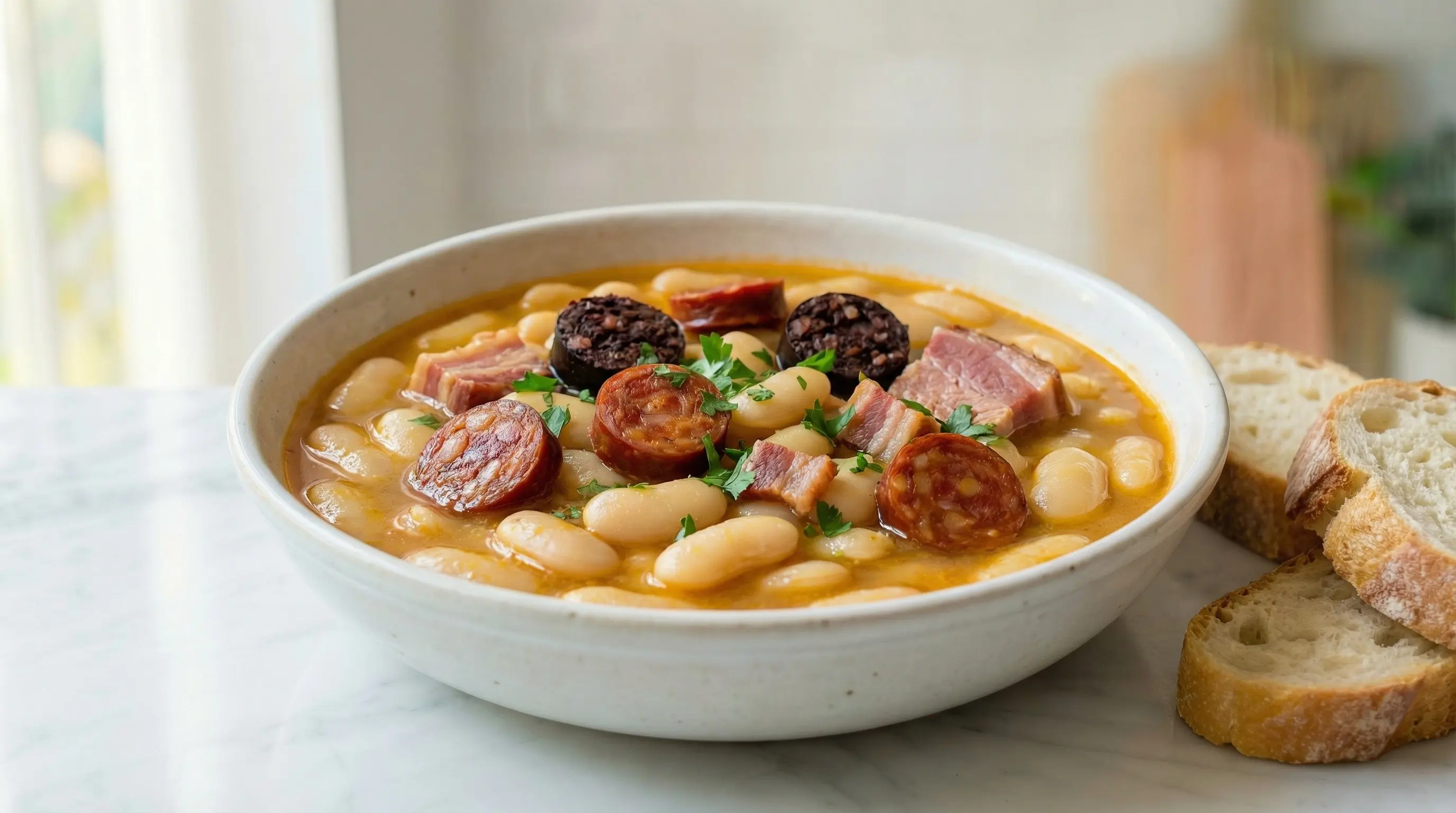
Fabada Asturiana
Learn how to make authentic fabada asturiana, the legendary Spanish bean stew from Asturias with chorizo, morcilla, and lacón. This rich, hearty dish is the ultimate comfort food!
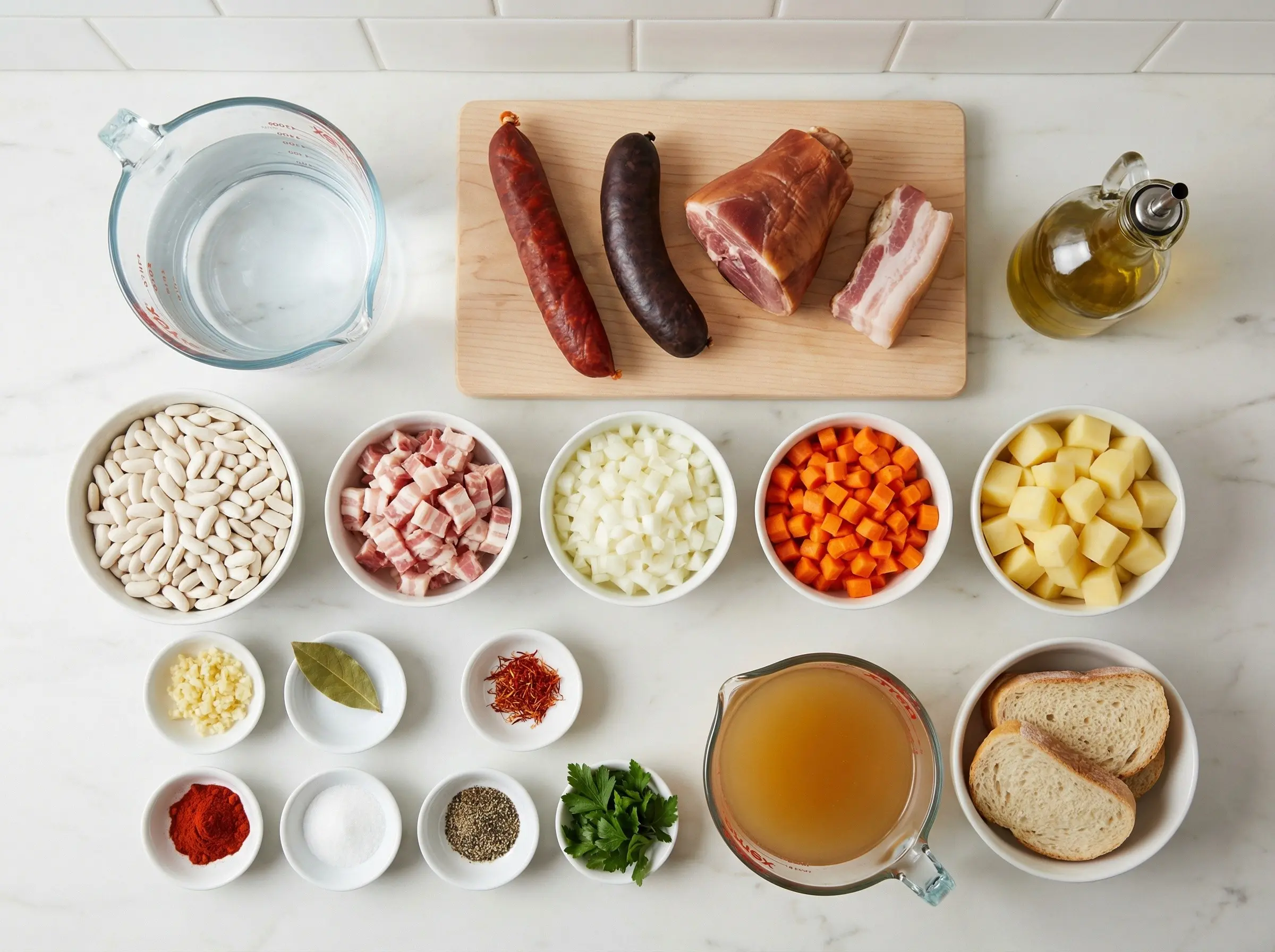
Ingredients
The Story
Fabada asturiana is the crown jewel of Asturian cuisine and one of Spain's most celebrated regional dishes. Originating in the mountainous northern region of Asturias, this hearty bean stew was born from the necessity of fueling hardworking miners, farmers, and fishermen through cold, wet winters. The name comes from "fabes," the large white beans native to Asturias that are prized for their creamy texture and thin skin. These fabes de la Granja beans are grown in the river valleys of Asturias, where the cool, humid climate produces beans of exceptional quality that cannot be replicated elsewhere. A true fabada must use these authentic Asturian beans - substitutes simply do not compare. The dish dates back at least to the 18th century, though its exact origins are lost to history. What is certain is that fabada became the defining dish of Asturian identity, served at family gatherings, festivals, and sidrerias (cider houses) throughout the region. The traditional recipe combines fabes with what Asturians call "compangu" - the assortment of cured pork products that give the stew its rich, smoky depth. This includes chorizo asturiano (a softer, more peppery version than Castilian chorizo), morcilla asturiana (blood sausage), lacón (cured pork shoulder), and tocino (salt pork or bacon). Each element contributes its own character to the final dish, creating layers of flavor that are greater than the sum of their parts. What makes fabada so extraordinary is its silky, almost voluptuous texture and profound depth of flavor. The beans are cooked low and slow, never stirred but gently shaken to prevent breaking, until they become impossibly creamy while maintaining their shape. The cooking liquid transforms into a rich, unctuous broth infused with the essence of the pork products and perfumed with saffron. Unlike other bean stews that can feel heavy and dense, properly made fabada has an almost ethereal quality - the beans seem to melt on the tongue while the broth coats the mouth with savory richness. Traditionally served as a first course followed by the sliced meats, fabada is a dish that demands time, quality ingredients, and respect for tradition. It represents Asturian cuisine at its finest - robust, generous, and deeply satisfying.
Instructions
Step 1
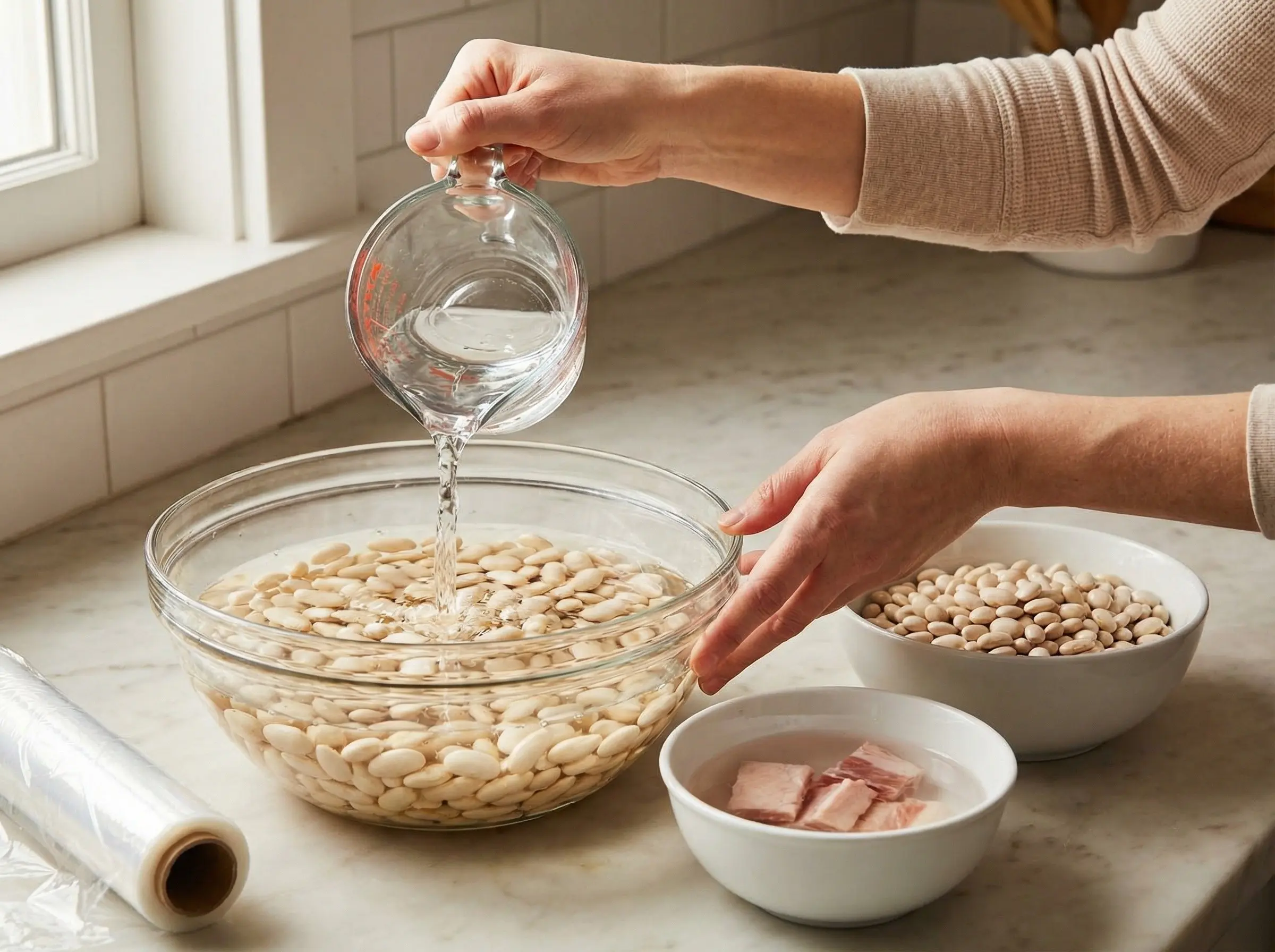
The night before cooking, place the dried beans in a large bowl and cover with plenty of cold water - at least 3 inches above the beans. Let soak for 12-24 hours at room temperature. The beans will double or triple in size. If using salt pork or lacón that is very salty, soak it separately in cold water overnight as well to remove excess salt - change the water once or twice if possible. Authentic fabes de la Granja from Asturias are ideal, but large white lima beans, gigante beans, or butter beans can substitute. The beans must be large with thin skins - small white beans will not produce the proper texture.
Step 2
Drain the soaked beans and place them in a large, heavy-bottomed pot or Dutch oven. Add the whole chorizo, whole morcilla, lacón or ham hock, and tocino or salt pork. Add the halved onion, whole garlic cloves, bay leaf, and saffron threads. The saffron is traditional and adds a subtle golden color and earthy aroma. Pour in the cold water - it should cover everything by about 2 inches. It is essential to start with cold water, not hot, as this allows the beans to cook evenly from the outside in and helps release their starch gradually for a creamy broth.
Step 3
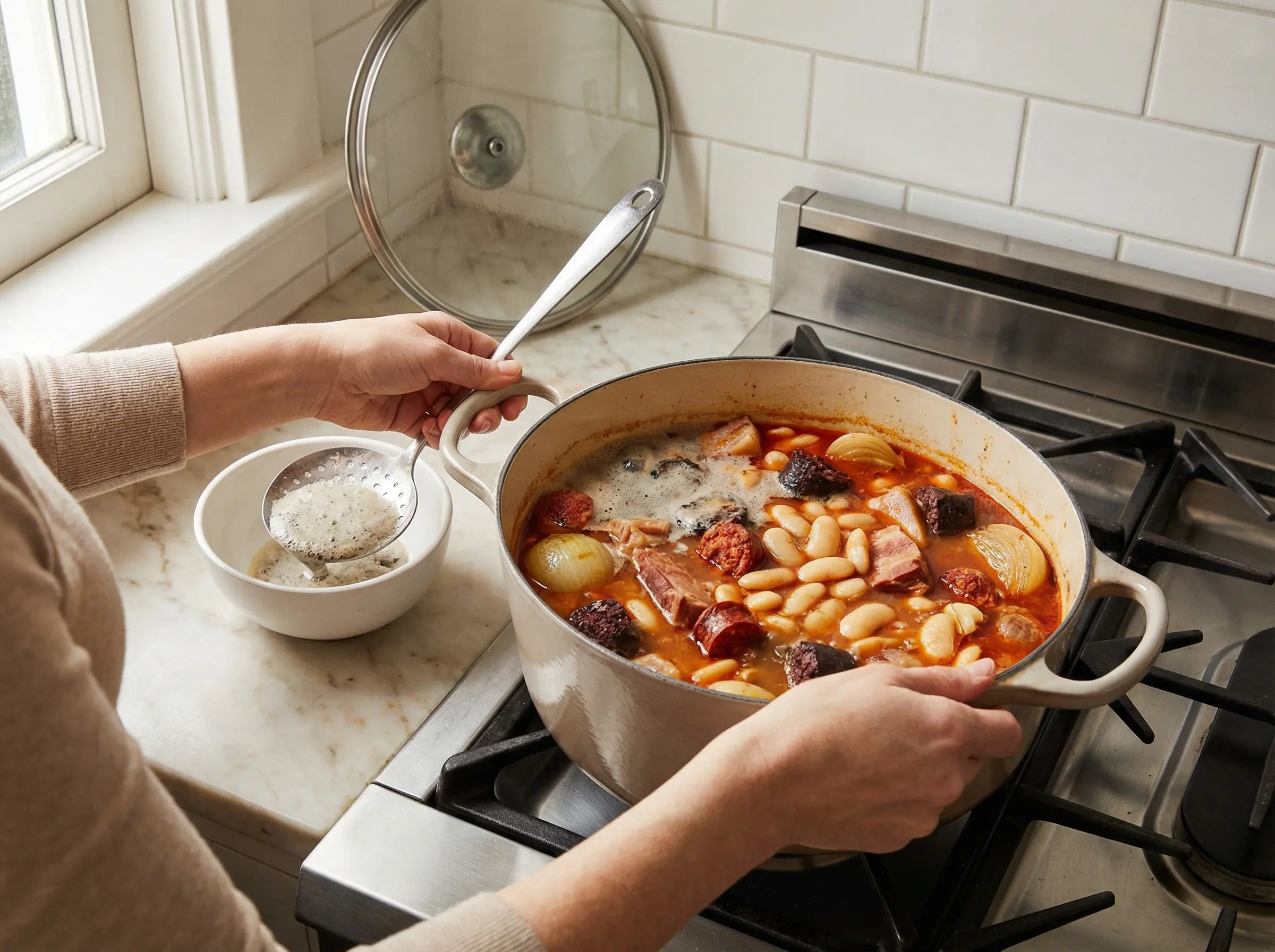
Bring the pot to a boil over high heat. As it heats, skim off any foam or impurities that rise to the surface - this keeps the broth clear and clean-tasting. Once boiling, reduce the heat to the lowest possible setting. The fabada must cook at a bare simmer - you should see only occasional lazy bubbles breaking the surface, never a rolling boil. Boiling will break the beans and make the broth cloudy. Cover the pot with the lid slightly ajar to allow steam to escape. This gentle cooking is the secret to creamy, intact beans.
Step 4
Simmer the fabada very gently for 2 to 3 hours. Here is the crucial technique: never stir the pot with a spoon, as this will break the delicate beans. Instead, periodically give the pot a gentle shake or swirl to prevent sticking. If the water level drops below the beans, add more cold water - always cold, never hot, as hot water can crack the beans. This technique of adding cold water is called asustar (to scare) and is believed to help the beans cook more evenly. Check the beans after 2 hours - they should be very tender and creamy but still holding their shape.
Step 5
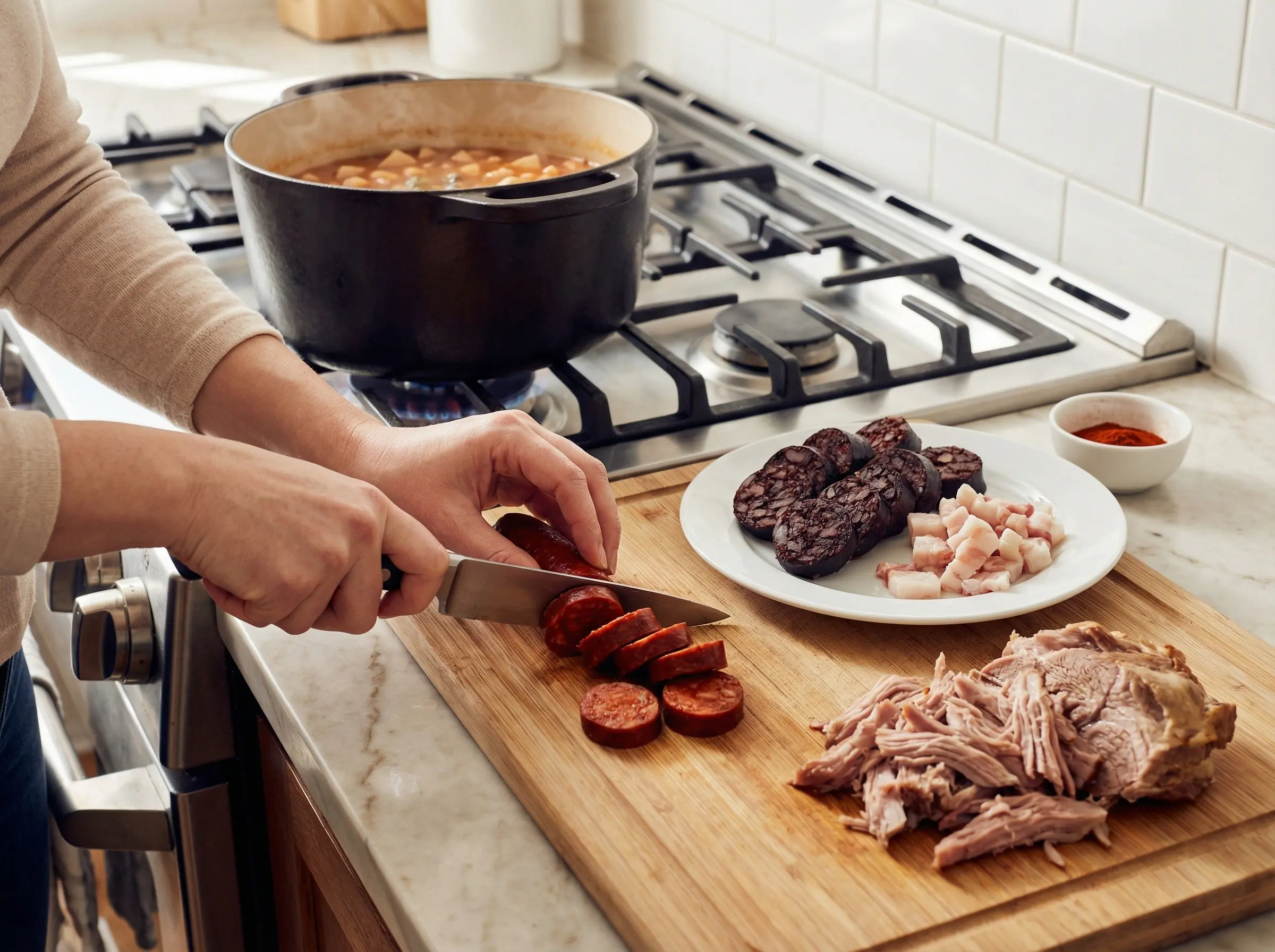
After about 1.5 hours of cooking, carefully remove the chorizo and morcilla from the pot - they cook faster than the beans and can become too soft if left the entire time. Set them aside on a plate. Continue simmering the beans with the lacón and tocino until everything is completely tender. The lacón should be falling-off-the-bone tender and the beans should be creamy throughout with no chalky center. About 15 minutes before serving, return the chorizo and morcilla to the pot to warm through. Add the smoked paprika and stir very gently - or better, swirl the pot to incorporate.
Step 6
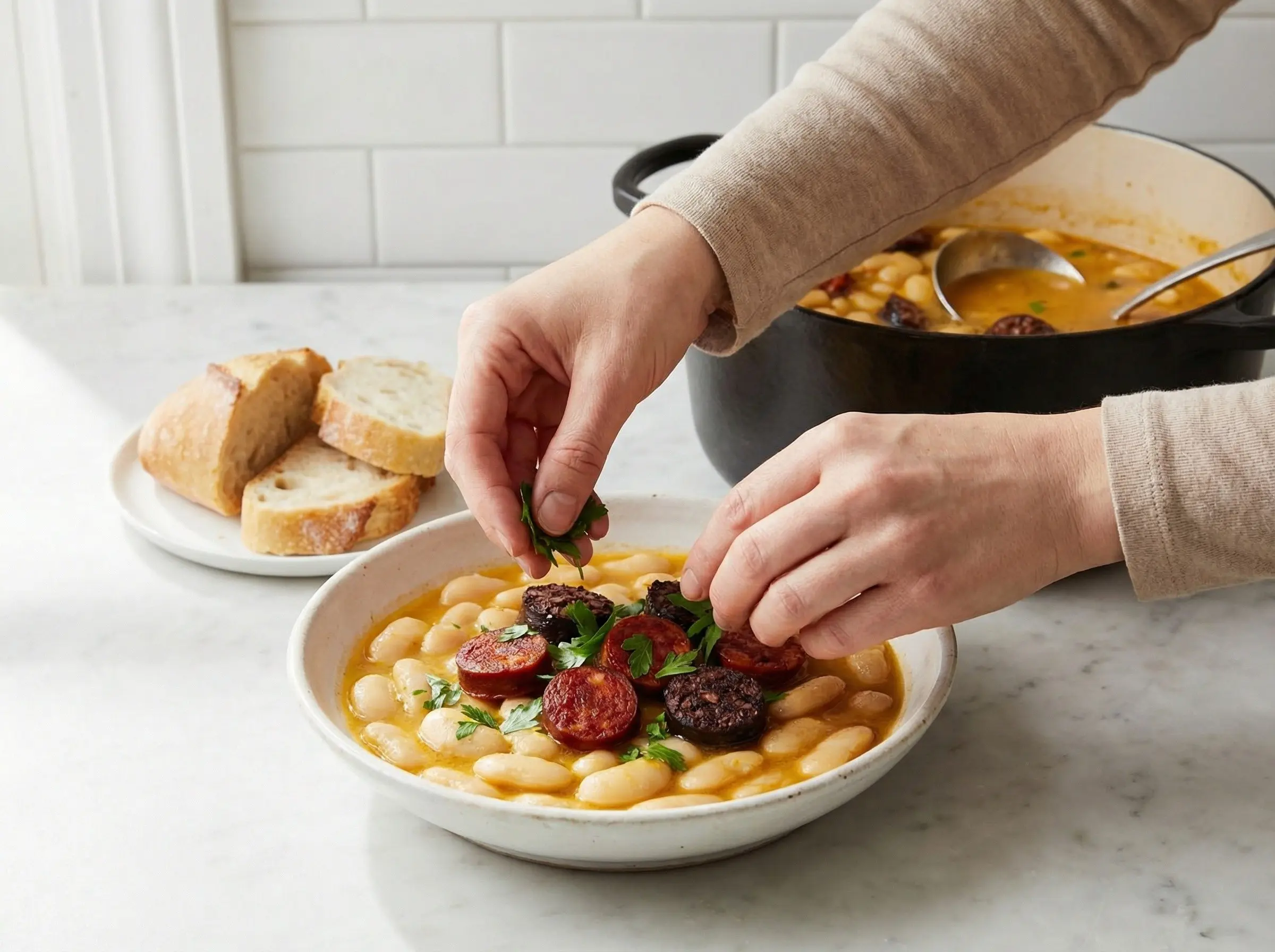
Taste the broth and season with salt as needed - be cautious as the cured meats add significant saltiness. Remove and discard the onion, garlic, and bay leaf. The broth should be rich, slightly thick from the bean starch, and deeply flavorful. Let the fabada rest off heat for 10-15 minutes before serving - this allows the flavors to meld and the broth to thicken slightly. To serve traditionally, ladle the beans and broth into deep bowls first. Remove the meats, slice them, and arrange on a separate platter or on top of the beans. The lacón should be shredded or sliced, the chorizo and morcilla cut into rounds. Garnish with fresh parsley. Serve with crusty bread and Asturian sidra (cider) if available. Fabada is traditionally served as the main event of a meal, often followed by a simple salad or fruit. It tastes even better the next day - refrigerate overnight and reheat gently, adding a splash of water if needed.
You Might Also Like
Master Your Kitchen with PantryAI
Love this recipe? Save it, shop for it, and cook it with ease. Download the PantryAI app to organize your pantry, track expirations, and discover recipes based on what you already have.

On a computer?Scan with your iPhone camera to download PantryAI.








Swipe to see more screenshots