
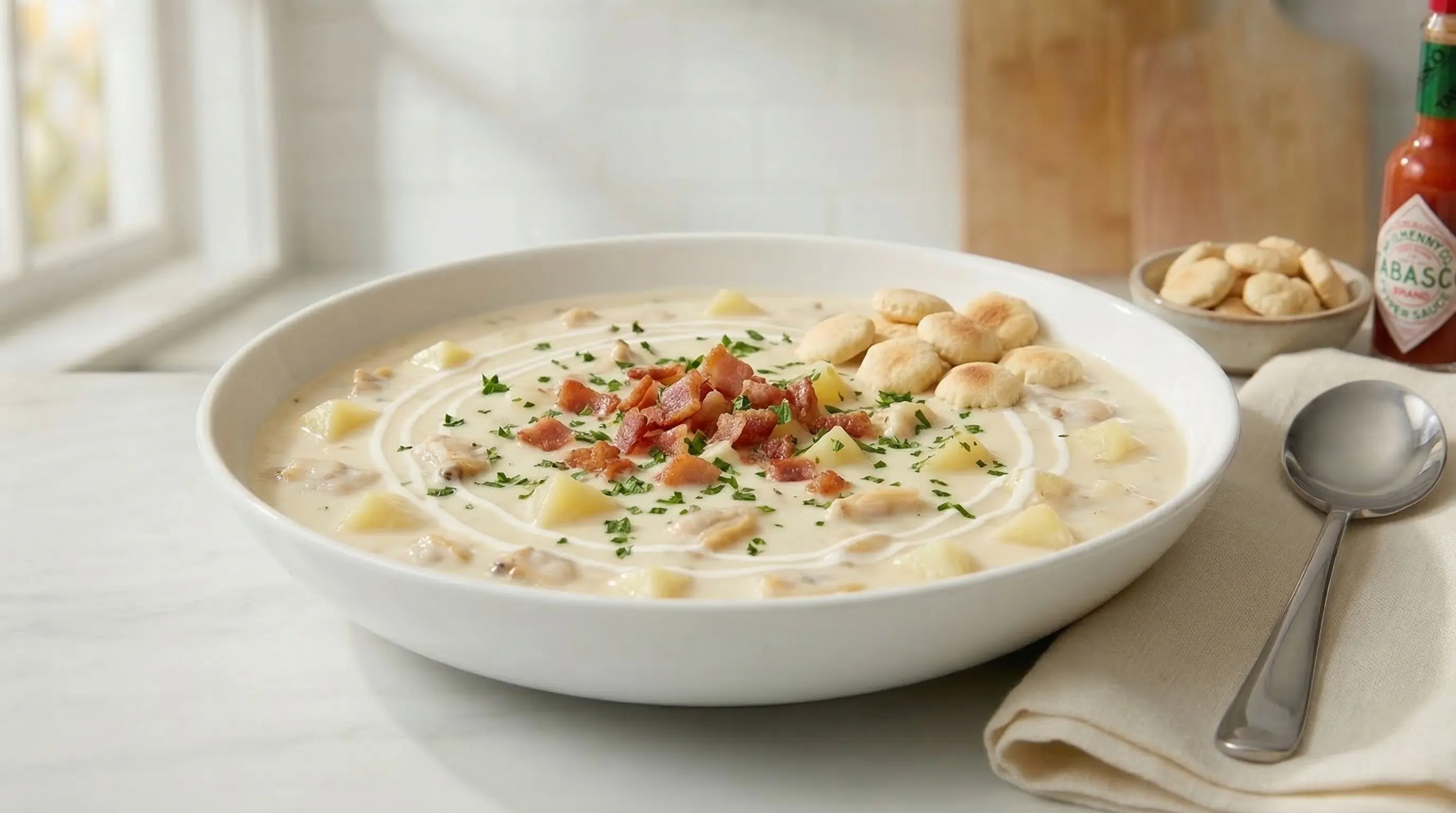
New England Clam Chowder
Learn how to make authentic New England clam chowder, the iconic creamy soup with tender clams, potatoes, and smoky bacon. This Boston classic is rich, hearty, and the ultimate coastal comfort food!
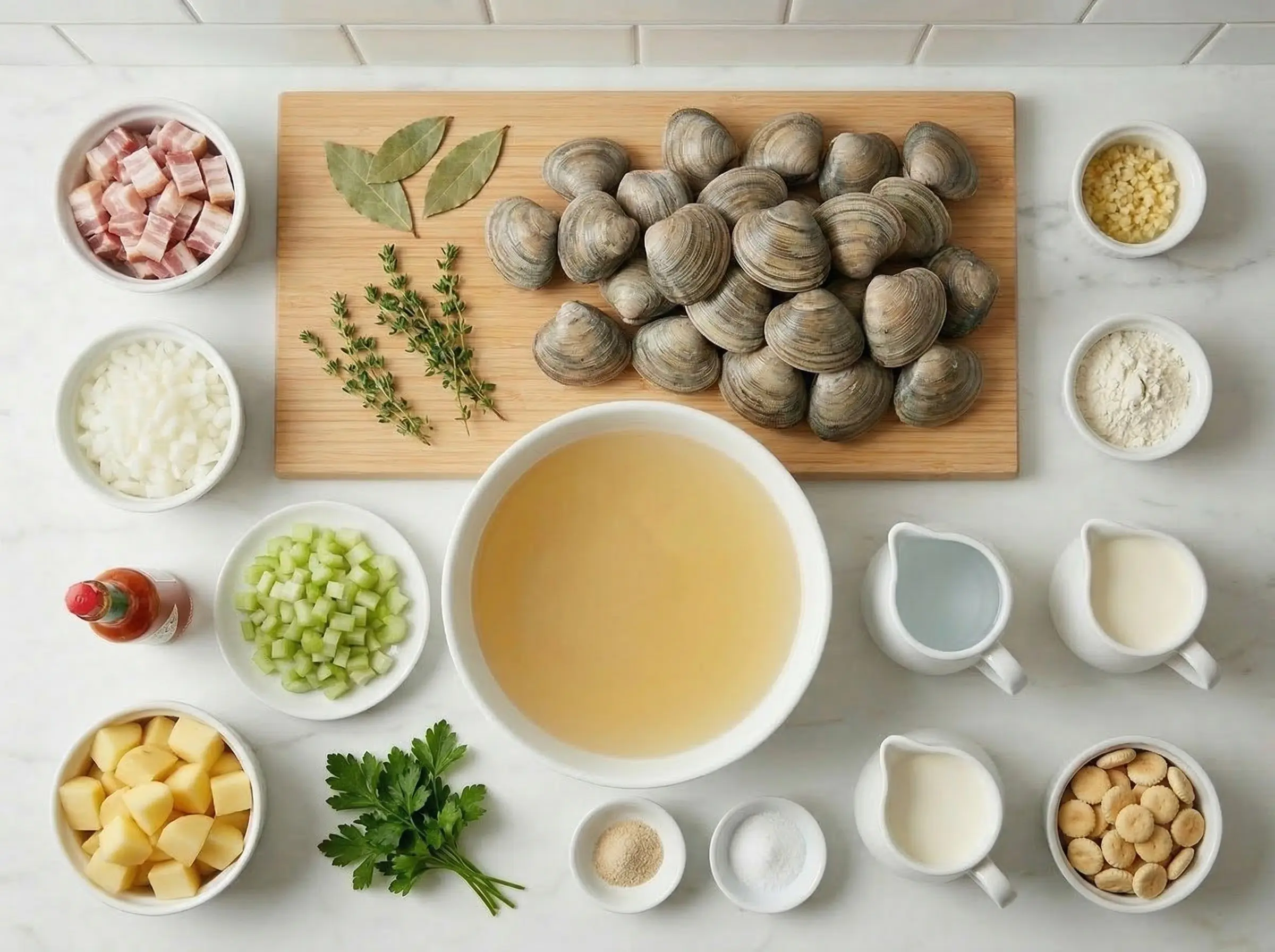
Ingredients
The Story
New England clam chowder is America's most iconic soup, a creamy, hearty celebration of the ocean that has warmed New Englanders for over three centuries. The word "chowder" likely derives from the French "chaudière," a large copper pot used by Breton fishermen to cook communal stews. French settlers in Nova Scotia brought this tradition to North America, where it merged with the abundant clams of the Atlantic coast to create something distinctly American. By the 1700s, clam chowder was established as a staple of coastal New England, with the first printed recipe appearing in the Boston Evening Post in 1751. The dish became so central to regional identity that in 1939, Maine actually introduced legislation to ban the addition of tomatoes to clam chowder. The rivalry between New England and Manhattan-style chowder is one of America's great culinary debates. New England chowder is cream-based, thick, and rich, while Manhattan chowder uses a tomato broth and is thinner, almost like a vegetable soup with clams. Rhode Island offers a third variation - a clear broth version. New Englanders consider their version the only true chowder, viewing the Manhattan version as heresy. The cream-based style became dominant in Boston and spread throughout New England, served in bread bowls on Fisherman's Wharf, in waterfront restaurants from Portland to Provincetown, and in countless home kitchens on cold winter nights. Legal Sea Foods, the famous Boston restaurant chain, has served its chowder at every presidential inauguration since 1981. What makes New England clam chowder so extraordinary is the layering of flavors and textures that create comfort in every spoonful. The foundation begins with rendered salt pork or bacon, providing smoky depth and savory fat. Onions and celery soften in this fat, building an aromatic base. Potatoes, cut into tender cubes, provide starchy body and satisfying heft. The clam juice - the soul of the chowder - delivers briny, oceanic essence. Cream adds luxurious richness that mellows and unifies. And the clams themselves, added at the end to prevent toughening, provide sweet, tender bursts of the sea in every bite. Properly made chowder should be thick but not gluey, creamy but not heavy, with each ingredient distinct yet harmonious. Served steaming hot with oyster crackers and perhaps a dash of hot sauce, New England clam chowder is coastal New England in a bowl.
Instructions
Step 1
Steam the clams if using fresh. Scrub the clams under cold running water to remove any grit. Discard any with cracked shells or that do not close when tapped. In a large pot, bring 1 cup of water to a boil. Add the clams, cover, and steam for 5-8 minutes until the shells open. Remove the clams as they open - do not overcook. Discard any that remain closed. Remove the clam meat from the shells, roughly chop, and set aside. Strain the steaming liquid through a fine-mesh sieve lined with cheesecloth to remove any sand - this precious liquid is the foundation of your chowder. If using canned clams, drain and reserve the liquid, supplementing with bottled clam juice.
Step 2
Render the salt pork or bacon. In a large Dutch oven or heavy-bottomed pot, cook the diced salt pork or bacon over medium heat for 8-10 minutes, stirring occasionally, until the fat has rendered and the meat is golden and crispy. The fat should coat the bottom of the pot. This smoky, savory fat is essential to authentic chowder flavor. Remove the crispy bits with a slotted spoon and set aside for garnish, leaving the rendered fat in the pot.
Step 3
Build the aromatic base. Add the diced onion and celery to the rendered fat. Cook over medium heat for 6-8 minutes, stirring occasionally, until softened and translucent but not browned. Add the garlic and cook for 1 minute until fragrant. Sprinkle the flour over the vegetables and stir constantly for 2-3 minutes to cook out the raw flour taste. This roux will thicken the chowder.
Step 4
Add the liquids and potatoes. Slowly pour in the reserved clam steaming liquid (or bottled clam juice) and water, whisking constantly to prevent lumps. Add the cubed potatoes, bay leaves, and thyme sprigs. Bring to a boil, then reduce heat to a gentle simmer. Cook uncovered for 15-20 minutes until the potatoes are tender but not falling apart. Stir occasionally to prevent sticking. The potatoes will release starch that helps thicken the chowder.
Step 5
Add the cream and milk. Reduce heat to medium-low. Pour in the heavy cream and milk, stirring gently to combine. Let the chowder simmer very gently for 10-15 minutes to meld the flavors - do not boil or the cream may curdle. The chowder should be thick enough to coat a spoon but still pourable. If too thick, add more milk; if too thin, simmer a bit longer.
Step 6
Finish and serve. Remove the bay leaves and thyme stems. Add the reserved chopped clams to the pot and cook for just 2-3 minutes to warm through - do not overcook or the clams will become tough and rubbery. Season with white pepper and salt to taste (be careful with salt as clam juice is quite salty). The chowder should taste briny, creamy, and deeply satisfying. Ladle into warm bowls and garnish with the reserved crispy salt pork or bacon bits and freshly chopped parsley. Serve immediately with a generous handful of oyster crackers and hot sauce on the side for those who like a kick. Traditional accompaniments include more oyster crackers, a drizzle of additional cream, or crusty bread. Some restaurants serve chowder in a hollowed-out sourdough bread bowl, which is delicious but not strictly traditional. Clam chowder thickens as it sits and is even better the next day. Thin with milk when reheating and warm gently over medium-low heat.
You Might Also Like
Master Your Kitchen with PantryAI
Love this recipe? Save it, shop for it, and cook it with ease. Download the PantryAI app to organize your pantry, track expirations, and discover recipes based on what you already have.

On a computer?Scan with your iPhone camera to download PantryAI.



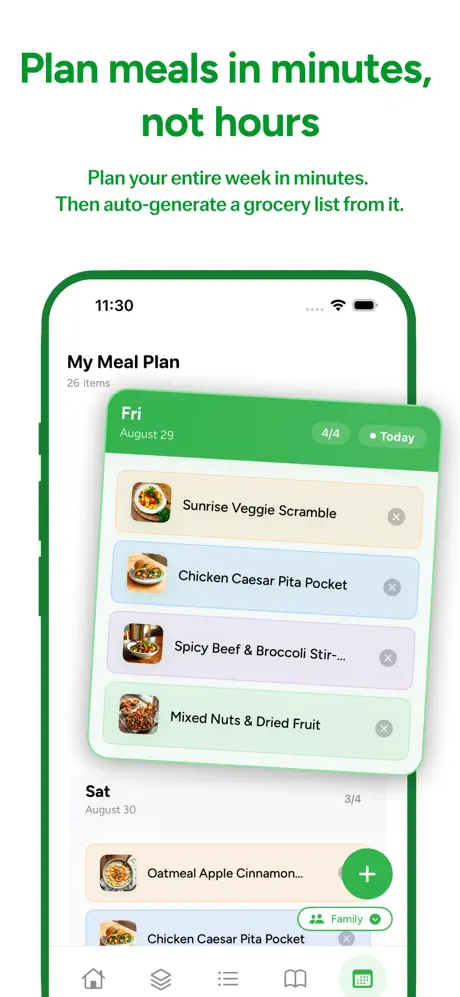

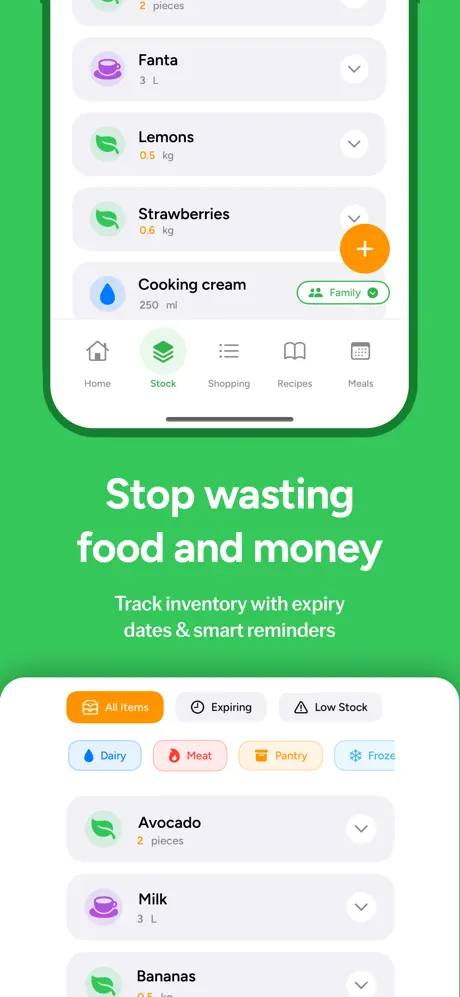


Swipe to see more screenshots