
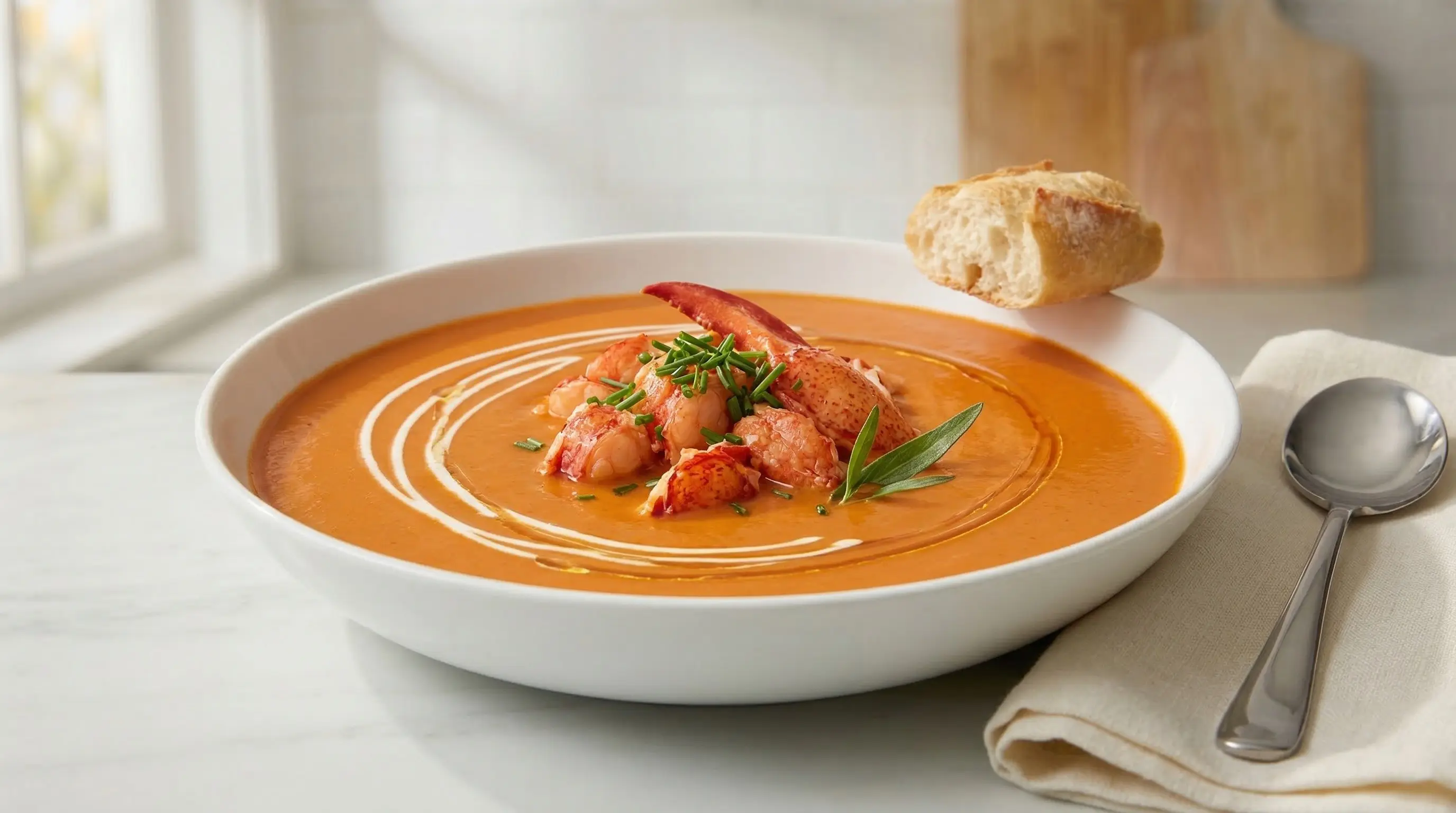
Lobster Bisque
Learn how to make luxurious lobster bisque, the elegant French soup with a velvety smooth, intensely flavored lobster and cream broth. This restaurant-quality classic is rich, sophisticated, and utterly decadent!
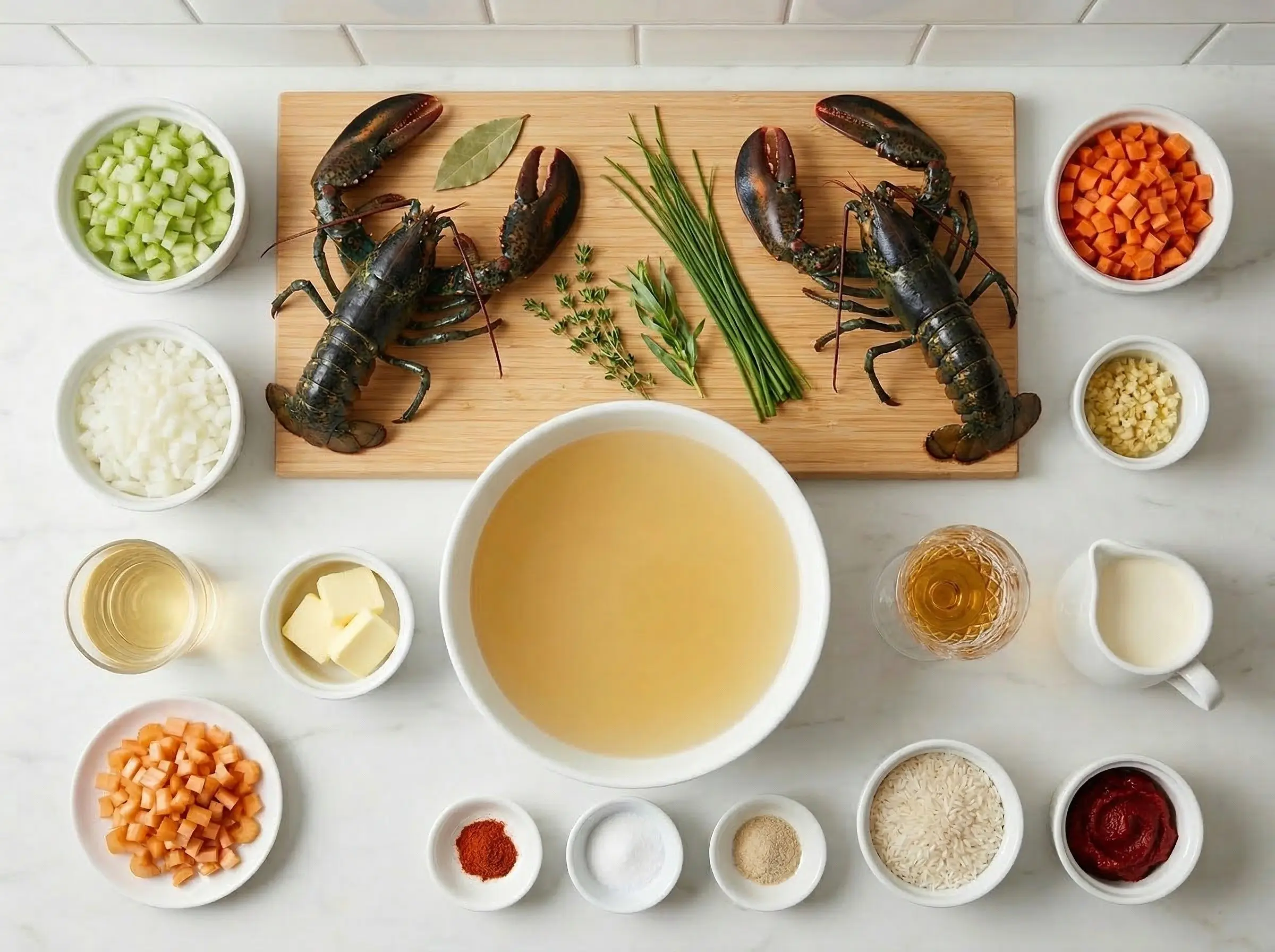
Ingredients
The Story
Lobster bisque is the pinnacle of French soup-making, a rich and velvety creation that transforms humble crustacean shells into liquid luxury. The word "bisque" itself has uncertain origins - some trace it to the Bay of Biscay on the French-Spanish coast, while others suggest it derives from "bis cuites" meaning "twice cooked," referring to the traditional method of first roasting the shells, then simmering them into stock. What is certain is that bisque emerged from the thrifty French tradition of extracting every ounce of flavor from ingredients, particularly the shells that home cooks might otherwise discard. By the 17th century, bisque had become established in French haute cuisine as one of the great shellfish soups. The genius of bisque lies in its ability to capture the pure essence of shellfish in concentrated form. Classic technique demands that the shells - heads, bodies, legs, and all - be roasted until deeply colored, then simmered with aromatics, tomato paste, wine, and brandy to extract their complex flavors. The resulting stock is strained, thickened with rice or roux, enriched with cream, and finished with a flourish of cognac. The process is labor-intensive, requiring hours of simmering and multiple straining steps, but the result is transcendent - a soup so intensely flavored with lobster that each spoonful delivers the very soul of the sea. In classic French restaurants, bisque is considered a test of a chef's fundamental skills. What makes lobster bisque so extraordinary is the depth and complexity of flavor achieved through careful technique. The initial roasting of shells develops Maillard browning that contributes caramelized, nutty notes. The tomato paste adds acidity and color. The cognac provides warmth and aromatic complexity. The cream rounds and mellows the intense shellfish flavor into something elegant rather than aggressive. When properly made, bisque is silky smooth - strained through fine mesh to remove any trace of grit or shell - with a color somewhere between coral and sunset orange. A few pieces of tender lobster meat float in the velvety broth, providing textural contrast. A final drizzle of cognac perfumes each bowl. Lobster bisque is extravagance and technique united, proof that the French approach to cooking can transform even scraps into something sublime.
Instructions
Step 1
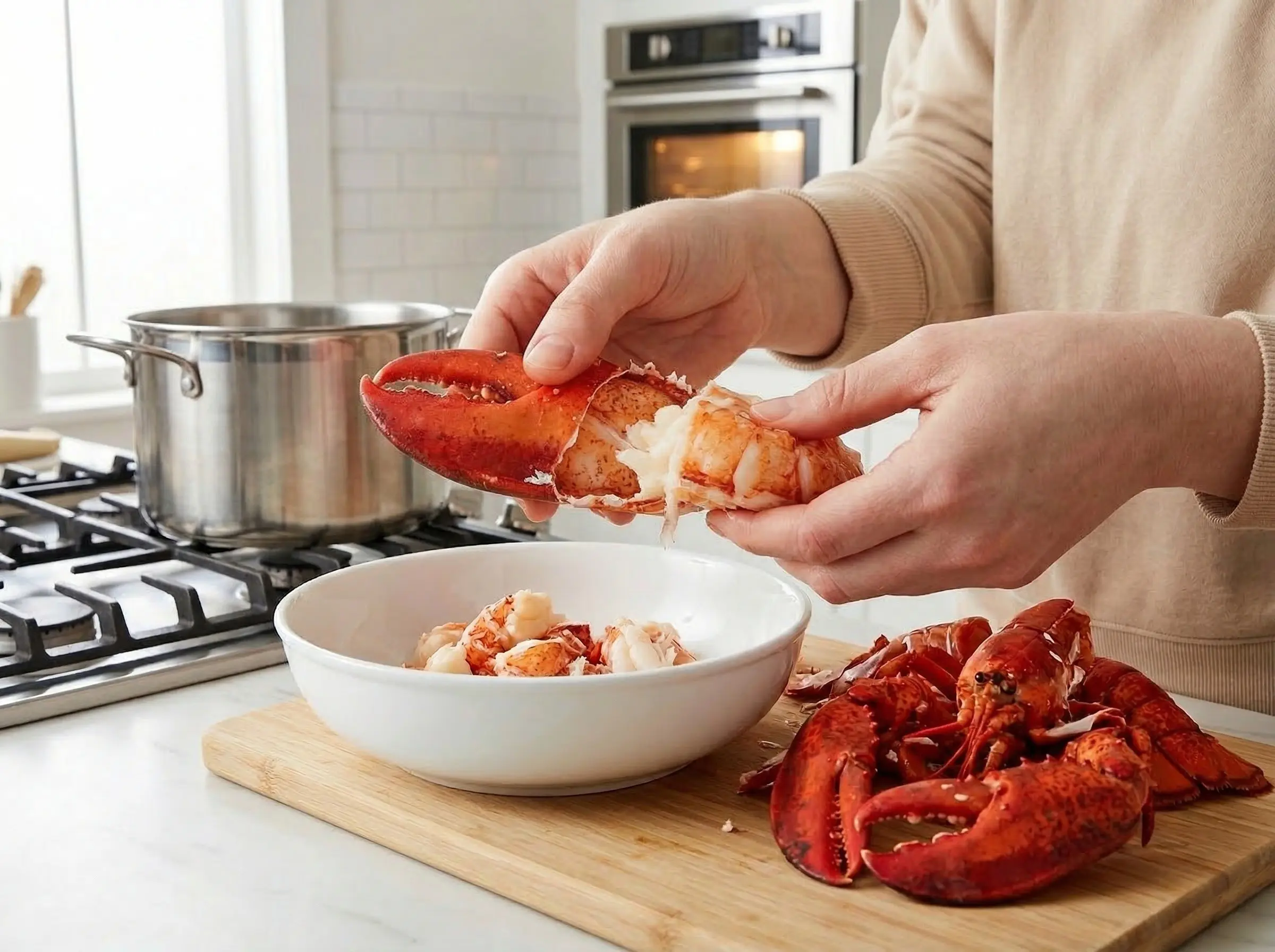
Cook the lobsters and extract the meat. Bring a large pot of salted water to a rolling boil. Plunge the lobsters head-first into the boiling water, cover, and cook for 8-10 minutes until the shells turn bright red. Immediately transfer to an ice bath to stop cooking. Once cool enough to handle, remove all the meat from the tails, claws, and knuckles. Chop the meat into bite-sized pieces, cover, and refrigerate until serving. Crucially, reserve all the shells, bodies, and heads - these are the foundation of your bisque. Break or chop the shells into smaller pieces for better flavor extraction.
Step 2
Roast the shells for maximum flavor. Preheat your oven to 400 degrees F. Spread the broken lobster shells on a baking sheet in a single layer. Roast for 15-20 minutes until deeply colored and fragrant, tossing halfway through. The shells should be brick red with some browned spots. This roasting step is essential - it develops the deep, caramelized flavors that distinguish restaurant-quality bisque from ordinary lobster soup. If any liquid has accumulated in the shells, save it.
Step 3
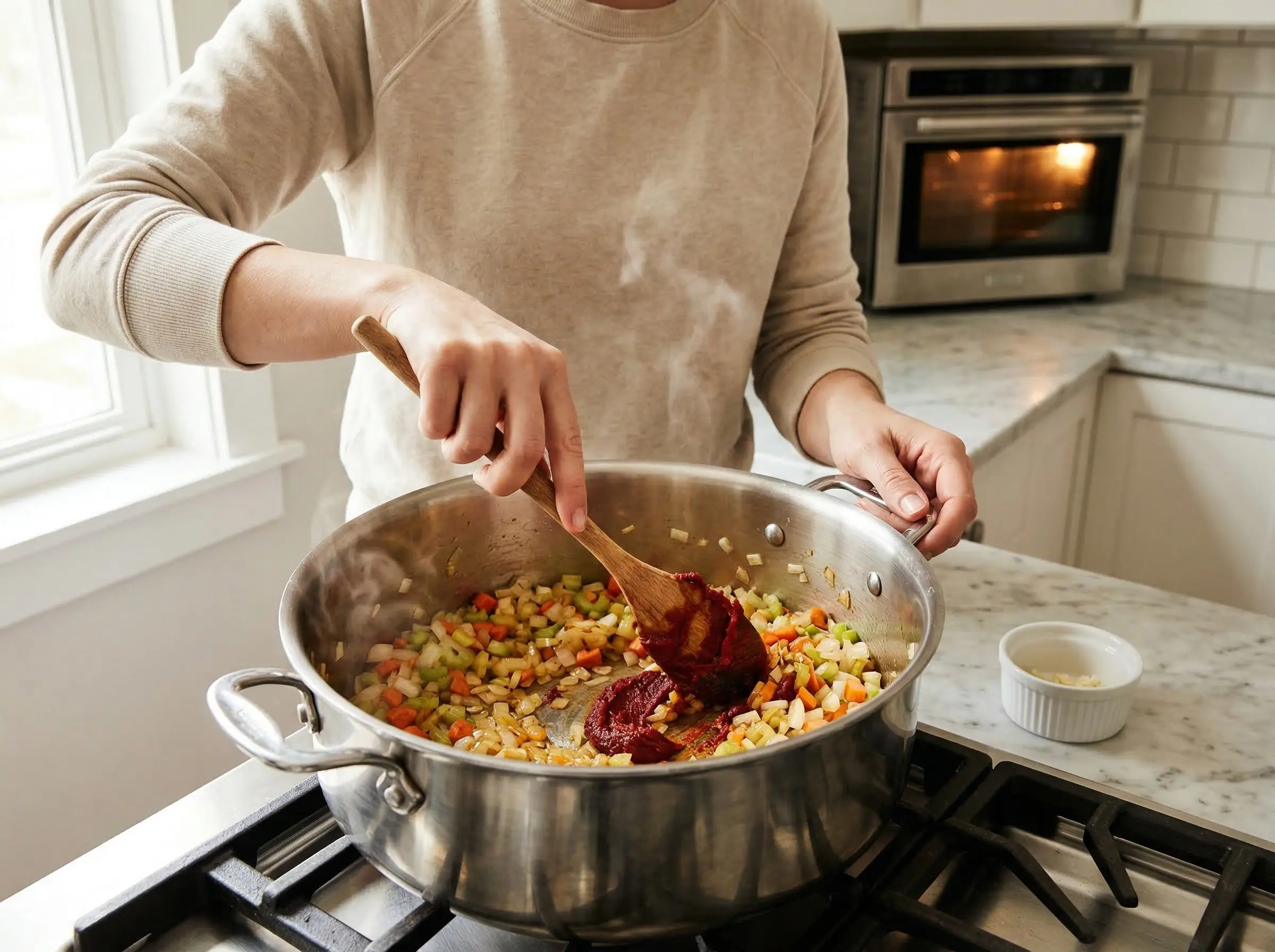
Build the aromatic base. In a large Dutch oven or stockpot, melt the butter over medium heat. Add the diced onion, celery, and carrot. Cook for 8-10 minutes, stirring occasionally, until the vegetables are softened and lightly golden. Add the garlic and cook for 1 minute until fragrant. Add the tomato paste and cook, stirring constantly, for 2-3 minutes to caramelize and deepen its color. The mixture should turn a brick-red color and smell intensely savory.
Step 4
Add the shells and deglaze. Add the roasted lobster shells to the pot and stir to coat with the tomato mixture. Carefully pour in the cognac - it may flame, so be prepared. If it does not flame, simply cook until the alcohol aroma dissipates, about 1 minute. Add the white wine and scrape up any browned bits from the bottom of the pot. Let simmer for 3-4 minutes until the wine has reduced by half.
Step 5
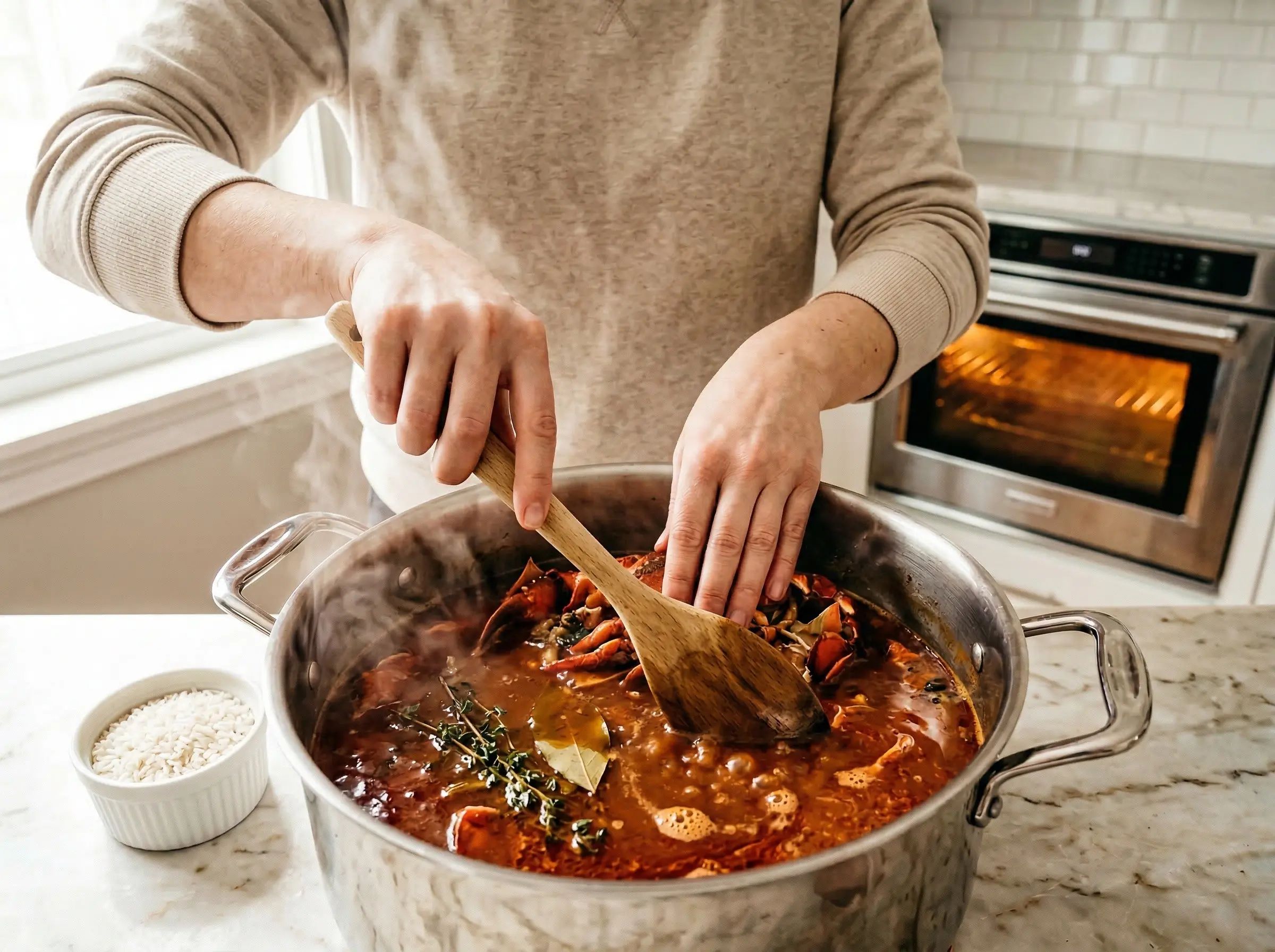
Simmer the stock. Add the fish stock, water, rice, bay leaf, and thyme. The rice will help thicken the bisque naturally. Bring to a boil, then reduce heat to a gentle simmer. Cook uncovered for 45-50 minutes, stirring occasionally and pressing on the shells to extract maximum flavor. The liquid should reduce by about one-third, concentrating the lobster essence. The aroma should be intensely shellfish-forward.
Step 6
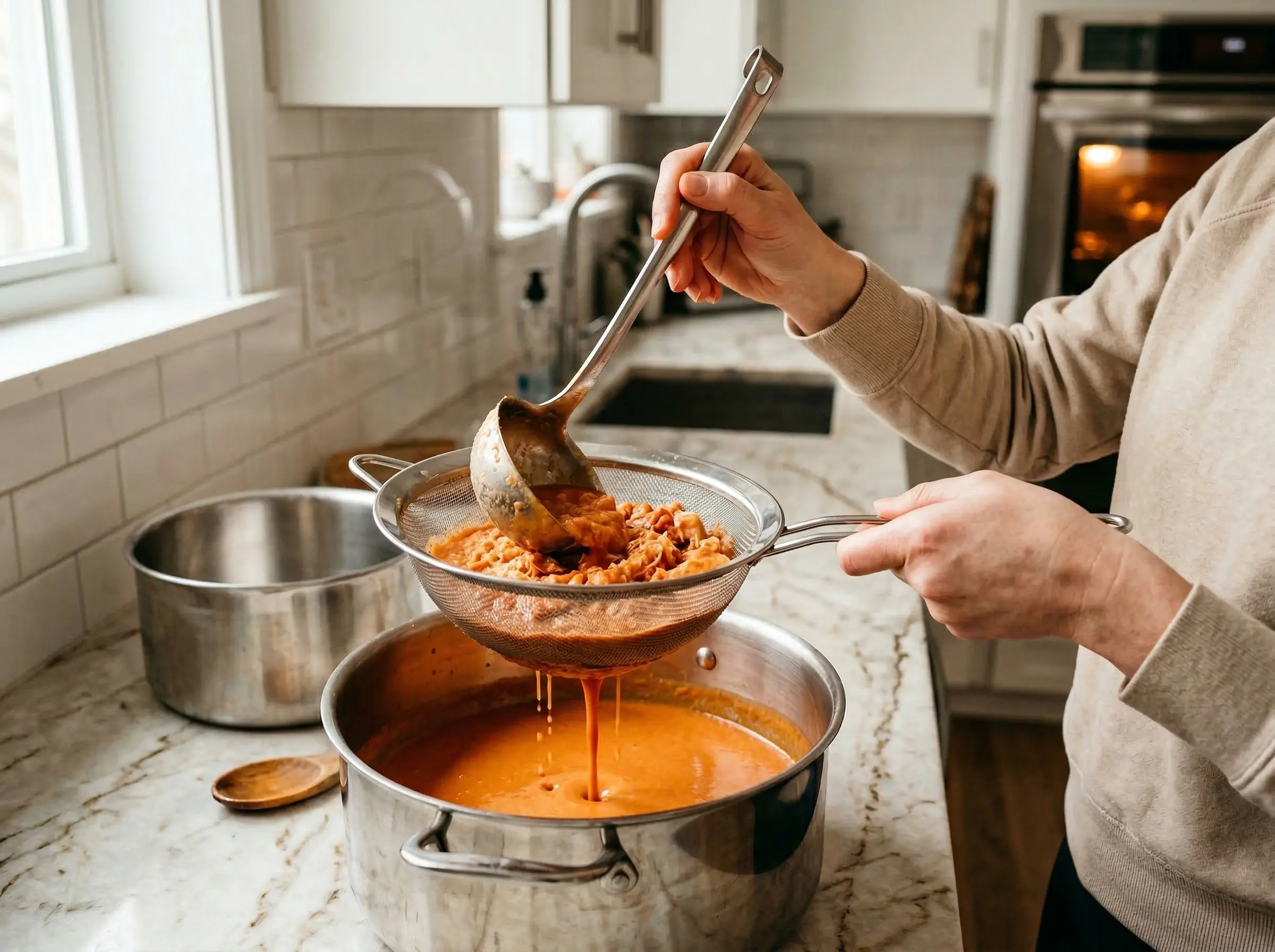
Strain and puree. Remove and discard the bay leaf and thyme stems. Working in batches, carefully ladle the soup (shells and all) into a blender and puree until as smooth as possible - this extracts even more flavor from the shells. Strain the pureed soup through a fine-mesh strainer into a clean pot, pressing firmly on the solids to extract every drop of liquid. Discard the solids. For the silkiest texture, strain a second time through a cheesecloth-lined strainer. This double-straining ensures no grit or shell fragments remain.
Step 7
Finish and serve. Return the strained bisque to medium heat. Stir in the heavy cream, cayenne pepper, salt, and white pepper. Simmer gently for 5-10 minutes to meld the flavors - do not boil or the cream may break. Taste and adjust seasoning - bisque should be rich and intensely flavorful but balanced. Add the reserved lobster meat to the pot to warm through for 2-3 minutes. Ladle into warm shallow bowls, ensuring each serving has pieces of lobster meat. Drizzle each bowl with a teaspoon of cognac for aroma. Garnish with finely snipped chives and a leaf or two of fresh tarragon if using. Serve immediately with crusty bread for dipping. Lobster bisque should be served very hot in warmed bowls - the heat releases the aromatics and keeps the cream at its silkiest. This is a soup for special occasions, worth every minute of effort.
You Might Also Like
Master Your Kitchen with PantryAI
Love this recipe? Save it, shop for it, and cook it with ease. Download the PantryAI app to organize your pantry, track expirations, and discover recipes based on what you already have.

On a computer?Scan with your iPhone camera to download PantryAI.








Swipe to see more screenshots