
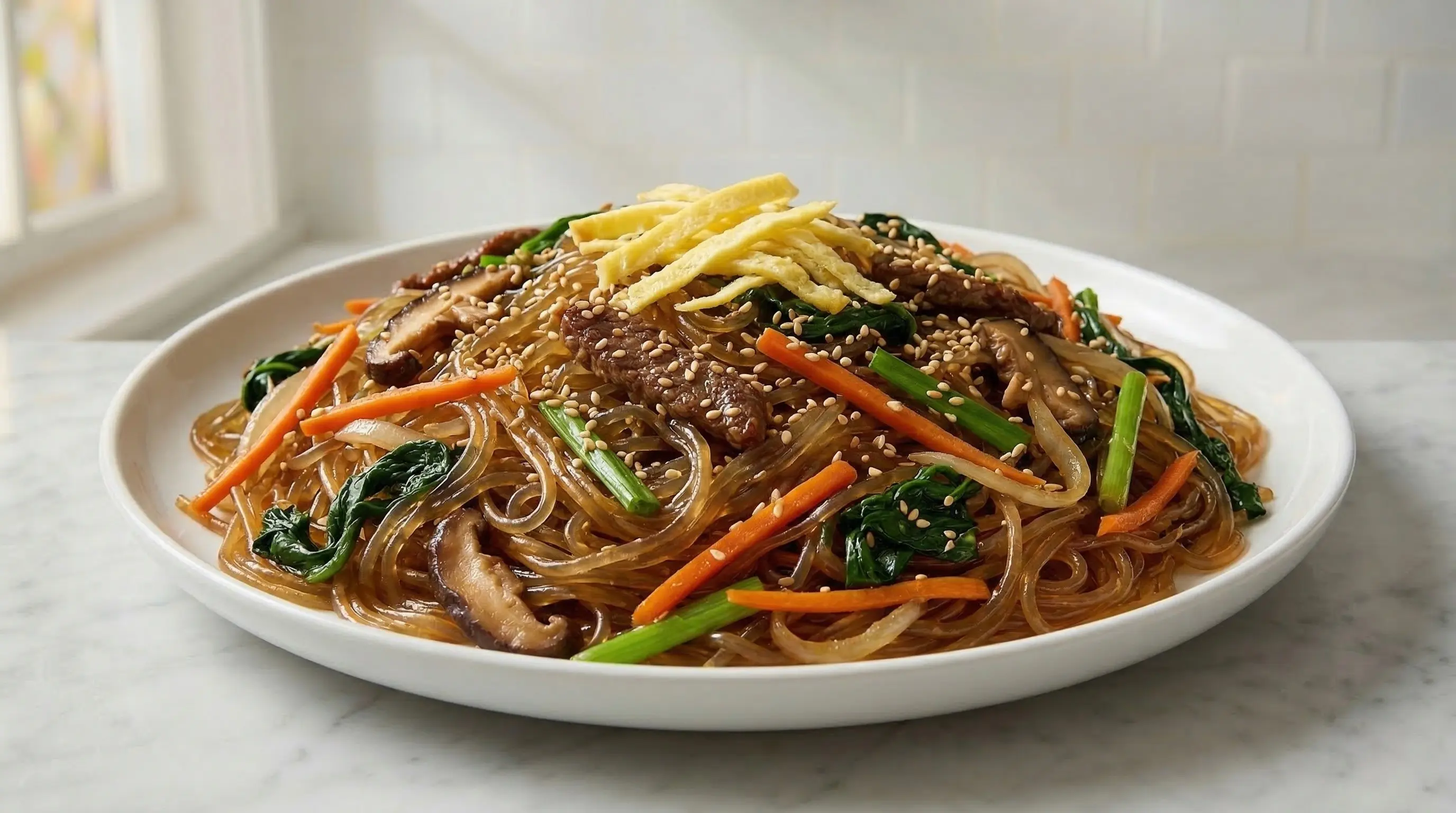
Japchae
Learn how to make authentic japchae, the beloved Korean dish of sweet potato glass noodles stir-fried with vegetables and beef. This elegant, slightly sweet noodle dish is perfect for celebrations and everyday meals alike!
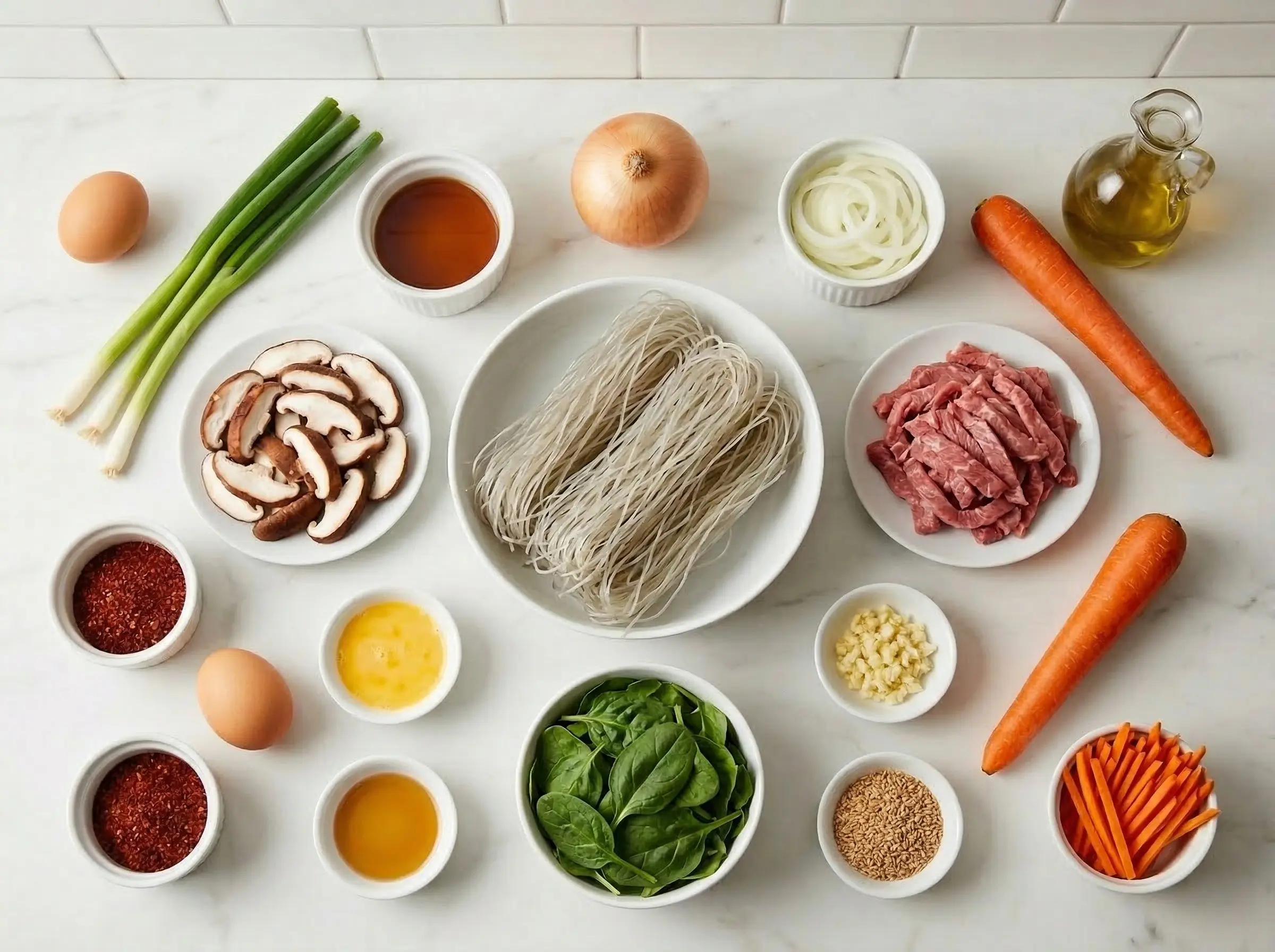
Ingredients
The Story
Japchae is one of Korea's most celebrated dishes, a glistening tangle of sweet potato glass noodles stir-fried with colorful vegetables and tender beef in a sweet-savory sauce of soy and sesame. The dish has noble origins - it was created in the early 17th century during the Joseon Dynasty by Yi Chung, a court official who served King Gwanghaegun. The king so loved the dish that he promoted Yi Chung to a higher government position. Originally, japchae did not include noodles at all; it was a stir-fry of various vegetables and mushrooms. Sweet potato noodles (dangmyeon) were introduced to Korea from China in the early 20th century and became the dish's signature component. Today, japchae occupies a special place in Korean cuisine as a dish for celebrations. It appears at birthday parties, Chuseok (autumn harvest festival), Seollal (Lunar New Year), wedding banquets, and any occasion worth commemorating. The dish's association with special events stems from the labor-intensive traditional preparation - each vegetable and the meat are cooked separately to preserve their individual colors, textures, and flavors, then combined at the end. This painstaking technique, while time-consuming, produces a dish where each component maintains its integrity while contributing to a harmonious whole. Home cooks often simplify the process, but for important occasions, the traditional method is honored. What makes japchae so extraordinary is the interplay of textures, colors, and the distinctive character of the sweet potato noodles themselves. Dangmyeon are made from sweet potato starch and have a uniquely chewy, bouncy, almost squeaky texture that is deeply satisfying to eat. They are also translucent, giving the dish its alternate name - glass noodles. The vegetables provide color and crunch - spinach for green, carrots for orange, mushrooms for earthiness, and often egg strips for yellow and white. The sauce, built on soy sauce, sesame oil, and a touch of sugar, ties everything together with its sweet-savory profile. Finished with a generous shower of toasted sesame seeds, japchae is as beautiful as it is delicious - a celebration dish that happens to taste like celebration itself.
Instructions
Step 1
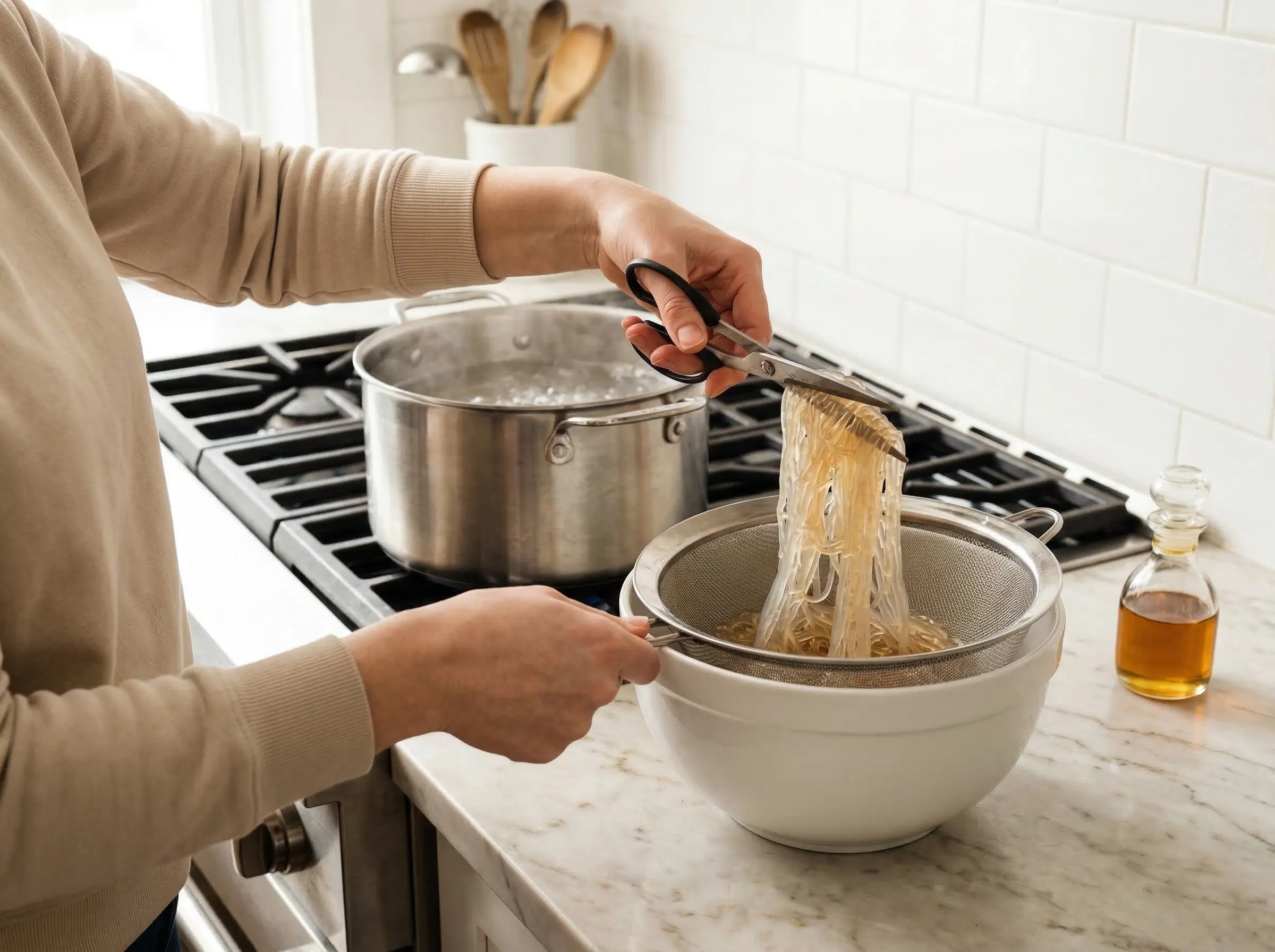
Cook the noodles. Bring a large pot of water to a boil. Add the sweet potato noodles and cook for 6-8 minutes until tender but still chewy - they should be translucent with no white core remaining. Unlike wheat noodles, these can become gummy if overcooked. Drain, rinse briefly with cold water, and drain again. Using kitchen scissors, cut the noodles into more manageable lengths (about 6-8 inches) to make mixing and eating easier. Toss with 1 tablespoon sesame oil to prevent sticking. Set aside.
Step 2
Prepare and marinate the beef. Slice the beef into thin strips against the grain. In a bowl, combine 1 tablespoon soy sauce, 1 tablespoon sesame oil, half the minced garlic, and a pinch of pepper. Add the beef and toss to coat. Let marinate for at least 15 minutes while you prepare the vegetables. For vegetarian japchae, simply omit the beef or substitute with extra mushrooms or tofu.
Step 3
Cook each vegetable separately. This traditional method preserves each ingredient's color and texture. Heat a large skillet or wok over high heat. For each vegetable: add a little vegetable oil, stir-fry briefly, season lightly with salt, remove to a large bowl. Cook the spinach for 30 seconds until just wilted, then squeeze out excess water. Cook the carrots for 2-3 minutes until slightly softened but still crisp. Cook the onions for 2-3 minutes until translucent. Cook the mushrooms for 3-4 minutes until softened and golden. Cook the green onions for 1 minute. Transfer each to the bowl.

Step 4
Cook the beef and make egg strips. In the same skillet over high heat, add a little oil and stir-fry the marinated beef for 2-3 minutes until browned and just cooked through. Add to the bowl of vegetables. If making egg strips (jidan), beat the eggs with a pinch of salt. Heat a non-stick pan over low heat with a little oil. Pour in a thin layer of egg, swirling to coat. Cook until set, about 1 minute, then flip briefly. Roll up the thin omelet and slice into thin strips. Set aside for garnish.
Step 5
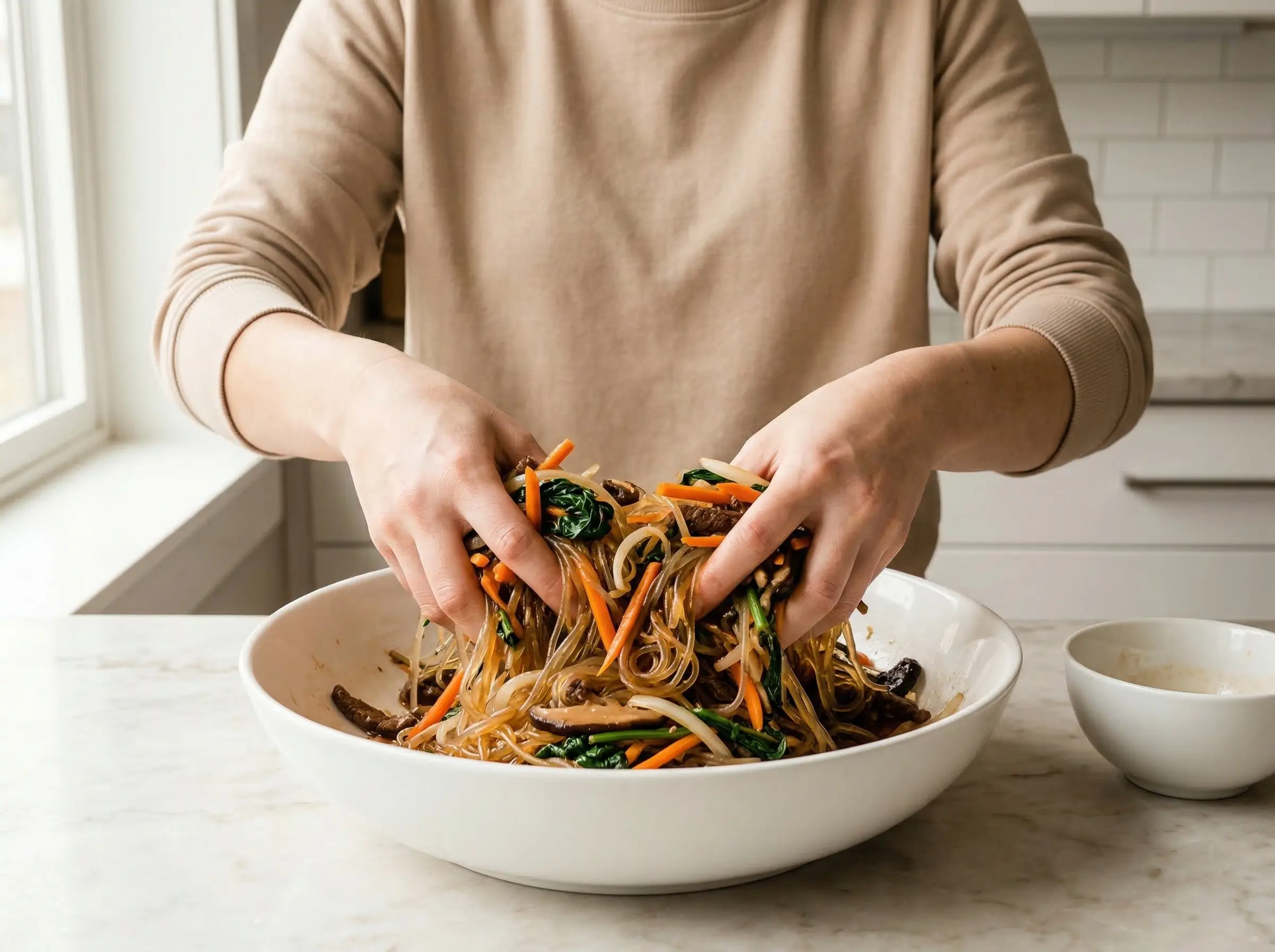
Make the sauce and combine everything. In a small bowl, whisk together the remaining 3 tablespoons soy sauce, remaining 1 tablespoon sesame oil, remaining garlic, and sugar until the sugar dissolves. Add the cooked noodles to the bowl of vegetables and meat. Pour the sauce over everything. Using your hands or tongs, gently toss everything together until evenly combined and the noodles are coated with sauce. The hands-on mixing is traditional and gives you better control to avoid breaking the noodles.
Step 6
Taste, adjust, and serve. Taste the japchae and adjust seasoning - you may want more soy sauce for saltiness, more sugar for sweetness, or more sesame oil for richness. The dish should be balanced between sweet and savory. Transfer to a large serving platter. Garnish with egg strips if using and a generous sprinkle of toasted sesame seeds. Japchae can be served warm, at room temperature, or even cold - it is delicious at any temperature, which makes it perfect for parties and potlucks. In Korea, japchae is often served as a banchan (side dish) with rice, but it is substantial enough to be a main course. Leftovers keep refrigerated for 3-4 days; the noodles may stiffen but will soften again when brought to room temperature or briefly reheated.

You Might Also Like
Master Your Kitchen with PantryAI
Love this recipe? Save it, shop for it, and cook it with ease. Download the PantryAI app to organize your pantry, track expirations, and discover recipes based on what you already have.

On a computer?Scan with your iPhone camera to download PantryAI.








Swipe to see more screenshots