
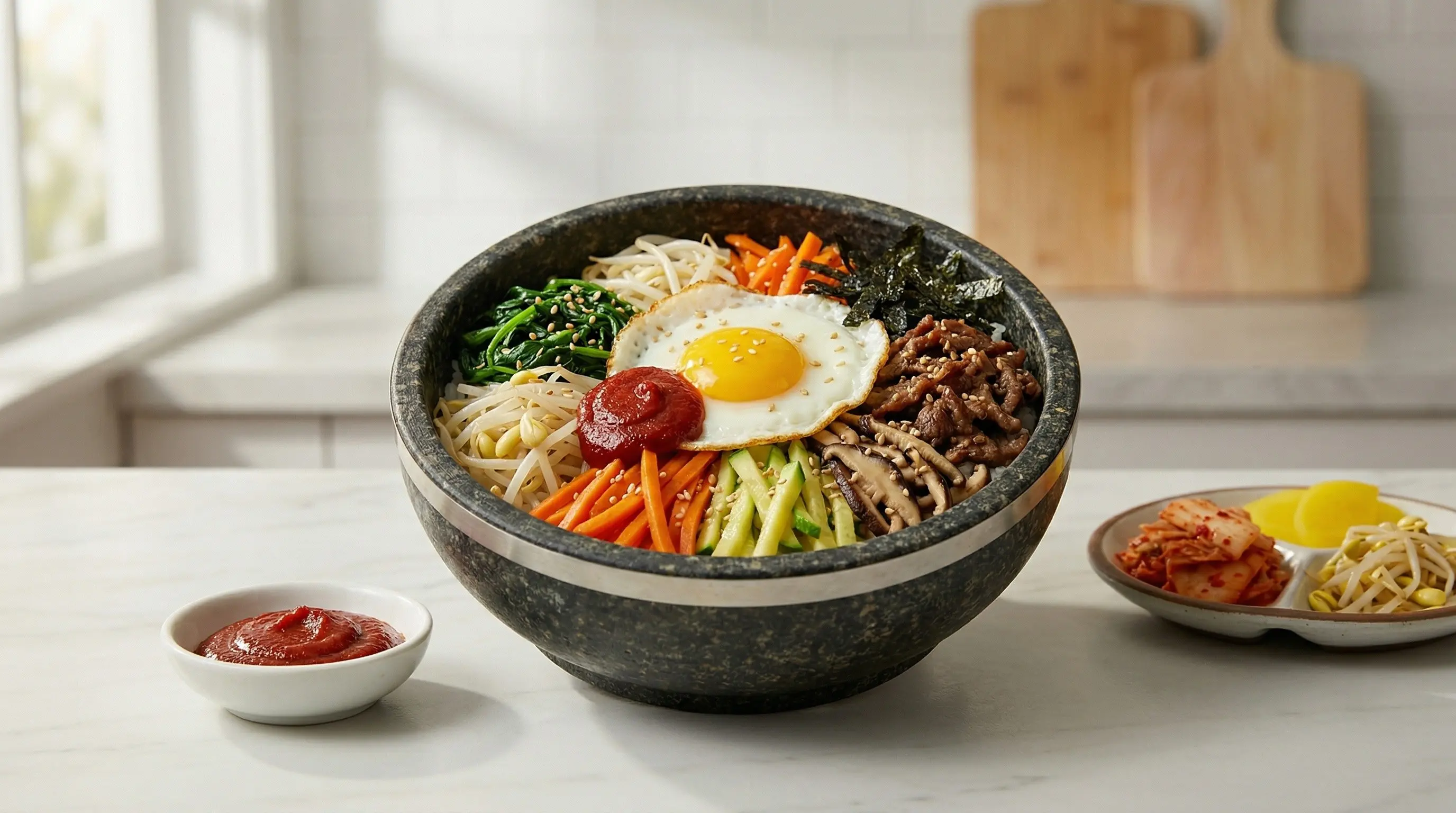
Bibimbap
Learn how to make authentic bibimbap, the beloved Korean rice bowl with colorful vegetables, meat, a fried egg, and spicy gochujang sauce. This beautiful, nutritious dish is endlessly customizable!
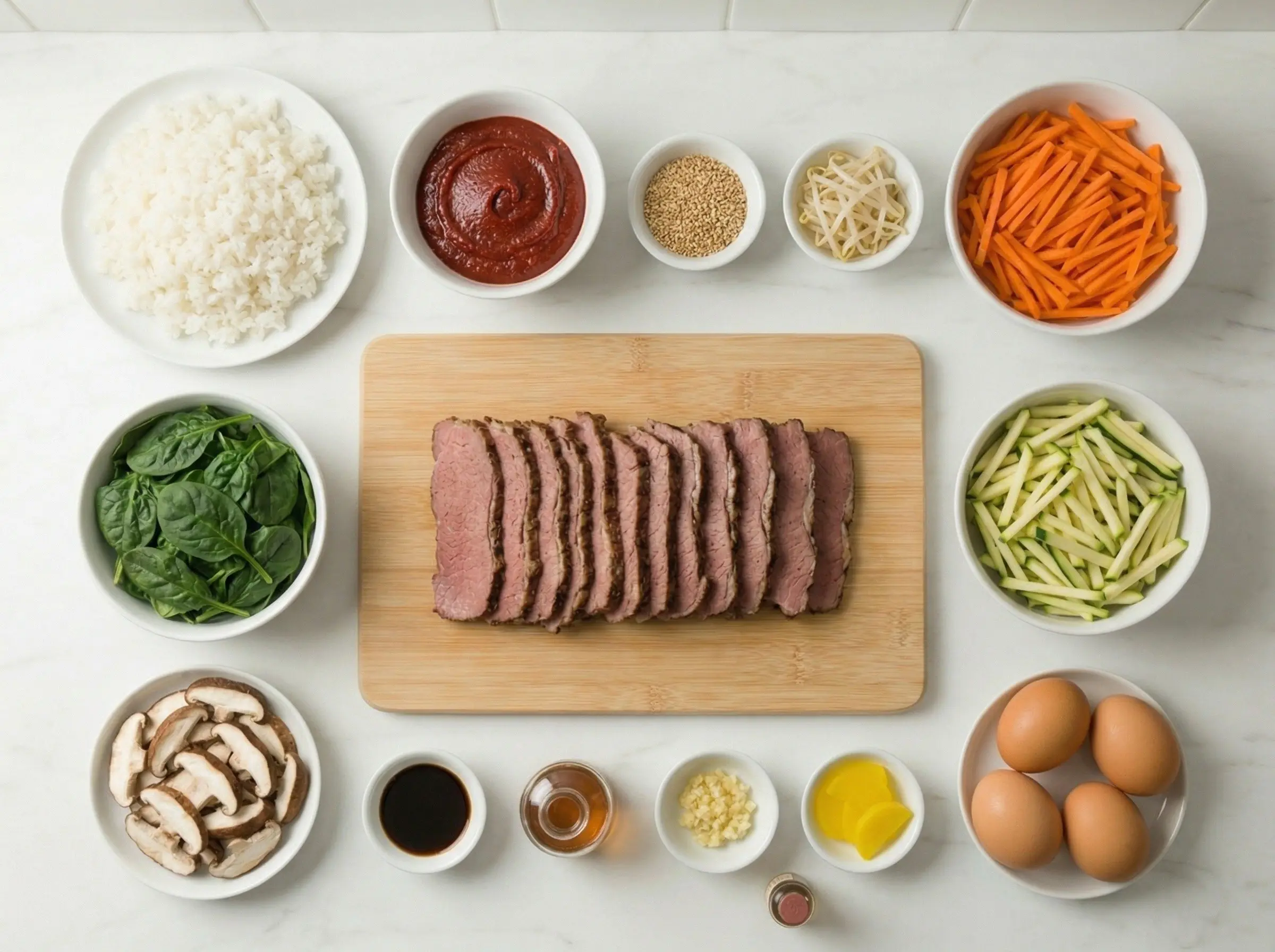
Ingredients
The Story
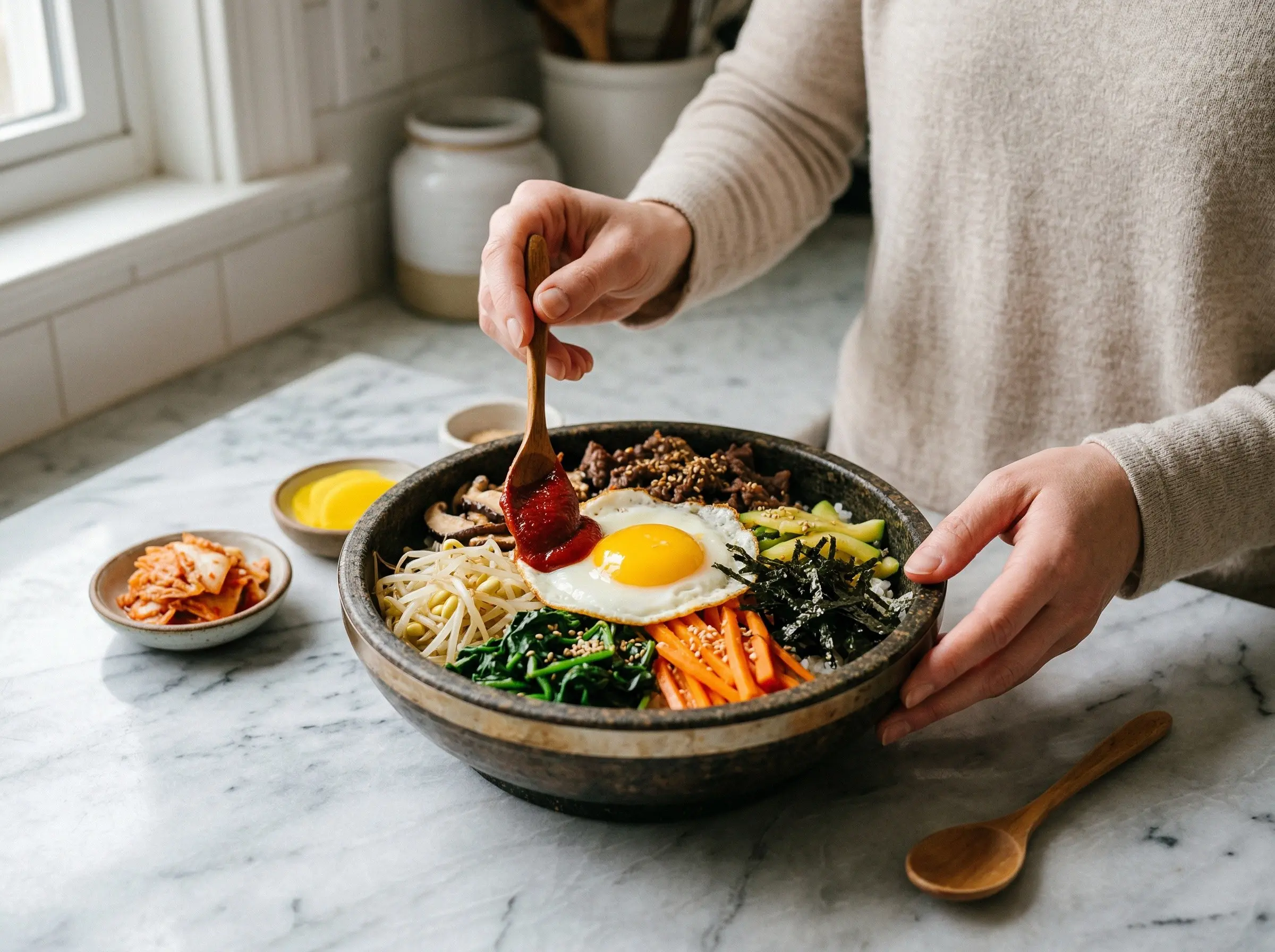
Bibimbap is one of Korea's most iconic dishes, a vibrant rice bowl topped with an array of colorful seasoned vegetables, meat, a fried egg, and fiery gochujang sauce, all mixed together just before eating. The name literally means "mixed rice" in Korean - "bibim" meaning mixed and "bap" meaning rice - and the act of mixing is central to the dish's identity. While the exact origins are debated, bibimbap likely evolved from the ancient Korean practice of mixing leftover vegetables and rice together, a practical way to use up ingredients before they spoiled. The dish is mentioned in records dating back to the late 19th century, though it almost certainly existed in home kitchens long before then. Several Korean cities claim to be the birthplace of bibimbap, with Jeonju, Jinju, and Tongyeong each boasting distinctive regional versions. Jeonju bibimbap is perhaps the most famous, featuring an elaborate array of over 30 different toppings including bean sprouts, fernbrake, spinach, and raw beef tartare (yukhoe). Legend has it that Jeonju bibimbap was served to the king, and the city's version remains the gold standard. Another popular variation is dolsot bibimbap, served in a sizzling hot stone bowl (dolsot) that creates a crispy layer of rice on the bottom called nurungji - this crunchy rice is considered a delicacy and adds textural contrast to the soft toppings. Hoedeopbap substitutes raw fish for meat, essentially creating a Korean chirashi-style dish. What makes bibimbap so extraordinary is the harmony of colors, flavors, and textures that come together when you mix it. The presentation before mixing is a feast for the eyes - vegetables arranged in colorful sections like a wheel, each prepared differently to highlight its character. The spinach is blanched and dressed with sesame oil, the carrots julienned and sauteed, the mushrooms earthy and savory, the bean sprouts crunchy and fresh. The runny egg yolk becomes a rich sauce when mixed, coating every grain of rice. The gochujang adds sweet heat that ties everything together. When you finally stir it all with your spoon, breaking the yolk and swirling the red sauce through the rice, the colors blend into a beautiful mosaic. Every bite is different - sometimes more vegetable, sometimes more meat, sometimes a burst of heat from the gochujang. Bibimbap embodies the Korean philosophy of balance and harmony, bringing together the five colors (obangsaek) that represent health and completeness.
Instructions
Step 1
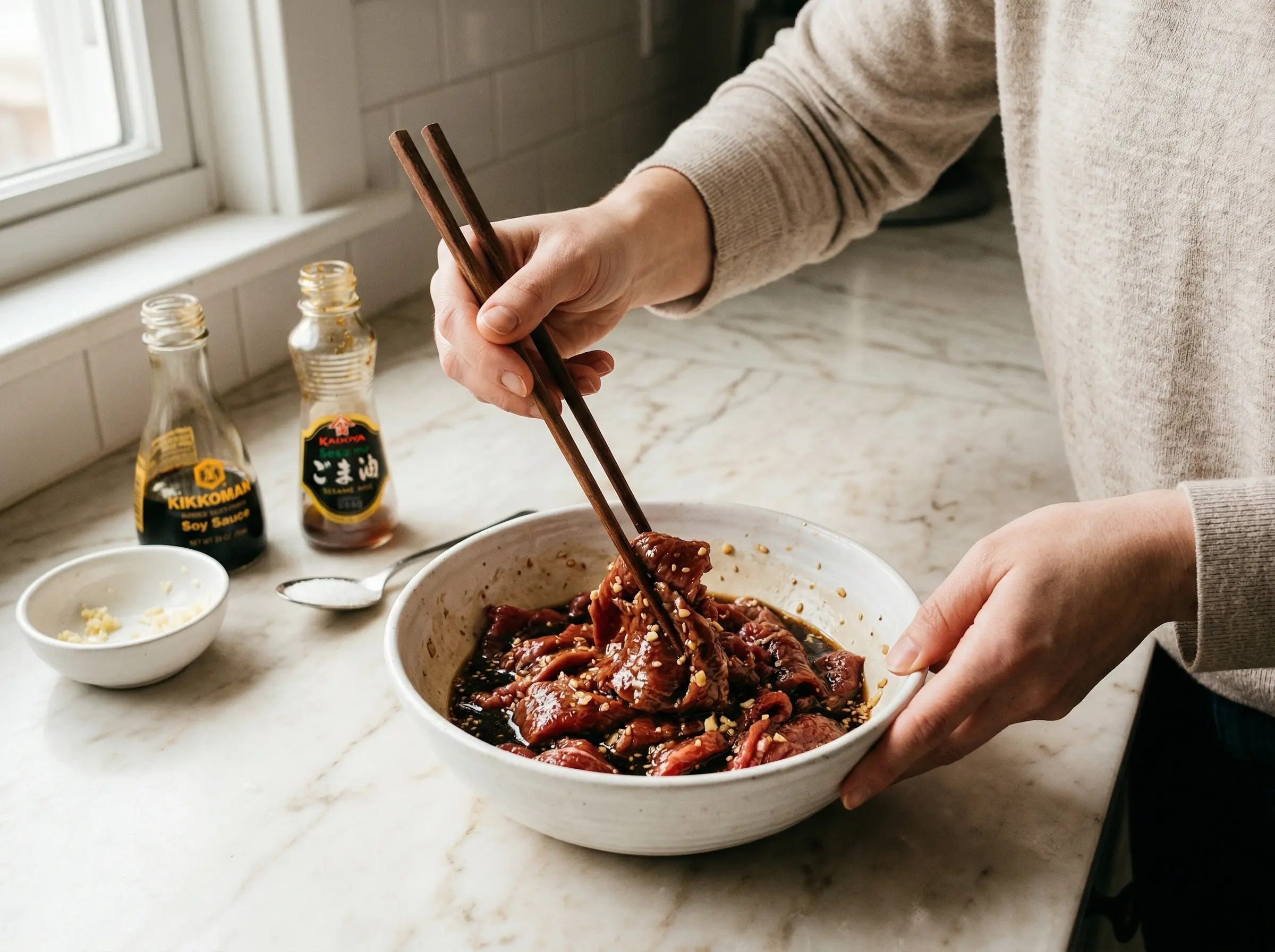
Marinate the beef. In a bowl, combine the thinly sliced beef with the soy sauce, 1 tablespoon sesame oil, minced garlic, and sugar. Mix well and let marinate for at least 15 minutes while you prepare the vegetables. For the most tender beef, slice it against the grain as thinly as possible - partially freezing the meat for 30 minutes makes slicing easier.
Step 2
Prepare the spinach and bean sprouts. Bring a pot of salted water to a boil. Blanch the spinach for 30 seconds until just wilted, then immediately transfer to ice water to stop cooking and preserve the bright green color. Squeeze out excess water firmly - this is important or the spinach will water down your rice. Season with a pinch of salt and a drizzle of sesame oil. Blanch the bean sprouts for 1-2 minutes until slightly softened but still crunchy. Drain, cool, and season the same way.
Step 3
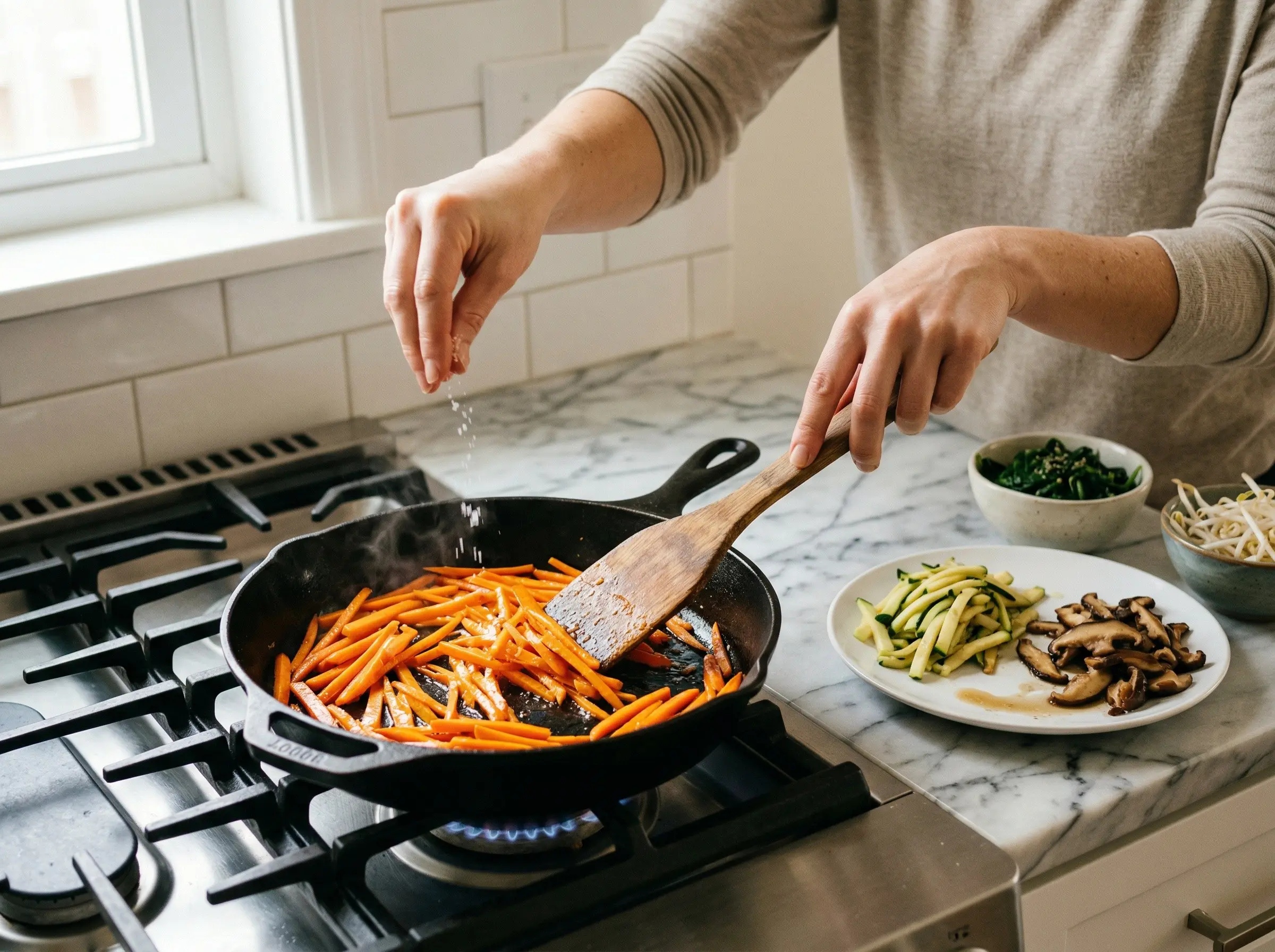
Prepare the remaining vegetables. Heat a drizzle of vegetable oil in a skillet over medium-high heat. Saute the julienned carrots for 2-3 minutes until slightly softened but still crisp, seasoning with a pinch of salt. Transfer to a plate. Saute the julienned zucchini for 2 minutes until just tender, seasoning with salt. Transfer to the plate. Saute the sliced mushrooms for 3-4 minutes until golden and any liquid has evaporated, seasoning with salt and a splash of soy sauce. Each vegetable should be cooked separately to maintain its distinct flavor and texture.
Step 4
Cook the marinated beef. In the same skillet over high heat, add a drizzle of oil and cook the marinated beef for 2-3 minutes, stirring frequently, until browned and caramelized at the edges. The high heat creates delicious charred bits while keeping the meat tender. Set aside with the vegetables.
Step 5
Fry the eggs. In a non-stick skillet, heat a little vegetable oil over medium heat. Crack the eggs into the pan and fry until the whites are set but the yolks remain runny - about 2-3 minutes. The runny yolk is essential as it becomes a rich sauce when mixed into the rice. For dolsot bibimbap (stone bowl version), the egg can be placed raw on top and will cook from the residual heat of the hot bowl. Season the eggs with a tiny pinch of salt.

Step 6
Assemble the bibimbap. Divide the warm rice among 4 serving bowls - for dolsot bibimbap, use heated stone bowls brushed with sesame oil which will create crispy rice on the bottom. Arrange the vegetables, beef, and egg on top of the rice in separate sections like a colorful wheel, keeping each ingredient distinct. Place a fried egg in the center of each bowl. Add a generous tablespoon of gochujang on the side or on top. Sprinkle with toasted sesame seeds and roasted seaweed strips. Serve immediately with additional gochujang on the side. Instruct your guests in the traditional way of eating: add as much gochujang as desired, then use a spoon to thoroughly mix everything together, breaking the yolk and incorporating the sauce throughout the rice. The beauty of bibimbap is that it transforms from an artful arrangement into a harmonious, flavorful mixture. Every bite should include rice, vegetables, meat, egg, and sauce. Serve with pickled radish (danmuji) and kimchi on the side for a complete Korean meal.
You Might Also Like

Master Your Kitchen with PantryAI
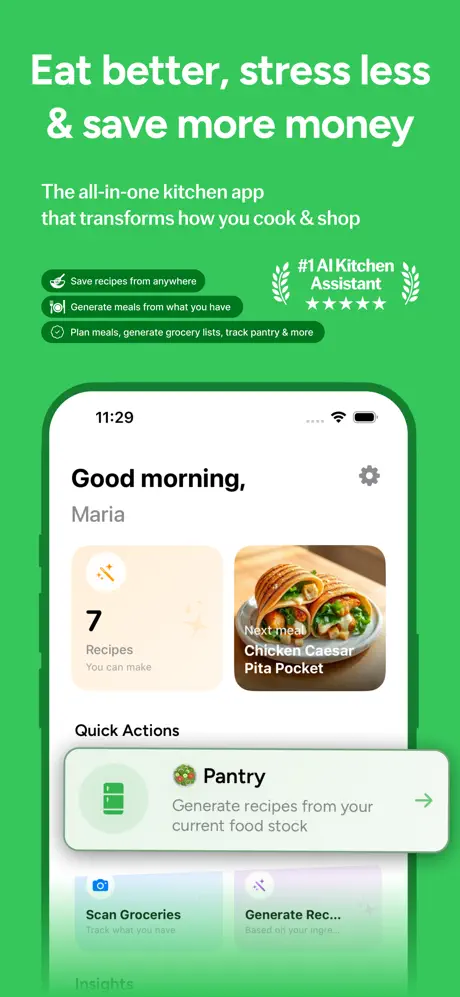
Love this recipe? Save it, shop for it, and cook it with ease. Download the PantryAI app to organize your pantry, track expirations, and discover recipes based on what you already have.

On a computer?Scan with your iPhone camera to download PantryAI.







Swipe to see more screenshots