
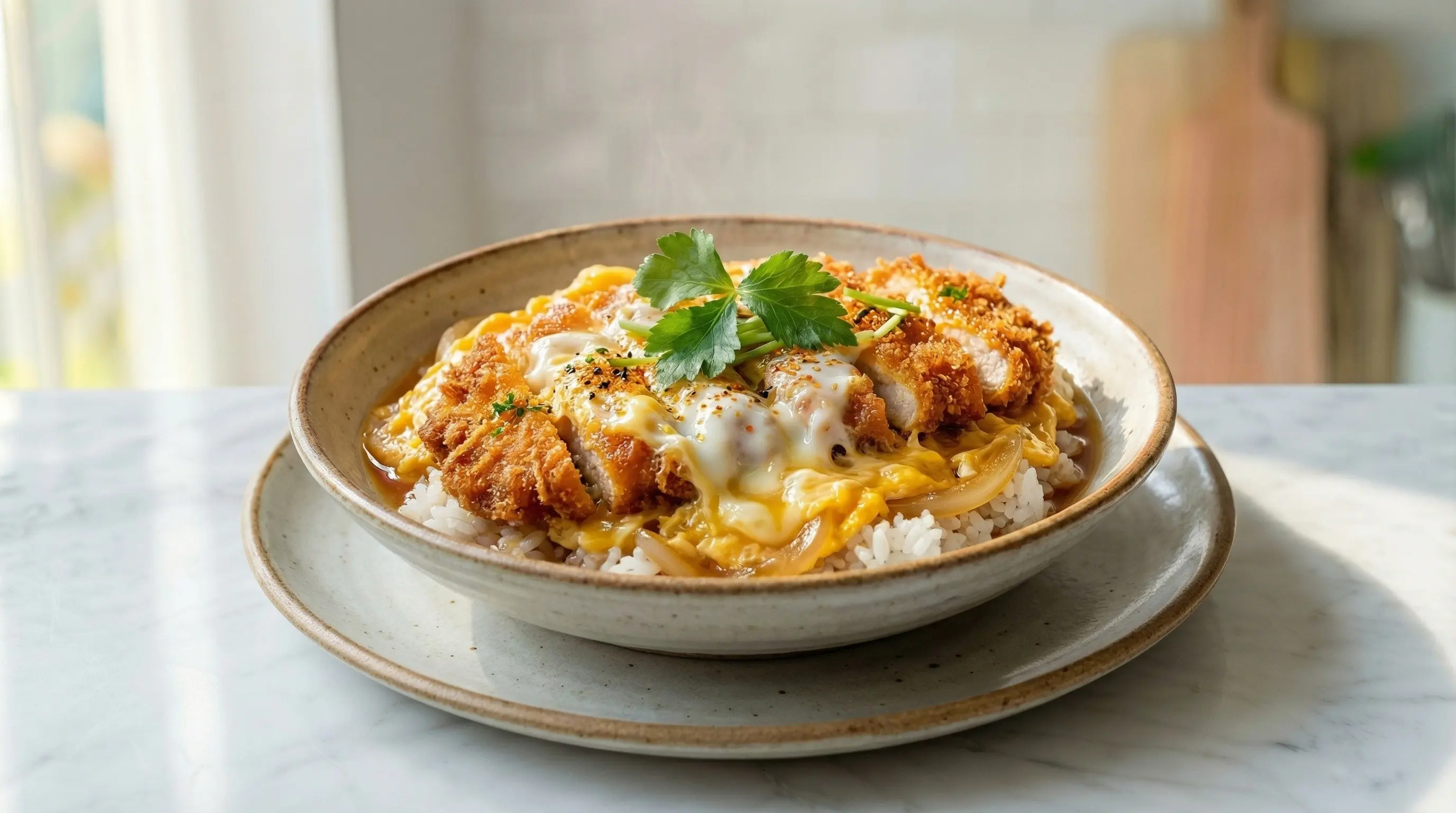
Katsudon
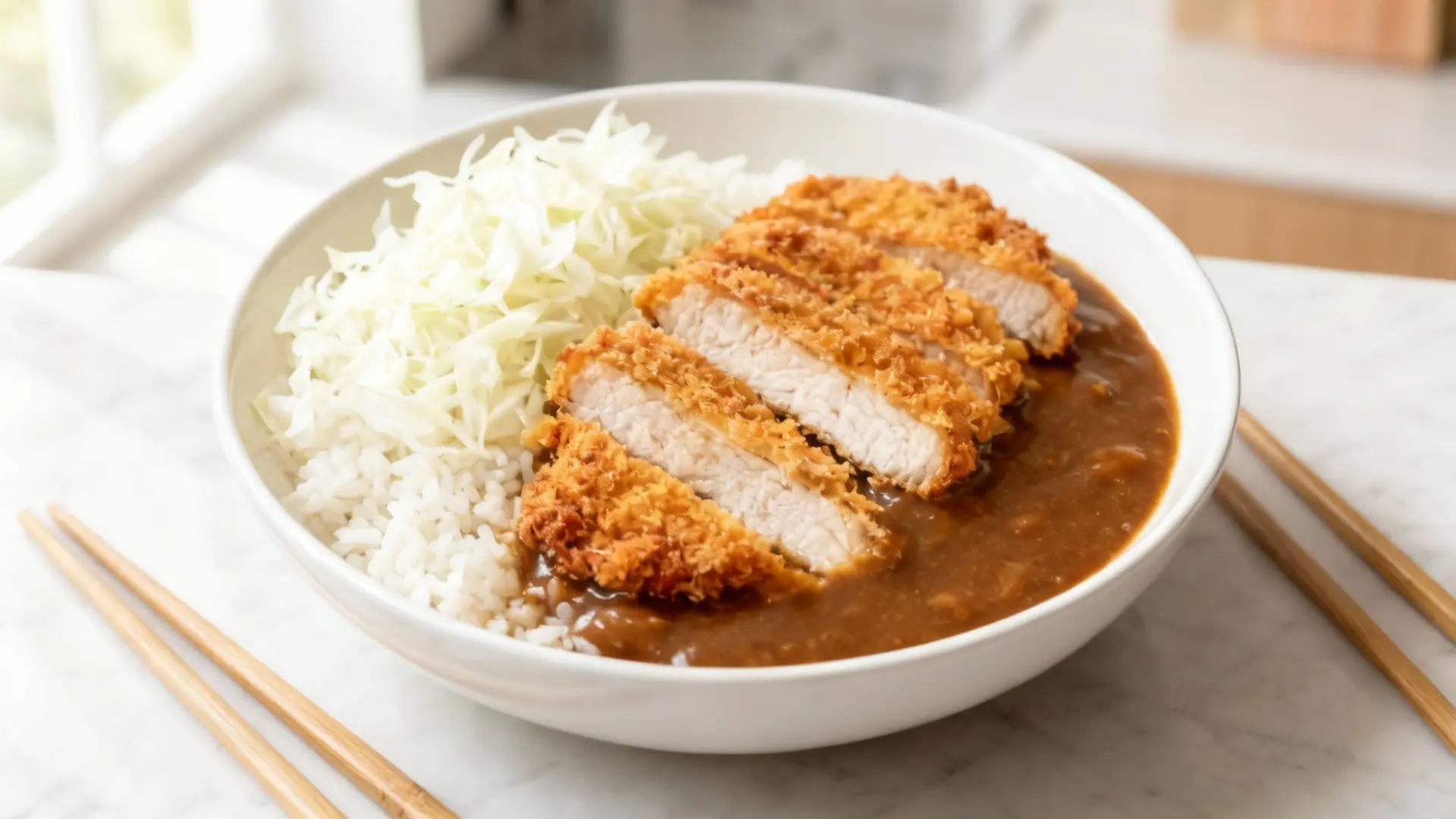
Learn how to make katsudon, a comforting Japanese rice bowl with crispy pork cutlet, silky eggs, and savory-sweet sauce. This beloved donburi is the ultimate comfort food!
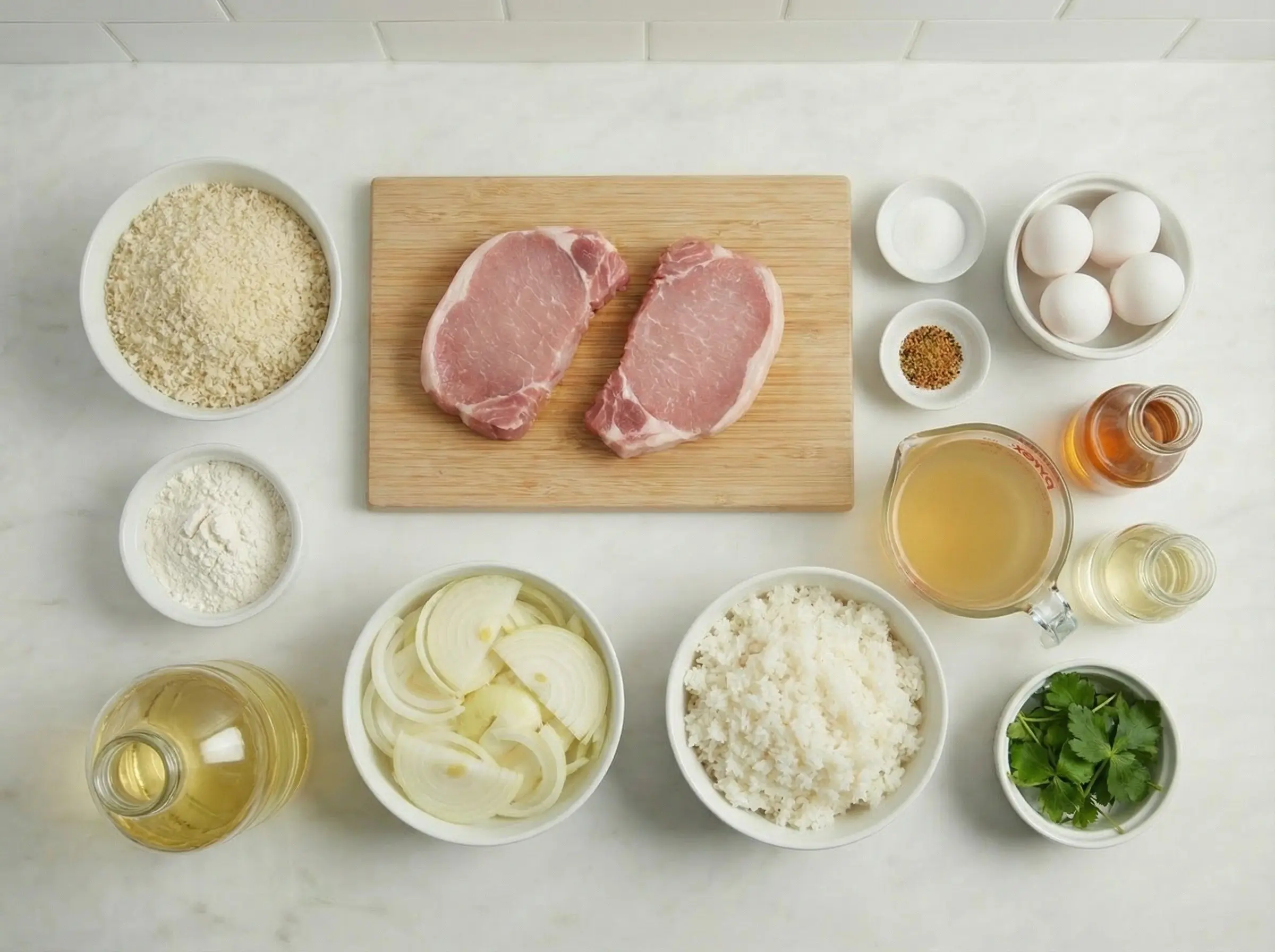
Ingredients
The Story
Katsudon is one of Japan's most beloved comfort foods, a hearty rice bowl that combines tonkatsu (breaded pork cutlet) with softly scrambled eggs in a sweet-savory sauce, all served over steaming rice. The name combines "katsu" (cutlet, derived from the English word) and "don" (short for donburi, meaning rice bowl). The dish is believed to have originated in the early 20th century, with various restaurants claiming credit for its invention. One popular origin story credits a restaurant in Tokyo around 1921, where a cook had the idea to simmer leftover tonkatsu in egg and sauce, transforming yesterday's crispy cutlet into today's saucy, satisfying bowl. Katsudon holds a special place in Japanese culture beyond its delicious taste. The word "katsu" is a homophone for the Japanese verb meaning "to win" or "to be victorious," making katsudon a traditional good-luck meal eaten before exams, sporting events, job interviews, and other important occasions. Students across Japan eat katsudon the night before university entrance exams, hoping the linguistic connection will bring success. This superstition has made katsudon a symbol of determination and hope in Japanese society. The dish also appears frequently in Japanese pop culture - it is famously associated with police dramas, where detectives often eat katsudon while interrogating suspects, a trope that has become a beloved cliché. What makes katsudon so satisfying is the transformation that occurs when the crispy tonkatsu meets the simmering sauce. The cutlet, initially shatteringly crisp from deep-frying, softens slightly as it absorbs the dashi-soy-mirin broth, creating a contrast between the still-crunchy edges and the sauce-soaked center. The eggs, added in stages and barely cooked, form silky curds that envelop the pork in a custard-like embrace. Sweet onions, softened in the broth, add another layer of flavor. When spooned over hot rice, the savory sauce pools at the bottom of the bowl, flavoring every grain. Katsudon is comfort food at its finest - rich, satisfying, and deeply warming. It represents the Japanese genius for transforming simple ingredients into something greater than the sum of their parts.
Instructions
Step 1
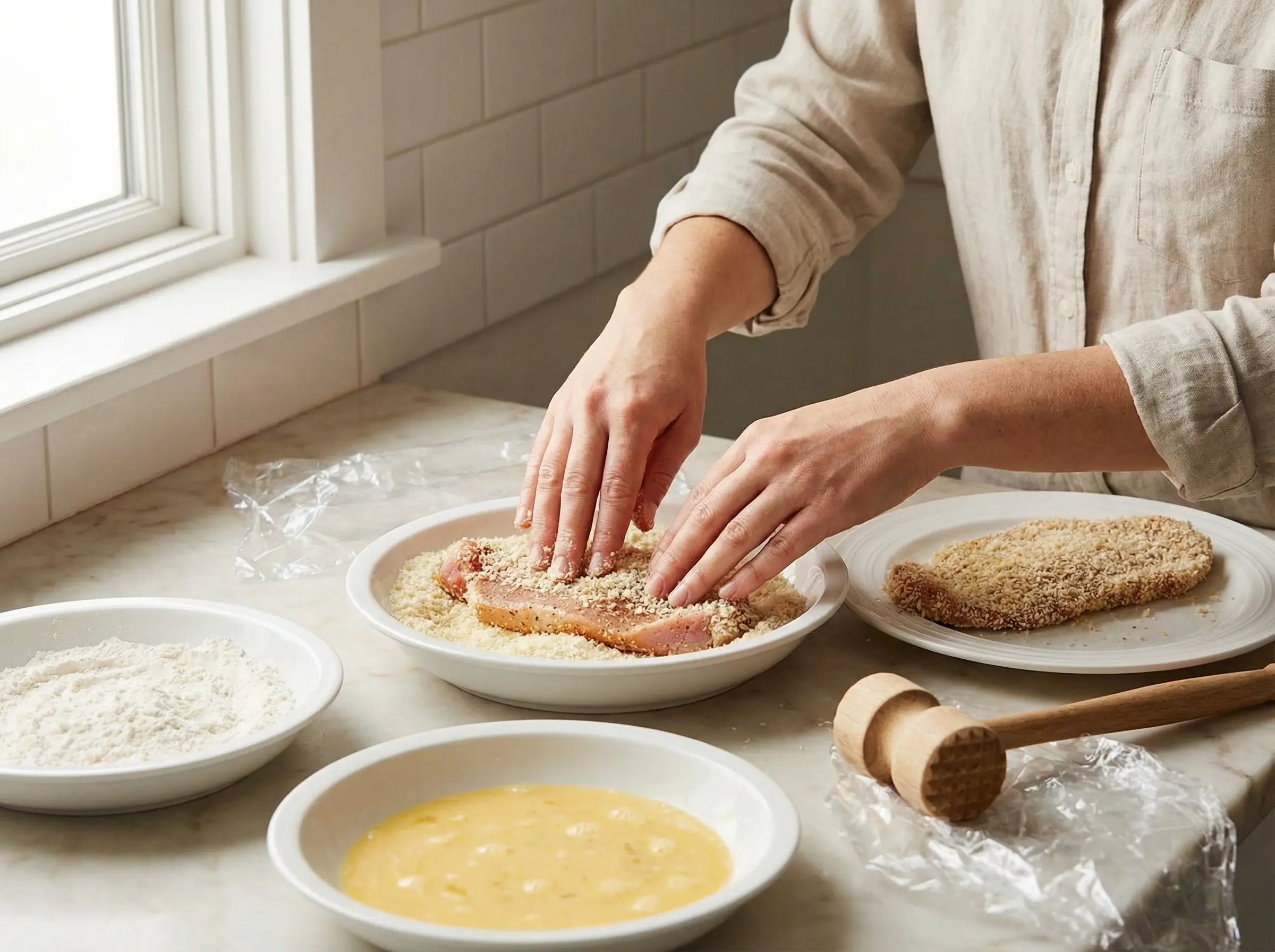
Prepare the tonkatsu (pork cutlets). Place the pork chops between two sheets of plastic wrap and pound with a meat mallet to an even thickness of about 1/2 inch - this tenderizes the meat and ensures even cooking. Make a few small cuts along the edges where the fat meets the meat to prevent curling during frying. Season both sides generously with salt and pepper. Set up a breading station with three shallow dishes: flour in the first, beaten eggs in the second, and panko breadcrumbs in the third. Dredge each cutlet in flour, shaking off excess, then dip in egg, letting excess drip off, and finally coat thoroughly in panko, pressing gently to adhere. Let the breaded cutlets rest for 5 minutes to help the coating set.
Step 2
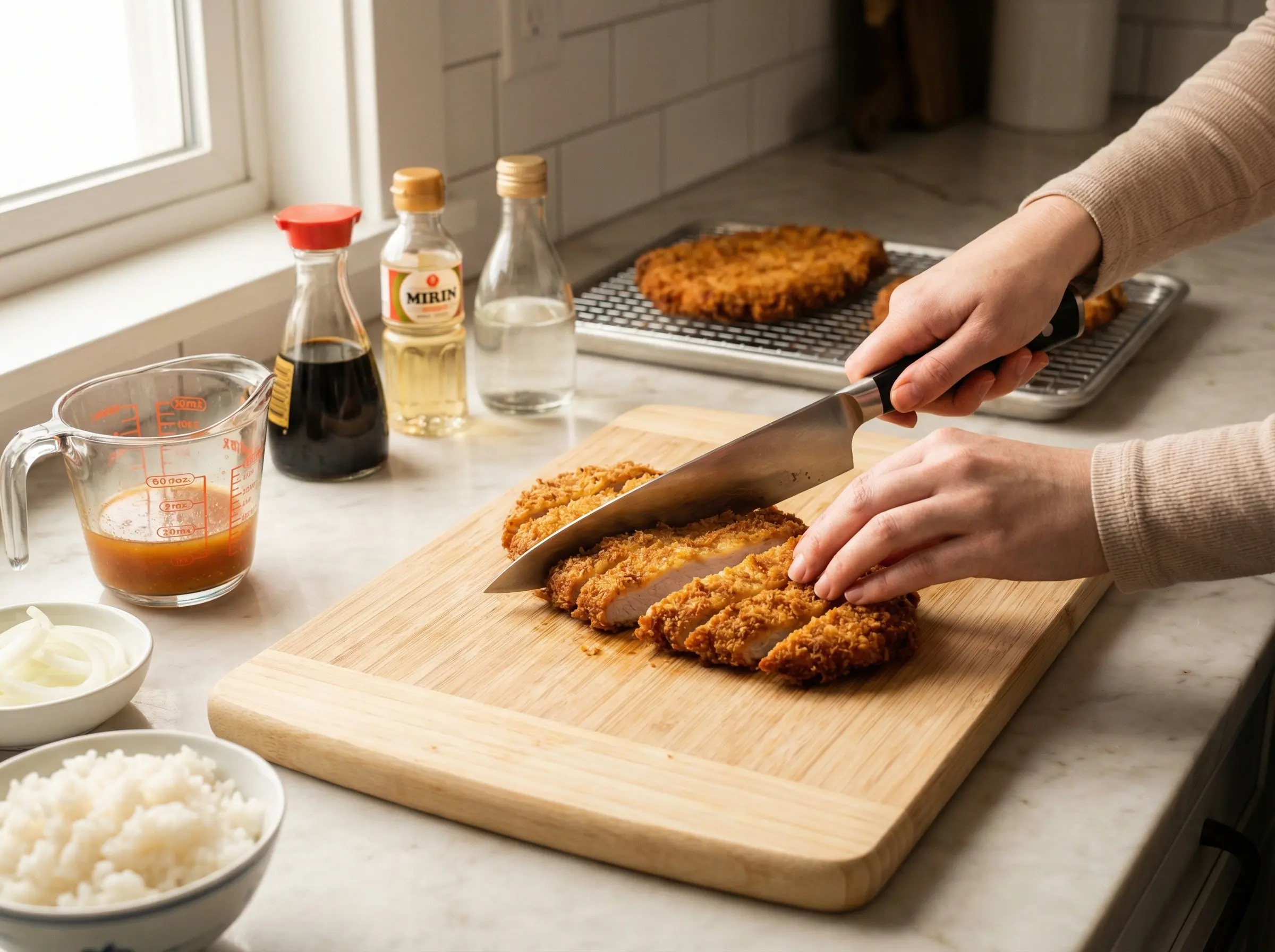
Fry the tonkatsu. Heat 2-3 inches of vegetable oil in a deep pot or Dutch oven to 340-350 degrees F. The moderate temperature is important - too hot and the outside burns before the inside cooks, too cool and the cutlet absorbs excess oil. Carefully lower one cutlet into the hot oil. Fry for about 5-6 minutes, turning once halfway through, until deep golden brown and cooked through (internal temperature of 145 degrees F). The panko should be evenly golden and crispy. Transfer to a wire rack set over a baking sheet to drain. Repeat with the second cutlet. Let the cutlets rest for 2-3 minutes, then slice crosswise into 1-inch strips, keeping the cutlet shape intact.
Step 3
While the tonkatsu rests, prepare the cooking sauce. In a measuring cup or small bowl, combine the dashi stock, soy sauce, mirin, sake, and sugar. Stir until the sugar dissolves. This sauce is similar to the broth used in oyakodon and provides the savory-sweet flavor that defines katsudon. The dashi adds umami depth, the soy sauce contributes saltiness, and the mirin and sugar provide the characteristic sweetness. Taste and adjust if needed - the sauce should be well-balanced and flavorful on its own.
Step 4
Katsudon is best made one portion at a time for optimal egg texture. Use a small lidded skillet or oyakodon pan. Pour half of the sauce into the pan and bring to a simmer over medium heat. Add half of the sliced onions and cook for 2-3 minutes until softened and translucent. The onions should be tender and sweet, having absorbed some of the flavorful broth. Arrange one sliced tonkatsu on top of the onions, fanning out the pieces slightly while keeping the cutlet shape.
Step 5
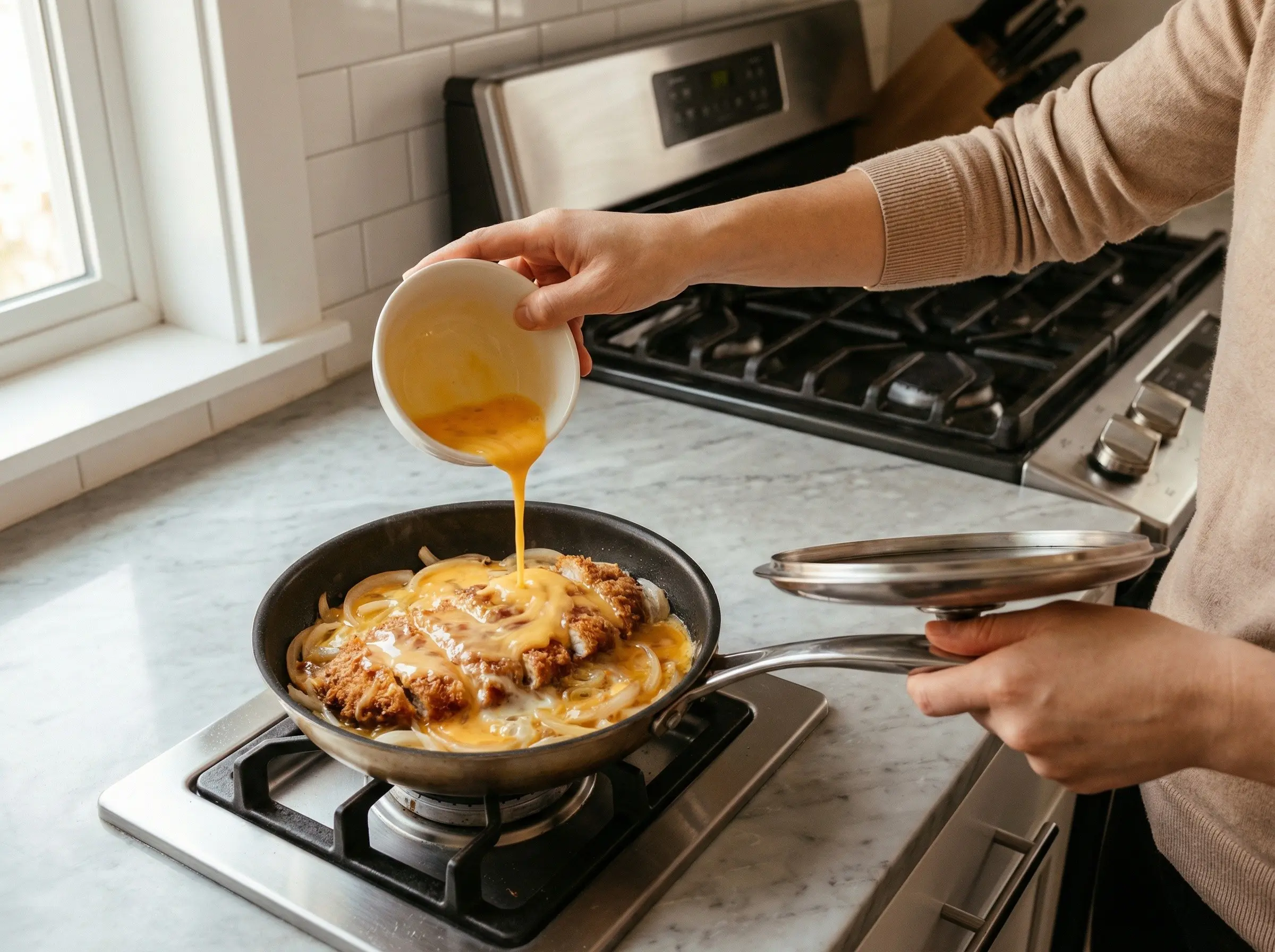
Lightly beat 2 eggs in a small bowl - do not overbeat, as you want some streaks of white and yolk visible in the final dish. Pour about two-thirds of the beaten egg mixture evenly over the tonkatsu and onions. Cover the pan with a lid and cook for about 30 seconds to 1 minute. Remove the lid and drizzle the remaining egg over the top in a circular pattern. Cover again and cook for another 20-30 seconds. The eggs should be just barely set - still glossy, soft, and slightly runny in places. The residual heat will continue cooking them, so remove from heat when they look slightly underdone. This two-stage egg technique creates layers of texture.
Step 6
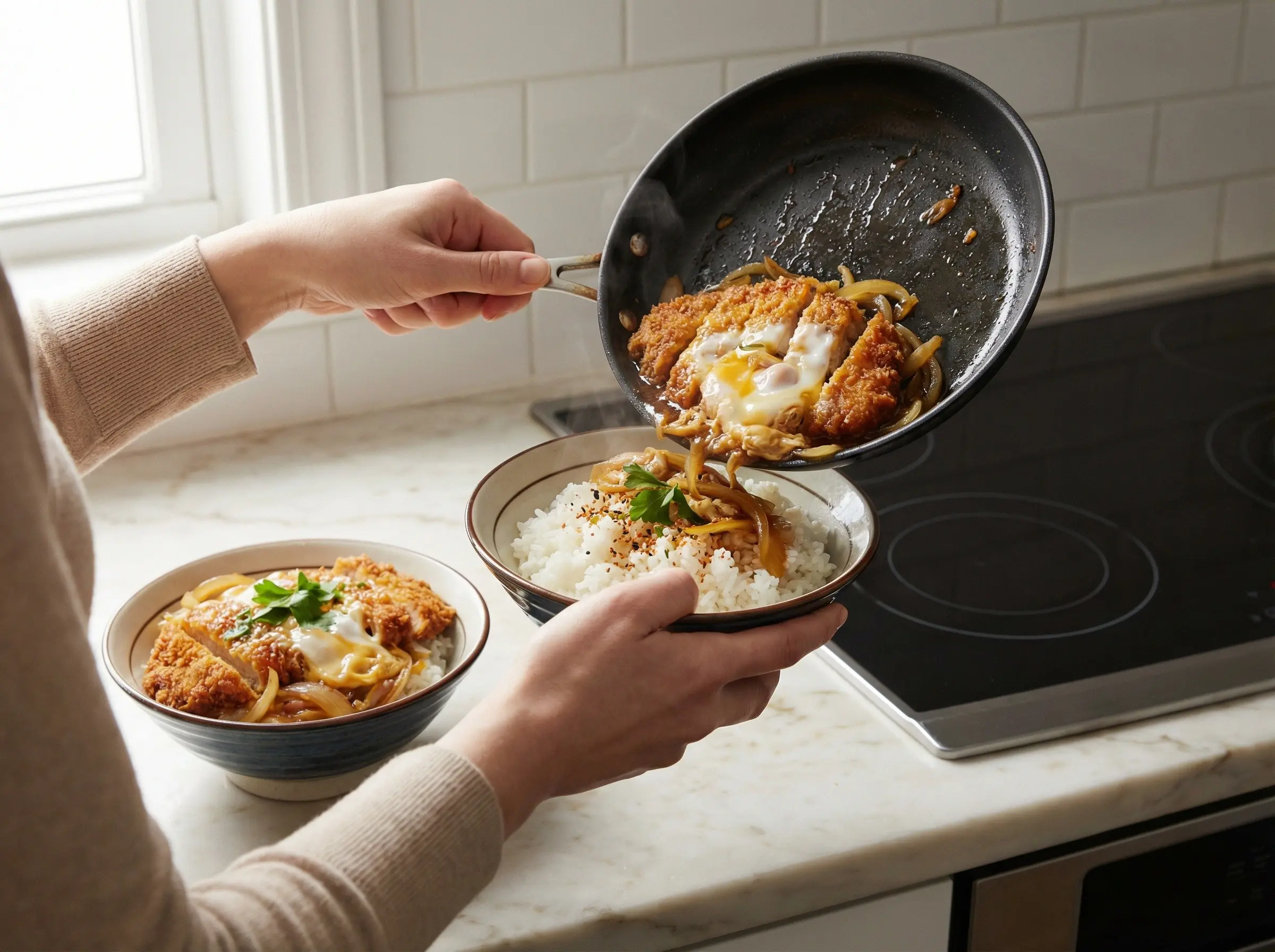
Working quickly while the eggs are still silky, slide the entire contents of the pan over a bowl of hot steamed rice. The cutlet, eggs, onions, and sauce should cascade over the rice together. Garnish with mitsuba (Japanese wild parsley) or sliced green onions. Sprinkle with shichimi togarashi for a touch of heat if desired. Repeat the process to make the second portion with the remaining ingredients. Serve immediately while the eggs are still soft and creamy. The beauty of katsudon is the contrast of textures - the still-crispy edges of the tonkatsu, the silky half-set eggs, the sweet soft onions, and the fluffy rice beneath, all bound together by the savory-sweet sauce. Eat with chopsticks and a spoon, making sure to scoop up the flavorful sauce that pools at the bottom of the bowl.
You Might Also Like
Master Your Kitchen with PantryAI
Love this recipe? Save it, shop for it, and cook it with ease. Download the PantryAI app to organize your pantry, track expirations, and discover recipes based on what you already have.

On a computer?Scan with your iPhone camera to download PantryAI.








Swipe to see more screenshots