
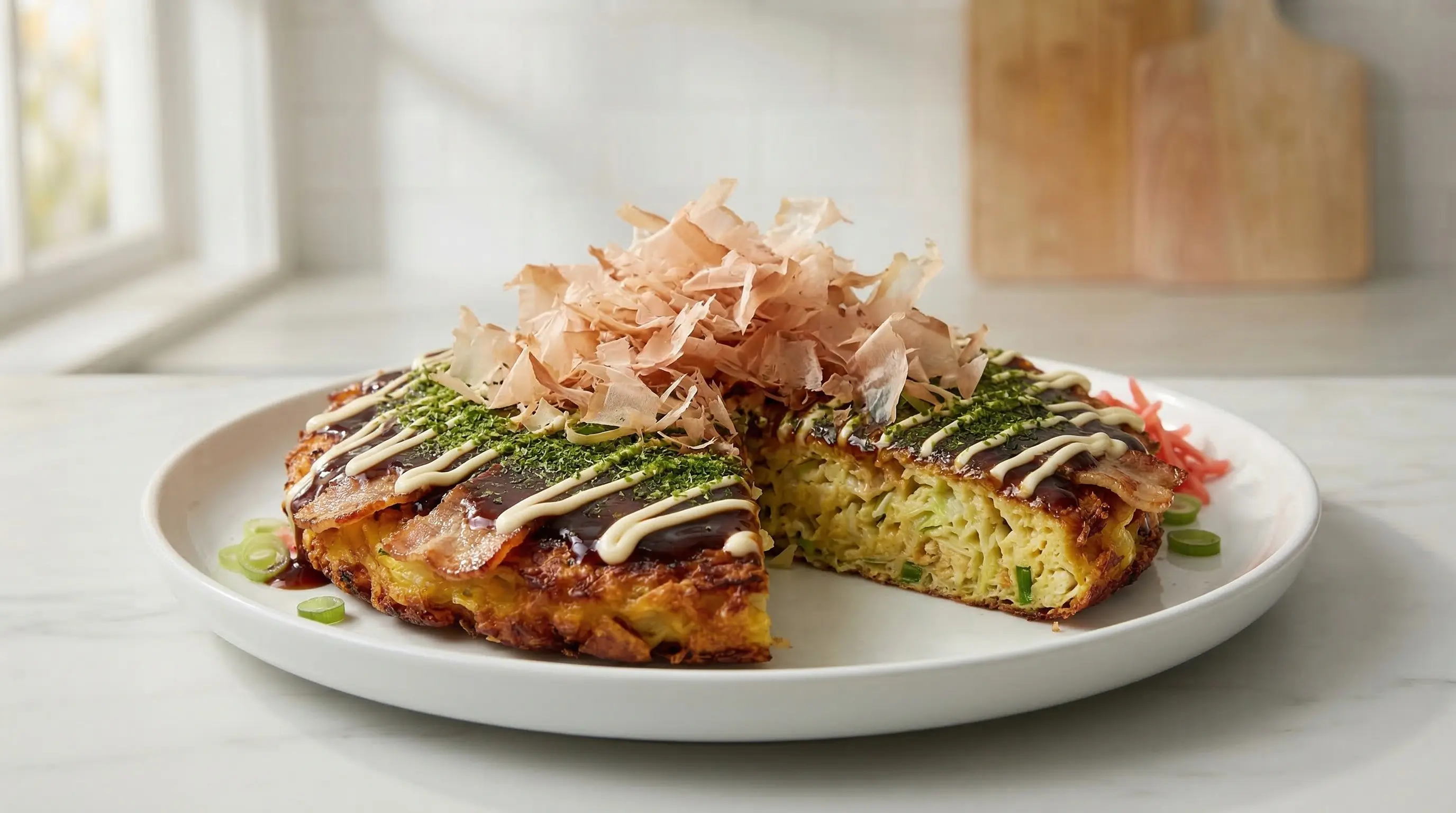
Okonomiyaki
Learn how to make authentic okonomiyaki, the beloved Japanese savory pancake loaded with cabbage, pork belly, and topped with sweet sauce and mayo. This Osaka street food classic is crispy, satisfying, and endlessly customizable!
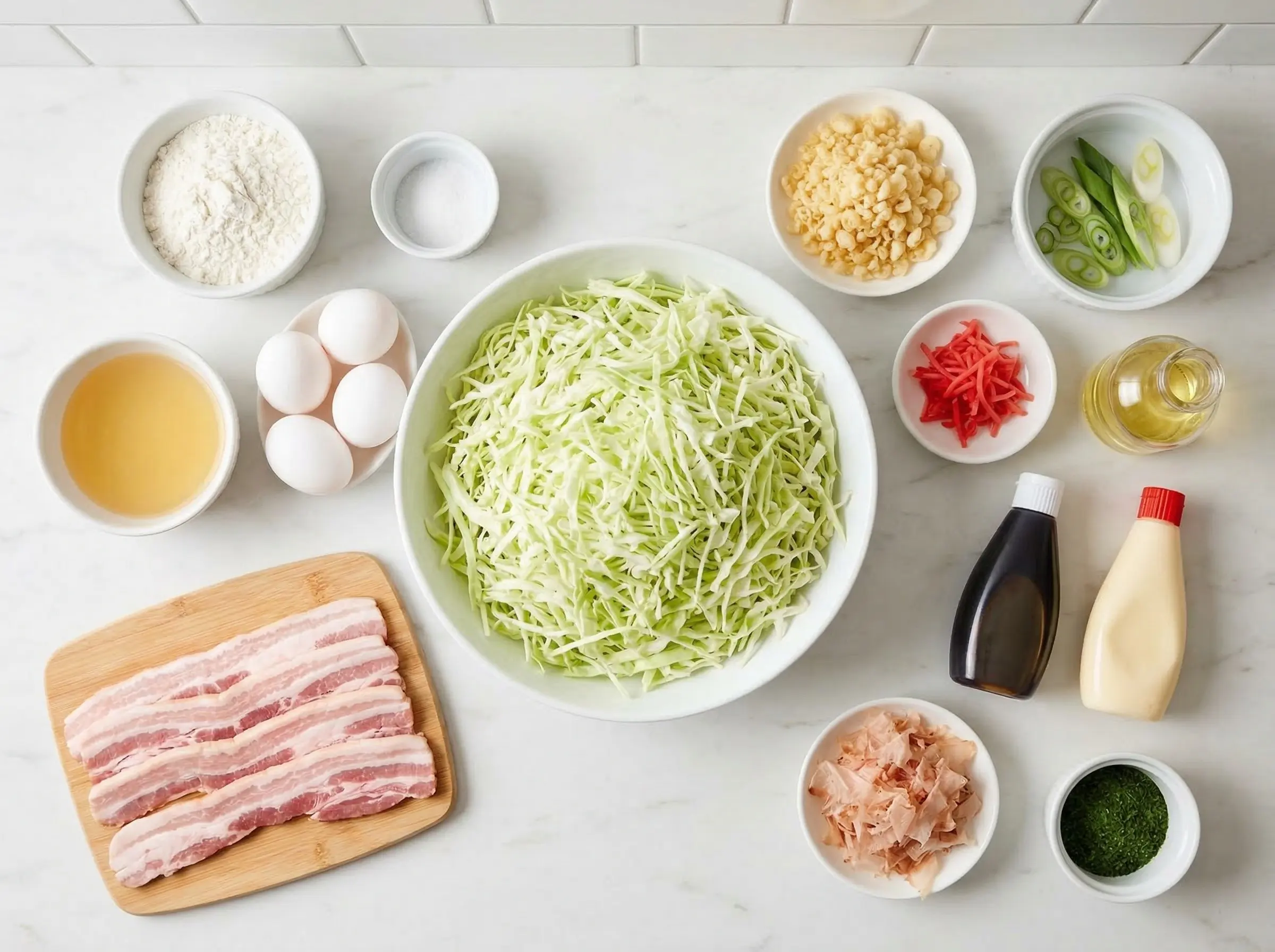
Ingredients
The Story
Okonomiyaki is one of Japan's most beloved comfort foods, a savory pancake whose name literally translates to "grilled as you like it" - "okonomi" meaning "what you like" and "yaki" meaning "grilled." This philosophy of customization is central to the dish's identity; while the base of batter and cabbage remains constant, the additional ingredients are limited only by imagination and preference. The dish has roots in pre-war Japan, evolving from simpler flour-based snacks called "issen yoshoku" that were popular among children in the 1930s. After World War II, when rice was scarce but wheat flour was available through American aid, okonomiyaki became a filling, economical meal that helped feed a recovering nation. Two regions of Japan claim okonomiyaki as their own, and the rivalry is fierce. Osaka-style (Kansai-style) okonomiyaki mixes all the ingredients into the batter before cooking, creating a thick, cohesive pancake. Hiroshima-style takes a completely different approach, layering thin crepe-like batter, mountains of cabbage, noodles, pork, and egg separately, creating a dramatic tower that is pressed and flipped during cooking. Both styles are served with the same essential toppings: sweet-savory okonomiyaki sauce, Japanese mayonnaise in artistic zigzag patterns, bonito flakes that dance in the rising heat, and powdered aogori (green seaweed). In Osaka, okonomiyaki restaurants often feature teppan (iron griddles) built into each table, allowing diners to cook their own - a communal, interactive experience central to the dish's appeal. What makes okonomiyaki so extraordinary is the alchemy that occurs when the simple batter meets the hot griddle. The exterior develops a golden, crispy crust while the interior remains soft and custard-like, studded with tender cabbage and whatever additions you've chosen. The mountain of raw cabbage shrinks dramatically during cooking, concentrating its sweetness. Pork belly crisps on the outside while basting the pancake with its rendered fat. The toppings are not mere garnish but essential components - the sweet-tangy sauce, the creamy mayo, the umami punch of dancing bonito flakes, and the oceanic whisper of aogori combine to create something far greater than its humble ingredients suggest. Okonomiyaki is street food elevated to art, proof that Japan's culinary genius extends far beyond sushi and ramen.
Instructions
Step 1
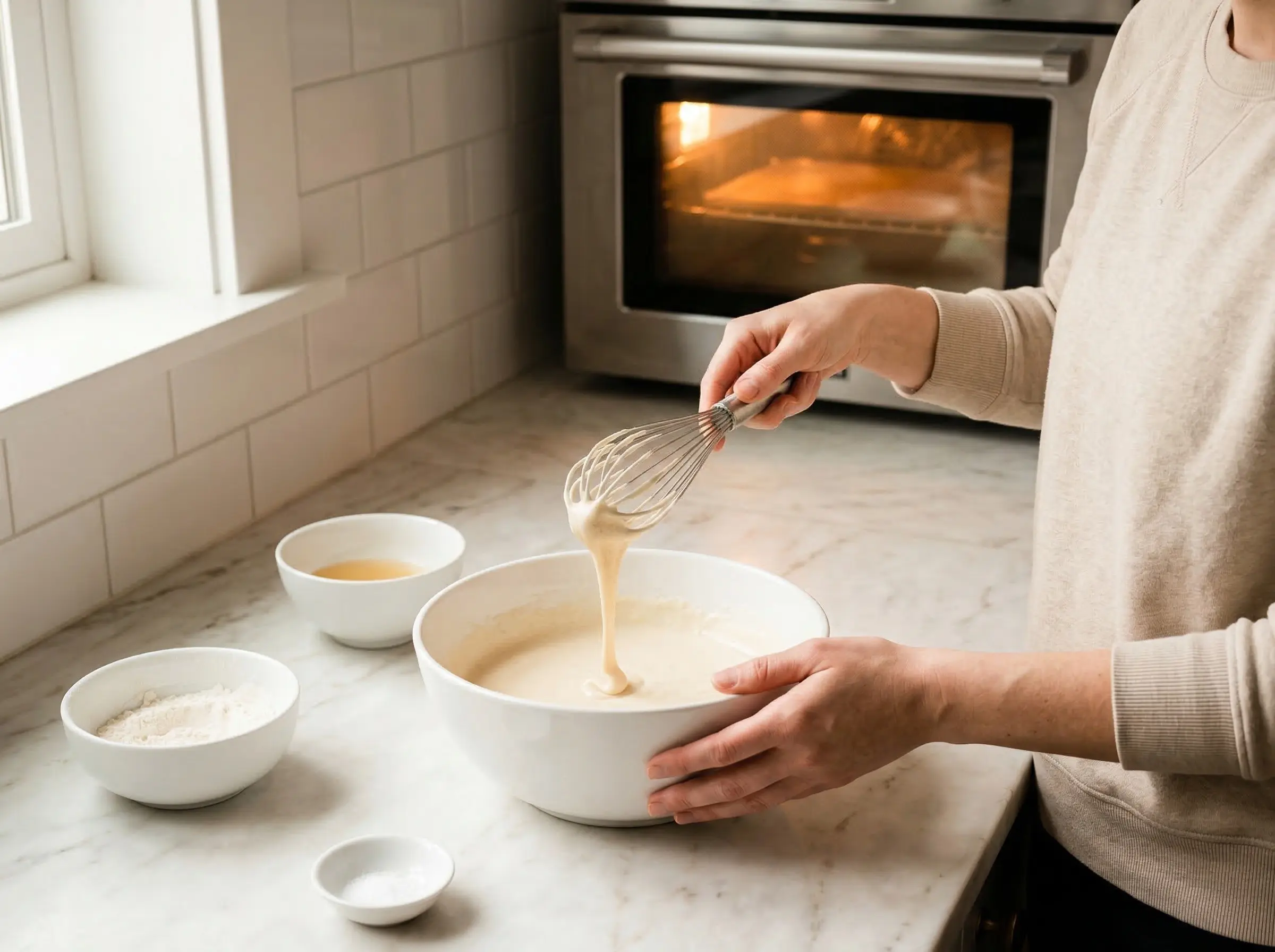
Make the batter. In a large bowl, whisk together the flour and salt. Add the dashi (or water) and whisk until smooth - the batter should be thicker than Western pancake batter, more like a loose dough. Do not overmix; some lumps are fine. Let the batter rest for 15-20 minutes at room temperature. This allows the gluten to relax and the flour to fully hydrate. If using dashi, the savory flavor will permeate the pancake; water works but dashi is traditional.
Step 2
Prepare the cabbage and mix-ins. Shred the cabbage very finely - thin strands cook more evenly and create a better texture. Use a sharp knife or mandoline. The cabbage should be dry; if wet, pat dry with paper towels to prevent a soggy pancake. Beat 2 of the eggs. Add half the cabbage, half the tenkasu (tempura scraps), half the green onions, half the pickled ginger, and 1 beaten egg to half the batter. Fold gently to combine - the mixture should be predominantly cabbage held together by batter, not batter with some cabbage. Repeat with remaining ingredients to make 2 portions.
Step 3
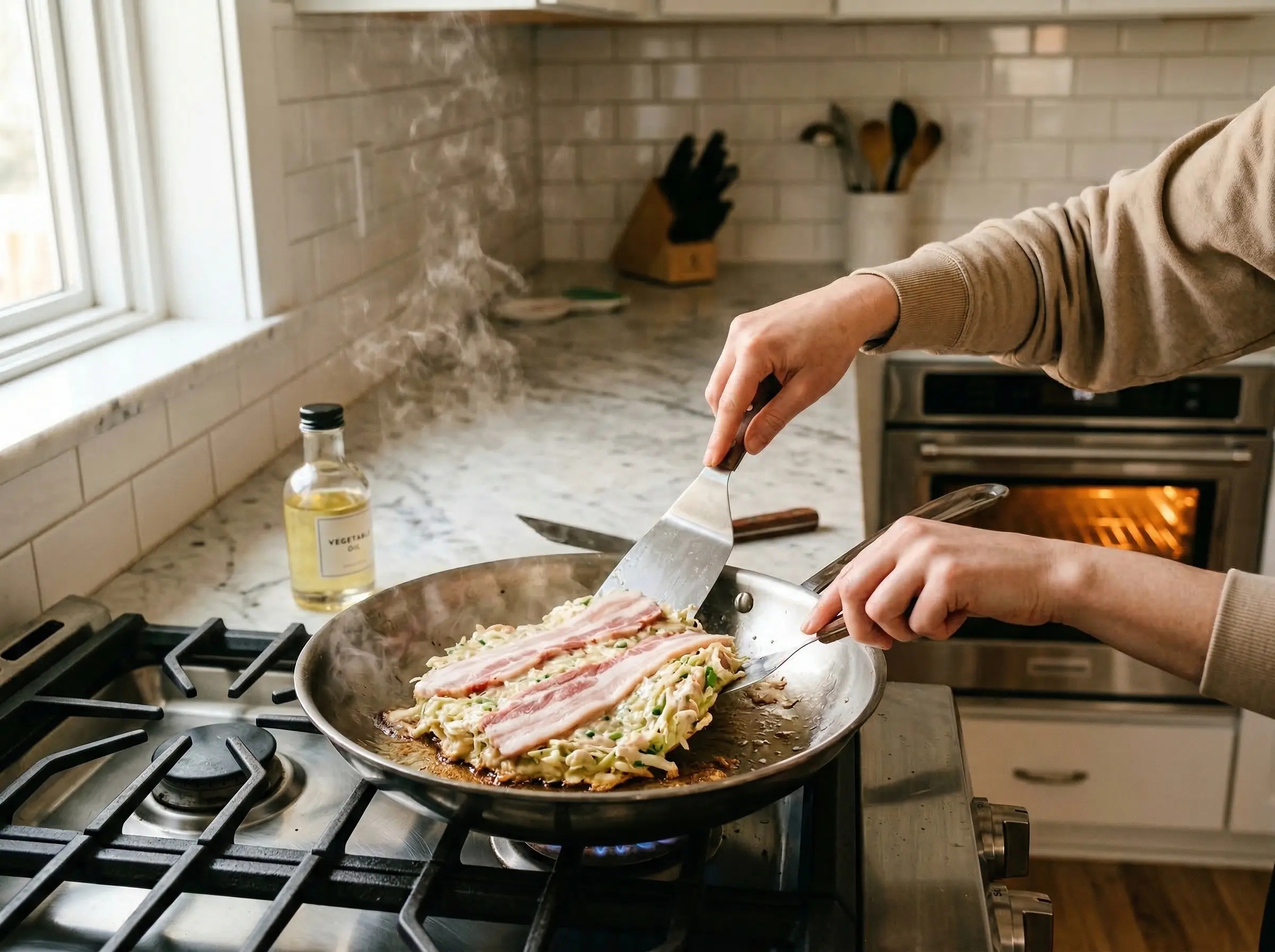
Cook the first side. Heat a large non-stick skillet or griddle over medium heat. Add 1 tablespoon vegetable oil. Mound one portion of the cabbage mixture onto the skillet and use a spatula to shape it into a round disc about 1/2 to 3/4 inch thick and 6-7 inches in diameter. Do not press down too hard - you want it compact but not dense. Lay 2 strips of pork belly (or bacon) across the top of the uncooked surface. Cook for 4-5 minutes until the bottom is golden brown and crispy. The edges should look set while the top is still slightly wet.
Step 4
Flip and cook the second side. This is the moment of truth. Using a wide spatula (or two spatulas), carefully flip the okonomiyaki so the pork is now on the bottom. The pork will crisp and render its fat into the pancake. Press down gently to ensure good contact with the pan. Cook for another 4-5 minutes until the pork is crispy and the pancake is cooked through. To test doneness, press the center - it should feel firm, not soft or wet. Reduce heat to medium-low if browning too quickly.
Step 5
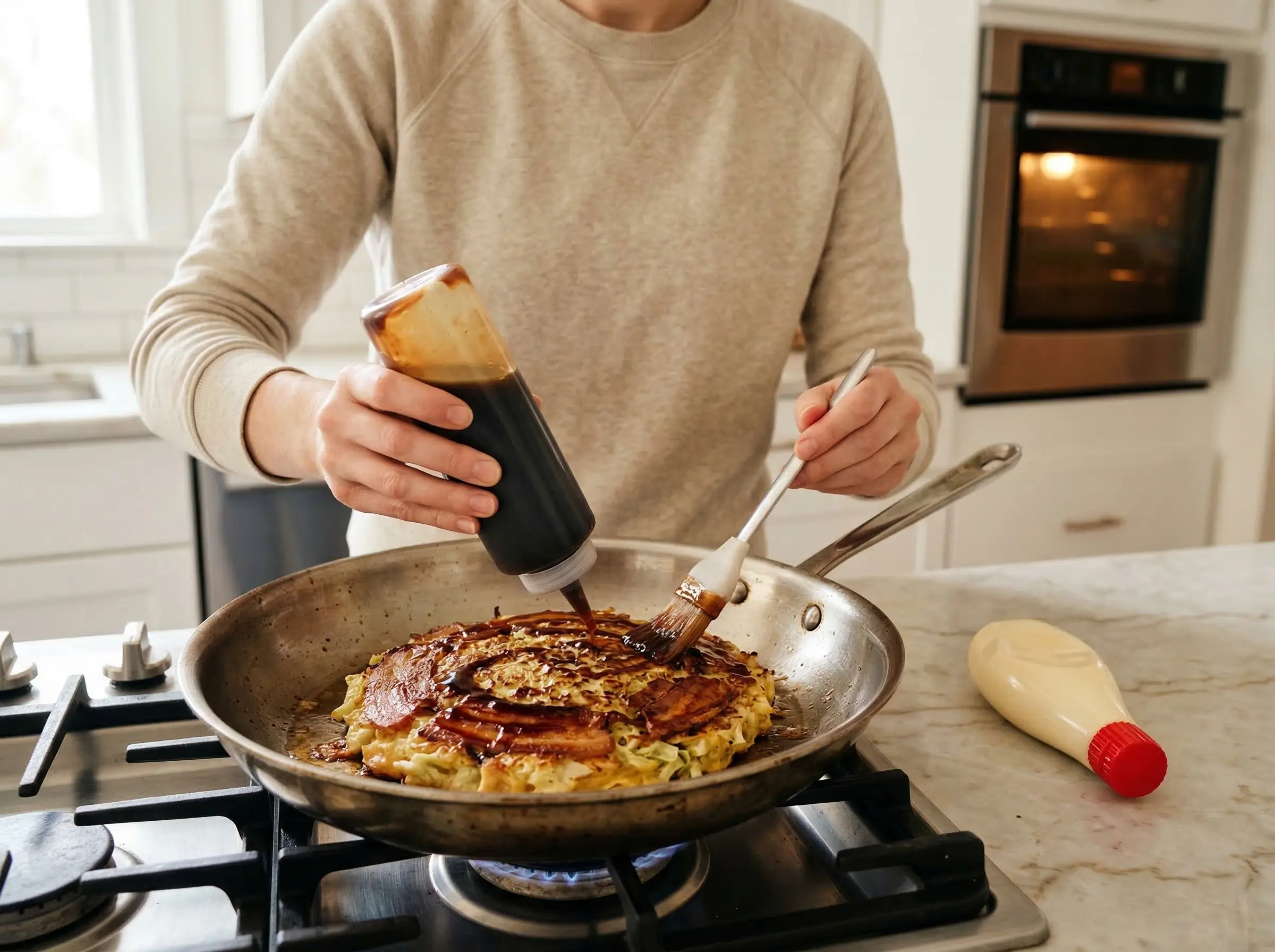
Flip again and apply the toppings. Flip the okonomiyaki one more time so the pork faces up - this is the presentation side. Immediately brush generously with okonomiyaki sauce - be liberal, as the sauce is essential to the flavor profile. Drizzle Japanese mayonnaise in a crosshatch or zigzag pattern over the sauce. The contrast of dark sauce and white mayo is part of the aesthetic. Repeat cooking process with the second portion while the first rests.
Step 6
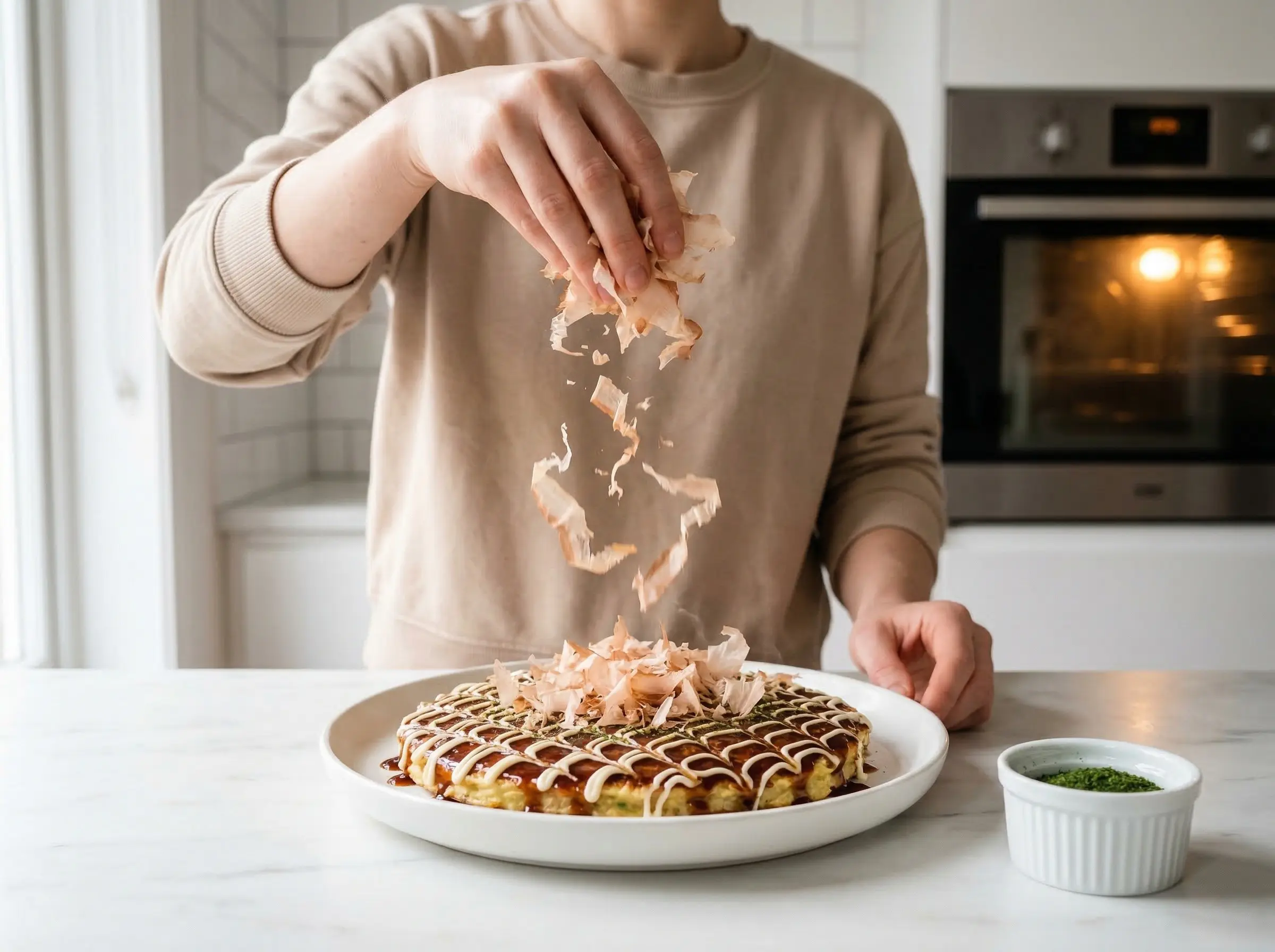
Add the finishing toppings and serve immediately. Sprinkle a generous pile of bonito flakes (katsuobushi) over the hot okonomiyaki - watch as they dance and wave from the rising heat, a mesmerizing effect caused by the steam and thermal currents. This dancing is part of the okonomiyaki experience. Finish with a dusting of aonori (dried seaweed powder) for its oceanic flavor and green color. Cut into wedges like a pizza or leave whole to eat with a spatula, Japanese-style. Serve immediately while still hot and crispy. Traditionally, okonomiyaki is eaten directly from the griddle using a small metal spatula (kote) rather than chopsticks. Each bite should include a bit of the crispy exterior, the soft cabbage-studded interior, the crispy pork, and all the toppings. Okonomiyaki does not wait - eat it while the outside is still crackling and the bonito flakes are still dancing.
You Might Also Like
Master Your Kitchen with PantryAI
Love this recipe? Save it, shop for it, and cook it with ease. Download the PantryAI app to organize your pantry, track expirations, and discover recipes based on what you already have.

On a computer?Scan with your iPhone camera to download PantryAI.
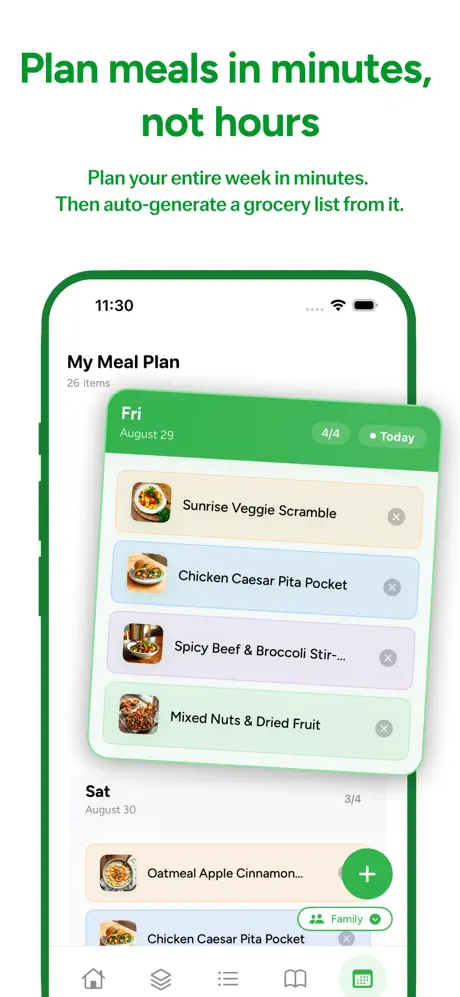
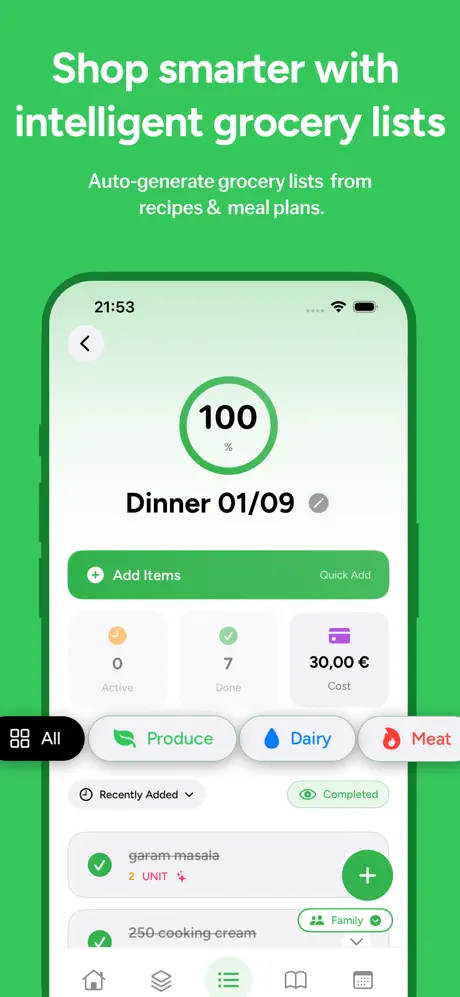
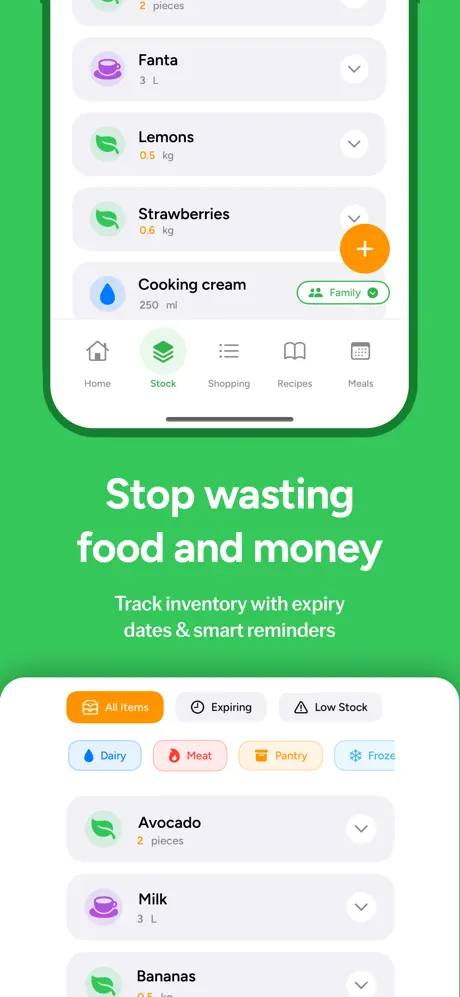
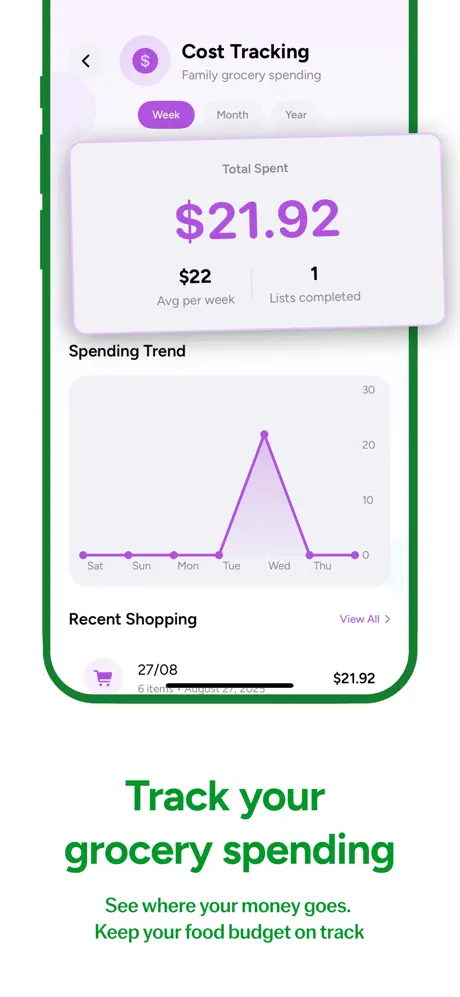

Swipe to see more screenshots