

Piperade
Learn how to make authentic piperade, the vibrant Basque dish of sweet peppers and tomatoes simmered with Espelette pepper and topped with eggs. This Pays Basque classic is rustic, colorful, and utterly delicious!
Ingredients

The Story
Piperade is the signature dish of the Basque Country, a vibrant stew of sweet peppers, tomatoes, and onions simmered slowly until silky and jammy, seasoned with the region's prized Espelette pepper. The name derives from "piper," the Basque word for pepper, and the dish showcases the Basque love affair with this vegetable in all its forms. Piperade belongs to the same family as Spanish pisto, Italian peperonata, and French ratatouille - Mediterranean vegetable stews that transform humble ingredients into something extraordinary through slow, patient cooking. But piperade has its own distinct character, defined by the gentle heat and fruity complexity of piment d'Espelette. The dish has deep roots in Basque farmhouse cooking, where it served as a versatile preparation that could be eaten on its own, used as a sauce for grilled meats or fish, or enriched with eggs for a more substantial meal. In the traditional version, eggs are either stirred into the peppers to create soft, creamy curds distributed throughout, or they are gently poached on top, their yolks breaking into golden rivers when pierced. Piperade is often served alongside jambon de Bayonne, the famous cured ham from the nearby town, creating a classic combination of sweet peppers, smoky ham, and rich eggs that embodies Basque gastronomy. What makes piperade so extraordinary is the transformation that occurs when peppers and tomatoes are cooked slowly with patience. The vegetables break down and concentrate, losing their raw crunch and developing deep, sweet, almost caramelized flavors. The Espelette pepper - not fiery but gently warm, with notes of red fruit and mild smokiness - ties everything together with its distinctive character. When eggs are added, they provide richness and protein, turning the vegetable stew into a complete, satisfying meal. Piperade can be eaten for breakfast, lunch, or dinner; hot, warm, or at room temperature. It is peasant food elevated by time and technique, a taste of the sun-drenched valleys where the Pyrenees meet the Bay of Biscay.
Instructions
Step 1
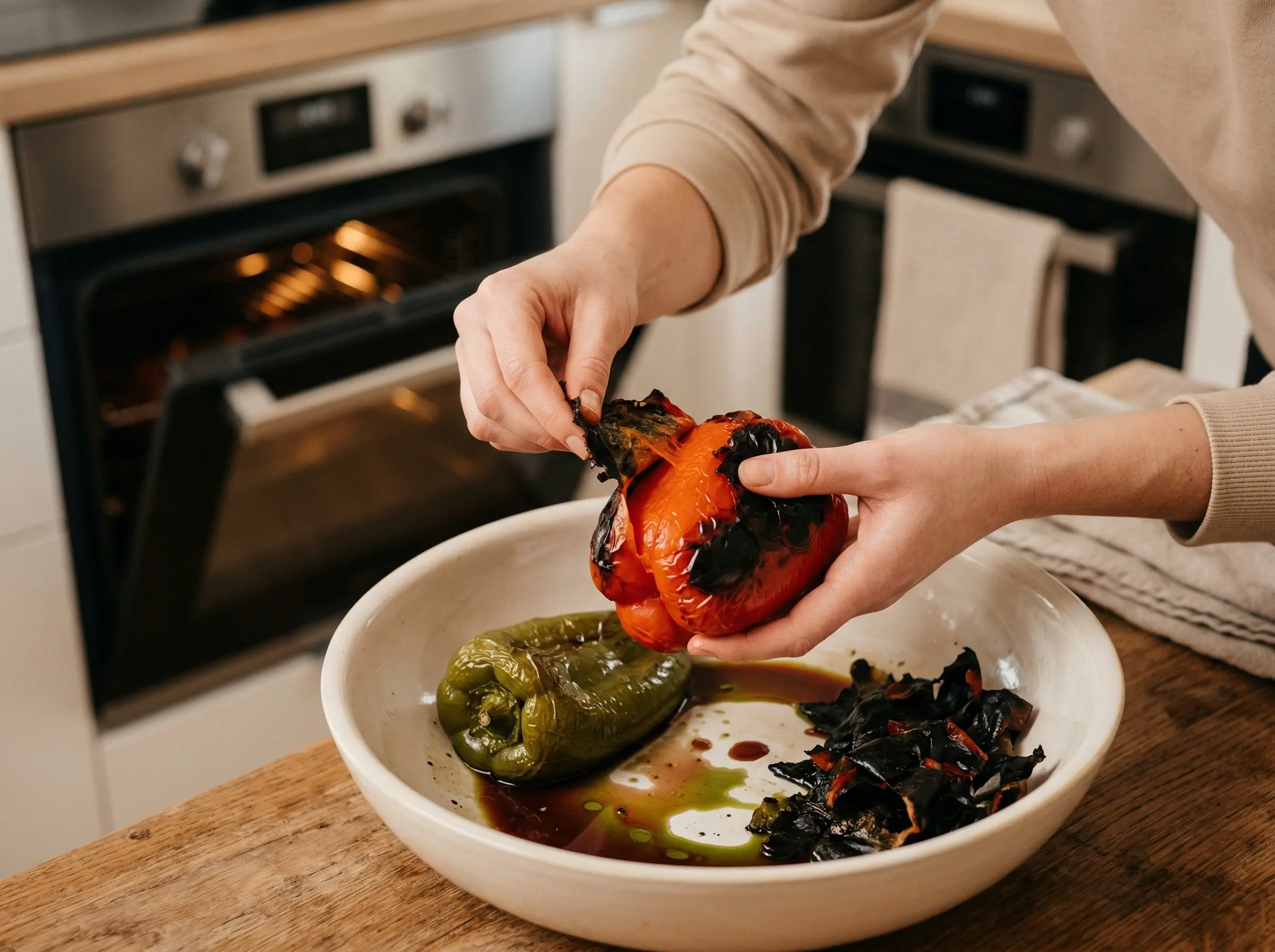
Prepare the peppers and tomatoes. Roast the bell peppers directly over a gas flame, under a broiler, or on a grill, turning frequently until charred on all sides. Place in a bowl, cover, and steam for 10 minutes. Peel off the charred skin, remove stems and seeds, and slice into strips. Alternatively, slice raw peppers into strips - roasting adds depth but is not essential. If using fresh tomatoes, score the bottoms, blanch in boiling water for 30 seconds, peel, and roughly chop. If using canned tomatoes, crush them by hand.
Step 2
Sweat the onions and garlic. Heat the olive oil in a large, deep skillet or braiser over medium-low heat. Add the sliced onion and a pinch of salt. Cook slowly for 10-15 minutes, stirring occasionally, until the onions are very soft and translucent but not browned. Add the garlic and cook for another minute until fragrant. Patience here builds the sweet foundation of the dish.
Step 3
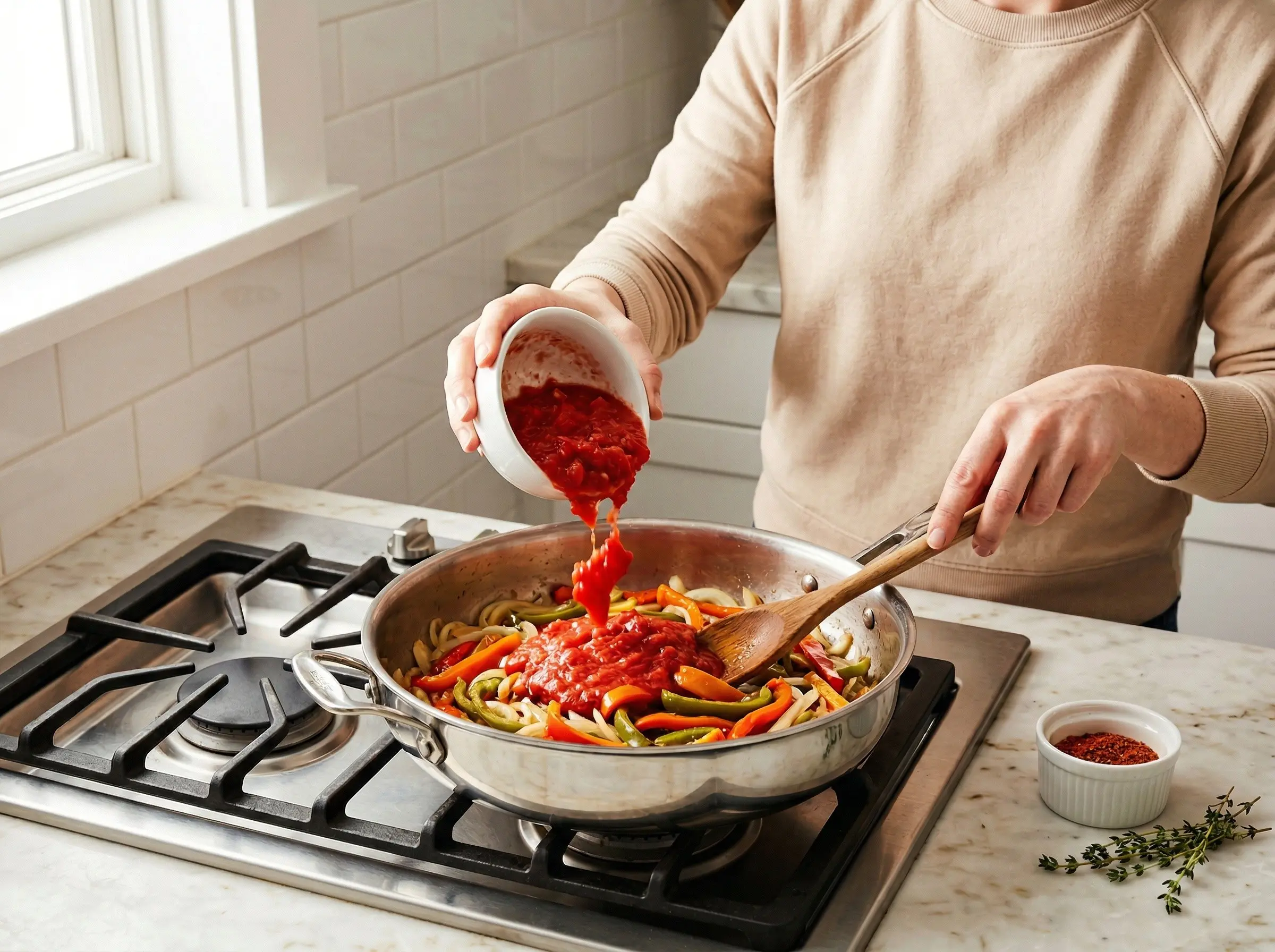
Add peppers and tomatoes. Add the pepper strips to the onions and stir to combine. Cook for 5 minutes until beginning to soften. Add the tomatoes, piment d'Espelette, thyme, bay leaf, salt, and pepper. If your tomatoes are not perfectly ripe and sweet, add the optional sugar. Stir well, bring to a gentle simmer, then reduce heat to low.
Step 4
Simmer until jammy. Cook the piperade uncovered over low heat for 30-40 minutes, stirring occasionally, until the vegetables have broken down into a thick, jammy consistency. The peppers should be very soft and the tomatoes should have reduced and concentrated. The mixture should be moist but not watery - if it seems too liquid, increase the heat slightly to evaporate excess moisture. Remove the bay leaf. Taste and adjust seasoning.
Step 5
Add the eggs. You have two traditional options: For stirred eggs, crack the eggs into a bowl and beat lightly. Pour over the piperade and stir gently as they cook, creating soft, creamy curds distributed throughout the vegetables - about 3-4 minutes. For poached eggs, make 6 shallow wells in the piperade, crack an egg into each well, cover the pan, and cook for 5-7 minutes until the whites are set but the yolks remain runny.

Step 6
Serve immediately. Transfer the piperade to a warm serving platter or serve directly from the pan. Garnish with chopped fresh parsley. Drape slices of jambon de Bayonne or prosciutto alongside or on top - the salty, smoky ham is the traditional accompaniment. Serve with plenty of crusty bread for scooping. Piperade is also delicious without eggs as a side dish for grilled fish, lamb, or chicken. It can be made ahead and reheated gently - the flavors improve overnight - but add the eggs fresh when serving. In the Basque Country, piperade is eaten any time of day: for breakfast with eggs and ham, as a lunch dish, or alongside grilled meats at dinner.

You Might Also Like


Master Your Kitchen with PantryAI
Love this recipe? Save it, shop for it, and cook it with ease. Download the PantryAI app to organize your pantry, track expirations, and discover recipes based on what you already have.

On a computer?Scan with your iPhone camera to download PantryAI.








Swipe to see more screenshots