
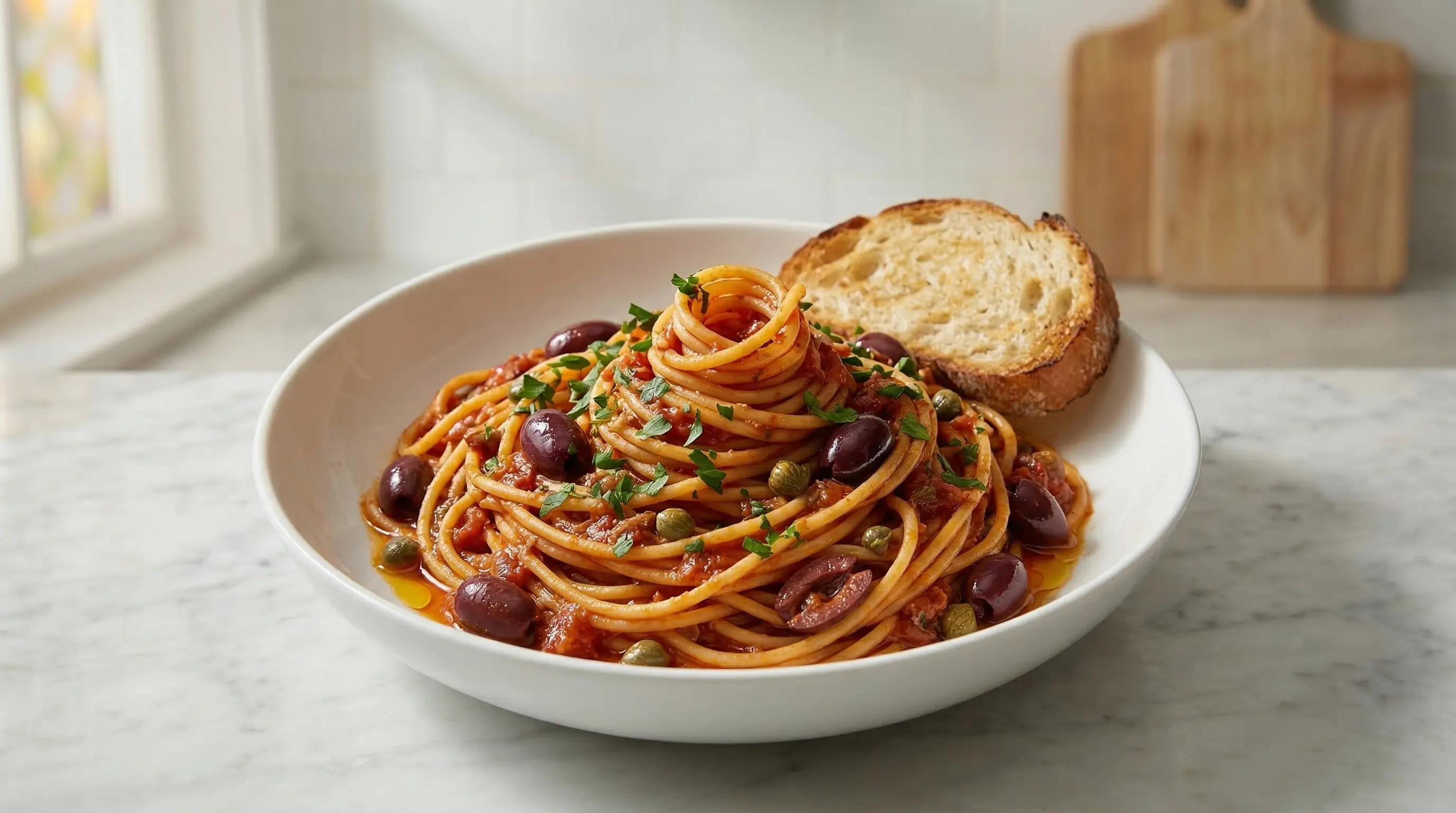
Pasta Puttanesca
Learn how to make authentic pasta puttanesca, the bold Neapolitan pasta with tomatoes, olives, capers, and anchovies. This punchy, pantry-friendly Italian classic is ready in just 20 minutes!
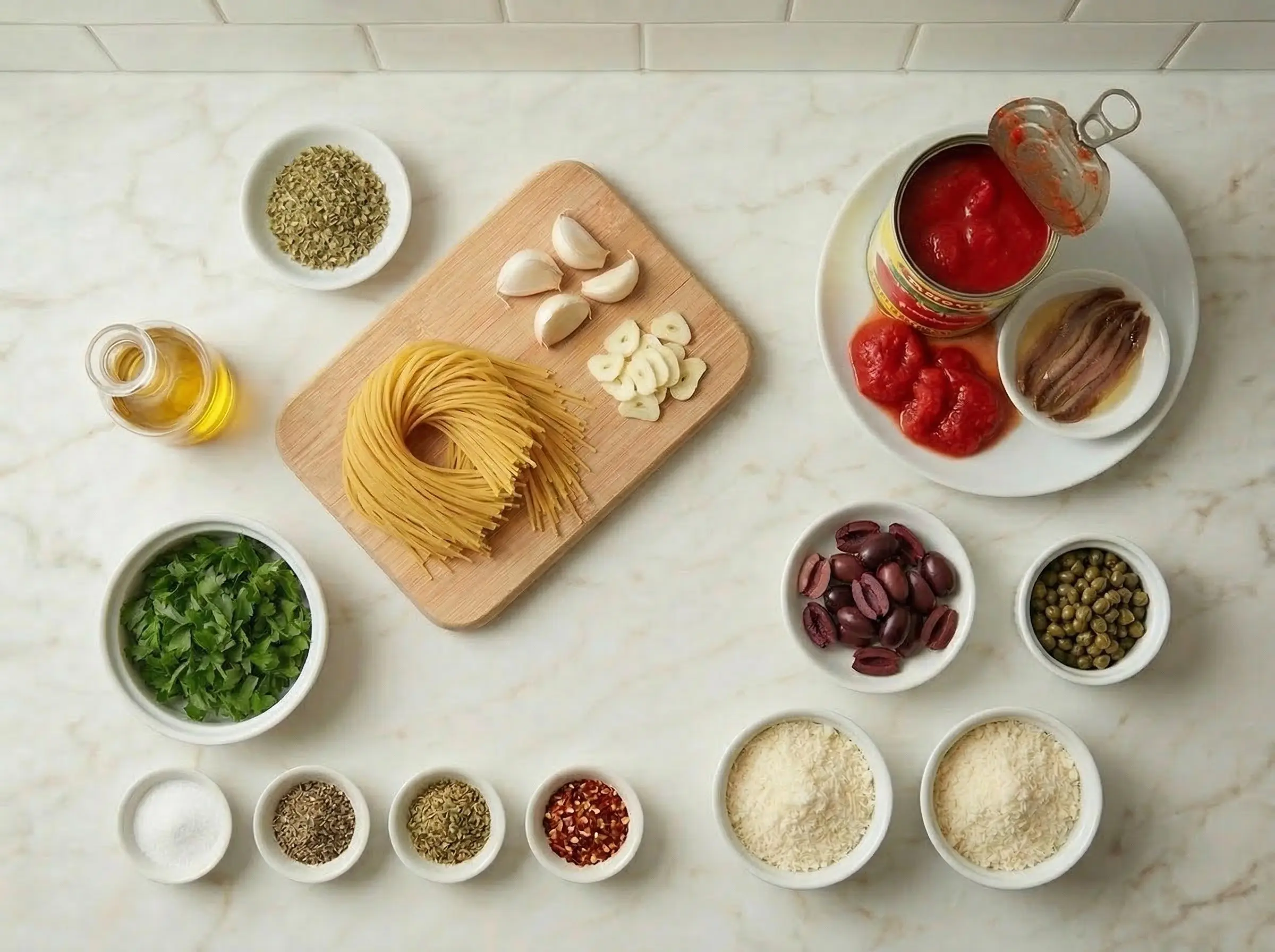
Ingredients
The Story
Pasta puttanesca is one of Italy's most boldly flavored pasta dishes, a fiery combination of tomatoes, olives, capers, anchovies, garlic, and chili that assaults the senses in the most delicious way possible. The dish hails from Naples and the surrounding Campania region, though its exact origins are debated and shrouded in colorful legend. The name "puttanesca" derives from "puttana," the Italian word for prostitute, and various stories attempt to explain the connection. Some say the dish was quick enough to cook between clients. Others claim the pungent aroma was used to lure customers. More prosaically, "puttanesca" may simply mean "in the style of" or "garbage" - a thrown-together dish made from whatever was in the pantry. The most credible origin story traces puttanesca to the 1950s or 1960s on the island of Ischia, near Naples. According to this account, a restaurant owner named Sandro Petti threw together whatever ingredients he had on hand - tomatoes, olives, capers, and anchovies - when a group of late-night customers demanded to be fed despite the kitchen being officially closed. When asked what the dish was called, he allegedly replied, "Ho fatto una puttanata qualsiasi" (I just made any old garbage). The name stuck. Regardless of its true origin, puttanesca became a beloved fixture of Neapolitan cooking, prized for its bold flavors and its ability to be made entirely from shelf-stable pantry ingredients. What makes puttanesca so extraordinary is the way its assertive ingredients harmonize into something greater than their individual parts. The anchovies, often feared by the uninitiated, melt into the sauce completely, leaving no fishy chunks but contributing a profound savory depth that makes everything taste more intensely of itself. The olives add briny richness and meaty texture. The capers provide bursts of tangy, pickled sharpness. The garlic and chili bring heat and pungency. The tomatoes tie everything together with sweet acidity. When properly made, puttanesca tastes not of any single ingredient but of Naples itself - bold, unapologetic, and irresistibly alive. It is proof that great cooking does not require fresh ingredients or careful technique - sometimes all you need is a well-stocked pantry and the courage to be bold.
Instructions
Step 1
Start the pasta water. Bring a large pot of generously salted water to a boil. The water should taste like the sea. Good pasta water is essential for finishing the sauce. Do not add the pasta yet - the sauce comes together quickly, and you want to time them to finish together.

Step 2
Bloom the aromatics. Heat the olive oil in a large skillet or sauté pan over medium-low heat. Add the sliced garlic and red pepper flakes. Cook gently for 1-2 minutes until the garlic is fragrant and just barely turning golden - do not let it brown or it will become bitter. Add the anchovy fillets and cook, stirring and pressing with a wooden spoon, until they completely dissolve into the oil, about 2 minutes. This is the flavor foundation of the dish - the anchovies will not taste fishy but will provide deep savory umami.
Step 3
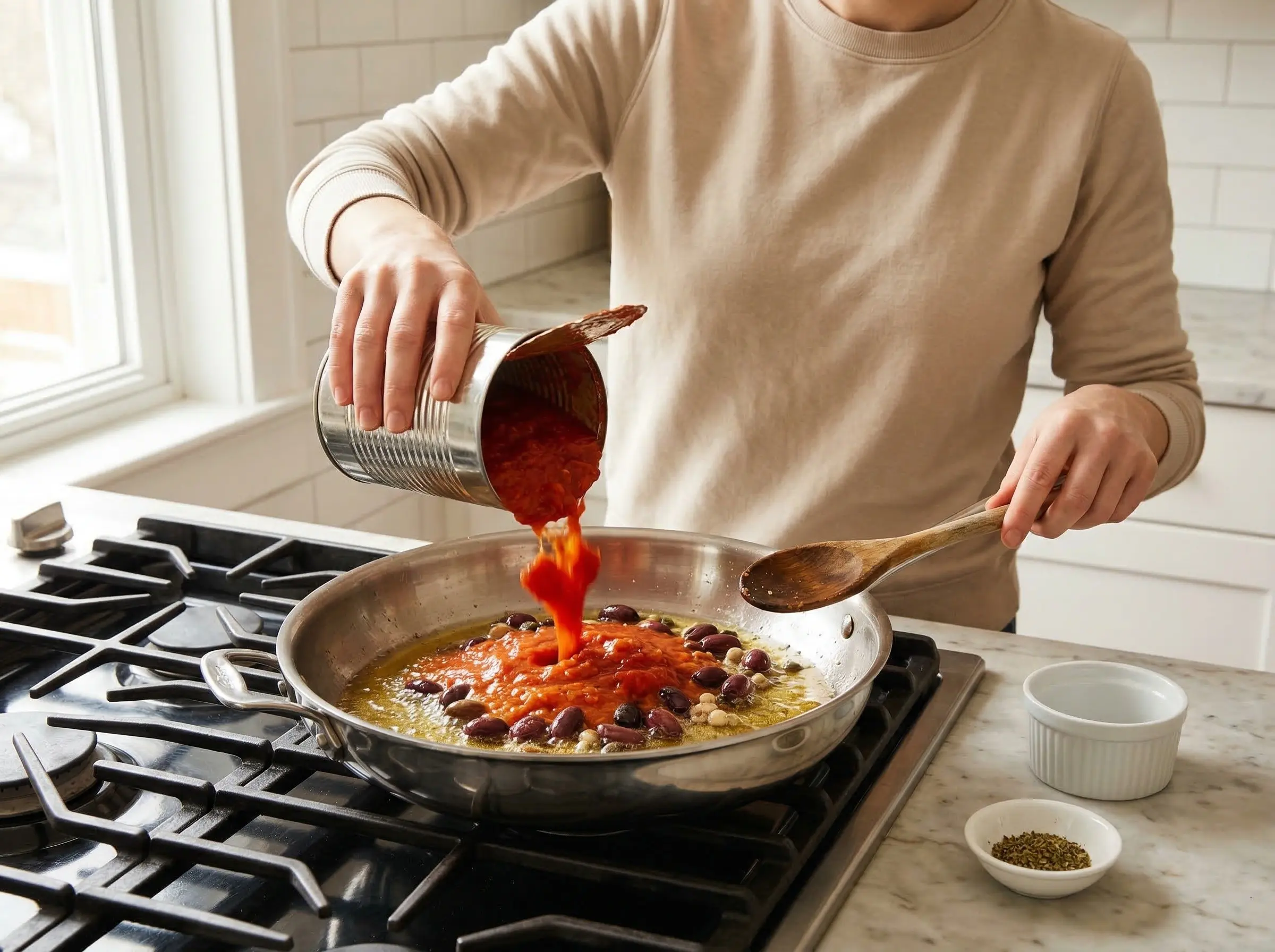
Build the sauce. Add the olives and capers to the pan, stirring to coat with the anchovy oil. Cook for 1 minute to warm through and lightly toast. Pour in the crushed tomatoes with their juices, being careful of splatter. Add the oregano, salt, and pepper. Increase heat to medium and bring to a simmer. Cook for 15-20 minutes, stirring occasionally, until the sauce has thickened slightly and the flavors have melded. The oil may separate slightly - this is fine and traditional.
Step 4
Cook the pasta. When the sauce is about halfway done, add the pasta to the boiling water. Cook according to package directions minus 1-2 minutes - you want it quite al dente as it will finish cooking in the sauce. Reserve 1 cup of pasta water before draining.
Step 5
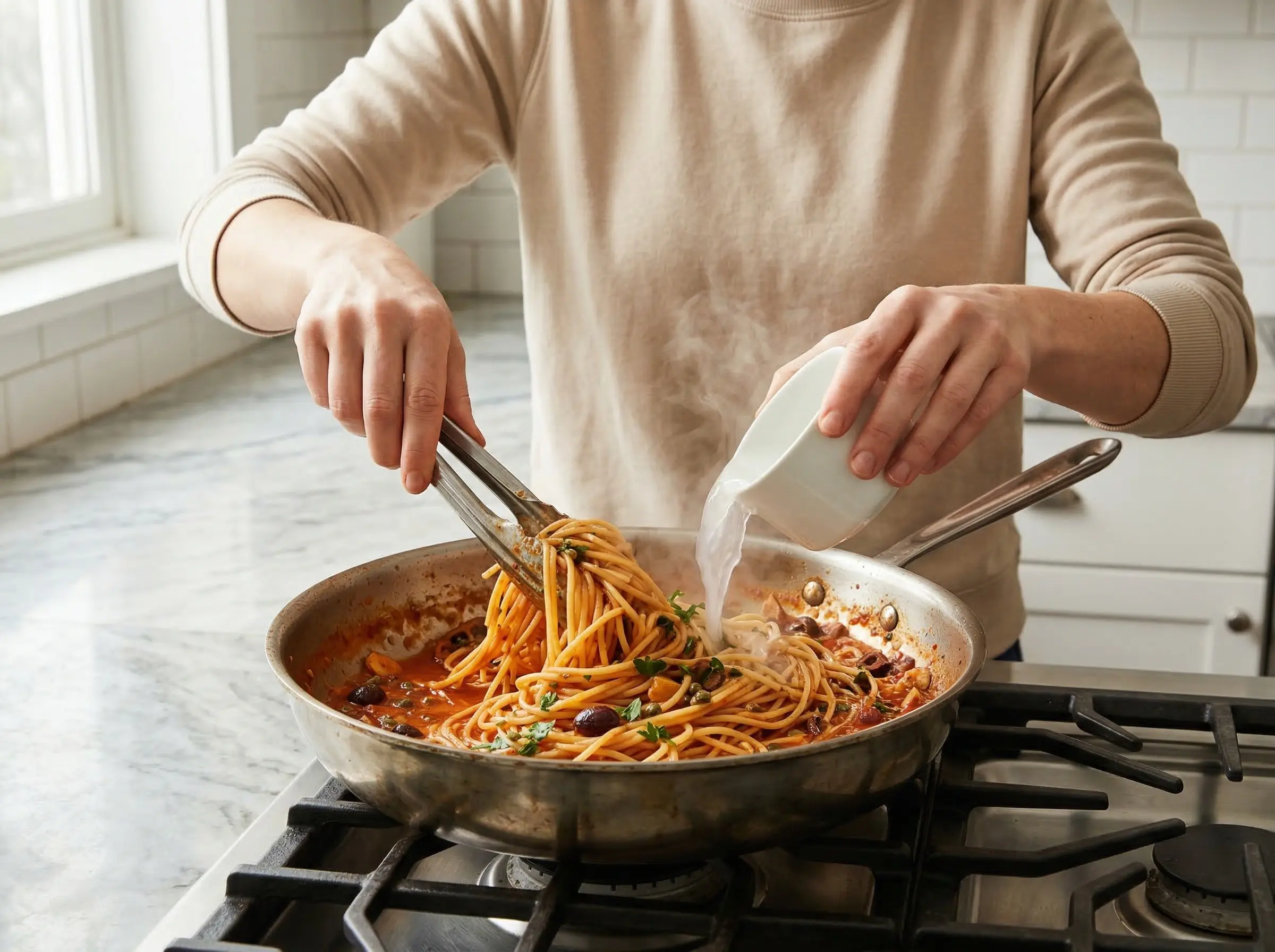
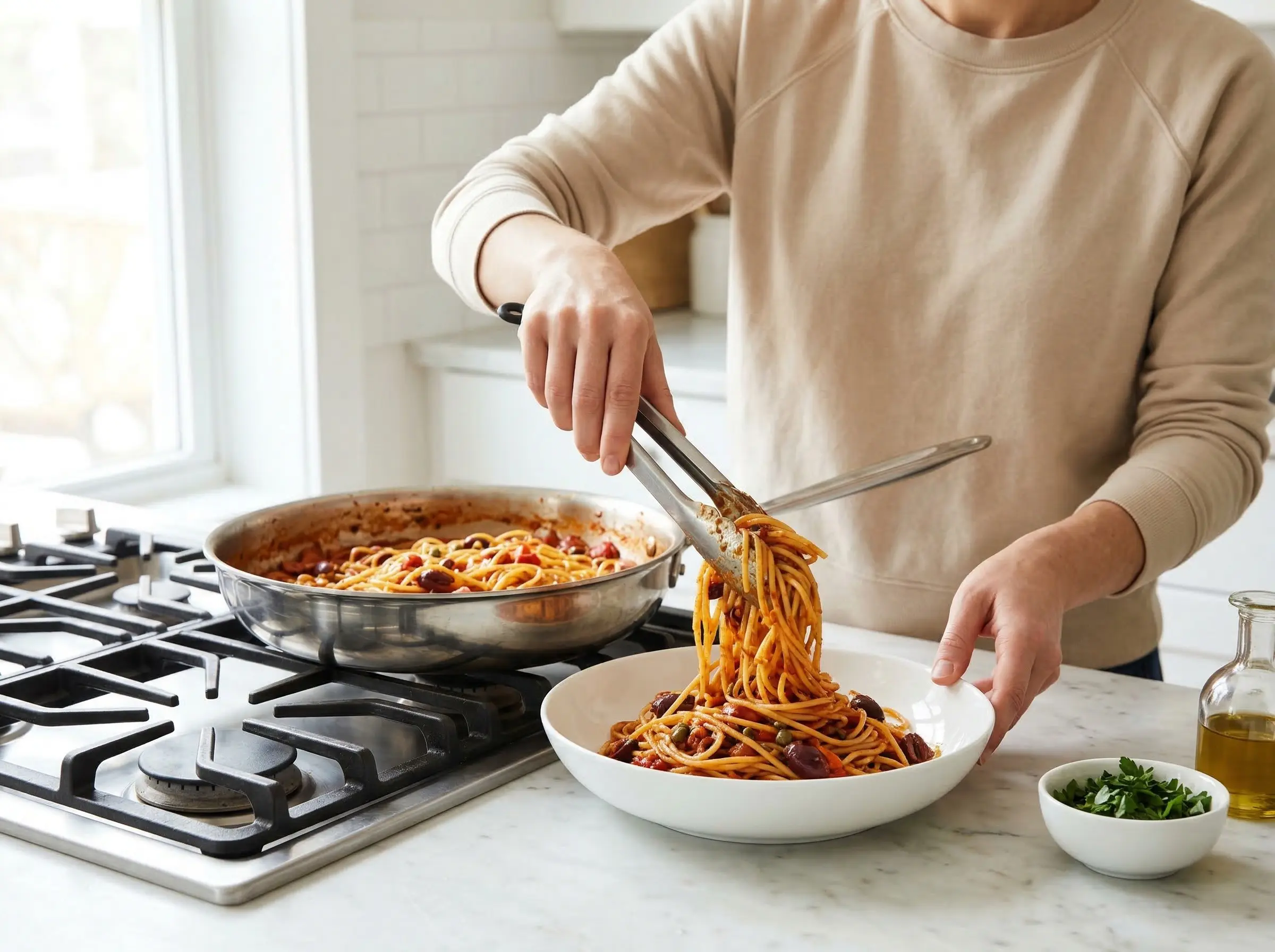
Marry the pasta and sauce. Drain the pasta and add it directly to the skillet with the sauce. Toss vigorously over medium heat for 1-2 minutes, allowing the pasta to absorb the sauce and finish cooking. Add splashes of pasta water as needed to loosen the sauce and create a silky coating on each strand. The starch in the pasta water helps the sauce cling to the noodles. The pasta should be well-coated but not swimming in sauce.
Step 6
Finish and serve immediately. Remove from heat and stir in most of the fresh parsley, reserving some for garnish. Taste and adjust seasoning - the olives, capers, and anchovies are all salty, so you may not need additional salt. Divide among warm bowls and garnish with remaining parsley. Serve immediately while the pasta is hot. Pecorino Romano can be offered on the side, though some purists argue that cheese should not be added to seafood pasta - the choice is yours. Puttanesca does not wait - the sauce begins to absorb into the pasta immediately, so bring bowls to the table and eat at once. A crusty bread for sopping up any remaining sauce is highly recommended.
You Might Also Like
Master Your Kitchen with PantryAI
Love this recipe? Save it, shop for it, and cook it with ease. Download the PantryAI app to organize your pantry, track expirations, and discover recipes based on what you already have.

On a computer?Scan with your iPhone camera to download PantryAI.








Swipe to see more screenshots