
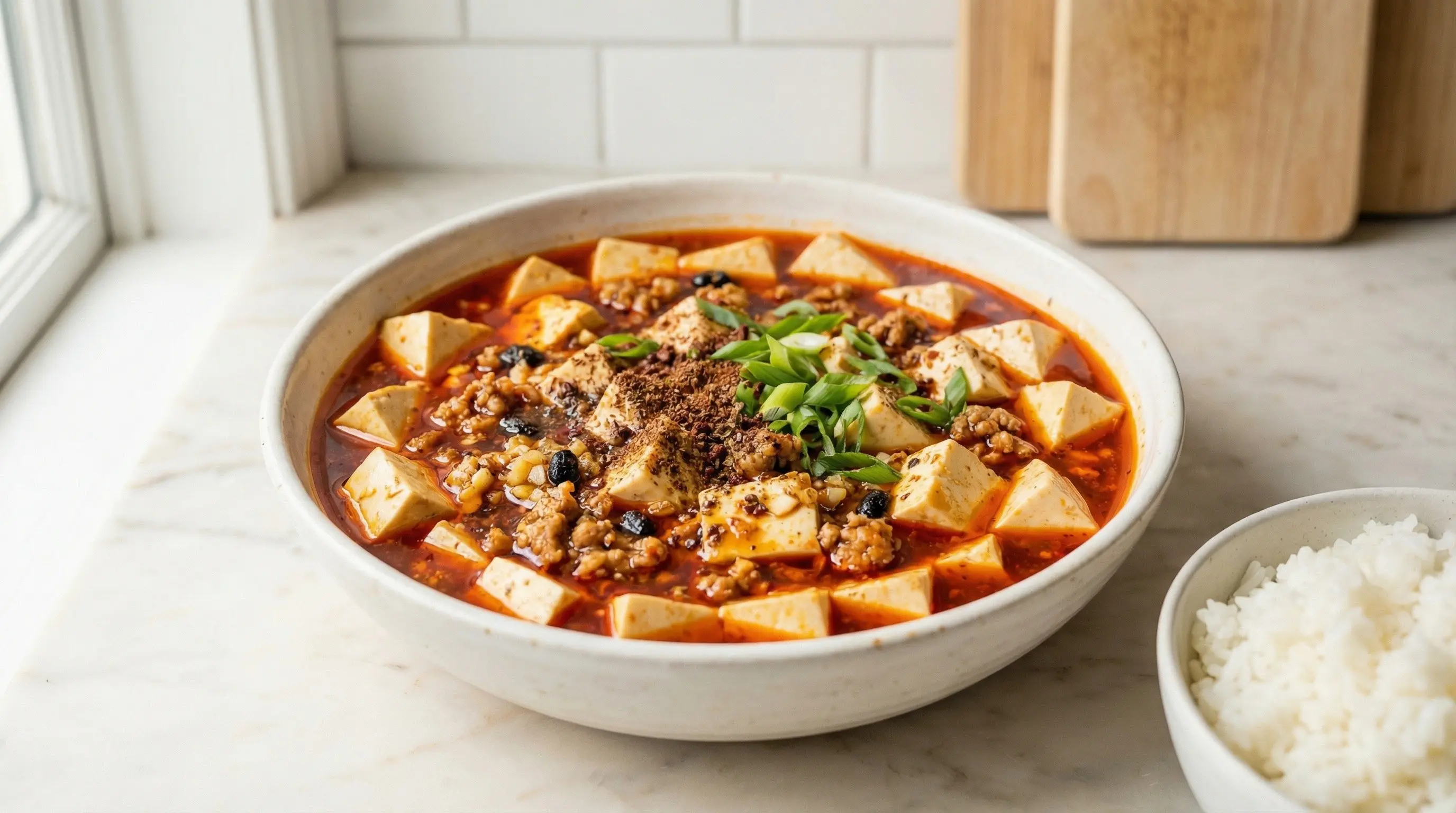
Mapo Tofu
Learn how to make authentic mapo tofu, the legendary Sichuan dish of silky tofu in a fiery, numbing sauce with ground pork. This iconic Chinese classic is bold, addictive, and ready in 20 minutes!
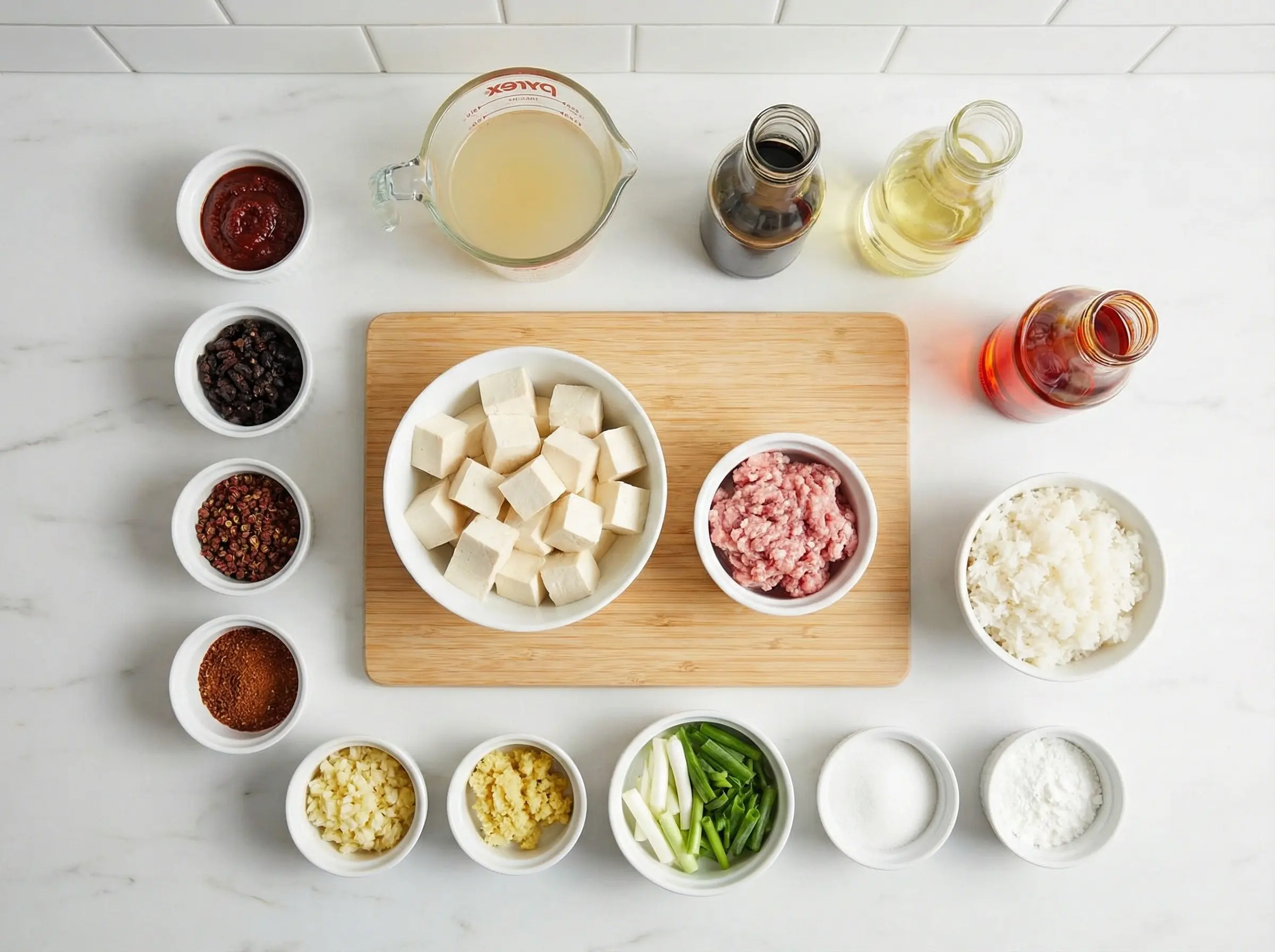
Ingredients
The Story
Mapo tofu is one of the most famous dishes in Sichuan cuisine and one of the most beloved tofu preparations in the world. The dish was created in 1862 in Chengdu, the capital of Sichuan Province, by a woman named Chen whose face was marked by pockmarks - "mapo" literally means "pockmarked old woman" in Chinese. Chen ran a small restaurant near the Wanfu Bridge that was frequented by laborers and oil merchants. She created this hearty, inexpensive dish of tofu cooked with minced beef (later pork became more common) in a spicy, oily sauce that could be eaten with large quantities of rice. The dish was so popular that her restaurant became famous, and the recipe spread throughout China and eventually the world. What makes mapo tofu distinctive is its embodiment of the Sichuan flavor philosophy called "mala" - a combination of "ma" (numbing) from Sichuan peppercorns and "la" (spicy) from chili peppers. This numbing-spicy sensation is unique to Sichuan cuisine and creates an almost addictive quality that keeps you reaching for more despite the heat. The dish also exemplifies the Sichuan concept of layered flavors: the doubanjiang (fermented chili bean paste) provides deep, fermented spiciness, the douchi (fermented black beans) add umami complexity, the Sichuan peppercorns contribute their famous tingling numbness, and the final drizzle of chili oil adds glossy heat. All of these bold flavors are balanced against the mild, silky tofu. What makes mapo tofu so extraordinary is the contrast between the gentle tofu and the aggressive sauce. The tofu should be silky soft, almost custard-like, providing a cooling counterpoint to the fiery sauce that surrounds it. The ground pork adds savory richness and textural interest, while the sauce itself is a complex symphony of heat, numbness, fermented depth, and aromatic garlic and ginger. When properly made, mapo tofu should have what the Chinese call "qi wei" or seven flavors: spicy, numbing, hot, fresh, tender, soft, and aromatic. Served over steaming white rice that absorbs the intensely flavorful sauce, mapo tofu is comfort food for spice lovers - humble ingredients transformed into something transcendent through the genius of Sichuan seasoning.
Instructions
Step 1
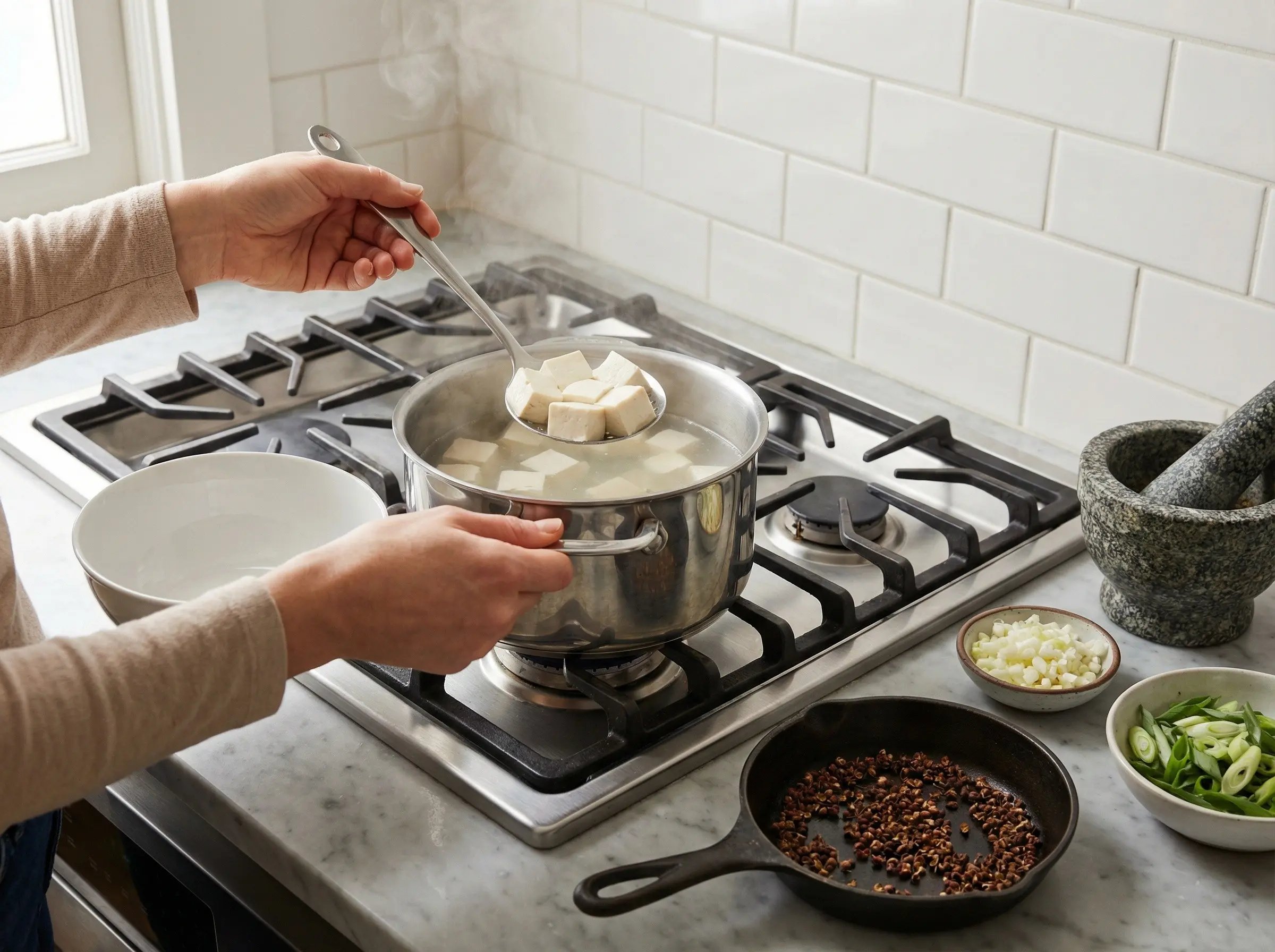
Prepare all ingredients before you start cooking - mapo tofu comes together very quickly. Cut the tofu into 1-inch cubes and gently slide them into a pot of salted simmering water. Let the tofu poach for 2-3 minutes - this firms it slightly so it holds its shape better during cooking and removes any raw bean taste. Carefully drain and set aside. Toast the whole Sichuan peppercorns in a dry skillet over medium heat for 1-2 minutes until fragrant and slightly darkened. Grind them in a spice grinder or mortar and pestle. Separate the green onions into white parts (minced) and green parts (sliced for garnish).
Step 2
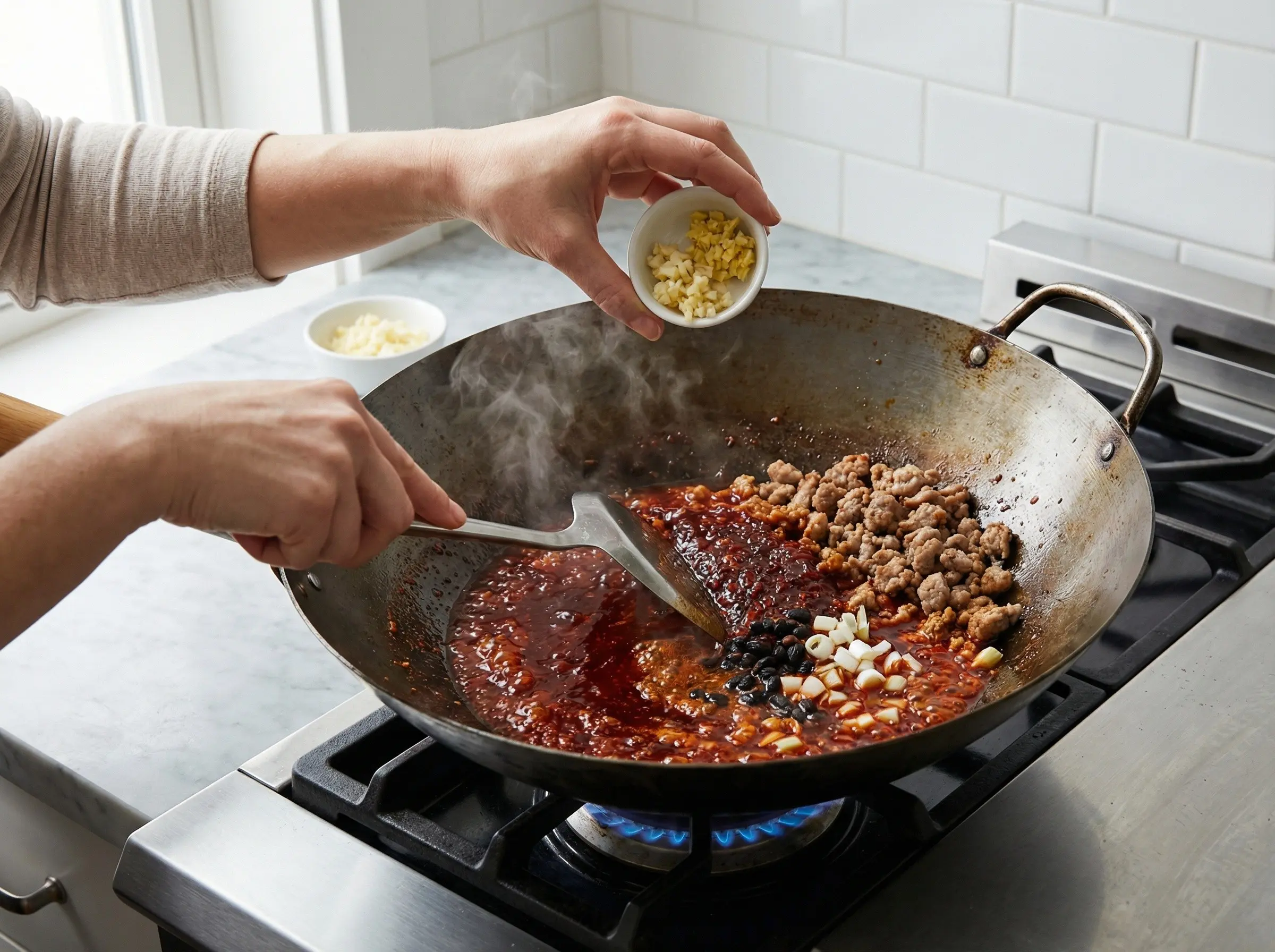
Heat the vegetable oil in a wok or large skillet over high heat until shimmering. Add the ground pork and cook, breaking it up into small crumbles, for 2-3 minutes until browned and cooked through. The pork should be in small, separate pieces rather than large clumps - this creates better texture in the final dish. Push the pork to the side of the wok.
Step 3
Reduce the heat to medium and add the doubanjiang (chili bean paste) to the oil in the wok. Stir and fry for about 1 minute until the oil turns red and the paste becomes very fragrant - this is called "stir-frying the color" and is essential for developing the deep, complex flavor of the dish. Be careful not to burn the paste. Add the fermented black beans, minced garlic, minced ginger, and white parts of the green onions. Stir-fry for another 30 seconds until very aromatic.
Step 4
Add the chicken broth (or water), soy sauce, and sugar. Stir to combine everything and bring to a simmer. Gently slide the poached tofu cubes into the sauce. Do not stir vigorously or the tofu will break apart. Instead, gently shake the wok or use a spatula to carefully fold the sauce over the tofu. Let the tofu simmer in the sauce for 3-4 minutes, allowing it to absorb the flavors. Occasionally spoon the sauce over the tofu cubes.
Step 5
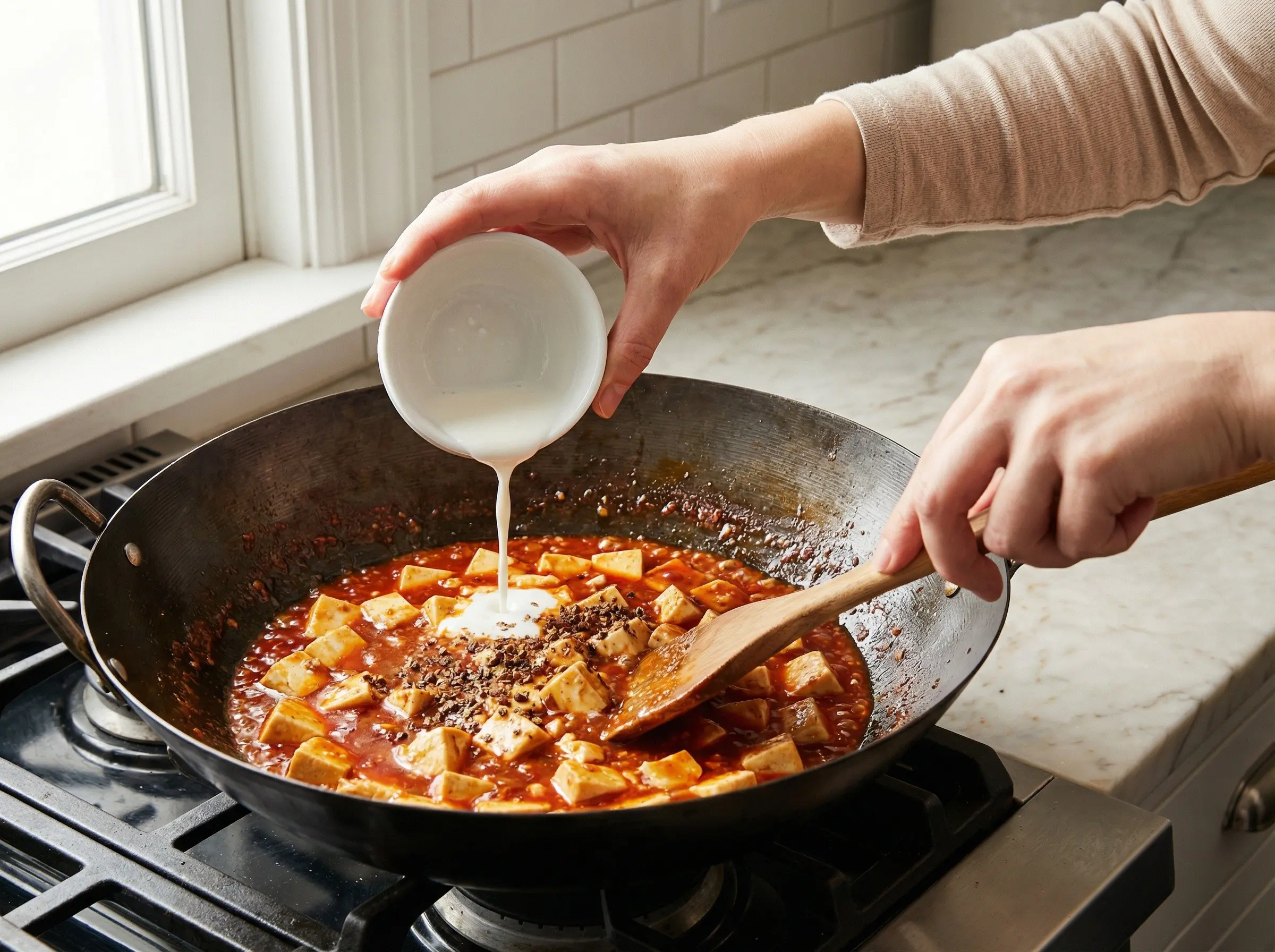
Give the cornstarch slurry a stir to recombine, then drizzle it into the wok while gently stirring. The sauce will thicken almost immediately into a glossy coating that clings to the tofu. Add half of the ground Sichuan peppercorn and gently fold to combine. The sauce should be thick enough to coat the tofu but still slightly fluid. If it becomes too thick, add a splash of broth or water.
Step 6
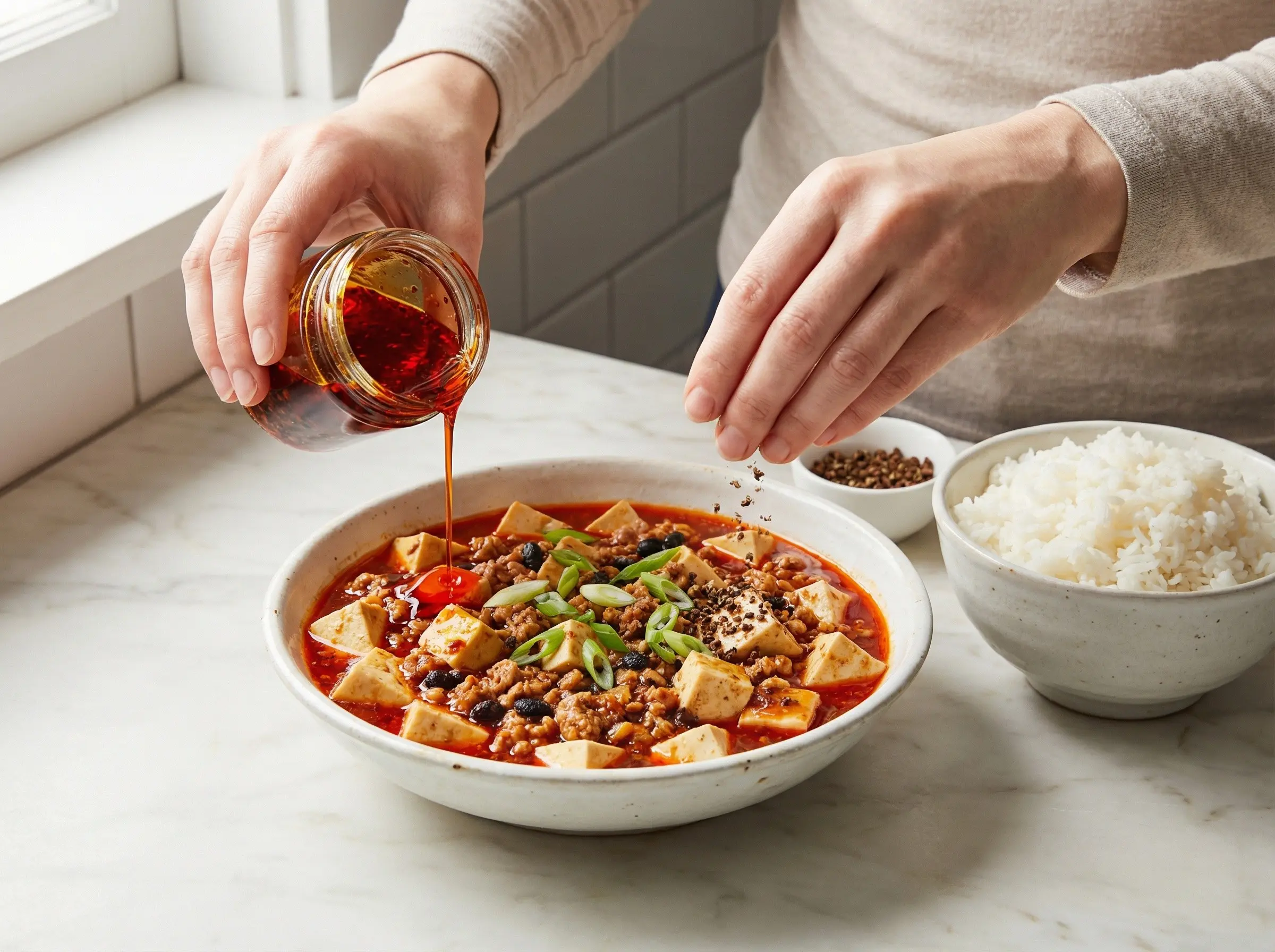
Transfer the mapo tofu to a serving bowl, being careful to keep the tofu cubes as intact as possible. Drizzle with the chili oil - this adds glossy heat and beautiful red color. Sprinkle the remaining ground Sichuan peppercorn over the top for an extra numbing kick. Garnish with the sliced green onion greens. Serve immediately over steaming white rice - the rice is essential for absorbing the intensely flavorful, spicy sauce and providing relief from the heat. In Sichuan, mapo tofu is often served as part of a larger meal with milder dishes to balance the intense flavors. For an even more authentic experience, serve with additional chili oil and ground Sichuan peppercorn on the side so diners can adjust the heat and numbness to their preference.
You Might Also Like
Master Your Kitchen with PantryAI
Love this recipe? Save it, shop for it, and cook it with ease. Download the PantryAI app to organize your pantry, track expirations, and discover recipes based on what you already have.

On a computer?Scan with your iPhone camera to download PantryAI.








Swipe to see more screenshots