
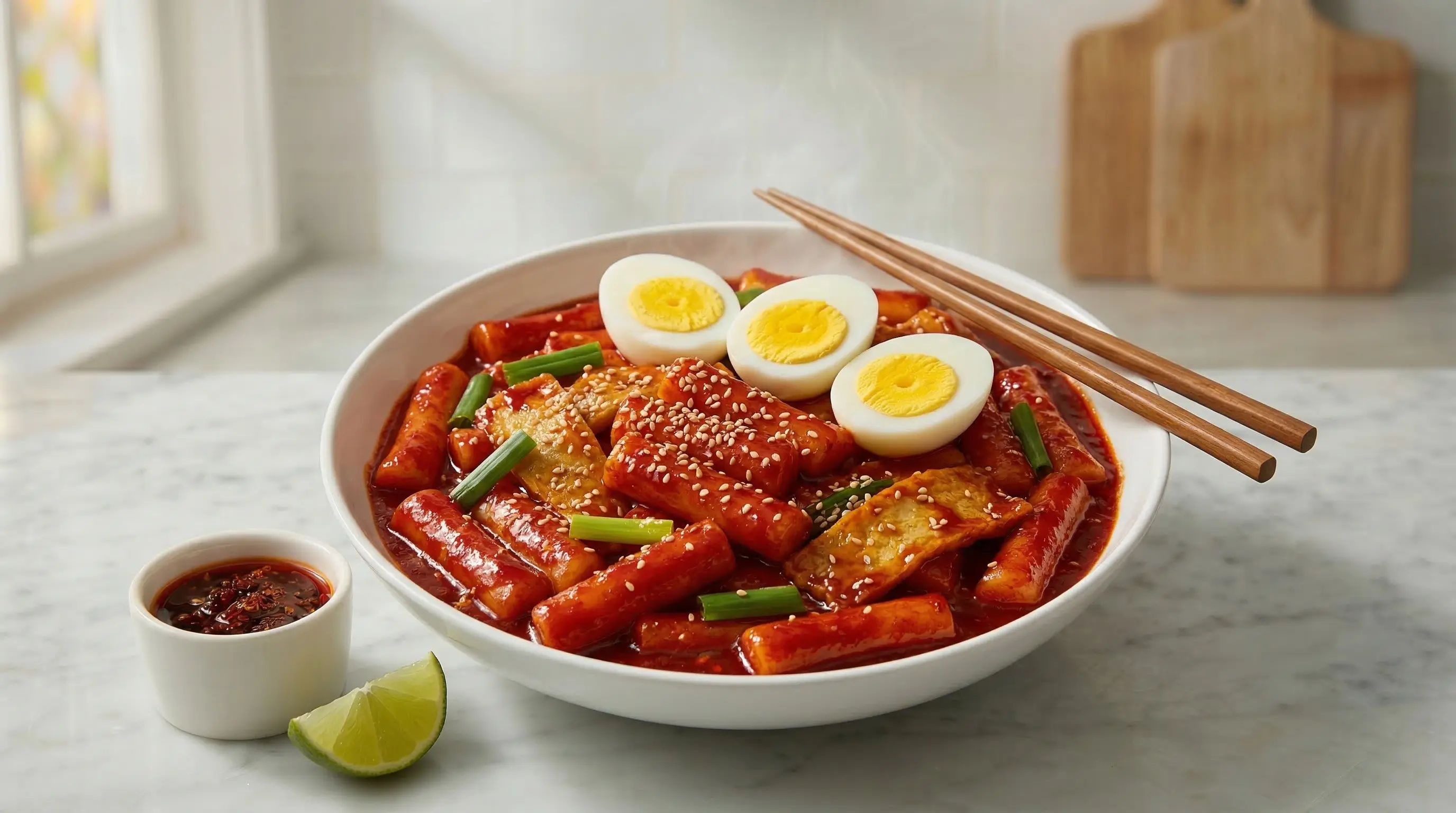
Tteokbokki
Learn how to make authentic tteokbokki, Korea's beloved spicy rice cake street food in a sweet and fiery gochujang sauce. This addictive snack is chewy, bold, and the ultimate Korean comfort food!
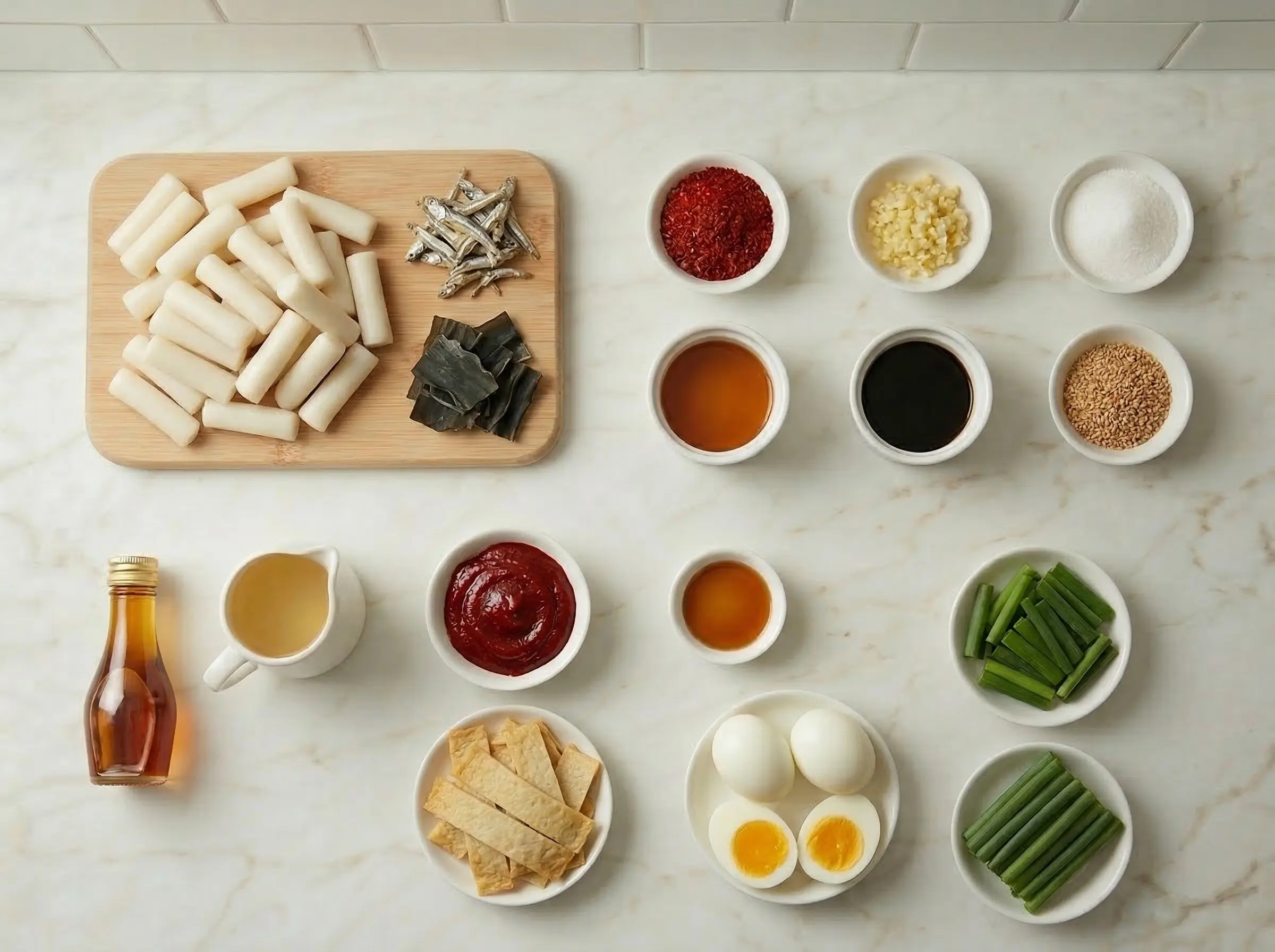
Ingredients
The Story
Tteokbokki is Korea's most iconic street food, chewy rice cakes swimming in a fiery red sauce that has captivated Koreans for generations and is now conquering the world. The dish's history reflects Korea's tumultuous 20th century. Tteok (rice cakes) have been part of Korean cuisine for millennia, traditionally served in savory dishes or royal court cuisine. The original tteokbokki was actually a mild, soy sauce-based dish called gungjung tteokbokki (royal court tteokbokki), stir-fried with beef and vegetables in a savory brown sauce - a far cry from today's fiery red version. The transformation came in the 1950s, after the Korean War. According to popular legend, a woman named Ma Bok-rim accidentally dropped tteok into a bowl of jjajangmyeon (black bean noodles) and discovered the combination of chewy rice cakes with bold sauce was delicious. She began experimenting, eventually creating a new dish using the increasingly available gochujang (red chili paste), which had become more affordable after the war. Her spicy tteokbokki, sold from a small stall in Seoul's Sindang-dong neighborhood, was an instant sensation. The neighborhood became famous as "Tteokbokki Town," and the spicy red version became the standard. Today, Sindang-dong still has numerous tteokbokki restaurants, though the dish is now ubiquitous throughout Korea. What makes tteokbokki so extraordinary is the interplay between the chewy, bouncy texture of the rice cakes and the addictively spicy-sweet sauce. The tteok themselves are made from glutinous rice flour, pounded and shaped into cylinders that have a uniquely satisfying chew - soft yet resilient, yielding to the teeth but with bounce and body. The sauce builds on gochujang's complex flavor - fermented, sweet, spicy, and deeply savory - amplified by gochugaru (chili flakes), sugar, and often anchovy or kelp broth for umami depth. Fish cakes add another layer of texture and savory flavor. When everything simmers together, the sauce reduces and clings to each rice cake in a glossy red coat. Eaten from pojangmacha (street food tents) with wooden skewers, or from bubbling hot pots in casual restaurants, tteokbokki is comfort food that warms from the inside out.
Instructions
Step 1
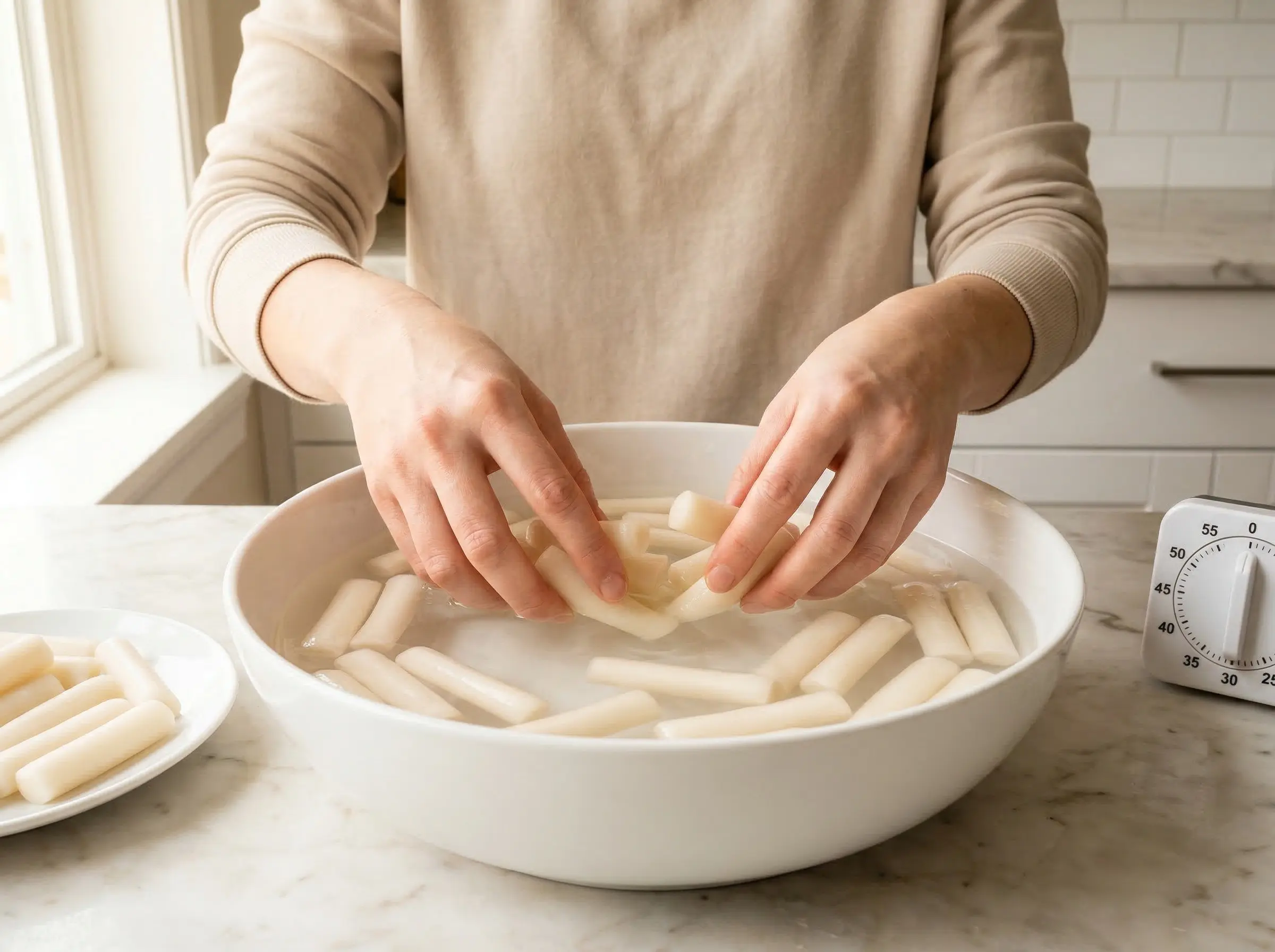
Prepare the rice cakes. If using refrigerated rice cakes, they are ready to use. If using frozen rice cakes, soak them in room temperature water for 30 minutes to 1 hour until softened and pliable - do not use hot water as this can make them gummy on the outside while still frozen inside. If using dried rice cakes, soak in warm water for at least 2 hours or until completely softened. The rice cakes should be soft enough to bend without cracking but still hold their shape.
Step 2
Make the anchovy kelp broth for the most authentic flavor. In a pot, combine 4 cups water with a small handful of dried anchovies (heads and guts removed) and a 4-inch piece of dried kelp. Bring to a boil, then simmer for 15-20 minutes. Strain and discard the solids. This umami-rich broth is the foundation of great tteokbokki. For a quicker version, use plain water with a splash of fish sauce, but the broth makes a noticeable difference.
Step 3
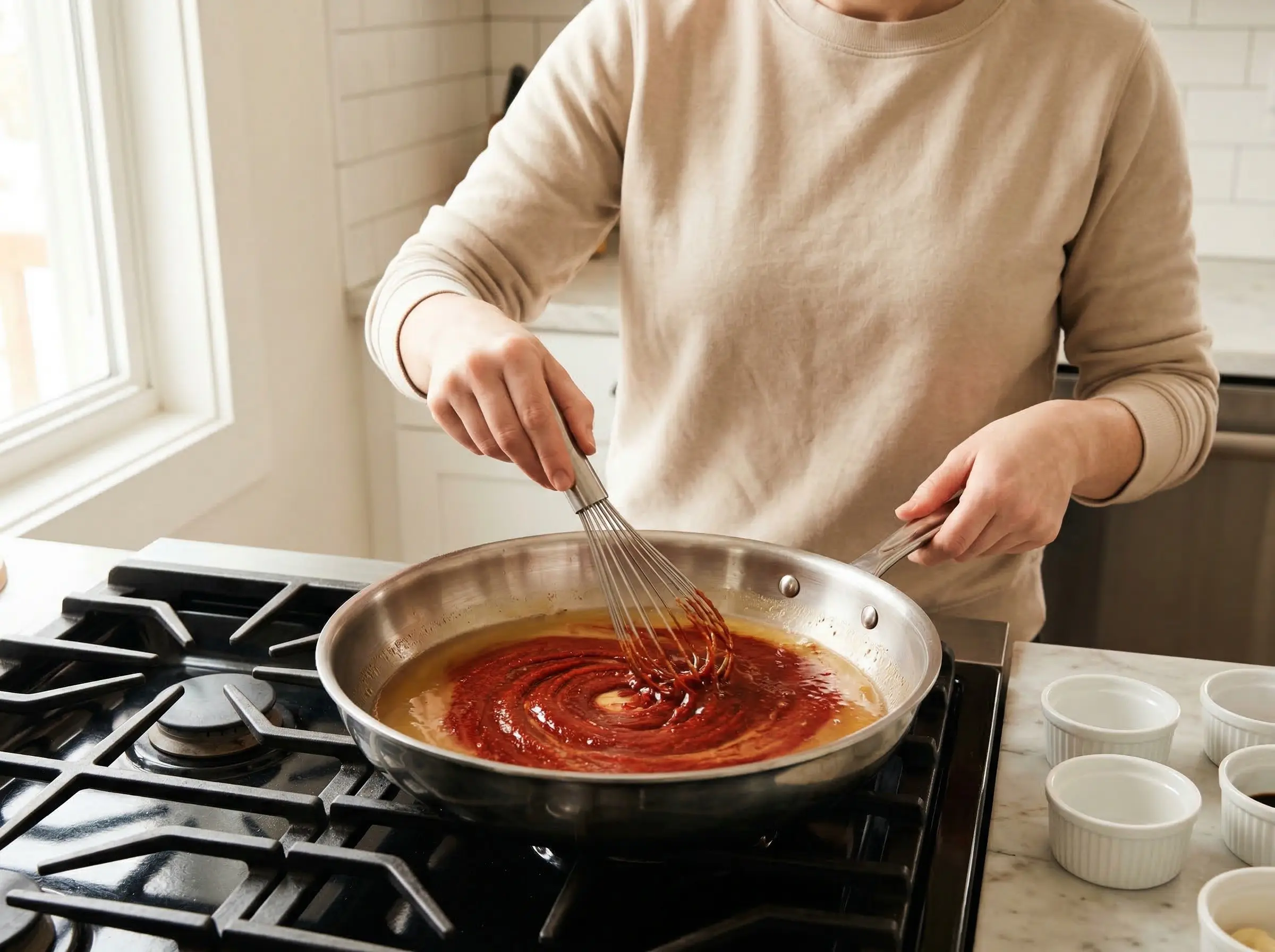
Make the sauce base. In a large shallow pan or skillet, combine the broth, gochujang, gochugaru, sugar, soy sauce, and minced garlic. Whisk well to dissolve the gochujang completely - there should be no lumps. Taste the sauce before adding the rice cakes and adjust: more sugar for sweetness, more gochujang for depth, more gochugaru for heat. The sauce should taste bold and well-balanced.
Step 4
Cook the rice cakes. Bring the sauce to a boil over medium-high heat. Add the softened rice cakes to the pan, spreading them out so they are mostly submerged. Cook for 8-10 minutes, stirring frequently to prevent sticking and to ensure even coating. The rice cakes will absorb the sauce and begin to soften. Keep the liquid at an active simmer - too low and the rice cakes will not cook properly, too high and the sauce will reduce before the rice cakes are tender.
Step 5
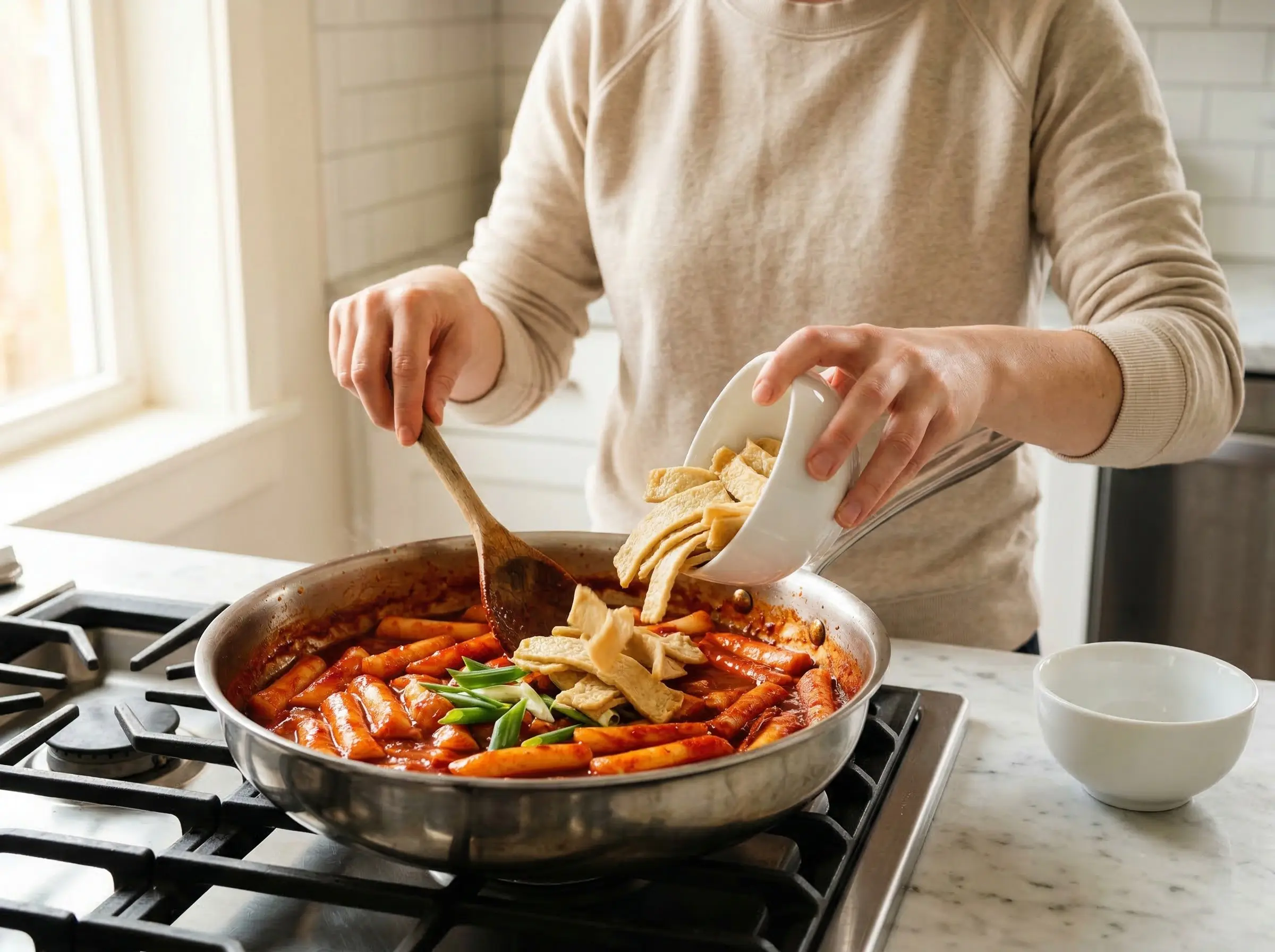
Add the fish cakes and finish. When the rice cakes are nearly tender and the sauce has thickened to coat them glossily, add the sliced fish cakes and green onion pieces. Cook for another 2-3 minutes until the fish cakes are heated through and the sauce has reduced to your desired consistency. The finished sauce should be thick and clingy, not watery, generously coating each rice cake. If the sauce reduces too much before the rice cakes are tender, add a splash of water.
Step 6
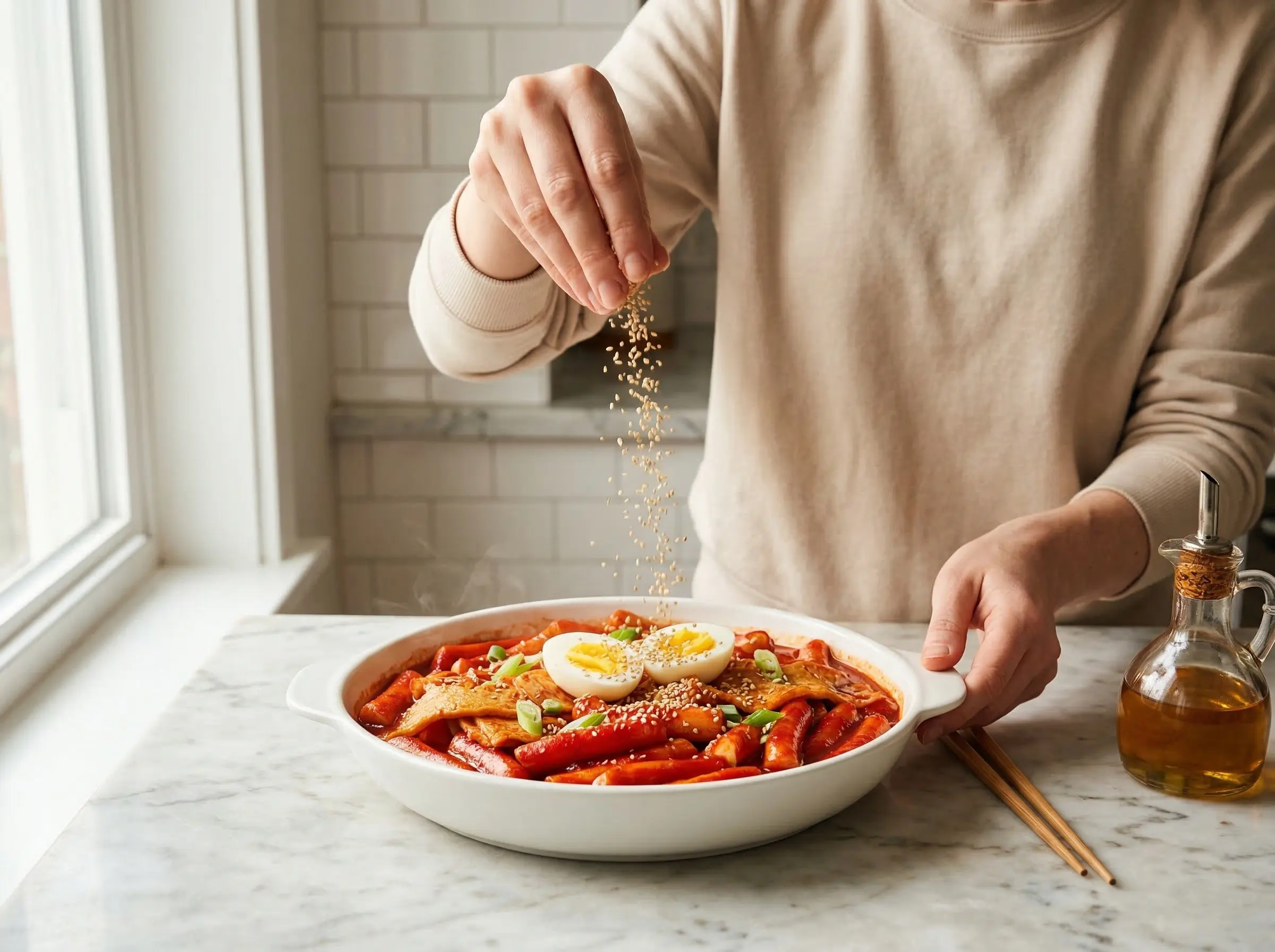
Serve immediately. Transfer the tteokbokki to a shallow serving dish or serve directly from the pan. Garnish with toasted sesame seeds and drizzle with sesame oil if desired. Add hard-boiled eggs on top - a classic addition that provides richness to balance the heat. Serve immediately while the rice cakes are soft and the sauce is bubbling. Tteokbokki is traditionally eaten with wooden skewers or chopsticks, straight from the communal dish. The rice cakes will continue to firm up as they cool, so eat while hot. Leftovers can be reheated with a splash of water to loosen the sauce, but freshly made is always best. Popular additions include ramyeon noodles (rabokki), cheese (for a modern twist), or boiled cabbage. In Korea, tteokbokki is often enjoyed with fried foods like twigim (tempura) or kimbap on the side.
You Might Also Like
Master Your Kitchen with PantryAI
Love this recipe? Save it, shop for it, and cook it with ease. Download the PantryAI app to organize your pantry, track expirations, and discover recipes based on what you already have.

On a computer?Scan with your iPhone camera to download PantryAI.








Swipe to see more screenshots